
Executive Overview
In the modern educational landscape, the illusion of learning is a persistent challenge for educators. A lesson often feels profoundly successful when a classroom of students chorus correct answers in unison, nodding along with the teacher’s explanations. Yet, a critical question remains: how much of that newly acquired knowledge actually survives the transition from short-term memory to long-term retention after the school bell rings?
A landmark study conducted by researchers Boulahnane, Ismaili, and Haddi (2026) sought to answer this exact question within the halls of a Moroccan middle school. Over a rigorous three-week period, the research team tracked two ninth-grade classes consisting of 30 students each, aged 14 to 15. Both cohorts navigated the identical curriculum—covering foundational English grammar, specialized vocabulary, and complex Life and Earth Science content—under the exact same volume of instructional time.
The core divergence lay in the pedagogical methodology: one class leveraged the interactive, game-based learning platform Kahoot!, while the comparison group experienced conventional instruction featuring traditional teacher-led lectures, textbook exercises, and pair-work drills.
The empirical findings challenge traditional instructional assumptions. Rather than merely measuring academic performance immediately following the instructional unit, the researchers administered follow-up testing two weeks later. The data revealed that students utilizing Kahoot! achieved roughly twice the learning gains of their peers in conventional classrooms. Furthermore, they sustained significantly higher score averages during the delayed post-tests across all three academic subjects.
Beyond cognitive retention, the study uncovered a dramatic chasm in student motivation. When surveyed using a standardized engagement metric, the Kahoot! cohort reported an average score of 23.6 out of 25, vastly outperforming the conventional group’s average of 17.0 out of 25. This comprehensive investigation offers authoritative, empirical evidence that integrating gamified digital tools with immediate feedback loops can fundamentally transform middle school knowledge acquisition and cognitive retention.
Detailed Chronology of the 2026 Study
To understand the profound implications of Boulahnane, Ismaili, and Haddi’s work, one must examine the meticulous methodological framework established for the three-week intervention. The study was structured to eliminate confounding variables, ensuring that the comparative outcomes were directly attributable to the instructional medium rather than disparities in student demographics, teaching quality, or curriculum design.
Week Zero: Baseline Establishment and Cohort Equivalence
Prior to the instructional intervention, both ninth-grade classes—comprising a total of 60 students—underwent baseline testing. The researchers formulated specialized 20-item diagnostic assessments for each distinct subject area: English grammar, English vocabulary, and Life and Earth Science.
The goal of this initial phase was to establish statistical equivalence between the two groups. The baseline data confirmed that both classes started from a statistically identical cognitive footing, possessing comparable baseline knowledge across all three domains. Neither group had any prior exposure to the specific instructional units that were about to be delivered.
Weeks One to Three: Divergent Pedagogical Delivery
Over the subsequent three weeks, both classes were taught the same core concepts, but the delivery mechanisms diverged sharply:
- The Conventional Instruction Group: This cohort experienced a traditional teacher-centered environment. Lessons relied heavily on direct instruction, whiteboard explanations, standard textbook readings, worksheet completions, and peer-to-peer pair-work drills. Formative checks consisted primarily of traditional questioning, where teachers called upon individual students, and spot-checking notebooks.
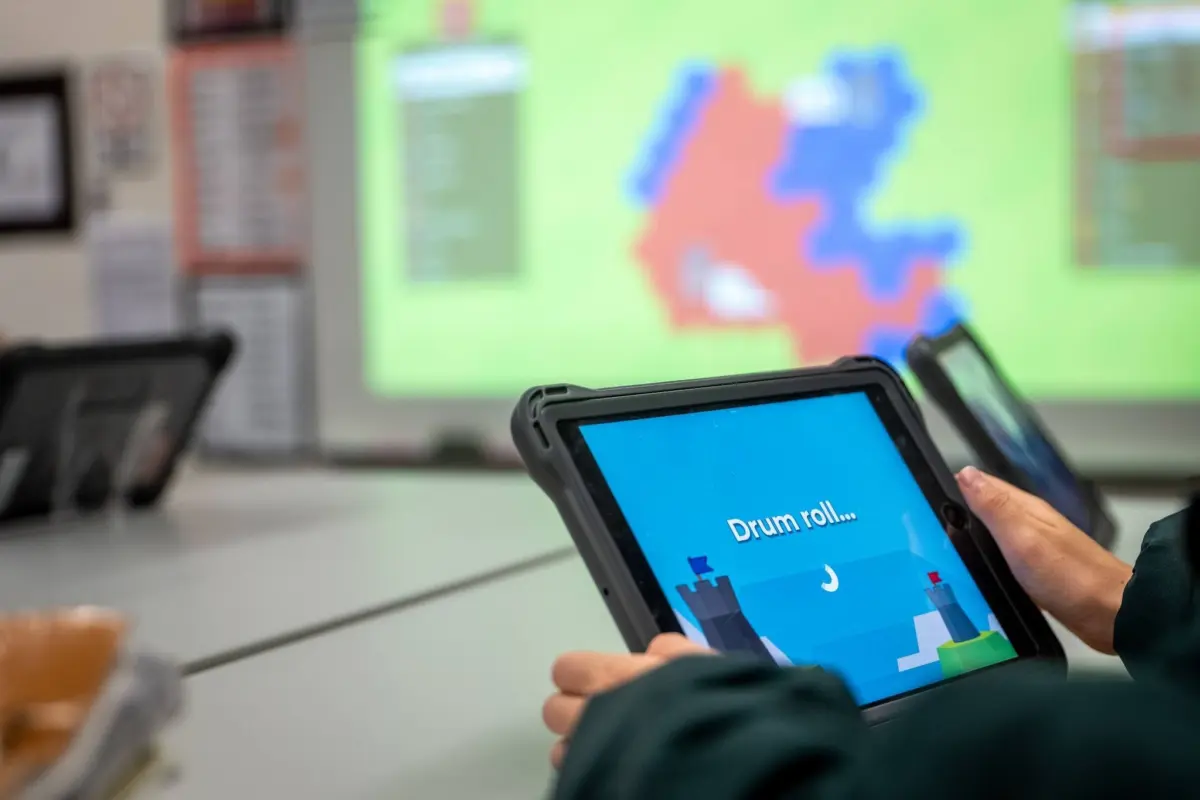
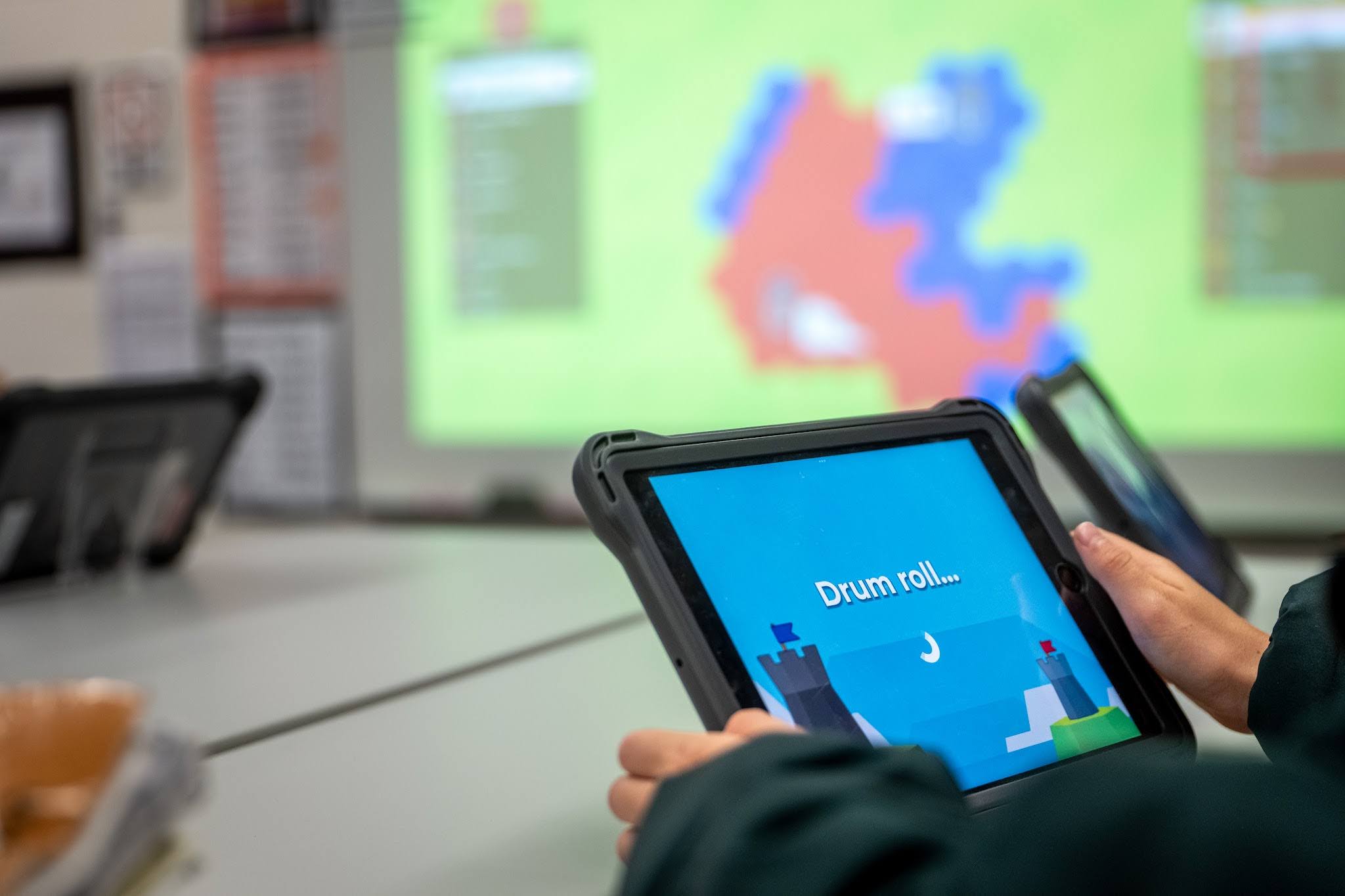
- The Kahoot! Intervention Group: This cohort engaged with the exact same curriculum mediated through the Kahoot! platform. Instructors projected game-pin screens and quiz questions onto a shared classroom display. Students interacted individually using personal mobile devices or school-issued tablets.
Crucially, the Kahoot! sessions were not deployed in isolation as mere entertainment; they were integrated into a pedagogical routine of immediate feedback. Following each question prompt, the system visualized the exact distribution of class responses alongside the correct answer. The instructor then paused the game to lead a targeted, brief review of questions that yielded widespread confusion before advancing to the next challenge.
Immediate Post-Instruction Assessment
Immediately upon the conclusion of the three-week curriculum, both groups were administered the 20-item post-tests for grammar, vocabulary, and science.
While both groups demonstrated academic improvement—a natural consequence of receiving instruction—the magnitude of the gains diverged sharply. The students utilizing Kahoot! surged ahead, recording improvements that were roughly twice as large as those observed in the conventional instruction group. The immediate feedback loop and active retrieval practice engineered by the game format appeared to solidify neural pathways more effectively than passive listening or static textbook drills.
The Two-Week Delayed Retention Test
The most revealing phase of the chronology occurred fourteen days after the conclusion of instruction. Without prior warning or a review period, the researchers administered the exact same 20-item assessments to both classes.
This delayed post-test was designed to measure true knowledge retention rather than transient short-term memory performance. The results confirmed that while both groups experienced a slight cognitive decline over the two-week hiatus—highlighting the universal human curve of forgetting—the Kahoot! cohort maintained a commanding lead. They outperformed the conventional group by a margin of 3.3 to 3.7 points across all three subjects, proving that game-based learning fortifies long-term memory consolidation.
Supporting Context & Metrics
The statistical data compiled by Boulahnane, Ismaili, and Haddi provide a compelling quantitative foundation for the efficacy of educational gaming technology. By breaking down the metrics across cognitive growth and affective engagement, educators can observe precisely where and how the interventions succeeded.
Cognitive Metrics: Subject-Specific Gains and Retention
The assessment instruments—standardized at 20 points per subject—revealed consistent performance advantages for the gamified learning environment across linguistic and scientific domains:
- English Grammar: The Kahoot! cohort demonstrated accelerated growth from pre-test to immediate post-test, translating into superior long-term retention of structural syntax and rules compared to the workbook-reliant group.
- English Vocabulary: Retention of lexical items showed some of the most pronounced differences. The active recall mechanism embedded in timed, competitive vocabulary quizzes forced students to retrieve definitions repeatedly, preventing the rapid decay typically associated with rote memorization lists.
- Life and Earth Science: Complex scientific terminology and systems (such as ecological cycles and earth structures) were absorbed more durably. Students using Kahoot! were better equipped to recall these scientific principles two weeks later, indicating that gamification aids in conceptual mapping, not just factual recall.
| Assessment Phase | Subject Area | Conventional Class Mean Score (out of 20) | Kahoot! Class Mean Score (out of 20) | Performance Advantage |
|---|---|---|---|---|
| Baseline (Pre-test) | Grammar / Vocab / Science | Comparable (Equiv.) | Comparable (Equiv.) | 0.0 (Neutral) |
| Immediate Post-test | Combined Subjects | Moderate Increase | Significant Increase | ~2x Greater Gains |
| Delayed Post-test (2 Weeks) | Grammar | Lower Retention | Sustained Higher Score | +3.3 Points |
| Delayed Post-test (2 Weeks) | Vocabulary | Lower Retention | Sustained Higher Score | +3.5 Points |
| Delayed Post-test (2 Weeks) | Science | Lower Retention | Sustained Higher Score | +3.7 Points |
Affective Metrics: Student Engagement Scores
Cognitive performance cannot be decoupled from affective state; students learn more effectively when they are psychologically invested in the educational process. The engagement survey administered at the conclusion of the study utilized a 25-point scale to gauge students’ attention, enjoyment, and emotional investment during lessons.
- Conventional Class Engagement Mean: 17.0 / 25
- Kahoot! Class Engagement Mean: 23.6 / 25
This substantial variance underscores the psychological shift induced by game-based learning. Adolescent learners aged 14 to 15 navigate complex developmental stages where peer dynamics, autonomy, and interactive stimulation heavily influence motivation. The competitive, game-like atmosphere of Kahoot! transformed passive compliance into active, self-motivated participation.
Official Insights & Pedagogical Mechanisms
While the quantitative metrics establish that Kahoot! improves retention and engagement, researchers and educational theorists have evaluated why these outcomes occur. The study points toward several interlocking cognitive and pedagogical mechanisms:
The Power of Active Retrieval Practice
Traditional education often relies on passive review, where students read over notes or listen to a teacher re-explain a concept. Cognitive science consistently demonstrates that retrieval practice—the act of forcibly dragging information out of one’s memory—strengthens neural connections far more effectively than passive review.
When students participate in a Kahoot! session, they are subjected to dozens of rapid-fire retrieval events. Every question forces the student’s brain to search its internal database, evaluate options, and commit to an answer under temporal pressure. This repeated cognitive exertion creates robust memory traces that resist decay over time.
Immediate Feedback Loops
In a conventional classroom, when a teacher assigns a worksheet, students complete it independently. The teacher collects the papers, grades them over the evening or weekend, and returns them days later. By the time the student sees their mistakes, the contextual immediacy of the learning moment has evaporated.
Kahoot! collapses this feedback loop into milliseconds. Students submit an answer and instantly discover whether they were correct or incorrect, accompanied by visual representations of how their peers fared. This immediate feedback corrects misconceptions on the spot, preventing students from encoding and practicing incorrect information.
Teacher-Led Formative Intervention
A common critique of educational technology is that it can dislocate the teacher from the center of instruction. However, Boulahnane, Ismaili, and Haddi noted that the most successful implementations in their study featured active educator mediation.
Rather than treating the game as an autonomous babysitter, teachers used the real-time analytics dashboard provided by Kahoot! to diagnose classroom-wide misconceptions. When a high percentage of students selected an incorrect distracter, the teacher halted the game, addressed the conceptual failure directly, and facilitated a micro-lecture. This symbiotic relationship between digital diagnostic tools and human pedagogical expertise is what turned raw gameplay into structured, high-yield learning.
Future Outlook: The Evolution of Gamified Learning in Middle Schools
As educational institutions navigate the digital transformation of the 21st century, empirical studies like the one conducted by Boulahnane, Ismaili, and Haddi provide essential guardrails. They move the conversation past generalized enthusiasm for "ed-tech" and provide concrete data regarding cognitive retention and curriculum integration.
Expanding Research Boundaries
While the 2026 study offers encouraging findings, researchers note several limitations that point the way forward for future academic inquiry. The study was intentionally localized: it observed two ninth-grade classes within a single Moroccan middle school over a brief three-week window, tracking retention for only fourteen days.
Future research endeavors are already being designed to scale these parameters. Scholars are beginning to investigate:
- Longitudinal Tracking: Examining whether the retention advantages of game-based learning persist across multi-month semesters or entire academic years.
- Cross-Cultural and Socioeconomic Replication: Testing similar interventions across diverse international school districts, varying class sizes, and different grade levels (ranging from primary education to university lecture halls).
- Isolated Variable Analysis: Disentangling the specific components of gamification—separating the effects of the timer, the point system, the visual leaderboards, and the immediate feedback loops to determine which elements drive the greatest cognitive gains.
Practical Takeaways for Middle School Educators
For teachers currently standing in front of middle school classrooms, the operational blueprint derived from these findings is clear, actionable, and low-barrier. Educators do not need to overhaul their entire curricula or abandon foundational teaching methods to reap the benefits of game-based learning.
Instead, teachers of languages, sciences, humanities, and mathematics can adopt a hybrid instructional rhythm:
- Deliver Core Content: Utilize direct instruction, readings, or interactive lectures to introduce complex foundational concepts.
- Deploy Diagnostic Quizzes: Integrate a short, targeted Kahoot! session as a formative check for understanding at the conclusion of a sub-unit or week.
- Mediate and Clarify: Actively monitor the real-time analytics. Pause when error rates spike to clarify misconceptions, turning the quiz interface into a collaborative discussion board.
- Reinforce Over Time: Capitalize on the enhanced retention baseline by spacing out review sessions, ensuring that initial gains do not fade over the subsequent weeks.
As educational paradigms continue to evolve, the integration of gamified formative assessment offers a scientifically validated bridge between student engagement and enduring cognitive achievement. By transforming assessment from a high-stakes, anxiety-inducing hurdle into an engaging, interactive challenge, educators can ensure that what students learn today remains with them long after the classroom doors close.

