
Executive Overview
In the landscape of early childhood education, the transition from spoken language to written literacy is a pivotal developmental milestone. Educators and cognitive scientists continuously seek innovative, evidence-based tools to bridge the gap between phonemic awareness—the ability to identify and manipulate individual sounds in spoken words—and phonics, the understanding of the relationship between letters and sounds. Recently, educational resource platform This Reading Mama introduced a specialized pedagogical tool: a comprehensive set of Free Beginning Digraph Puzzles.
Designed for early learners, kindergarteners, and foundational reading intervention groups, these printable puzzles target a notoriously tricky phase of reading acquisition: beginning digraphs. By combining tactile puzzle-solving mechanics with auditory and visual phonics practice, the resource offers a multi-sensory approach to literacy. This article provides an in-depth examination of the pedagogical framework supporting these puzzles, explores the mechanics of phonemic isolation versus phonics application, analyzes the broader implications for early reading curricula, and outlines how educators and parents can leverage these resources to foster lifelong reading success.
Detailed Chronology of the Resource Development and Literacy Integration
To understand the value of the Beginning Digraph Puzzles, one must trace the evolution of modern literacy instruction and the timeline of targeted phonics interventions.
The Shift Toward Systematic Phonics
Over the past decade, educational research—often referred to in policy circles as the "Science of Reading"—has heavily emphasized the necessity of explicit, systematic phonics instruction. Balanced literacy models that relied heavily on context clues and guessing strategies have largely given way to rigorous decoding instruction. Within this systematic framework, educators introduce foundational sound-spelling patterns in a structured sequence: starting with single-letter consonants and short vowels, moving to consonant blends, and advancing to digraphs.

Conceptualization and Design
Recognizing a persistent gap in engaging, low-prep materials for early digraph practice, literacy specialist and creator Becky of This Reading Mama conceptualized the Beginning Digraph Puzzles. The design phase focused on two core psychological principles:
- Active Constructivism: Children learn better when they physically manipulate objects to form connections.
- Cognitive Load Theory: By breaking down complex sound-symbol relationships into discrete, manageable puzzle pieces, the resource prevents cognitive overload in young learners.
Upon release, the puzzles were integrated into a growing repository of digital educational tools, eventually finding a dedicated home within teacher resource networks such as The Library, offering educators ad-free access to specialized phonics aids.
Supporting Context & Metrics: The Science Behind Digraphs and Phonemic Awareness
The effectiveness of the Beginning Digraph Puzzles rests on solid linguistic and cognitive principles. To appreciate their utility, we must examine the specific linguistic components targeted by the resource.
What is a Digraph?
A digraph is a combination of two letters that represent a single distinct speech sound (phoneme). Unlike consonant blends (such as bl or st, where individual consonant sounds can still be heard when pronounced rapidly), digraphs produce an entirely new sound.

The free puzzle pack covers nine essential beginning digraphs:
- ch (e.g., chalk, cheese)
- sh (e.g., shoe, shark)
- th (e.g., thumb, thorn)
- wh (e.g., whale, wheel)
- wr (e.g., wrap, wrench)
- kn (e.g., knot, knife)
- ph (e.g., phone, photo)
- gn (e.g., gnat, gnaw)
Phonemic Awareness vs. Phonics: The Dual Approach
A common pitfall in early reading instruction is treating phonemic awareness and phonics as interchangeable terms. They are distinct yet complementary pillars of literacy:
- Phonemic Awareness is strictly auditory. It involves hearing, identifying, and manipulating phonemes without the presence of written letters. For instance, asking a child, "What sound do you hear at the beginning of cheese?" targets phonemic awareness.
- Phonics bridges the auditory to the visual. It involves connecting those phonemes (sounds) to graphemes (letters). When a child matches the picture of cheese to the letters ch, they are engaging in phonics.
The Beginning Digraph Puzzles bridge these two domains seamlessly. Learners first engage their phonemic awareness by naming the picture puzzle pieces and isolating the initial sound. Next, they engage their phonics skills by locating the corresponding letter pieces and physically locking them into place, completing both the puzzle and the conceptual loop between sound and symbol.
Official Guidelines and Pedagogical Implementation
Implementing manipulatives effectively requires a structured methodological approach. Educational guidelines recommend a step-by-step implementation strategy for the Beginning Digraph Puzzles to maximize student engagement and retention.

Step 1: Picture Isolation and Auditory Discrimination
Before introducing the letter pieces, educators are advised to distribute only the picture puzzle cards.
- Action: Students name each picture aloud (e.g., "chair," "shark," "thumb").
- Objective: The educator prompts the student to listen closely to the initial phoneme. By grouping words by their starting sounds, learners train their ears to distinguish subtle differences between digraphs and single consonant sounds (e.g., recognizing that ship begins with /sh/, not /s/).
Step 2: Grapheme Matching and Tactile Assembly
Once the auditory foundation is established, the corresponding letter pieces containing the digraphs (ch, sh, th, etc.) are introduced.
- Action: Students examine the digraph letters and match them to the correct picture based on the initial sound.
- Objective: This tactile phase reinforces letter-sound correspondence. The physical act of fitting puzzle pieces together provides immediate visual and kinesthetic feedback, signaling to the brain that the sound and the symbol belong together.
Step 3: Scaffolded Extension and Assessment
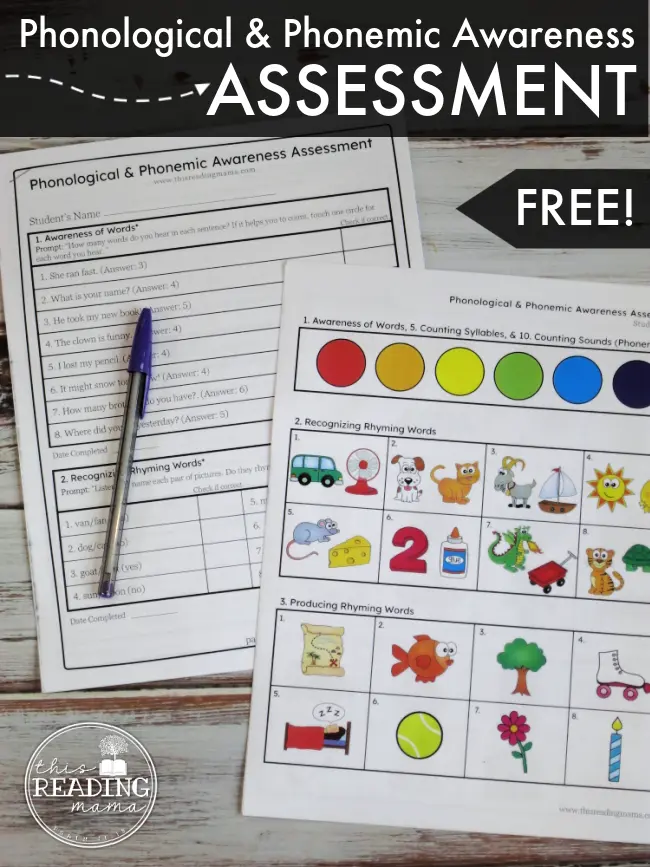
To ensure mastery, educators can utilize complementary diagnostic tools, such as formal and informal phonological and phonemic awareness assessments. Tracking student progress helps identify which digraphs require further reinforcement—particularly trickier variants like kn or wr, where one letter is silent.
Future Outlook: The Evolution of Digital and Tactile Phonics Resources
As educational paradigms continue to evolve in the post-digital era, the demand for high-quality, hybrid learning tools remains at an all-time high. While screen-based learning has its place, cognitive researchers increasingly emphasize the irreplaceable value of tactile, hands-on manipulatives in early childhood development.
The Balancing Act of Modern Classrooms
The future of early literacy instruction points toward an integrated approach: leveraging digital platforms for broad resource distribution (such as ad-free teacher membership libraries and instant PDF downloads) while maintaining physical, hands-on activities in the classroom and home environment. Puzzles, flashcards, and tactile letter tiles foster fine motor skills alongside cognitive development, creating a holistic learning experience that digital screens alone cannot replicate.
Expanding Access to Equity in Education
Resources like the Free Beginning Digraph Puzzles play a crucial role in democratizing early literacy support. By providing high-quality, research-aligned materials at no cost to parents, homeschoolers, and underfunded public school classrooms, creators help bridge the achievement gap. Ensuring that every child has access to foundational tools for phonemic awareness sets the stage for advanced reading comprehension, academic success, and a lifelong love of literature.
Conclusion
Mastering beginning digraphs is a critical stepping stone on the path to fluent reading and writing. The Free Beginning Digraph Puzzles offer a scientifically grounded, engaging, and multi-sensory solution for educators and parents striving to build robust phonemic awareness and phonics skills in young learners. By seamlessly blending auditory sound isolation with tactile letter matching, these puzzles transform potentially frustrating foundational concepts into an intuitive, enjoyable game. As classrooms and homes continue to embrace evidence-based literacy practices, resources of this caliber will remain foundational to nurturing the next generation of proficient, confident readers.

