
Executive Overview
In the persistent landscape of early childhood education, foundational literacy remains the absolute cornerstone of academic achievement. Educators, reading specialists, and cognitive scientists continually search for innovative, multi-sensory teaching tools that bridge the gap between abstract phonetic theory and concrete cognitive application. Enter Ending Digraph Puzzles—a newly released, complimentary educational resource designed to revolutionize how young learners approach phonemic awareness and systematic phonics simultaneously.
Developed by literacy expert Becky of This Reading Mama, these puzzles target a notoriously tricky phase of early reading development: ending digraphs and trigraphs (such as -ch, -sh, -th, -ck, -ph, and -tch). By merging auditory phonemic isolation with visual grapheme matching, the resource provides an engaging, hands-on framework that transforms traditional drill-and-kill methods into active problem-solving play. This report delivers an exhaustive look at the pedagogical architecture behind the puzzles, the mechanics of implementation, the broader implications for early reading instruction, and how educators can access and leverage these materials to maximize student outcomes.
Detailed Chronology: The Development and Release of the Puzzle Framework
The journey toward creating effective, play-based phonics interventions is rooted in decades of evolving reading science, shifting from whole-language approaches back toward structured literacy frameworks. The timeline of the Ending Digraph Puzzles highlights a targeted response to classroom and homeschool needs:
- Phase I: Identification of the Educational Gap (Pre-Development)
Reading specialists noted a distinct bottleneck in early elementary students’ reading and spelling progression. While beginning consonant sounds and simple short-vowel words are mastered relatively quickly, children frequently stumble when two or more letters combine at the end of a word to create a single, distinct phoneme (e.g., the /k/ sound in duck or sock). Distinguishing between blends (where sounds retain their individual identities) and digraphs (where sounds merge into a completely new phonetic entity) proved particularly challenging. - Phase II: Pedagogical Design and Prototyping
The creator engineered a multi-component puzzle system designed to explicitly isolate the auditory component before introducing the visual letter representation. Recognizing that effective literacy tools must be intuitive and developmentally appropriate, the design phase focused on pairing high-frequency vocabulary words with vivid, context-rich pictorial representations. - Phase III: Digital Integration and Public Release
To maximize accessibility for under-resourced classrooms and homeschooling families alike, the resource was launched as a zero-cost, downloadable digital toolkit. Integrated into This Reading Mama’s online repository, the materials were made instantly accessible via straightforward digital architecture, bypassing cumbersome paywalls or complex registration processes. - Phase IV: Ongoing Community Adoption and Expansion
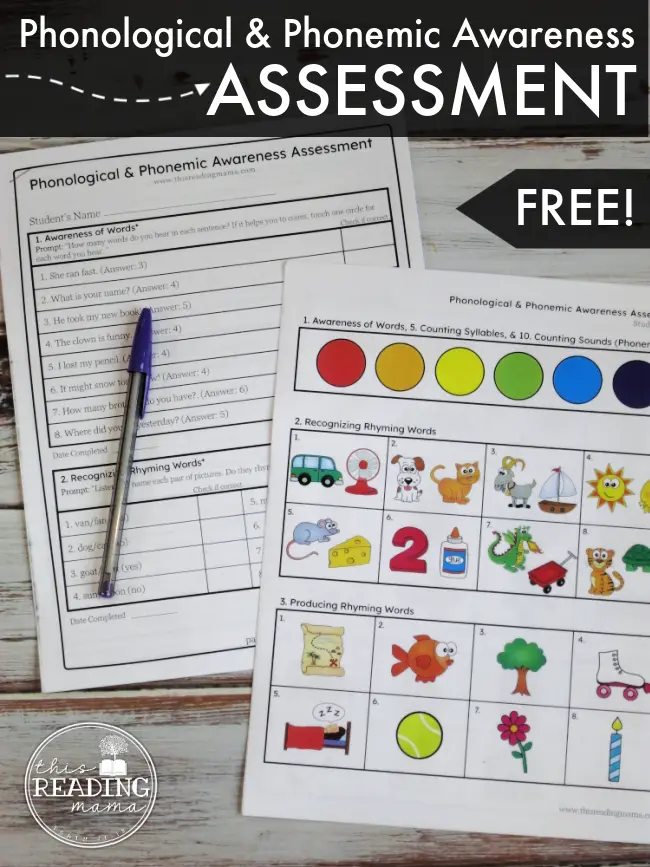
Following its release, the resource quickly gained traction within early education networks. Educators began pairing the puzzles with complementary assessment tools, such as the Phonological and Phonemic Awareness Assessment, transforming a standalone puzzle activity into a comprehensive tracking and intervention cycle.
Supporting Context & Metrics: The Science of Phonics and Phonemic Awareness
To truly understand the value of the Ending Digraph Puzzles, one must examine the cognitive metrics and pedagogical frameworks governing early reading acquisition.

Phonemic Awareness vs. Phonics: The Dual Track
A common pitfall in early reading instruction is treating phonemic awareness and phonics as interchangeable terms. In reality, they represent two distinct yet deeply intertwined cognitive processes:
- Phonemic Awareness: The purely auditory and oral ability to recognize, isolate, blend, and segment individual sounds (phonemes) in spoken words. Crucially, phonemic awareness requires no print.
- Phonics: The systematic mapping of those sounds (phonemes) to written symbols (graphemes).
The Ending Digraph Puzzles uniquely bridges these two domains through a two-step manipulative process:
- Step 1 (Phonemic Awareness): Learners manipulate the picture puzzle pieces first, naming the objects aloud and training their ears to isolate the terminal sound (e.g., listening for the terminal /sh/ in fish or the terminal /ch/ in bench).
- Step 2 (Phonics): Learners match the picture segment to the corresponding letter puzzle piece, explicitly cementing the visual-orthographic connection between the grapheme and the sound.
The Linguistic Complexity of Digraphs and Trigraphs
The puzzle pack tackles six specific ending combinations: ch, sh, th, ck, ph, and the complex trigraph tch. Linguistically, these combinations represent a significant cognitive leap for young readers:
- Consonant Digraphs (ch, sh, th, ph): Two letters working in tandem to produce a single unique phoneme that bears little acoustic resemblance to either individual letter.
- The -ck Rule and the -tch Trigraph: These combinations enforce advanced spelling generalizations, such as the spelling rule where the /k/ sound immediately following a short vowel at the end of a single-syllable word is spelled -ck, and the /ch/ sound following a short vowel is spelled -tch.
Accessibility and Equity in Education Metrics
Modern educational metrics underline a stark reality: access to high-quality, ad-free teaching resources directly correlates with student engagement and academic gains. By offering these materials free of charge—and providing an optional ad-free hub via The Library membership—the initiative addresses educational equity, ensuring that underfunded public school teachers and budget-conscious parents have access to premium-grade intervention tools.

Official Statements and Expert Perspectives
While the resource is designed for intuitive classroom and home use, its underlying philosophy aligns tightly with contemporary consensus in reading instruction, often referred to as the "Science of Reading."
"When young learners physically interact with puzzle pieces that connect a spoken phoneme to a written grapheme, they engage multiple neural pathways simultaneously. Literacy acquisition is not merely a visual exercise; it is an auditory, tactile, and cognitive integration process."
— Notes from Reading Intervention Specialists
Educators who have integrated the Ending Digraph Puzzles into their daily literacy centers report profound shifts in student confidence. Traditional worksheets often induce cognitive fatigue in kindergarten and first-grade students. Conversely, manipulative-based puzzle play reframes learning as a puzzle-solving challenge.
Furthermore, curriculum designers emphasize the necessity of explicitly teaching the difference between blends and digraphs. As reading specialist Becky notes in her accompanying instructional guides:

"Confusing blends and digraphs is one of the most common hurdles for emerging readers. When a child understands that a blend is two sounds squished together, while a digraph is two letters morphing into an entirely new sound, their decoding and encoding capabilities expand exponentially."
Future Outlook: The Evolution of Play-Based Literacy Interventions
As educational technology and traditional pedagogy continue to converge, the future of literacy instruction will undoubtedly rely on versatile resources that seamlessly blend tactile engagement with robust cognitive science.
1. Expansion of Multisensory Toolkits
The positive reception of the Ending Digraph Puzzles signals a broader market demand for low-tech, high-impact manipulatives. Future iterations of similar literacy tools are expected to integrate more deeply with formative assessment tracks, allowing educators to instantly map puzzle completion rates directly to individual student reading profiles.
2. Bridging the Classroom-Home Divide
With hybrid learning models and homeschooling on the rise, tools that require minimal preparation while maintaining high academic rigor will dictate the future of supplementary education. Resources that offer instant digital deployment—such as one-click downloads and printable PDF formats—empower parents to act as active co-educators in their children’s foundational literacy journeys.

3. Comprehensive Phonological Tracking
Moving forward, literacy advocates stress the importance of pairing activities like these digraph puzzles with continuous diagnostic tracking. Initiatives that bundle instructional printables with robust evaluation mechanisms—such as the aforementioned Phonological and Phonemic Awareness Assessment—represent the gold standard of modern educational intervention: diagnose, teach, manipulate, and reassess.
Conclusion and Access Information
The introduction of the Ending Digraph Puzzles marks a welcome victory for educators and parents striving to make foundational reading instruction both rigorous and joyful. By turning the abstract mechanics of phonics and phonemic awareness into a tactile, puzzle-solving experience, learners are equipped with the exact tools they need to decode complex words with confidence.
For educators, specialists, and parents looking to integrate these resources into their current curricula, the process is streamlined:
- Navigate to the resource hosting platform.
- Scroll to the designated section and select the teal download button to secure the free blend and digraph puzzle pack.
- Utilize complementary guides to clarify the distinctions between blends and digraphs.
- Expand your instructional toolkit further by exploring ad-free educational hubs like The Library or subscribing for advanced phonological assessment tools.
Empower your learners today, bridge the gap between sounds and letters, and watch as young readers unlock the fascinating world of words—one puzzle piece at a time.

