
Executive Overview
In an era dominated by screens, standardized indoor classrooms, and increasingly structured schedules, educators, parents, and neuroscientists are turning their attention to a timeless, organic remedy: the natural world. Far more than a simple venue for physical exercise or a momentary escape from academic rigor, nature serves as an optimal, low-stress environment for developing and refining critical brain-based abilities.
At the center of this movement is the cultivation of executive functioning skills—the neurological control tower of the human brain. These foundational capacities govern our ability to plan, organize, initiate, regulate impulses, pivot flexibly between tasks, and see complex projects through to completion. While traditional educational paradigms attempt to build these skills through direct instruction and desk-bound drills, emerging insights suggest that the great outdoors offers a remarkably potent, biologically attuned framework for cognitive development.
By combining the stress-reducing properties of green spaces with targeted, hands-on activities, children and teenagers can build lasting mental resilience and cognitive control. This report explores the neurological foundations of executive functioning, examines the robust body of research validating nature as a cognitive catalyst, and outlines actionable, evidence-based outdoor strategies designed to empower youth.
Detailed Chronology: The Evolution of Nature-Based Cognitive Development
The integration of environmental exposure and human psychology is not a novel concept, but its application to modern cognitive neuroscience represents a rapidly evolving frontier. Understanding how we arrived at our current appreciation of nature’s cognitive benefits requires examining key milestones in research and educational philosophy.
- Late 20th Century (The Rise of Attention Restoration Theory): Environmental psychologists Rachel and Stephen Kaplan formulated Attention Restoration Theory (ART). They posited that urban environments and digital stimuli place heavy demands on "directed attention," leading to mental fatigue. Conversely, nature engages "soft fascination"—effortless attention that allows the brain’s executive networks to replenish and recover.
- Early 2000s (The Neuroscience of Self-Regulation): Neuroimaging studies began to illuminate the physical changes in the prefrontal cortex—the command center for executive functions—associated with regular physical activity and low-stress environments. Researchers identified clear links between green-space exposure, reduced cortisol levels, and enhanced impulse control in children.
- 2010s (Global Empirical Validation): Large-scale epidemiological studies, including a landmark 20,000-person study in the United Kingdom, empirically established that spending a minimum of two hours per week in nature correlates with significantly higher levels of reported health and psychological well-being. Concurrently, educational institutions began experimenting with outdoor classrooms and "forest schools."
- Present Day (Holistic Executive Function Integration): Today, educators and mental health professionals are moving beyond passive outdoor time. They are actively mapping specific outdoor pursuits—ranging from community gardening and mindful nature walks to open-ended free play—directly to executive functioning pillars such as working memory, cognitive flexibility, and task initiation.
Supporting Context & Metrics: The Science of Green Spaces
To understand why nature acts as a catalyst for executive functioning, one must examine the physiological and neurological transformations that occur when humans step outside.
The Neurological Reset
Executive functioning relies heavily on the prefrontal cortex, which is vulnerable to cognitive overload. When children and teenagers are bombarded with constant digital notifications, academic pressures, and sensory inputs from modern interiors, their self-regulatory capacities deplete rapidly.
Research highlights the immediate restorative power of the outdoors:
- Stress Hormone Reduction: A study published by Harvard Health indicates that spending as little as 20 minutes immersed in a natural setting measurably reduces salivary cortisol levels, the body’s primary stress hormone. Lower stress directly correlates with an improved capacity for emotional regulation and impulse control.
- Cognitive Enhancement: An extensive review published in scientific literature demonstrates robust associations between regular nature exposure and measurable improvements in working memory, sustained attention, and cognitive flexibility.
- The Two-Hour Threshold: Broad population data reveals that individuals who log at least 120 minutes of nature contact per week experience a significantly elevated baseline of mental well-being, translating to better emotional equilibrium in academic and social environments.
What Are Executive Functioning Skills?
Executive functions are often compared to an airport’s air traffic control system. They manage multiple incoming streams of information, prioritize tasks, manage time, and monitor errors. Key components include:
- Working Memory: Holding and manipulating information over short periods.
- Inhibitory Control (Self-Control): Resisting impulsive reactions and maintaining focus despite distractions.
- Cognitive Flexibility: Adapting to unexpected changes, switching gears, and problem-solving creatively.
- Planning and Organization: Anticipating steps required to complete a goal and structuring time and materials effectively.
- Task Initiation: Overcoming procrastination and independently starting projects.
When these skills are underdeveloped, children struggle academically and socially. Nature provides a dynamic, unpredictable, yet inherently calming backdrop where these exact neural circuits are safely challenged and strengthened.
Official Insights & Practical Applications
Integrating executive function training into outdoor play does not require elaborate curricula or expensive equipment. Any local park, school green space, or backyard can function as a developmental laboratory. Below are curated, research-backed activities categorized by the specific cognitive domains they target.
Cultivating Attention, Self-Control, and Metacognition
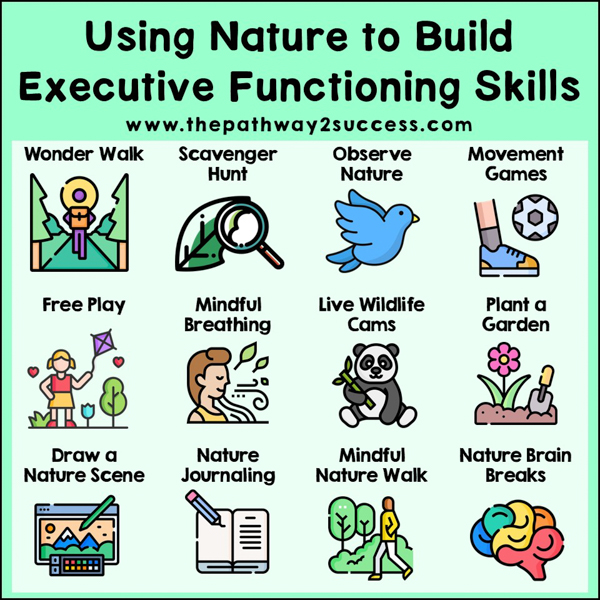
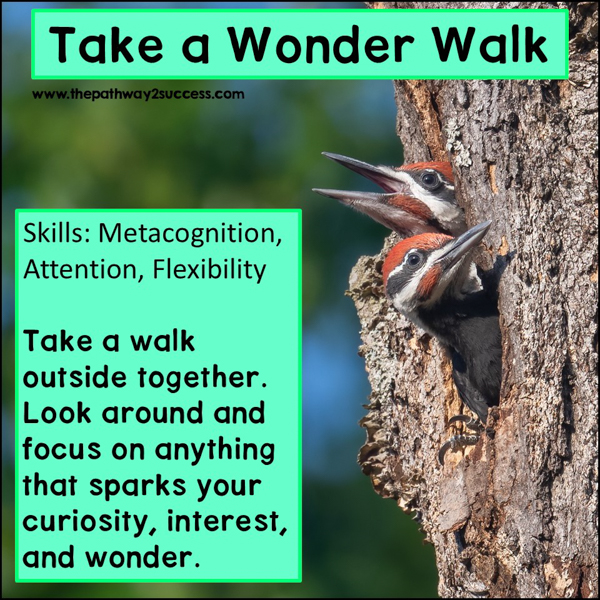
- The Wonder Walk: Instead of marching with a fixed destination, educators and parents can lead youth on a "Wonder Walk." The objective is to deliberately notice and voice elements that trigger genuine curiosity—such as observing how water droplets collect on a leaf or questioning why birds migrate. This exercise fosters metacognition (thinking about thinking) and intrinsic motivation.
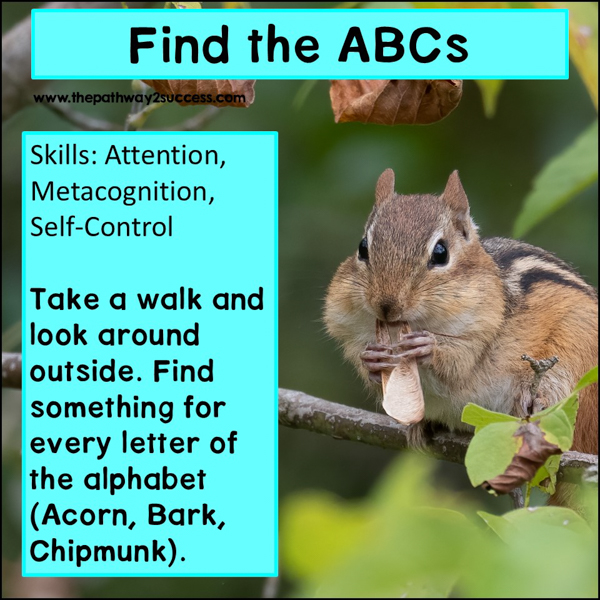
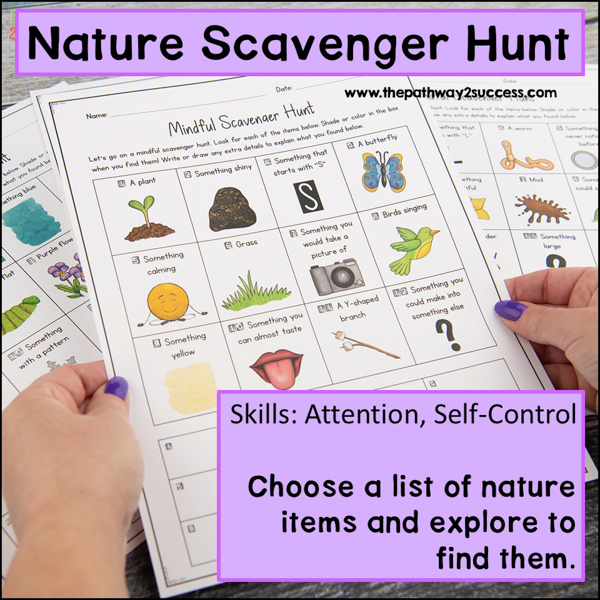
- The Alphabet Search (ABC Nature Hunt): To build laser-focused attention and inhibitory control, participants scan the environment to find an item corresponding to each letter of the alphabet in sequential order (e.g., A for acorn, B for bark). When environmental distractions attempt to pull a child’s attention away, the alphabet framework serves as an anchor to pull them back on track.
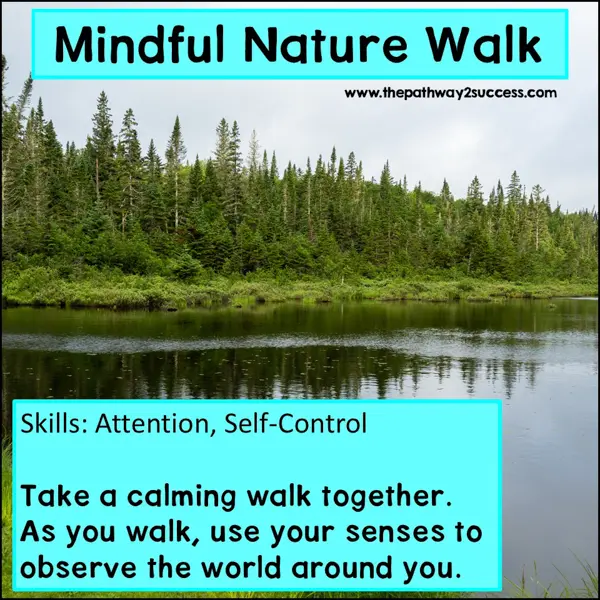
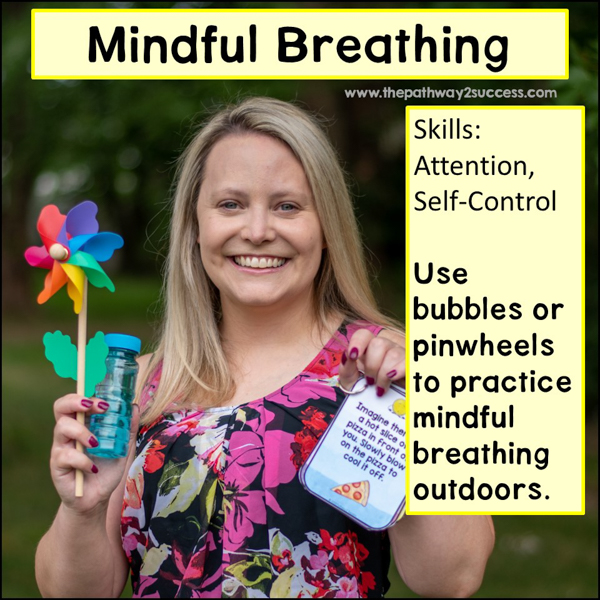
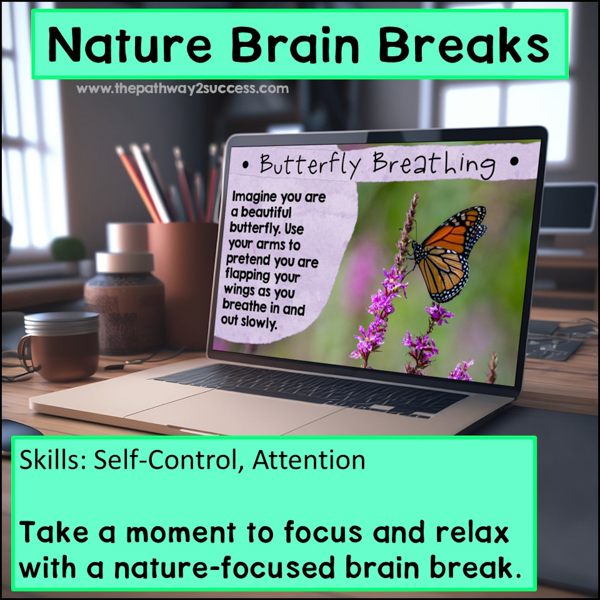
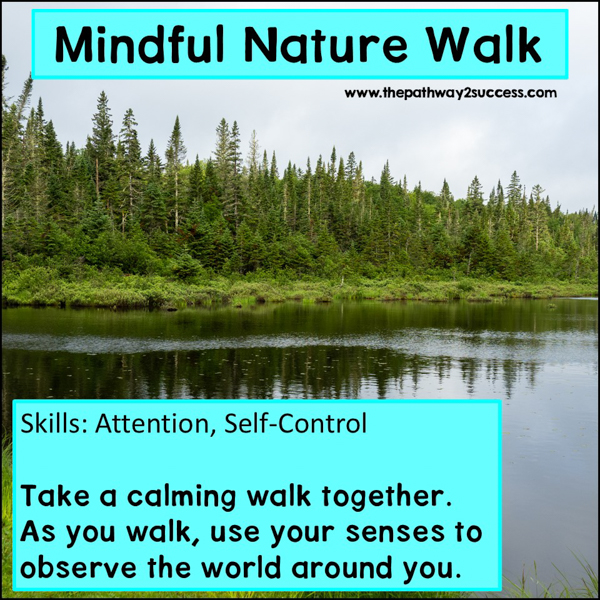
- Mindful Nature Walks and Breathing: Combining physical pacing with sensory awareness, a mindful walk asks participants to systematically engage all five senses—noticing sights, sounds, smells, and textures without judgment. Pausing to practice deep breathing exercises (such as "bear breathing" or using tactile props like pinwheels) grounds the nervous system and boosts impulse control.
Building Planning, Organization, and Task Initiation
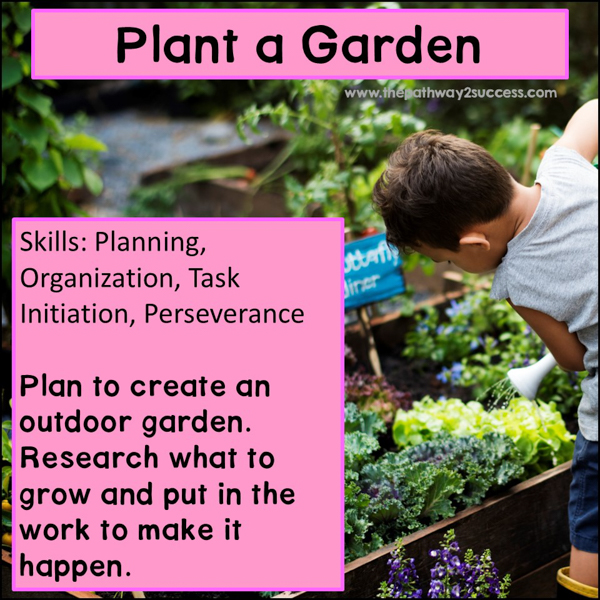
- Planting a Garden: Few activities match the executive functioning demands of gardening. The multi-step process requires rigorous planning and organization: researching plant species, determining soil and sunlight requirements, listing necessary tools (seeds, trowels, watering cans), and gathering materials before a single seed goes into the ground. Once established, ongoing maintenance builds perseverance and delayed gratification.
- Nature Journaling: By committing a few minutes daily to observing, sketching, and writing about a specific natural phenomenon, students exercise time management and structured reflection. Journals can evolve into inquiry projects where children pose questions, research answers, and track seasonal transformations.
- Community Clean-Up Projects: Organizing a group clean-up at a local park or schoolyard teaches children how to break a large, overwhelming task down into manageable pieces. It requires task initiation, resource organization, and cooperative time management while instilling civic responsibility and empathy.
Enhancing Cognitive Flexibility and Working Memory
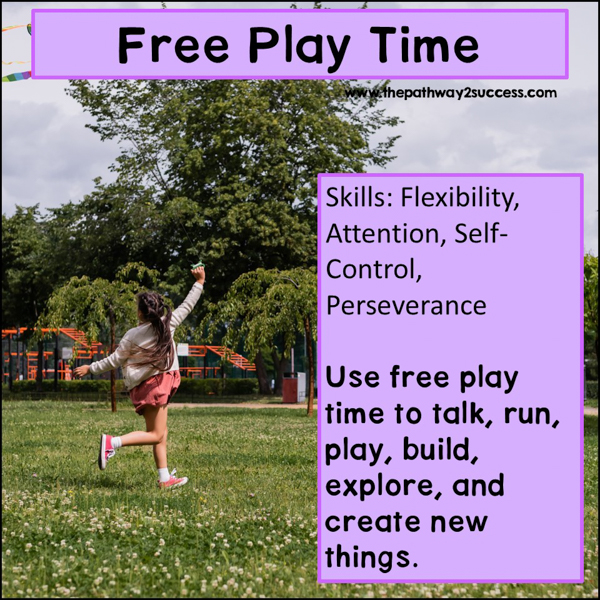
- Unstructured Free Play: In an over-scheduled world, free play is a vital yet endangered commodity. Unstructured time outdoors forces groups of children to negotiate rules, invent games, resolve conflicts, and adapt to changing weather or physical environments on the fly. This directly targets cognitive flexibility and working memory.
- Rhythmic Movement Games: Traditional outdoor games like "Follow the Beat" (where leaders clap or stomp complex rhythmic patterns for others to mirror), "Stoplight," and "Simon Says" challenge working memory and rapid inhibitory control. Children must hold auditory or visual rules in mind while monitoring their physical impulses.
- Shades of Nature Color Sorting: Equipped with a clipboard, youth collect items or snap photographs that represent various shades of a specific color family (e.g., finding five distinct hues of green or brown). This activity exercises visual attention, categorization, and mental organization.
Future Outlook: The Intersection of Neuroscience and Environmental Education
As the scientific community continues to map the profound impacts of ecological immersion on neurological health, the paradigm of child development is shifting. The artificial divide between indoor academic instruction and outdoor recreation is slowly dissolving.

Looking ahead, we can anticipate several key developments in education and child psychology:
- Green School Architecture: Educational planners are increasingly designing schools with outdoor learning pavilions, accessible courtyard gardens, and natural light optimization to support continuous executive function recovery throughout the school day.
- Nature Prescription Programs: Pediatricians and mental health clinicians are beginning to prescribe structured "park time" as a non-pharmacological intervention for attention-deficit challenges, anxiety, and self-regulation deficits in youth.
- Digital-Nature Hybrids: While excessive screen time remains a concern, innovative educators are utilizing tools like live wildlife cameras (observing nesting ospreys, eagles, or global zoo habitats) to bridge the gap when physical outdoor access is limited, maintaining engagement and curiosity even indoors.
Ultimately, building executive functioning skills does not require complex technological interventions. By returning to the original classroom—the natural world—we provide children and teens with the restorative space, engaging challenges, and biological grounding they need to plan, focus, adapt, and thrive in an increasingly complex world.

