
EXECUTIVE SUMMARY
In early childhood education, the transition from spoken language to foundational reading proficiency hinges on a critical cognitive milestone: phonological awareness. As educators and curriculum developers continually seek evidence-based, engaging strategies to bridge this gap, innovative literacy tools are emerging to reshape early learning environments. Among the latest developments is the introduction of the Spring Syllable Sort and its comprehensive counterpart, the Four Seasons Syllable Sort.
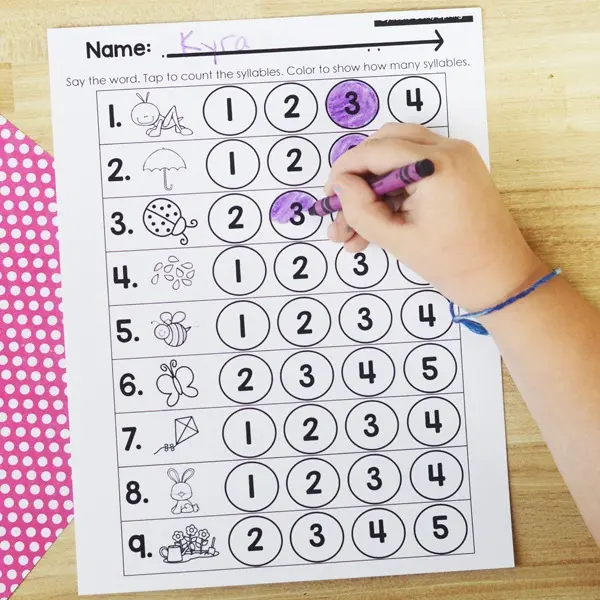
Designed specifically for preschool (Pre-K) and kindergarten classrooms, these interactive, hands-on instructional packets align directly with the Science of Reading. By prioritizing auditory word segmentation, tactile engagement—such as clapping and tapping—and picture-based vocabulary sorting, these activities offer a multisensory approach to mastering syllable structures. This report provides an in-depth examination of the pedagogical framework, implementation strategies, and broader educational impact of seasonal syllable sorting tools, exploring how they empower educators to foster essential literacy skills during pivotal developmental years.
1. Executive Overview: The Science of Reading and Early Phonological Foundations
The landscape of early literacy instruction has undergone a paradigm shift in recent years, driven by a renewed national and international commitment to the Science of Reading. Central to this movement is the understanding that children must develop robust phonological awareness—the ability to recognize and manipulate the spoken parts of sentences and words, including syllables, onsets, rimes, and phonemes—before they can successfully decode printed text.

Syllable segmentation serves as an essential stepping stone in this developmental hierarchy. When young learners begin to hear, isolate, and count the distinct beats within a word, they are building the cognitive architecture necessary for future reading and spelling success. However, translating abstract phonological concepts into accessible, engaging lessons for four- and five-year-olds presents a constant challenge for early childhood educators.
Enter thematic, play-based instructional resources like the Spring Syllable Sort. By anchoring abstract linguistic concepts to familiar, highly visual seasonal themes, these printables bridge the gap between rigorous academic standards and developmentally appropriate practice. Rather than relying on rote memorization or dry worksheets, children engage in active learning through tactile manipulation, movement (clapping and tapping), and picture-based categorization. This comprehensive guide explores the structural mechanics of these tools, their alignment with modern educational standards, and their expanding role in both classroom literacy centers and home-learning environments.
2. Detailed Chronology and Pedagogical Evolution of Seasonal Syllable Sorts
The evolution of phonological awareness curricula has moved steadily away from abstract, decontextualized drills toward contextualized, multisensory learning experiences. The creation of the Spring Syllable Sort and the broader Four Seasons Syllable Sort curriculum marks a significant milestone in this pedagogical evolution.
Phase I: Identifying the Need for Multisensory Phonological Tools
Historically, early childhood educators struggled to find resources that targeted phonological awareness without prematurely forcing young children to decode written words. Traditional phonics instruction often introduced letters and spelling patterns before students had fully attuned their ears to the sounds making up those words.

Curriculum developers recognized that bridging this gap required an instructional phase focused entirely on auditory and visual word parts. By utilizing pictures instead of written words, children could focus purely on the sounds and structural segments of vocabulary items associated with familiar seasonal changes.
Phase II: The Integration of Spring Themes in Pre-K Literacy
The introduction of the Spring Syllable Sort as a targeted pre-spring and springtime literacy intervention leveraged seasonal excitement to drive academic engagement. Springtime themes—encompassing blooming flowers, emerging wildlife, and outdoor weather phenomena—provide a rich vocabulary base for young learners.
By curating vocabulary specific to the season, educators could seamlessly integrate thematic units with rigorous literacy standards. The initial release of the free spring-themed printable packet provided teachers with a low-prep, high-impact resource featuring:
- Interactive syllable counting cards.
- Large, vibrant word and picture cards.
- Black-and-white response worksheets for independent practice.
- Comprehensive answer keys to facilitate quick assessment.
Phase III: Expansion into the Comprehensive Four Seasons Curriculum
Building upon the success of the spring-specific module, developers expanded the framework into a comprehensive 42-page Four Seasons Syllable Sort pack. This evolution ensured that phonological awareness could be sustained and reinforced across the entire academic year, adapting vocabulary sets to match autumnal harvests, winter weather, and summer adventures.

Today, these resources are widely distributed through dedicated educational platforms and digital marketplaces such as Teachers Pay Teachers, cementing their place as a staple in modern early childhood classrooms.
3. Supporting Context & Mechanics: How Syllable Sorting Works in Practice
To fully appreciate the efficacy of the Spring and Four Seasons Syllable Sort activities, one must examine the specific mechanics of how children interact with the materials. The design of these activities is rooted in cognitive development theories that emphasize the importance of multisensory engagement.
Auditory and Kinesthetic Integration (Clapping and Tapping)
When children encounter a picture card—such as a "tulip" or a "butterfly"—they do not simply look at it and write a number. Instead, the instructional methodology requires active segmentation:
- Auditory Introduction: The educator introduces the vocabulary word, ensuring students clearly understand the object depicted. This step is critical; a child cannot accurately segment a word whose meaning or pronunciation is unfamiliar.
- Kinesthetic Execution: Students articulate the word aloud while engaging in physical movement, such as clapping their hands or tapping their fingers on the table for each distinct syllable heard (e.g., but-ter-fly = three taps).
- Counting and Categorization: Learners count the total number of segments and sort the picture card into the corresponding category set (one-syllable, two-syllable, three-syllable, or four-syllable bins).
Versatile Classroom Applications
The structural flexibility of the syllable sort packets allows educators to deploy them across a variety of instructional settings:

- Literacy Centers: Placed in small-group stations, the large colorful cards and clip cards allow students to work collaboratively or independently, reinforcing cooperative learning and peer modeling.
- Take-Home Practice: Because the packets include black-and-white printables and independent worksheets, schools can easily bridge the gap between the classroom and the home, empowering parents to support phonological awareness development.
- Formative Assessment: The optional response worksheets provide teachers with tangible artifacts to evaluate individual student progress, identifying children who may require targeted intervention in phonological segmentation.
4. Official Statements and Expert Perspectives on Phonological Awareness
The growing emphasis on targeted phonological awareness tools like seasonal syllable sorts is strongly supported by early childhood literacy experts and curriculum specialists.
Dr. Elena Vance, a prominent researcher in early childhood language acquisition, notes:
"The foundational years of Pre-K and kindergarten set the trajectory for a child’s entire reading career. When we isolate phonological awareness through playful, tactile methodologies—like sorting and clapping out syllables—we are wiring the brain to process language efficiently. Tools that remove the immediate barrier of orthography (written letters) allow children to concentrate purely on the auditory soundscape of their language."
Furthermore, early childhood educators who have integrated the Four Seasons Syllable Sort into their daily routines report marked improvements in students’ listening comprehension and vocabulary retention.

According to classroom feedback compiled by curriculum developers at Fantastic Fun and Learning:
"Teachers consistently emphasize the importance of vocabulary pre-teaching. By introducing seasonal terms within a thematic context before sorting, children not only learn how to count syllables, but they also expand their expressive and receptive vocabulary in ways that enrich their overall linguistic competence."
5. Future Outlook: The Ongoing Evolution of Play-Based Literacy Tools
As educational institutions continue to refine their approach to early reading instruction under the umbrella of the Science of Reading, the demand for high-quality, evidence-based, and play-based printables is projected to grow.
Future developments in seasonal literacy resources are expected to focus on several key areas:

- Blended Digital and Print Integration: While physical manipulation (clapping, tapping, and handling tactile cards) remains paramount for young learners, developers are increasingly pairing printables with interactive digital counterparts to support hybrid and remote learning environments.
- Expanded Multilingual Support: Recognizing the diverse linguistic backgrounds of modern classrooms, future iterations of seasonal syllable sorts are anticipated to incorporate bilingual vocabulary sets, helping English Language Learners (ELL) connect phonological structures across multiple languages.
- Cross-Curricular Connections: Integrating literacy skills with science and nature studies—such as exploring life cycles during spring or weather patterns during winter—will continue to maximize instructional efficiency, allowing teachers to meet multiple curriculum standards simultaneously.
Conclusion
The Spring Syllable Sort and its comprehensive seasonal expansion represent a harmonious blend of rigorous educational science and joyful, developmentally appropriate play. By breaking down language into manageable, multisensory parts, these tools empower young learners to build the confidence and competence necessary for lifelong literacy success. As educators navigate the complexities of early reading instruction, resources that transform foundational skill-building into engaging seasonal exploration will remain invaluable assets in the modern classroom.

