
Executive Overview
As the global community grapples with the accelerating realities of ecological shifts, educators face an unprecedented pedagogical challenge: how to teach children about climate change without inducing eco-anxiety or fatalism. Traditional methods, often mired in heavy scientific data and apocalyptic projections, frequently leave young learners feeling overwhelmed and powerless.
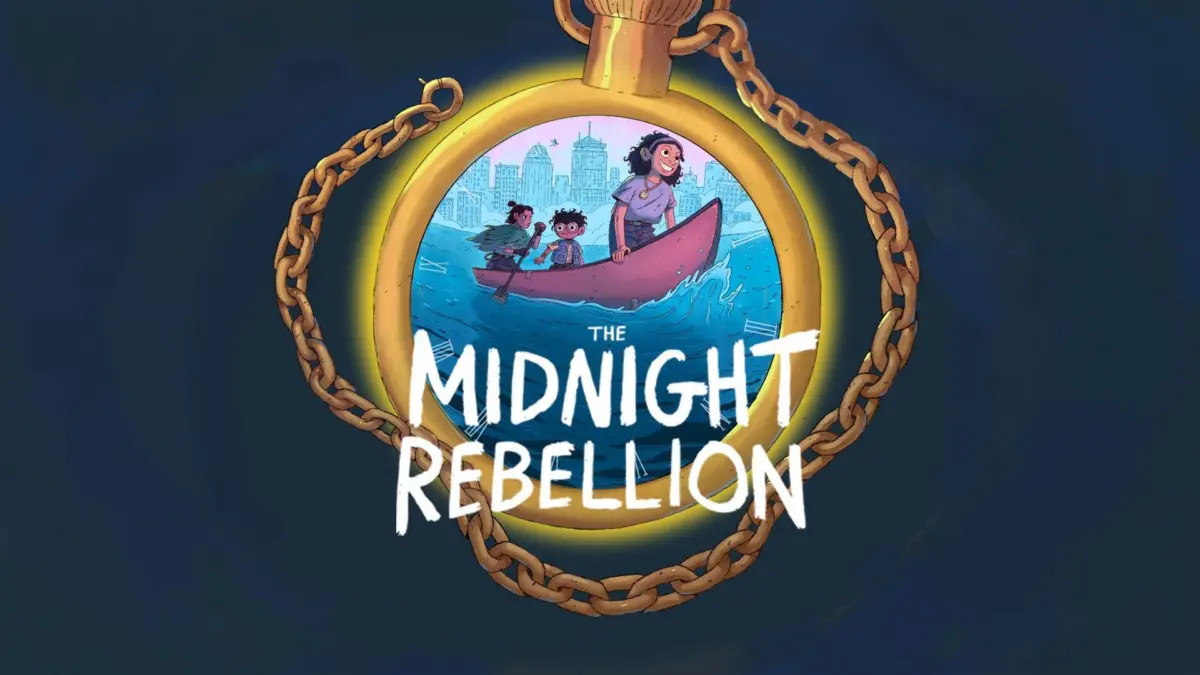
Recognizing this critical gap in modern curricula, a groundbreaking collaboration has emerged between WBUR—Boston’s premier, award-winning NPR station—and Kahoot!, the global game-based learning platform. Together, they have launched an innovative educational initiative that fuses an immersive "choose-your-own-path" fiction podcast, The Midnight Rebellion, with a series of free, ready-to-play, curriculum-aligned learning games.
This multi-platform experience transforms abstract environmental concepts into a high-stakes, interactive adventure. By placing young listeners in the shoes of Joule Watts-Green, a resourceful protagonist navigating a flooded, speculative future, the project bridges the gap between passive media consumption and active problem-solving. Backed by rigorous environmental science, real-world climate models, and endorsement from leading environmentalists like Bill McKibben, this initiative aims to replace climate dread with climate agency. Designed for deployment in traditional classrooms, hybrid learning environments, or living rooms, the program provides a scalable blueprint for modern environmental education.
Detailed Chronology: The Genesis of an Immersive Educational Experience
To understand the impact of this collaboration, one must examine the timeline of how The Midnight Rebellion evolved from a speculative audio drama into an interactive classroom staple.
Phase 1: Conceptualization and Scientific Grounding
The journey began within the production studios of WBUR, where creators sought to craft a narrative that would resonate with digitally native youth. Rather than opting for a traditional documentary format, the team developed a fictional universe centered on Joule Watts-Green. However, the world of The Midnight Rebellion—characterized by a polluted city of tides, flooded thoroughfares, and energy-harnessing "tin-skins"—was not pulled purely from thin air.
WBUR’s production team consulted extensively with environmental scientists, climatologists, and educators. They ensured that every plot point, environmental hazard, and ecological feedback loop mirrored real-world climate projections. The fictional city serves as an exaggerated, accessible proxy for the very real vulnerabilities coastal cities face today.
Phase 2: The Launch of the Audio Adventure
WBUR rolled out The Midnight Rebellion as an ambitious, non-linear audio experience. Spanning 26 audio-rich episodes, the podcast was engineered with 82 distinct narrative pathways. At the conclusion of every chapter, listeners are confronted with a moral, strategic, or environmental dilemma. Their choices directly alter the trajectory of the story, teaching a subtle yet profound lesson: system-wide outcomes are the aggregate of individual and collective decisions.
As episodes dropped across major podcast directories, the series quickly gained traction for its high production values, sharp humor, and emotional depth. Yet, WBUR recognized that passive listening, even when interactive, required a structural bridge to formal educational outcomes.
Phase 3: The Kahoot! Integration
Enter Kahoot!. To cement the lessons of the podcast and translate narrative engagement into measurable cognitive retention, the platform developed a dedicated, free-to-play channel. Educators and students gained instant access to a suite of kahoots meticulously synchronized with the themes of the podcast.
This integration transformed the auditory journey into a kinetic classroom experience. Teachers could pause between podcast arcs, launch a Kahoot! quiz to test comprehension of concepts like fossil fuel dependency, extreme weather mechanics, or sustainable food systems, and facilitate dynamic classroom discussions.
Phase 4: Widespread Adoption and Endorsement
With the official partnership formalized, the initiative drew high-profile support from prominent figures in environmental advocacy and media. The convergence of WBUR’s journalistic and storytelling integrity with Kahoot!’s ubiquitous classroom footprint established a new benchmark for cross-media educational tools, paving the way for international adoption.
Supporting Context & Metrics: The Science and Pedagogy of Play
The urgency of this initiative is underscored by mounting psychological and educational research regarding how children process ecological threats.
Combating Eco-Anxiety Through Agency
Modern studies in environmental psychology indicate that children and adolescents increasingly suffer from "eco-anxiety"—a chronic fear of environmental doom. When young people are bombarded solely with catastrophe narratives without actionable avenues for remediation, they frequently retreat into apathy or despair.
The Midnight Rebellion was specifically designed to counteract this phenomenon. By embedding the protagonist, Joule, in a high-stakes scenario where ingenuity, collaboration, and critical thinking yield tangible results, the podcast models resilience. When a listener’s choice within the podcast helps Joule navigate a crisis, the psychological reward reinforces a sense of personal agency.
Quantitative Reach and Instructional Versatility
The partnership leverages Kahoot!’s massive global infrastructure, ensuring equitable access to high-resource and low-resource learning environments alike.
- Multimodal Engagement: Spanning 26 episodes and 82 pathways, the audio component guarantees high replay value and narrative divergence.
- Curriculum Flexibility: The accompanying kahoots are broken down into digestible modules, allowing educators to address specific ecological topics—ranging from carbon footprints to climate-resilient agriculture—in as little as 15 minutes.
- Accessibility: Available on desktop, mobile devices, and interactive whiteboards, the games can be played synchronously in a traditional classroom setting or asynchronously as homework assignments.
The Science Behind the Story
The environmental frameworks embedded in the podcast are rooted in peer-reviewed climate science:
- Urban Hydrology: The depiction of rising tides and flooded streets reflects current sea-level rise models published by the Intergovernmental Panel on Climate Change (IPCC).
- Energy Transitions: The narrative contrasts hyper-pollutive, legacy energy structures with decentralized, adaptive survival mechanisms, mirroring the real-world transition from fossil fuels to renewable energy grids.
- Sustainable Consumption: References to unconventional or alternative sustenance (such as the narrative’s "Algae-Os") nod to actual agricultural adaptations being explored to reduce the massive greenhouse gas footprint of traditional livestock and industrial farming.
Official Statements: Industry Leaders Speak on the Partnership
The collaborative ethos driving this initiative is best articulated by the leaders and experts who brought it to fruition.
Victor Hernandez, WBUR Chief Content Officer:
"Climate change is the story of our time, and young people seek agency, not anxiety. The Midnight Rebellion from WBUR is a pick-your-own-path podcast built on real science, and Kahoot! puts that experience directly in front of the students and educators who are ready to engage. This is why we’re thrilled to partner with Kahoot!."
Hernandez’s observation highlights the core mission of modern public media: moving beyond the mere dissemination of facts to foster emotional intelligence and civic readiness. By handing the narrative reins over to the listener, the podcast dissolves the barrier between the audience and the subject matter.
Bill McKibben, Renowned Environmentalist, Author, and Founder of 350.org:
“New, fresh, funny, engaging — and about what will be the most important challenge in the life of every young person. What’s not to like?!”
McKibben’s endorsement lends significant environmental authority to the project. As one of the world’s most prominent climate activists and educators, his approval underscores that while The Midnight Rebellion is framed as an adventure story, it never loses sight of the rigorous scientific realities governing our biosphere.
Future Outlook: The Evolution of Interactive Environmental Literacy
As educational paradigms shift away from rote memorization toward experiential, project-based learning, initiatives like the WBUR and Kahoot! partnership point the way forward.
Expanding the Curriculum
Plans are already underway to expand the catalog of kahoots associated with WBUR’s educational audio channel. Future modules aim to incorporate localized environmental case studies, empowering students to connect the speculative challenges faced by Joule Watts-Green to ecological shifts occurring in their own backyards—from urban heat islands to local watershed management.
Technological Convergence
The success of this audio-gaming hybrid suggests a lucrative and impactful frontier for edtech developers. Future iterations of such programs may integrate augmented reality (AR) or localized data-tracking, allowing students to use their mobile devices to measure local environmental metrics (such as air quality or energy consumption) and feed those real-world datasets back into interactive storytelling frameworks.
A New Standard for Climate Communication
Ultimately, the WBUR-Kahoot! alliance demonstrates that complex, systemic crises do not need to be diluted to be made digestible for young minds. By treating children not as passive recipients of bad news, but as clever, creative problem-solvers, this initiative establishes a gold standard for how media organizations and educational platforms can cooperate to shape a more informed, resilient, and proactive generation.
Educators, parents, and students eager to embark on this journey can access the complete audio archives via WBUR and test their comprehension and problem-solving skills today by visiting the official WBUR channel on Kahoot!.

