
Executive Overview
For an entire generation that grew up tuning into Pokémon: Indigo League, cheering on Ash Ketchum as he vied for Indigo Plateau glory alongside his fiercely loyal Pikachu, the vast and ever-expanding universe of pocket monsters may seem like a distant childhood memory. However, the franchise has never slowed down. Now boasting numerous generational eras and sprawling across nine distinct eras of television—many of which are currently streaming on platforms like Netflix—the Pokémon phenomenon remains an indomitable global force.
Now, The Pokémon Company is taking a bold, tactile creative leap that marries one of the world’s most lucrative entertainment properties with legendary stop-motion craftsmanship. At the inaugural PokémonXP fan convention, developers and executives pulled back the curtain to reveal the first teaser trailer for Pokémon Tales: The Misadventures of Sirfetch’d & Pichu. Slated to debut on Disney XD before landing widely on Disney+ in 2027, the series represents a groundbreaking collaboration between The Pokémon Company and Aardman, the celebrated British animation studio universally renowned for its timeless claymation masterpieces including Wallace & Gromit, Chicken Run, and Shaun the Sheep.
Described as an epic, pocket-sized buddy comedy, the series centers on an unlikely pairing: the suave, noble knight-errant Sirfetch’d and an aggressively cute, high-energy Pichu. Set against the rolling hills and picturesque countryside of the Galar region—first introduced in the Pokémon Sword and Shield video games—the show trades traditional high-stakes battle-centric narratives for a character-driven, whimsical adventure.
Beyond the charming premise, the production represents a profound artistic statement. In an era dominated by hyper-processed computer graphics and the looming shadow of generative artificial intelligence, Pokémon Tales champions the painstaking dedication of human hands. Every blade of grass, every textured tree trunk, and every expressive clay puppet is meticulously sculpted, built, and manipulated frame by frame. This comprehensive report explores the genesis of the series, the painstaking artistry behind Aardman’s workshops, the expanding landscape of cozy Pokémon media, and what this landmark partnership means for the future of animated storytelling.
Detailed Chronology: From Galar’s Rolling Hills to the Big Screen
The journey toward Pokémon Tales: The Misadventures of Sirfetch’d & Pichu began quietly behind closed doors before exploding into public consciousness at the end of August during the inaugural PokémonXP convention. Drawing more than 50,000 dedicated fans from every corner of the globe, the event served as the ultimate playground for franchise loyalists. It was here, amidst towering statues and exclusive merchandise, that attendees were treated to an exclusive first look at the teaser trailer.
Once the preview hit the internet, the reception was overwhelmingly electric. The trailer immediately establishes the comedic and atmospheric tone of the series. Viewers watch as Pichu and Sirfetch’t crest a sun-drenched hill, gazing out over a richly textured, miniature rendition of the Galar region. The peace is immediately upended by a cascade of classic slapstick chaos. Fans are treated to fleeting, delightful glimpses of the region’s native wildlife: a synchronized, bouncing unit of Falinks marching in military formation, a fluffy herd of tumbling Wooloos rolling uncontrollably down a slope, an unfortunate Alcremie trapped high in the branches of a tree, and a delightfully wicked, cackling Farfetch’d reveling in minor mischief.
According to official rollout schedules confirmed during the convention, the series is slated for an official premiere in 2027. It will initially debut on Disney XD before finding its permanent streaming home on Disney+, signaling a major distribution push to capture both nostalgic older fans and a brand-new generation of young viewers.
The narrative backbone of the series finds its roots in the classic buddy-comedy formula. According to official press materials released by The Pokémon Company, the plot follows Sirfetch’d and Pichu as they embark on an epic, if thoroughly uncoordinated, journey across Galar. Their primary objective is simple: a gallant quest to help and protect Pokémon across the sprawling countryside. However, their well-intentioned missions rarely go according to plan. Through missed turns, accidental property damage, and run-ins with rival Pokémon, the duo forge an unbreakable friendship, stepping bravely into an unknown frontier filled with peril, unlikely alliances, fierce rivalries, and endless laughter.
Supporting Context & Metrics: The Artistry of Aardman
To fully appreciate the magnitude of Pokémon Tales, one must examine the meticulous craftsmanship required to bring a flat digital sprite into a tactile, three-dimensional reality. At PokémonXP, exclusive behind-the-scenes access provided a rare window into the inner workings of Aardman’s legendary Bristol studios, shedding light on the immense labor involved in puppet fabrication and set design.
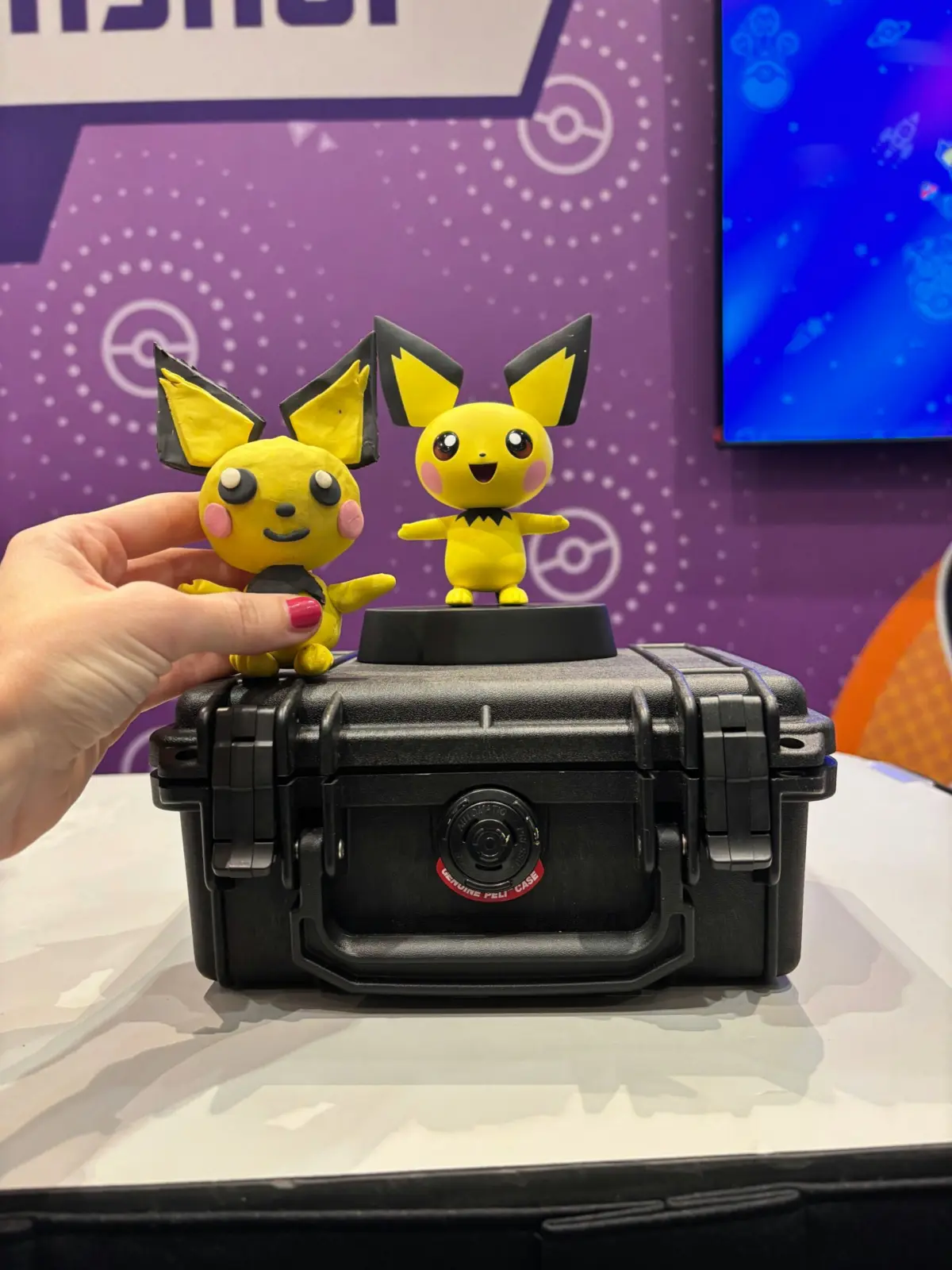
Manon Wright, a supervising set dresser for Aardman, offered deep insights into the physical realities of producing a stop-motion television series of this scale. Wright is just one of many master artisans responsible for breathing life into the clay and silicone figures that populate the screen. During hands-on workshops at the convention—where participants spent an hour molding perfectly round, oversized heads and agonizing over the precise curvature of a Pichu’s ears—the staggering timeline of stop-motion production became vividly clear.
Making a single puppet for the show is far from a quick molding process; it generally requires a grueling two to three weeks of dedicated labor. The artists do not simply sculpt a character once. Every bump must be meticulously smoothed out, every edge perfected, and engineering hurdles must be cleared. For instance, creators must devise ingenious visual tricks to make floating Pokémon—such as psychic or ghost types—appear to hover naturally on screen without visible support rigs.
Furthermore, a single puppet cannot capture an entire narrative arc on its own. Because stop-motion relies on physical manipulation, characters require modular components. Each hero needs multiple interchangeable eyes, mouths, and facial plates to achieve the dynamic range of expressions and precise body positions required to tell a visual story.
Once the puppets are perfected, they must be placed onto painstakingly handcrafted sets. Every miniature prop, stone wall, and thatched roof is built by human hands using traditional model-making techniques. Then comes the filming phase—a glacial process where animators adjust the puppets by millimeters across individual frames. Capturing just a few seconds of usable footage can take an entire day of painstaking labor.
This meticulous approach represents a fascinating evolution in the Pokémon animated landscape. While Pokémon Tales marks the franchise’s inaugural collaboration with Aardman, it is not Pokémon’s first venture into the stop-motion medium. That honor belonged to Dwarf Studios’ Pokémon Concierge, a gentle, critically acclaimed Netflix series that followed a resort worker named Haru as she helped stressed-out Pokémon relax at a tropical island getaway. Together, Pokémon Concierge and Pokémon Tales signal a concerted shift by The Pokémon Company toward slower, cozier, and more character-driven storytelling, moving away from the relentless, high-octane battle loops that defined the early television adaptations.
Official Statements and Industry Perspective
The partnership between a global merchandising behemoth like The Pokémon Company and an esteemed, independent-spirited animation house like Aardman represents a historic convergence of Eastern gaming culture and Western stop-motion pedigree. Executives from both sides have been vocal about the creative synergy driving the project.
Phil Rynda, The Pokémon Company’s Director of Original Animation, emphasized the unique emotional resonance that stop-motion brings to the franchise.
"These stories, full of adventure and heroism, all told from the perspective of Pokémon, are made even more exciting through the lens of the incredible filmmakers at Aardman," Rynda stated in an official press release. "Audiences will be delighted getting to know Sirfetch’d, Pichu, and the wonderful cast of Pokémon featured in this series. Aardman has brought Galar to life in a way that makes you feel like you can smell the air, touch the tree bark, and want to adventure alongside our series heroes."
For Aardman, taking on the expansive, beloved lore of Pokémon presented both a massive technical challenge and an exciting creative canvas. The studio, which has spent decades perfecting the art of claymation with beloved British icons like Wallace, Gromit, and Shaun the Sheep, found a natural alignment in Pokémon’s inherently expressive creature designs. The whimsical proportions of characters like Pichu and the chivalric, slightly absurd posture of Sirfetch’d lend themselves effortlessly to Aardman’s trademark brand of gentle British humor and physical comedy.
Industry analysts have also pointed out the cultural timing of this release. In an entertainment landscape increasingly saturated with computer-generated shortcuts, digital rendering mills, and the looming presence of generative artificial intelligence—where viewers are frequently left questioning the authenticity of visual media on their screens—there is a profound, visceral comfort in tactile art. Knowing that every frame of Pokémon Tales was physically sculpted, lit, and captured by human artists provides an authenticity that resonates deeply with modern audiences experiencing digital fatigue.
Future Outlook: A New Golden Age for "Cozy" Pokémon Media
As we look ahead to the series premiere on Disney XD and Disney+ in 2027, Pokémon Tales: The Misadventures of Sirfetch’d & Pichu stands as a watershed moment for how intellectual properties can diversify their storytelling mediums.
For nearly three decades, the Pokémon anime was rigidly tethered to a specific formula: a young protagonist leaves home, catches pocket monsters, collects gym badges, and strives to become a Master through competitive combat. While that formula remains the beating heart of the core franchise, the burgeoning sub-genre of "cozy Pokémon media"—pioneered by Pokémon Concierge and now supercharged by Pokémon Tales—proves that the universe is vast enough to support low-stakes, slice-of-life storytelling.
By focusing on the internal lives, friendships, and daily travails of the Pokémon themselves, free from human trainers barking commands, creators are unlocking entirely new emotional dimensions within the universe. Viewers are no longer just watching fighters; they are observing autonomous creatures navigating a vibrant, textured world with their own distinct personalities, comedic timing, and interpersonal dynamics.
Furthermore, the involvement of a powerhouse studio like Aardman sets a towering new benchmark for visual quality in franchise spin-offs. It demonstrates to the broader entertainment industry that major corporate franchises can successfully partner with specialized, artisan-driven studios to produce work of enduring artistic merit.
When Pokémon Tales finally hits television screens in 2027, it will do more than just entertain children and nostalgic adults; it will serve as a glowing testament to the power of human imagination, patient craftsmanship, and clay. Whether you are a lifelong fan who remembers watching the Indigo League on cathode-ray tube televisions or a newcomer drawn in by the irresistible charm of an oversized mouse and a knightly duck, Galar’s newest adventurers are poised to capture our hearts—no Pokéball required.

