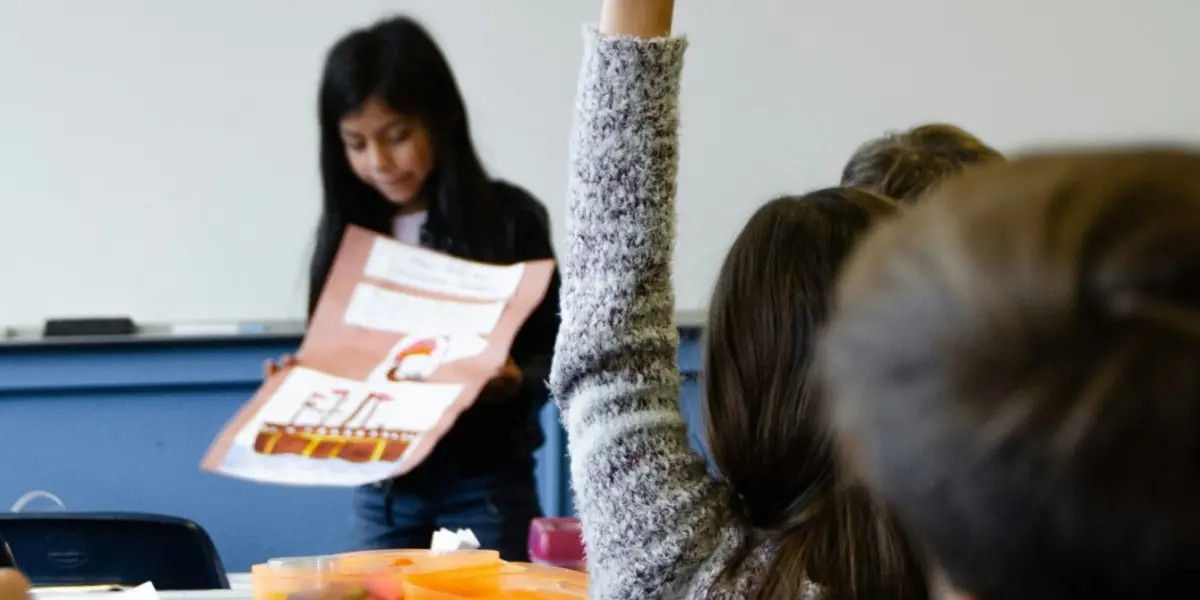
Every autumn, as a fresh wave of students floods school hallways, educators witness a familiar, silent phenomenon. Thousands of children sit at their desks holding the correct answer to a challenging problem, yet their hands remain firmly anchored to their laps. For generations, parents and teachers have misattributed this classroom hesitation to an immutable, innate personality trait. Children who fail to speak up are routinely cataloged as "shy"—a fixed label assigned at birth that children are expected to navigate throughout their academic careers.
However, child development experts are challenging this long-held psychological assumption. Sheila Fortson, a seasoned educator, child development expert, and the executive director of The FAME Center, argues that classroom silence is rarely a product of static temperament. Instead, it is the result of an underdeveloped physiological response to being seen and heard in public spaces. According to Fortson, children frequently lack a sufficient accumulation of low-stakes, highly supported opportunities to project their voices outside the comfort of their immediate family units. Consequently, their nervous systems have not yet learned a fundamental truth: that standing up and being visible in front of others is a completely survivable, and ultimately empowering, experience.
By reframing confidence not as an elusive personality trait, but as a quantifiable "rep count"—a cumulative muscle built through repetition—Fortson and other developmental specialists offer an actionable paradigm shift for parents. This comprehensive report explores the neurological and psychological mechanics behind classroom reticence, outlines actionable, low-pressure family rituals designed to foster vocal bravery, and details how a simple ten-minute daily investment can fundamentally alter a child’s academic trajectory.
Detailed Chronology: Understanding the Roots of Classroom Reticence
To understand why a child freezes when asked to read aloud or answer a teacher’s prompt, one must examine how children develop social-emotional resilience during their formative early childhood years.
The Early Childhood Threshold
In the safe enclave of the home, toddlers and young children learn to express desires, articulate thoughts, and command attention from parents who already know them intimately. However, the transition into formal schooling introduces an entirely foreign environment. Suddenly, a child is thrust into a room containing twenty to thirty peers, an authority figure, and an implicit set of behavioral expectations.
For children with limited exposure to structured public speaking or performance within the home, this environment triggers an evolutionary protective mechanism. The physiological symptoms of stage fright—increased heart rate, shallow breathing, tightened vocal cords, and a surge of cortisol—convince the child’s nervous system that they are under threat. Speaking up feels risky; remaining invisible feels safe.
The Cumulative Deficit of "Reps"
Fortson, who identifies as having been a profoundly shy child herself, notes that her own transformation did not occur through a dramatic therapeutic breakthrough or a high-stakes pep talk. Rather, it was the result of small, compounding exposures over time.
When children are consistently shielded from minor performance pressures—such as telling a story at the dinner table, ordering their own food at a restaurant, or sharing a favorite book with a grandparent—they miss critical developmental windows. Without these incremental repetitions, the brain’s amygdala continues to register public visibility as an acute stressor. Building classroom confidence requires systematically retraining this neural pathway through predictable, positive exposures.
Supporting Context & Metrics: The Mechanics of the Family Presentation Ritual
At the core of Fortson’s methodology is a surprisingly uncomplicated, highly effective practice known as the family presentation ritual. Designed to be seamlessly integrated into a household’s evening routine, this ritual builds public-speaking stamina without the heavy emotional baggage typically associated with school presentations.
The Anatomy of the 10-Minute Ritual
The parameters of the family presentation ritual are intentionally modest:
The Stage: Any designated space in the home qualifies. Standing at the end of the living room couch, on a low footstool, or simply facing the family dinner table is sufficient.
The Duration: Two to five minutes maximum. The goal is not to exhaust the child, but to ensure they successfully complete a beginning, middle, and end.
The Content: The subject matter is entirely secondary. Children can share a page from a book they are reading, recount a joke, describe a block tower they constructed, or provide a narrative summary of their day.
"It’s not about the sophistication of the speech," Fortson emphasizes. "It’s about the physical act of standing up, being seen, and finishing the task. That is the muscle, and that is how we build it."
Age-Specific Adaptation of the Method
The implementation of the ritual naturally evolves as children mature:
Early Elementary (Ages 5–7): Focus heavily on play-based sharing. Using stuffed animals as an audience or employing the "character retell" method—where the child invents an absurd character and describes their day—reduces self-consciousness through distancing.
Upper Elementary (Ages 8–10): Encourage deeper narratives, such as explaining the rules of a new playground game or presenting a favorite graphic novel plotline.
Middle School (Ages 11–14): Shift toward brief persuasive or informative presentations, allowing them to choose topics tied to personal passions, hobbies, or current events.
The Sneaky Power of Reading Aloud
In addition to original storytelling, Fortson champions reading aloud as an underrated tool for confidence training. When a child reads a book aloud to a parent or sibling, they are relieved of the cognitive burden of inventing words. Instead, they can focus entirely on vocal projection, pacing, and expression. Filling a room with the sound of their own voice, using someone else’s text as a vehicle, desensitizes the child to the auditory experience of being the center of attention.
Official Statements and Expert Insights
Developmental psychologists and educational specialists increasingly support the view that anxiety around public participation in schools is manageable through gentle, consistent exposure rather than clinical intervention.
"Confidence isn’t a personality trait; it’s a rep count. The more opportunities a child gets to be safely seen within their family unit, the less foreign and terrifying it feels to be seen anywhere else."
— Sheila Fortson, Child Development Expert and Executive Director of The FAME Center
Educational researchers point out that traditional classroom structures often inadvertently penalize quiet children. Participation grades and verbal recitation models reward extroverted processing styles, leaving internal processors—who require more time to formulate responses—at a distinct disadvantage. By bridging the gap at home, parents provide children with the self-advocacy tools necessary to bridge this systemic educational gap.
Furthermore, child guidance experts emphasize the critical role of parental response immediately following a child’s presentation. Fortson outlines strict guidelines for what to say—and what not to say—when a child finishes speaking:
Applaud First, Every Time: Applause must be non-negotiable and immediate. It reinforces that the act of bravery was the primary objective, not the polish of the delivery.
Postpone Coaching: The immediate aftermath of a performance is not the time for constructive critique. Telling a child, "Next time, try to speak louder," immediately after they have stepped off the stage can undo the psychological safety just established. Save feedback for subsequent conversations, and frame it around specific, positive reinforcements.
Drop the Word ‘Perform’: The terminology matters. Framing an exercise as a "performance" elevates anxiety. Instead, frame it as sharing, reporting, or storytelling.
Future Outlook: A Slow Unfolding, Not a Dramatic Transformation
Parents searching for a quick fix to back-to-school anxiety must manage their expectations. Fortson cautions that building a child’s classroom confidence rarely resembles a cinematic before-and-after transformation.
Instead, the results manifest as a slow, steady unfolding. By mid-term, teachers begin to notice subtle shifts: a hand raised a little more frequently, a willingness to volunteer for a reading group, slightly elevated vocal projection, and a marked decrease in physical shrinking when called upon. The child stops retreating into the background during moments that previously caused them to duck their heads and avoid eye contact.
By investing just ten minutes a night into low-stakes, high-support family communication rituals, parents can completely redefine their child’s relationship with public visibility. In doing so, they provide a gift far more enduring than academic answers: the lifelong conviction that their voice matters and that the world is a safe place to share it.