
Executive Overview
As school districts nationwide grapple with the rapid evolution of artificial intelligence, educational leaders are facing a pivotal challenge: how to introduce emerging technologies into the classroom responsibly, thoughtfully, and with a primary focus on student outcomes. While much of the early public discourse surrounding generative AI has centered on academic integrity, plagiarism risks, and automated content generation, a quiet paradigm shift is taking place in select forward-thinking districts.
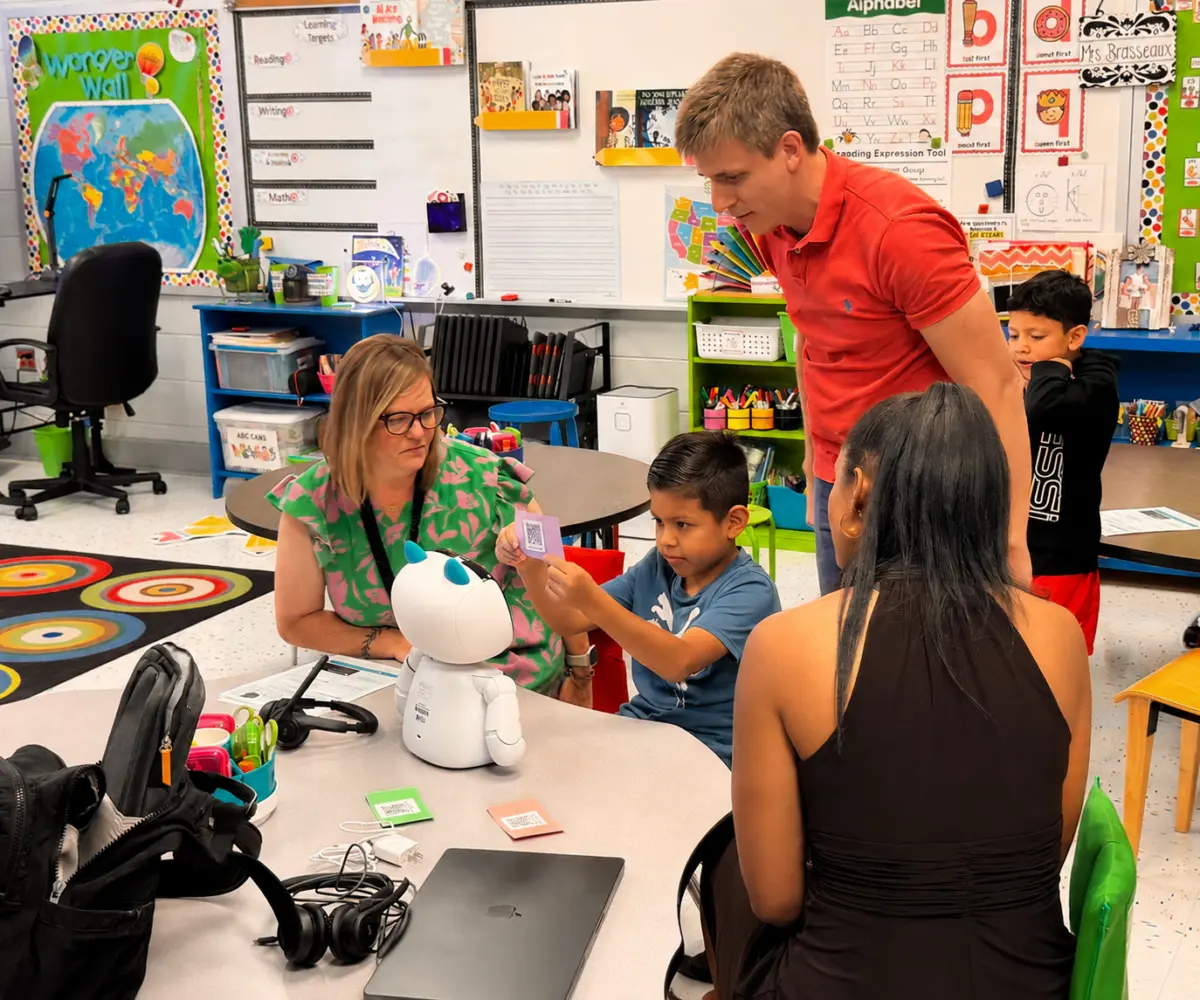
Alabaster City Schools, located in Alabama, has emerged as a national bellwether for purposeful educational technology integration. Following a successful pilot program utilizing Telo AI—a specialized, conversational AI-powered robot designed to support English learners (EL)—district leadership has announced a significant expansion. For the upcoming 2026–27 school year, Alabaster is purchasing four additional Telo AI units.
This decision is rooted in a fundamental pedagogical philosophy: technology holds value only when it directly addresses a tangible classroom need while keeping human educators firmly at the center of instruction. Rather than relying on traditional screen-heavy software or attempting the financially prohibitive task of hiring a one-on-one instructional assistant for every language learner, Alabaster City Schools has deployed conversational AI as a strategic force multiplier.
The initiative addresses one of the most persistent hurdles in modern education—providing sufficient, individualized speaking and listening practice for English learners. By shifting the paradigm from passive screen time to active, voice-first dialogue, Alabaster is charting a sustainable path forward that honors teacher expertise, respects student data privacy, and scales critical language acquisition support.
Detailed Chronology: From Initial Pilot to Strategic Expansion
The Genesis of the Pilot Program
The journey began when Alabaster City Schools initiated a modest pilot program to explore the real-world utility of Telo AI within its English learner population. School leaders were driven by a central, pressing question: How can artificial intelligence be integrated responsibly to support both teachers and students without compromising the core tenets of pedagogy?
During the initial phase, educators embedded the robotic AI tool into everyday instructional routines. The goal was to test its capabilities in a controlled environment, observing how students interacted with the technology and evaluating whether the tool could genuinely alleviate the heavy conversational burdens placed on language teachers.
Evaluating Real-World Classroom Impact
As the pilot progressed, district administrators and classroom teachers closely monitored student engagement, language development, and overall classroom integration. The results exceeded expectations. Educators noted that students who typically remained hesitant to speak during whole-group instruction found a safe, non-judgmental conversational partner in the Telo AI robot.
Rather than functioning as a novelty, the technology quickly proved its worth as an operational asset. It demonstrated an ability to adapt seamlessly to existing teacher-designed lesson plans, ensuring that instructional momentum was never interrupted by the introduction of a foreign software platform.
The Decision to Scale
Buoyed by positive qualitative feedback from teachers and measurable gains in student confidence, district leadership evaluated the long-term feasibility of the program. Recognizing that the constraints of teacher time, staffing shortages, and strict budgetary limits would continue to challenge the district, administrators looked for scalable solutions.

The successful pilot provided the necessary confidence to transition from experimentation to permanent adoption. Consequently, Alabaster City Schools committed to purchasing four additional Telo AI robots for the 2026–27 academic year. This strategic expansion marks a mature phase in the district’s technological evolution, signaling that AI-driven solutions are no longer viewed as experimental novelties, but as essential infrastructure for student support.
Supporting Context & Metrics: The Mechanics of Language Acquisition
The English Learner Dilemma
To fully understand the significance of Alabaster’s deployment, one must examine the operational realities facing modern classrooms. English learners require intensive, high-frequency opportunities to speak, listen, and respond in English to build true fluency and academic confidence.
However, classroom reality presents severe structural limitations. A single English language teacher often manages a diverse caseload of students representing varying linguistic backgrounds, proficiency tiers, and developmental needs. Providing extended, individualized one-on-one conversation practice for every student is mathematically impossible within a standard 45- or 60-minute class period.
While hiring additional human instructional assistants or interventionists would be the ideal remedy, school districts face compounding financial pressures:
- Severe Staffing Shortages: Educational labor markets across the country continue to experience deficits in specialized educators and support personnel.
- Tight Budgetary Constraints: Public school funding models rarely stretch far enough to accommodate the high operational costs associated with expanding human headcount for targeted, niche interventions.
The Voice-First, Screen-Reducing Solution
Telo AI was engineered specifically to bridge this gap. Unlike traditional educational applications that glue students to laptops or tablets for hours of multiple-choice tapping, Telo introduces a voice-first modality. The system integrates conversational artificial intelligence with a physical robotic form factor, encouraging students to speak, listen, explain, and converse out loud.
This design philosophy directly addresses the growing societal and pedagogical concern surrounding excessive screen time in schools. By interacting with a physical entity through natural spoken language, students engage in authentic conversational exchanges that mimic human-to-human dialogue.
Data-Driven Insights and Standards Alignment
Beyond immediate conversational practice, the technology serves as a robust diagnostic engine. Telo systematically tracks student sessions, logging metrics such as:
- Participation duration and frequency
- Vocabulary development and lexical diversity
- Performance across core language skill domains
Teachers receive actionable analytics derived from these sessions, allowing them to pinpoint precise linguistic vulnerabilities, track developmental trajectories over time, and tailor future group instruction accordingly.
Crucially, Telo’s framework is meticulously aligned with major national English language proficiency standards, including:

- WIDA (World-Class Instruction Design and Assessment)
- Texas ELPS (English Language Proficiency Standards)
- California ELD (English Language Development)
- ELPA21 (English Language Proficiency Assessment for the 21st Century)
- AZELLA (Arizona English Language Learner Assessment)
This alignment ensures that the individualized practice students receive directly reinforces the exact competencies measured on high-stakes accountability assessments such as ACCESS, TELPAS, ELPAC, and AZELLA.
Official Statements and Leadership Perspectives
The success and expansion of the Alabaster initiative are anchored by the clear, values-driven vision of its leadership team and educators.
Dr. Wayne Vickers, Superintendent of Alabaster City Schools, emphasized the district’s deliberate, cautious approach to emerging technology:
"We want to be thoughtful about how we bring AI into our schools. For us, technology should support our teachers and create meaningful opportunities for students. What we saw during the Telo pilot gave us the confidence to expand its use and see what it can do for more of our English learners. AI is already a part of education, but the important question for school leaders is how we use it responsibly and purposefully. If we can use these tools to provide students more individualized support while empowering our teachers, that’s an opportunity worth exploring."
Echoing these sentiments, Dr. Brent Byars, Director of Testing and Federal Programs for Alabaster City Schools, highlighted the logistical realities that necessitated the adoption of AI-supported interventions:
"Our EL students come to us with different backgrounds, proficiency levels, and needs. We want to give them as much individualized practice as possible, but adding enough staff to provide that level of one-on-one support isn’t realistic. Telo gives us another way to expand that practice while our teachers remain in control of what students are working on."
Classroom implementation requires the enthusiastic buy-in of educators. Mandy Heatherly, an EL teacher at Alabaster City Schools who directly piloted the technology, praised its pedagogical flexibility and focus on active language production:
"One of the things I liked most was seeing students get another opportunity to actually use English. They weren’t just answering multiple-choice questions on a screen. They had to listen, understand, and respond. For English learners, having that additional speaking practice can be very valuable. I don’t have to change what I’m teaching or adopt a new curriculum. I can use the materials and activities I’m already working on with my students, and Telo adapts the interaction around them. The teacher is still deciding what the student needs to work on."
Future Outlook: Redefining Responsible AI in Public Education
The deployment model established by Alabaster City Schools offers a compelling blueprint for school districts nationwide seeking to navigate the complex landscape of artificial intelligence. By reframing AI not as a shortcut for cheating or a replacement for human educators, but as an operational force multiplier, Alabaster has demonstrated how technology can genuinely expand classroom capacity.

A New Model for Student Engagement
While much of the educational technology market has focused on generative tools that produce essays or solve math equations for students—sparking legitimate fears regarding academic integrity—Alabaster’s implementation demands more rigorous cognitive and linguistic output from the learner. Conversational AI forces students to articulate thoughts, practice pronunciation, construct arguments, and verbally navigate linguistic obstacles in real time.
Uncompromising Data Privacy Standards
A critical pillar of Alabaster’s successful adoption is the stringent data governance model embedded within the technology. In an era where data privacy is paramount, educational leaders are rightly skeptical of platforms that harvest sensitive student information.
Telo AI addresses these concerns through a strict data minimization architecture:
- Images, raw audio recordings, and verbatim transcripts of student conversations are not retained on the company’s servers.
- Student data is never utilized to train external or foundational AI models.
- Once an interaction is analyzed, only the high-level educational insights and progress metrics necessary for teacher evaluation are retained.
This robust privacy framework ensures that student dignity and security remain uncompromised, setting a high benchmark for EdTech developers and school procurement boards alike.
Conclusion: Extending the Reach of the Educator
As Alabaster City Schools integrates its four new Telo AI robots, the district stands at the vanguard of a pragmatic, sustainable educational revolution. The partnership proves that innovation does not require abandoning traditional teaching values; rather, when deployed thoughtfully, technology can amplify the reach of dedicated educators.
By keeping teachers firmly in the driver’s seat, reducing harmful screen time, safeguarding student privacy, and providing vital conversational practice to populations that need it most, Alabaster is redefining what it means to bring responsible artificial intelligence into the modern American classroom.

