In the modern landscape of innovation, problem-solving is rarely an isolated stroke of genius. Instead, it is a disciplined, cyclical methodology that bridges abstract concepts with tangible reality. At the heart of this methodology lies the Engineering Design Process (EDP)—a structured, step-by-step framework deployed by engineers, designers, and innovators worldwide to tackle complex challenges.
While commonly associated with high-tech aerospace initiatives, civil infrastructure, and advanced robotics, the core principles of the EDP are universally applicable. Whether engineers are designing a next-generation microchip or a family is improvising a nutritious dinner with limited pantry items, the architecture of the solution remains remarkably consistent. This article provides an authoritative deep dive into the five core phases of the Engineering Design Process. By utilizing a relatable, everyday scenario—preparing a meal under constraints—we will examine how teams analyze variables, prototype solutions, and iteratively improve outcomes. Furthermore, we will draw critical distinctions between the Engineering Design Process and the Scientific Method, exploring how these two foundational pillars of STEM education intersect, diverge, and ultimately drive human progress.
Detailed Chronology: The 5-Step Engineering Design Lifecycle
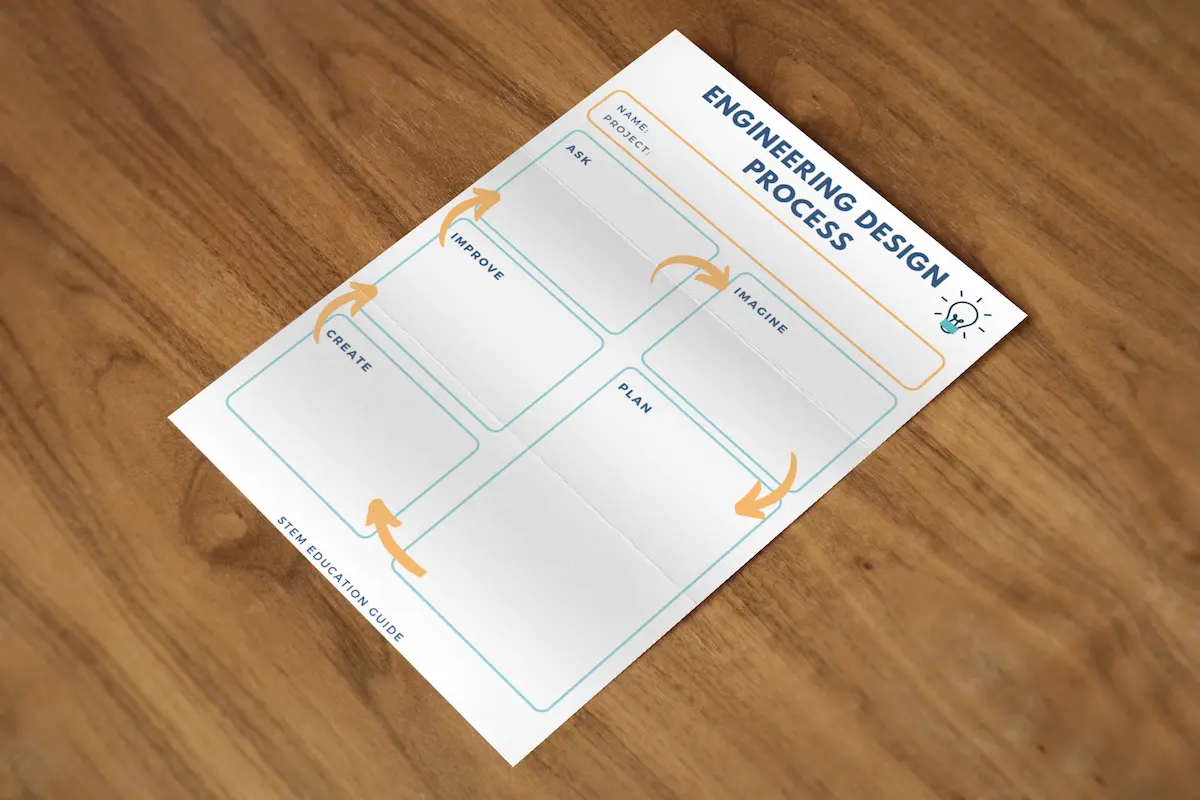
The Engineering Design Process is not a linear track with a definitive end; rather, it operates as a continuous loop. Once a solution is implemented, evaluation and refinement spark new questions, driving perpetual improvement. To understand how this framework functions in practice, we can break it down into five foundational phases: Ask, Imagine, Plan, Create, and Improve.
Every engineering challenge begins with a defined problem or an unmet need. In professional environments, this phase involves stakeholder interviews, requirement gathering, and establishing design criteria and constraints (such as budget, timeline, and physical limitations).
The Everyday Analogy: Imagine a busy household at the end of a long week. Parents and children return home exhausted, facing an immediate dilemma: no one has planned or shopped for dinner. Hunger is mounting, and the clock is ticking.
The Engineering Link: The family convenes an impromptu status meeting to audit available resources. They inspect the inventory of the refrigerator, freezer, and pantry. The parameters are established: utilize available ingredients, minimize preparation time, and satisfy multiple dietary preferences without generating excessive ambient heat in the kitchen.
Step 2: Imagine — Brainstorming and Conceptualization
Once the problem is clearly articulated, teams enter the divergent thinking phase. Brainstorming encourages unconstrained ideation. No idea is immediately dismissed; instead, team members pool their diverse perspectives, historical knowledge, and technological research to generate a wide array of potential solutions.
The Everyday Analogy: The family of six evaluates their options. A traditional roasted meat dish is quickly dismissed: it requires too long of a cooking cycle, and operating a high-heat oven will excessively warm the house. However, a wealth of fresh vegetables gifted by grandparents sits on the counter, demanding utilization to prevent spoilage.
The Engineering Link: The concept of a vegetable stew emerges. To ensure adequate nutritional balance, a protein source must be incorporated. Utilizing digital research tools (the internet), the team explores viable protein pairings that complement garden-fresh vegetables, weighing the pros and cons of various culinary components against their defined constraints.
Step 3: Plan — Designing the Blueprint and Managing Variables
With a conceptual direction established, the team transitions from divergent thinking to convergent planning. This phase requires meticulous organization, resource allocation, and the drafting of actionable steps. Blueprints, schematics, material lists, and task divisions are finalized.
The Everyday Analogy: The family compiles an agreed-upon inventory list of ingredients: potatoes, carrots, tomatoes, zucchini, summer squash, turnips, green beans, beets, and peas. For protein options, they identify dried kidney beans, tofu, and eggs.
The Engineering Link: A design conflict arises: not all family members agree on a single protein source. Applying modular design principles, the engineering lead (in this case, the family coordinator) decides to decouple the system into three distinct subsystems—creating three separate pans of stew to accommodate divergent user preferences.
Step 4: Create — Prototyping and Execution
The fourth phase transforms the theoretical blueprint into a physical prototype. Teamwork, precise execution, and adherence to safety and operational guidelines are paramount as the design takes physical form.
The Everyday Analogy: Labor is divided according to skill level and safety considerations. Younger children handle tasks requiring lower risk—shelling peas, snapping green beans, and cutting soft produce with table knives. Adults manage denser vegetables using precision cutting tools. The household splits into three specialized operational teams, each managing one prototype pot.
The Engineering Link: Each team introduces water, foundational herbs, and spices to their respective vessels. Specialized protein and vegetable components are integrated into each pot, with certain sensitive elements (such as eggs) staged for later introduction to prevent overcooking.
Step 5: Improve — Testing, Evaluation, and Iterative Refinement
In engineering, the initial prototype is rarely perfect. The testing phase exposes unforeseen flaws, systemic inefficiencies, and structural weaknesses. Rather than signaling failure, these discoveries initiate the critical "Improve" phase—troubleshooting, redesigning, and retesting until optimal performance is achieved.
The Everyday Analogy: As cooking aromas fill the kitchen, quality control testing reveals critical issues in two of the prototypes. First, the tofu cubes in one pot are beginning to break apart and assume an unpalatable, mushy consistency. Second, the red beets in another pot are leaching pigments, turning the entire broth, potatoes, and turnips an unexpected shade of bright pink.
The Engineering Link: Immediate design adjustments are deployed:
System Redirection: The beets are extracted before further pigment dispersion occurs, set aside for alternative culinary applications, and replaced with stable carrots.
Material Substitution: The compromised tofu is strained out using a slotted spoon. A team member re-engineers the protein preparation method, stir-frying new tofu cubes to a golden-brown crispness before reintroducing them to the soup matrix at a later stage of the cooking cycle.
Staged Integration: The egg-integration team introduces six eggs near the final stages of the thermal cycle, observing how rapid protein denaturation transforms the whites while protecting the yolks.
Final taste tests are conducted. While the kidney bean stew requires extended thermal processing due to firmness, the other variants achieve optimal sensory standards. The iterative loop successfully resolves operational flaws.
Supporting Context & Metrics: STEM Education and Problem-Solving Frameworks
The integration of structured design processes into everyday learning environments is a cornerstone of modern Science, Technology, Engineering, and Mathematics (STEM) education initiatives. Pedagogical research indicates that experiential, project-based learning significantly enhances cognitive flexibility, spatial reasoning, and collaborative problem-solving skills in students.
Feature / Metric
Engineering Design Process (EDP)
Scientific Method
Primary Objective
To create functional solutions, products, or systems to meet human needs.
To discover new knowledge and explain natural phenomena.
Starting Point
An identified problem, challenge, or human requirement.
A question or curiosity about the natural world.
Core Action
Brainstorming, designing, prototyping, testing, and improving.
Hypothesizing, experimenting, observing, and analyzing data.
Final Output
A functional physical artifact, software program, or engineered system.
Empirical conclusions, research papers, and theoretical frameworks.
As illustrated above, while both frameworks share roots in analytical thinking, their terminal objectives diverge significantly. Understanding this distinction is vital for students, educators, and industry professionals alike.
Official Statements & Expert Perspectives
Educational theorists and engineering practitioners alike emphasize the necessity of reframing "failure" as a vital data point within the design lifecycle.
Dr. Elena Vance, a prominent researcher in STEM curriculum development, notes:
"When students—or adults—encounter a collapsed soufflé, a mushy tofu cube, or an unexpected chemical reaction like pink turnips, they aren’t failing; they are gathering empirical data. The Engineering Design Process teaches us to embrace these anomalies. Innovation occurs precisely in the gap between the initial prototype and the final, optimized solution."
Furthermore, industrial engineers highlight that the human element—collaboration, communication, and division of labor—remains just as critical as technical specifications.
Lead Systems Architect Marcus Thorne remarks:
"You can have the most advanced CAD drawings in the world, but if your multidisciplinary teams cannot communicate their constraints—much like a family negotiating dinner ingredients—the project will stall. The EDP provides a universal vocabulary that bridges technical requirements with human collaboration."
Future Outlook: The Convergence of Engineering and Scientific Discovery
As we look toward the future, the boundaries between scientific inquiry and engineering execution are increasingly porous. The culinary-scientific intersection observed during our family dinner project offers a compelling preview of this convergence.
Consider the humble beet: while the engineering design process successfully eliminated beets from the soup prototype due to aesthetic and structural complications (the unintended pink discoloration), a parallel scientific investigation highlights their profound biochemical value. Modern scientific research—utilizing the rigorous mechanics of the Scientific Method—has demonstrated that dietary nitrates found in beet juice are metabolized by the human body into nitric oxide. This molecule plays a crucial role in vasodilation, enhancing blood flow to the brain and skeletal muscles while effectively lowering high blood pressure.
Thus, while an engineer might temporarily reject beets from a structural soup matrix due to pigment interference, a scientist validates their systemic physiological benefits. Ultimately, society requires both disciplines in tandem: scientists uncover the foundational laws governing nature and human biology, while engineers harness those discoveries to build functional products, refine technologies, and solve everyday challenges.
By mastering frameworks like the Engineering Design Process, individuals of all ages cultivate a resilient, analytical mindset. Whether navigating complex global infrastructure projects or orchestrating a successful family meal under tight constraints, the iterative cycle of asking, imagining, planning, creating, and improving remains our most reliable tool for shaping a better tomorrow.

![What is the Engineering Design Process? [Plus, a Free Worksheet] - STEM Education Guide](https://stemeducationguide.com/wp-content/uploads/2020/04/enginereering-design-process-worksheet.png)
![What is the Engineering Design Process? [Plus, a Free Worksheet] - STEM Education Guide](https://stemeducationguide.com/wp-content/uploads/2020/04/Engineering-Design-Process.png)

