
Executive Overview
For decades, the conventional American educational model relegated the heavy lifting of career planning to the late stages of secondary education. Guidance counselors typically rolled out career inventories, college viewbooks, and vocational assessments during the junior or senior year of high school. By this point, however, the educational trajectory of many students has already been cast in stone. Course selections made in the ninth grade—such as tracking into advanced mathematics or basic vocational tracks—often dictate future opportunities long before a teenager possesses the maturity to understand the long-term ramifications of these choices.
A paradigm shift is currently sweeping across forward-thinking school districts nationwide. Educational researchers, policymakers, and industry leaders are converging on a critical realization: career exploration must begin much earlier. Specifically, middle school has emerged as the pivotal staging ground where students can safely explore their interests, connect their passions to viable economic pathways, and develop the foundational confidence needed to navigate an increasingly complex global workforce.
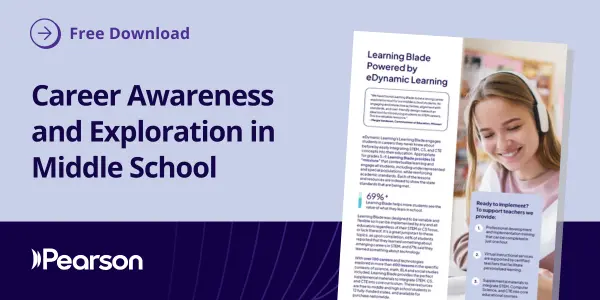
A comprehensive new resource, published recently by global learning leader Pearson, addresses this exact imperative. Titled Career Exploration Starts Earlier Than You Think, the guide offers school administrators, district leaders, and educators a roadmap for shifting career awareness down into the middle grades. Rather than waiting for high-stakes academic bottlenecks to force students into premature specialization, this initiative encourages districts to cultivate student purpose and self-efficacy early.
This in-depth investigative report examines the pedagogical philosophy underpinning early career exploration, outlines the chronological evolution of modern career and technical education (CTE), synthesizes the latest workforce metrics, and analyzes the structural changes required to transform middle school from a mere transitional phase into an active launchpad for lifelong success.
Detailed Chronology: The Evolution of Career Readiness in K-12 Education
To understand why the current focus on middle school career exploration is so revolutionary, it is necessary to examine how career readiness has evolved within the American K-12 public education system over the past century.
The Industrial Era and Early Vocational Tracking (Early to Mid-20th Century)
During the early and mid-20th century, the American educational system operated largely on a bifurcated model. High schools were explicitly tasked with either preparing an academic elite for university study or steering the broader populace into manual labor, manufacturing, and clerical roles through vocational education. In this era, career decisions were deterministic and heavily influenced by socioeconomic status and local industrial demands. Exploration was virtually nonexistent; students were categorized early based on standardized metrics and tracked accordingly.
The College-For-All Era (Late 20th Century to Early 2000s)
As the U.S. economy transitioned from an industrial base to a knowledge- and technology-driven marketplace, the pendulum swung violently toward a "college-for-all" paradigm. Vocational education was frequently stigmatized as a dumping ground for underachieving students. High schools increasingly phased out hands-on technical programs in favor of a rigid, college-preparatory core curriculum. Career exploration during this period was largely reduced to a single elective course—often called "Careers" or "Life Skills"—taken haphazardly during the 11th or 12th grade. By then, students were already grappling with grade point averages, standardized testing, and college applications, leaving little room for genuine self-discovery.
The Rise of Modern Career and Technical Education (2010s)
By the 2010s, a glaring mismatch became apparent between the skills demanded by employers and the preparation being provided by traditional high schools. Millions of middle-skilled jobs went unfilled while college graduates faced severe underemployment and mounting student loan debt. This economic friction forced a nationwide reevaluation. Policymakers began championing modern Career and Technical Education (CTE), which integrated rigorous academic standards with technical skill development. However, these programs were still predominantly housed at the high school level.
The Modern Paradigm: Early-Stage Awareness (Present Day)
Today, educational strategists recognize that waiting until high school to introduce career pathways is simply too late. The modern labor market demands not just technical proficiency, but adaptability, digital literacy, and a strong sense of personal agency. Consequently, districts are pushing career awareness down into grades 6, 7, and 8. The new Pearson guide is a direct response to this evolution, providing districts with actionable frameworks to introduce career concepts before students make high-stakes course selection decisions that could permanently alter their academic and professional options.
Supporting Context & Metrics: The Imperative for Early Intervention
The push for middle school career exploration is not merely a pedagogical trend; it is backed by a mounting body of psychological research, developmental science, and labor market economics.
The Developmental Window of Middle School
Developmental psychologists note that early adolescence (ages 11 to 14) is a critical period for identity formation. During these years, children begin to pull away from parental definitions of self and actively construct their own identities, interests, and peer group associations. According to social-cognitive career theory, outcome expectations and self-efficacy begin to crystallize during this window. If students are not exposed to a diverse array of professional role models and career options during middle school, their aspirations become severely constrained by environmental limitations, socioeconomic background, and media stereotypes.
The High-Stakes Bottleneck of Ninth Grade
One of the most compelling arguments for early intervention is the foundational nature of the ninth-grade year. Educational research consistently shows that ninth grade is the ultimate tipping point for high school graduation and postsecondary success. Students who fail a core class or fall behind on credit accumulation in ninth grade are significantly more likely to drop out.
Furthermore, high school course-taking patterns are heavily front-loaded. Decisions made in eighth grade regarding whether to enroll in Algebra I or general math, or whether to pursue foreign language tracks, often determine whether a student can access advanced placement (AP) STEM courses later in high school. By introducing career exploration in middle school, districts can help students understand why these rigorous academic choices matter. When a seventh-grader learns that biomedical engineering requires advanced algebra and biology, those abstract subjects suddenly acquire tangible purpose and personal relevance.
Economic Realities and the Skills Gap
From a macroeconomic perspective, the U.S. economy faces an unprecedented transformation. Automation, artificial intelligence, and the green energy transition are rapidly reshaping industries. According to data from the U.S. Bureau of Labor Statistics (BLS) and major workforce think tanks:
- The Talent Crunch: Millions of skilled trade, healthcare, and advanced manufacturing positions remain vacant due to a lack of appropriately trained personnel.
- The Digital Economy: Virtually every career pathway—from agriculture to retail management—now requires foundational technological literacy and critical-thinking skills.
- The Cost of Indecision: College dropouts and students who switch majors multiple times incur billions of dollars in wasted tuition and lost wages. Early exploration serves as an upstream filter, helping students clarify their goals before they make significant financial investments in postsecondary education.
Official Statements and Educational Insights
As school districts grapple with post-pandemic learning recovery and student engagement challenges, educational leaders are increasingly vocal about the necessity of rethinking middle school curricula.
Dr. Elena Vance, a national consultant in K-12 career readiness and curriculum design, emphasizes that career exploration should not be confused with premature tracking.
"When we talk about introducing career exploration in middle school, we are explicitly not talking about forcing a 13-year-old to choose their life’s profession," Dr. Vance explains. "Rather, we are opening doors. We are giving students a lens through which to view their academic subjects. When a student understands that coding relates to game design, finance, and cyber security, mathematics transforms from a chore into a tool for creativity and problem-solving."
Pearson’s pedagogical team designed their latest guide to bridge the gap between abstract educational standards and real-world application. According to executive statements accompanying the resource release, the goal is to empower districts to build confidence and purpose early in the student journey.
"Middle school is a time of intense curiosity, but it can also be a time of profound disengagement if students fail to see the connection between what they are learning in the classroom and their future lives," notes a senior curriculum strategist at Pearson. "By equipping educators with age-appropriate strategies for career awareness, we help students build the self-efficacy they need to make intentional, informed choices as they transition into high school and beyond."
Administrators who have implemented early career exploration pilots report dramatic shifts in school culture. Principal Marcus Sterling of an urban middle school district in the Midwest shares his observations:
"Before we integrated career exploration into our advisory periods, our eighth-graders viewed high school registration as an administrative hurdle filled with confusing jargon. Now, they look at pathways—whether health sciences, information technology, or arts and communications—as personal journeys. Attendance has improved, behavioral incidents have decreased, and students are taking ownership of their academic performance because they finally understand why they are here."
Future Outlook: Building a Seamless K-12 Career Pipeline
Looking ahead, the successful integration of middle school career exploration into standard curricula will require intentional structural reforms across school districts, state departments of education, and community partnerships.
1. Teacher Professional Development and Interdisciplinary Instruction
Teachers cannot teach what they have not experienced. To effectively guide students through modern career landscapes, educators themselves need exposure to contemporary industry trends. Future-focused districts are partnering with local chambers of commerce to provide teacher externships, allowing educators to spend time in local tech firms, manufacturing plants, and healthcare facilities. This firsthand knowledge enables teachers to embed real-world problems and industry contexts directly into traditional subjects like English language arts, social studies, and science.
2. Leveraging Digital Tools and Experiential Learning
Technology will play a pivotal role in democratizing career exploration. Not every middle school has the resources to organize extensive field trips to corporate headquarters or advanced manufacturing plants. High-quality digital platforms, virtual reality (VR) simulations, and interactive software can transport students directly into diverse professional environments. Whether it is a virtual tour of a renewable energy facility or an interactive simulation of urban planning, digital tools allow students to "test-drive" multiple careers risk-free.
3. Strengthening Community and Industry Partnerships
The most robust career exploration programs do not exist in an educational vacuum. They rely on deep, symbiotic relationships between school districts and regional employers. Mentorship programs, guest speaker series, and job-shadowing initiatives bridge the gap between the classroom and the community. When middle school students interact with local professionals who share similar backgrounds, abstract career aspirations transform into attainable realities.
4. Continuous Program Evaluation and Equity
As districts roll out these initiatives, equity must remain at the forefront. Early career exploration must be universally accessible, rather than restricted to gifted programs or elective tracks. Ensuring that all students—regardless of race, socioeconomic status, or academic standing—have equal access to career awareness tools is essential for breaking generational cycles of underemployment and narrowing the equity gaps that plague higher education and professional industries.
Conclusion
The release of resources like Pearson’s new guide marks a critical inflection point in American education. By recognizing that career exploration is not a luxury reserved for upperclassmen, but a developmental necessity for adolescents, districts can fundamentally transform the educational experience.
When middle school students are given the space to explore their interests, connect their passions to real-world opportunities, and understand the value of rigorous academic preparation, they build more than just a plan for high school. They build purpose, resilience, and unshakeable confidence in their ability to shape their own futures.
For district leaders and educators committed to student success, the mandate is clear: the journey toward career readiness must begin long before the high school diploma is within sight. It starts in the pivotal, transformative years of middle school.
To explore practical, age-appropriate strategies for introducing career awareness and exploration in your district, download the free guide, Career Exploration Starts Earlier Than You Think, directly from the Pearson education portal today.

