
Executive Overview
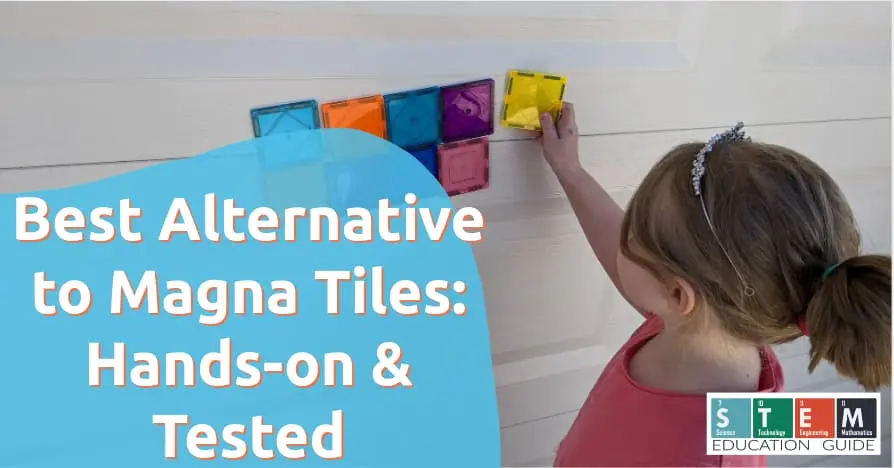
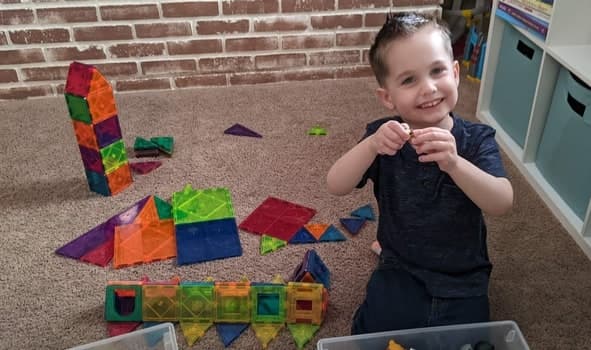
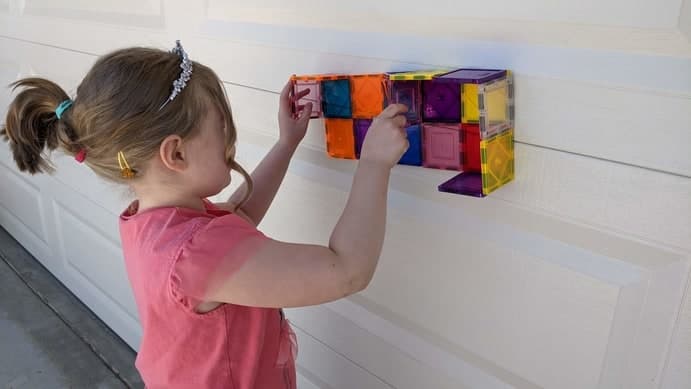
Magnetic building tiles have cemented their position as a cornerstone of modern early childhood education and open-ended play. Renowned for fostering spatial awareness, fine motor skills, and foundational Science, Technology, Engineering, and Math (STEM) competencies, these toys are a staple in households and classrooms worldwide.
However, a significant market friction point persists: consumer cost. Original market pioneers command a premium price point, creating a financial barrier for families looking to scale their existing collections or invest in large starter sets.
This investigative consumer guide explores the economics of magnetic toys, the structural differences between brand-name and generic tiles, and the top-tier, safety-tested alternatives available on the market today. By analyzing material composition, structural integrity, pricing strategies, and educational value, this report equips parents and educators with the insights needed to make informed purchasing decisions without compromising safety or play quality.
Detailed Chronology: The Rise of Magnetic Construction Toys
To understand the current marketplace for magnetic tiles, it is necessary to examine how the category evolved from a novel concept into a multi-million-dollar industry.
1997: The Inception of Magnetic Building
The landscape of tactile construction changed forever when magnetic tiles were first introduced to the commercial market. Designed to combine the structural simplicity of traditional wooden blocks with the dynamic connectivity of magnets, the original invention revolutionized how children interact with geometric shapes. Because the edges of the tiles house safely sealed neodymium magnets, children could snap pieces together effortlessly from any angle, bypassing the frustration of gravity-reliant stacking.
The 2000s–2010s: Market Expansion and Brand Dominance
For over a decade, the category pioneer enjoyed uncontested market share. During this period, educational institutions and parenting publications popularized the toys as premier tools for cognitive development. Because they were first to market, the foundational brand established a reputation for rigorous manufacturing standards, using durable ABS plastic and secure internal riveting to prevent magnet dislodgement.
The Mid-2010s to Present: The Rise of Compatible Competitors
As patents evolved and manufacturing capabilities advanced globally, generic and independent brands entered the space. Companies realized that ABS plastic, ultrasonic welding, and safe magnet encapsulation could be replicated at a fraction of the cost. Brands like PicassoTiles, Cossy, Shapemags, and Magblock emerged, offering cross-brand compatibility. This allowed consumers to expand existing collections with budget-friendly alternative pieces, transforming a monopolized market into a highly competitive landscape.
Supporting Context & Metrics: Why Are Premium Tiles So Expensive?
To the average consumer, a box of colorful plastic geometric shapes priced well over $100 can induce sticker shock. Understanding this pricing requires an evaluation of the economic and regulatory factors governing the toy industry.
Brand Equity and R&D Investment
A substantial portion of the cost associated with premium magnetic tiles goes toward brand equity and historical research and development (R&D). The original pioneers bore the initial financial burden of introducing a completely new toy category to skeptical retailers and consumers. Consequently, they established a pricing tier that reflects their legacy status.
Strict Retail Pricing Control
Market analysis reveals that premium magnetic tile brands exercise tight control over their retail distribution. Authorized sellers must adhere to strict manufacturer-suggested retail pricing (MSRP) guidelines. This corporate governance explains why deep discounts or promotional sales for the original brand are exceptionally rare, regardless of the retail season.
Material Safety and Regulatory Compliance
Both premium brands and reputable budget alternatives must adhere to rigorous international safety standards, including ASTM (American Society for Testing and Materials) and CPSIA (Consumer Product Safety Improvement Commission) regulations in the United States, as well as EN71 standards in Europe.
Independent testing organizations, such as the Good Housekeeping Institute, routinely evaluate these toys. Their findings indicate that top-tier alternatives utilize food-grade, non-toxic ABS plastic free of BPA, phthalates, and latex. Therefore, a lower price point does not automatically equate to compromised chemical safety; rather, it often reflects lower marketing expenditures and streamlined supply chains.
Comparative Analysis: Premium vs. Alternative Magnetic Tile Brands
When evaluating whether to invest in brand-name sets or explore alternatives, parents must weigh structural performance against financial investment.
| Feature / Metric | Premium Market Leader (e.g., Magna-Tiles) | Top-Tier Alternatives (e.g., PicassoTiles, Cossy) |
|---|---|---|
| Average Cost per Piece | High ($0.80 – $1.50+) | Moderate ($0.30 – $0.60) |
| Plastic Rigidity | Exceptionally rigid; minimal flex under high pressure | Slightly more flexible; robust enough for daily play |
| Magnet Strength | Strong, reliable edge alignment | Comparable pull force; excellent vertical building capacity |
| Cross-Compatibility | Yes | Universally cross-compatible with standard sizes |
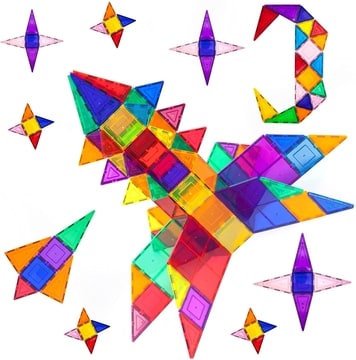
| Specialized Pieces | Basic geometric focus (squares, triangles) | Diverse inclusions (windows, fences, archways, letters) |
| Discount Availability | Extremely rare due to strict MSRP enforcement | Frequently discounted via online marketplaces and bundles |
Structural Integrity and Material Quality
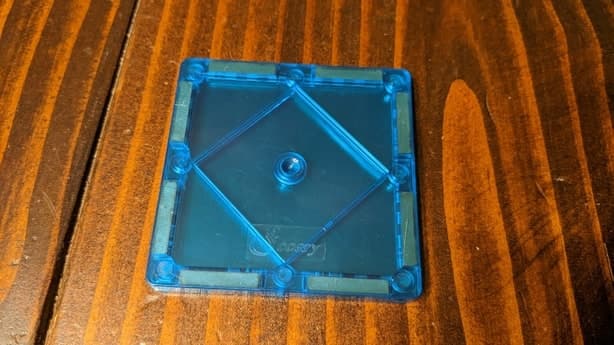
In destructive testing comparisons—such as applying localized weight or impact stress—premium tiles exhibit a slightly higher degree of rigid wall thickness. However, off-brand alternatives employ high-grade ultrasonic welding to seal the plastic seams, ensuring that magnets remain securely enclosed even after years of heavy classroom or household use.
Evaluating the Top Magna-Tile Alternatives
For families looking to maximize their purchasing power without sacrificing the developmental benefits of STEM play, several standout brands have earned praise from educators and parents alike.
1. PicassoTiles: The Value and Versatility Leader
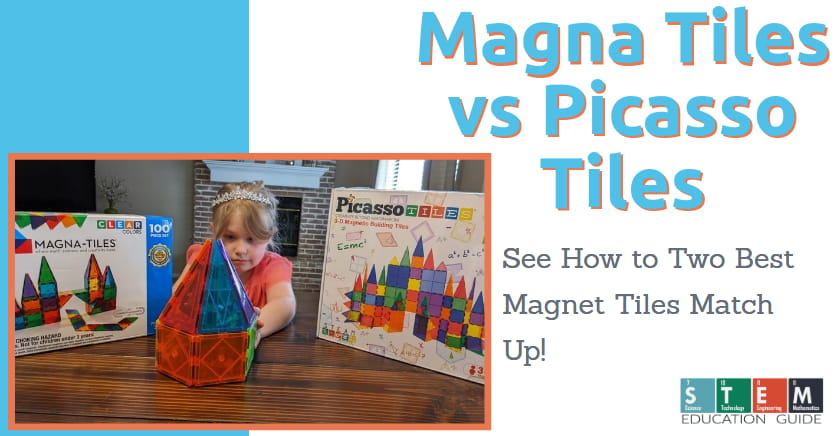
PicassoTiles consistently ranks at the top of consumer reviews for best overall alternative. Closely mirroring the dimensions of original sets, PicassoTiles offer seamless cross-compatibility.
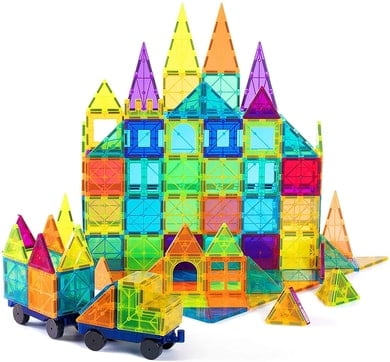
- Key Advantages: Exceptional affordability, robust starter packs, and a wide array of specialized theme sets (such as race car tracks and castle builders).
- Practical Application: Their standardized sizing allows children to seamlessly integrate PicassoTiles with existing collections, building expansive, multi-brand neighborhoods.
2. Cossy Kids Magnetic Tiles: Vibrant Transparency
Cossy has carved out a distinct market niche by focusing on optical brilliance and color saturation.
- Key Advantages: High-transparency plastic that maximizes light filtration. When children build structures near windows or light tables, Cossy tiles cast vibrant, stained-glass-like hues across the room.
- Practical Application: Built to withstand daily wear and tear, these tiles maintain their structural clarity and vivid color pigmentation over years of heavy play.
3. Shapemags: Bridging Literacy and Spatial Play
Shapemags introduce a multidisciplinary approach to construction by integrating linguistic elements into tactile play.
- Key Advantages: Offerings such as "StileMags"—magnetic slips featuring letters, numbers, and illustrations that snap onto the surface of the tiles.
- Practical Application: This hybrid design transforms traditional structural play into an early literacy tool, allowing preschoolers to practice spelling and recognition while building three-dimensional architectures.
4. Magblock Magnetic Blocks: Built-In Architectural Elements
While standard magnetic sets rely heavily on basic polygons, Magblock addresses a common play pattern: the desire to build functional human structures.
- Key Advantages: Sets frequently include pre-fabricated architectural components such as working doors, protective fences, and curved archways.
- Practical Application: Children who enjoy replicating real-world structures can construct elaborate houses and castles without requiring expensive supplemental expansion packs.
Expert Methodology: How to Test and Choose Magnetic Toys
To get the most value out of a magnetic tile purchase, educational experts recommend turning the selection process into an interactive learning experience for children.
- Comparative Weighing: Encourage children to use a small scale to compare the mass of different brand tiles. Ask critical-thinking questions: "Does this brand feel heavier or lighter than the other?"
- Optical Clarity Testing: Examine how light passes through different tiles. Discuss properties of transparency and color diffusion.
- Magnetic Pull Assessment: Test how many vertical squares a set can support before collapsing, teaching children about structural load-bearing and magnetic polarity.
Furthermore, parents should leverage supplementary resources provided by toy manufacturers, such as free downloadable building guides and architectural challenge prompts, which extend the lifespan and educational depth of any toy set.
Future Outlook: The Direction of the STEM Toy Market
As the global demand for early childhood STEM education accelerates, the magnetic toy market is projected to expand rapidly. Several key trends are shaping the future of the industry:
- Eco-Sustainable Materials: Manufacturers are facing increasing pressure to transition away from virgin petroleum-based ABS plastics toward bio-plastics, recycled polymers, and sustainably sourced wood-composite magnetic frames.
- Advanced Engineering and Safety: Future iterations will likely feature enhanced internal magnet-locking mechanisms, virtually eliminating the rare choking hazards associated with historical product recalls in the broader toy sector.
- Blended Physical-Digital Play: We anticipate the integration of augmented reality (AR) elements, where physical magnetic tile structures can be scanned via mobile devices to unlock digital interactive environments, merging tactile engineering with coding and digital literacy.
Ultimately, whether a consumer opts for the historical prestige of the original market leader or the cost-effective versatility of top-tier alternatives like PicassoTiles or Cossy, the core objective remains unchanged: empowering children through imaginative, open-ended spatial exploration.

