
Executive Overview
Innovation is rarely an accidental stroke of genius; rather, it is the systematic result of structured thinking, iterative testing, and disciplined execution. At the heart of technological and practical advancement lies the Engineering Design Process (EDP)—a cyclical, step-by-step methodology deployed by engineers, innovators, and problem-solvers to tackle complex challenges.
While the term often conjures images of aerospace laboratories, cleanrooms, and high-tech manufacturing floors, the fundamental tenets of the EDP apply universally. From fixing a malfunctioning household gadget to orchestrating large-scale industrial projects, the engineering mindset bridges the gap between abstract concepts and functional reality. By integrating mathematics, physics, and empirical science, problem-solvers design workable solutions, construct prototypes, evaluate performance, and continuously refine their ideas.
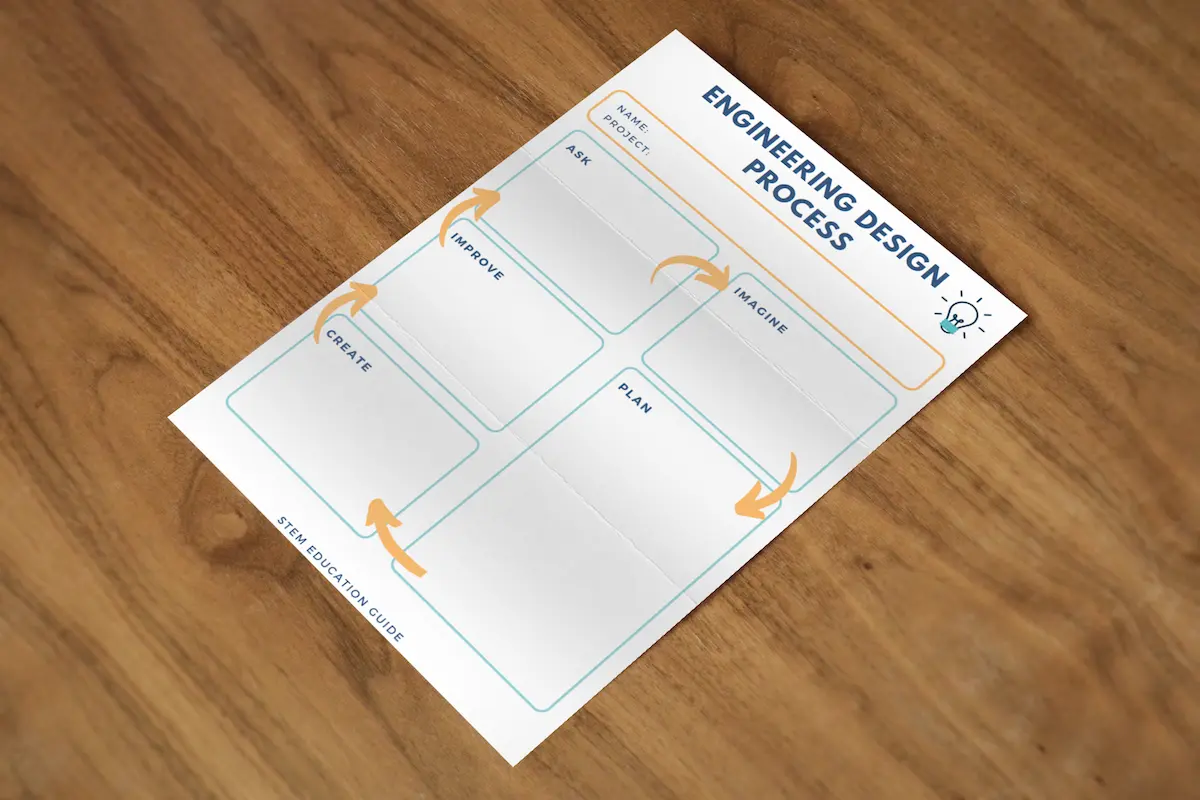
To demystify this process for learners and professionals alike, educators frequently break the EDP down into five core phases: Ask, Imagine, Plan, Create, and Improve. Far from a linear checklist, this framework functions as a continuous feedback loop. Once a solution is deployed, the evaluation phase invariably uncovers new areas for enhancement, launching the cycle anew.
This report explores the mechanics of the Engineering Design Process through an accessible, real-world case study—preparing a family meal under tight constraints. Furthermore, this analysis examines the crucial distinctions between the EDP and the Scientific Method, highlighting how scientists and engineers approach discovery and invention through fundamentally complementary, yet distinct, lenses.
Detailed Chronology: The 5-Step Engineering Design Process in Action
To truly grasp how the Engineering Design Process functions, it must be observed in a practical context. Consider a common, high-pressure household scenario: preparing a nutritious dinner for a family of six with minimal advance planning, limited ingredients, and strict time constraints.
By applying the five phases of the EDP, a chaotic kitchen dilemma transforms into an organized, collaborative engineering challenge.
Step 1: Ask (Defining the Problem)
The catalyst for any engineering challenge is a clearly defined problem. In our household scenario, the day has slipped away. Parents and children return home exhausted from work and school, realizing that no provisions have been made for dinner.
A rushed family meeting in the kitchen establishes the core parameters and constraints of the problem:
- The Goal: Provide a nutritious, satisfying meal for six people.
- The Constraints: Limited preparation time, restricted ingredients already on hand in the refrigerator, freezer, and pantry, and the need to avoid overheating the house on a warm day by using heavy appliances like the main oven.
With the problem explicitly defined, the family transitions from passive hunger to active problem-solving.
Step 2: Imagine (Brainstorming and Research)
Armed with an understanding of their constraints, the family enters the ideation phase. Brainstorming yields multiple possibilities, each weighed against the project limitations. A traditional roasted meat dish is quickly discarded; it requires too much cooking time and raises the ambient temperature of the house.
![What is the Engineering Design Process? [Plus, a Free Worksheet] - STEM Education Guide](https://stemeducationguide.com/wp-content/uploads/2020/04/enginereering-design-process-worksheet.png)
However, a strategic asset is discovered: grandparents have recently gifted a surplus of garden-fresh vegetables that must be consumed soon to prevent spoilage. The conceptual framework shifts toward a hearty vegetable stew.
Recognizing that vegetables alone lack sufficient nutritional density, the family identifies the need for a reliable protein source. Team members turn to digital research, scouring the internet to evaluate potential protein pairings that complement garden vegetables without requiring extensive culinary preparation.
Step 3: Plan (Developing Specifications and Prototypes)
With potential solutions conceptualized, the family formulates a concrete execution plan. They draft a definitive bill of ingredients:
- Vegetables: Potatoes, carrots, tomatoes, zucchini, summer squash, turnips, green beans, beets, and peas.
- Proteins: Dried kidney beans, tofu blocks, and fresh eggs.
A design conflict quickly emerges: consensus on a single protein source is impossible because individual family members possess distinct dietary preferences. Applying engineering flexibility, the team pivots from a monolithic design to a modular one. Instead of a single pot of stew, the project is divided into three parallel streams, allowing for customized protein integration while utilizing the shared vegetable base.
Step 4: Create (Execution and Assembly)
With the blueprint finalized, division of labor takes center stage. The operational phase mimics a specialized manufacturing assembly line:
- Younger children handle low-risk tasks, such as shelling peas, snapping green bean ends, and dicing softer ingredients with table knives.
- Parents take charge of denser, structurally challenging vegetables requiring precision cutting tools.
- The family splits into three distinct operational teams, each assuming total ownership of a dedicated cooking vessel.
Water, dried herbs, and targeted spice profiles are added to each pot alongside the chosen vegetable and protein combinations. Eggs are temporarily held aside to be integrated later in the thermal cycle, preventing overcooking.
Step 5: Improve (Evaluation, Iteration, and Optimization)
As heat transforms the raw ingredients and rich aromas fill the kitchen, the teams enter the critical evaluation phase. In engineering, the first iteration rarely achieves perfection; rigorous quality control is essential.
Two significant design flaws immediately manifest:
- Structural Failure of Materials: The tofu cubes begin to break down, turning mushy within the simmering broth.
- Unintended Chemical Reactions: The red beets leach their pigments into the surrounding liquid, turning the potatoes, turnips, and broth an intense, unexpected shade of pink.
Immediate engineering adjustments are deployed:
- Mitigating Aesthetic Drift: The beets are extracted from the pot before further pigment leaching occurs, set aside for future culinary applications, and replaced with stable chunks of carrot.
- Refining Material Durability: A team member uses a slotted strainer to rescue the compromised tofu. A supervising parent then stir-fries a fresh batch of tofu cubes in a separate pan until they achieve a golden-brown, structurally sound exterior, before reintroducing them to the soup.
- Managing Thermal Timing: True to the production schedule, a team cracks six eggs into their designated pot, monitoring closely as the whites coagulate instantly while protecting the yolks within.
Finally, rigorous quality assurance testing occurs. Designated taste-testers sample spoonfuls from each pot. The pot containing dried kidney beans reveals that the legumes are still excessively firm, necessitating an extended thermal processing time. Those burners remain active, while completed pots are removed from heat and covered. The iterative cycle concludes successfully as all three culinary systems meet operational standards.
![What is the Engineering Design Process? [Plus, a Free Worksheet] - STEM Education Guide](https://stemeducationguide.com/wp-content/uploads/2020/04/Engineering-Design-Process.png)
Supporting Context & Metrics: The Anatomy of Problem-Solving
To appreciate the broader utility of the Engineering Design Process, it is valuable to examine how it compares to other analytical frameworks. In educational and professional sectors, the EDP is frequently juxtaposed against the Scientific Method.
While both methodologies share foundational roots in critical thinking, their operational goals and ultimate deliverables diverge significantly.
Engineering Design Process vs. Scientific Method
| Feature | Scientific Method | Engineering Design Process |
|---|---|---|
| Primary Objective | To discover new knowledge and explain natural phenomena. | To create new products, systems, or solve practical human problems. |
| Starting Point | An observational question about the natural world. | A human need, desire, or practical challenge. |
| Core Mechanism | Hypothesis formation, controlled experimentation, and data analysis. | Brainstorming, prototyping, testing, and iterative improvement. |
| Tolerance for Failure | Failure disproves a hypothesis, generating new empirical data. | Failure is a diagnostic tool used to redesign and optimize physical performance. |
| Ultimate Deliverable | Published research papers, peer-reviewed articles, and empirical theories. | Functional prototypes, manufactured goods, and scalable technologies. |
The Intersecting Worlds of Science and Engineers
While their methodologies differ, scientists and engineers operate in a symbiotic relationship. Scientists investigate the fundamental rules of nature—often utilizing empirical data to uncover biochemical mechanisms. For instance, consider the biological profile of beets examined during our culinary project.
From an engineering perspective, raw beets posed a structural challenge due to pigment leaching and aesthetic disruption in a mixed vegetable stew. However, from a scientific standpoint, biochemical research utilizing the Scientific Method has revealed profound health benefits associated with beet consumption. Clinical studies demonstrate that human bodies convert naturally occurring nitrates found in beet juice into vital molecules that enhance vascular blood flow to the brain and skeletal muscles, while effectively lowering high blood pressure.
Thus, engineers often rely on the foundational discoveries established by scientists, applying these empirical insights to optimize commercial products, infrastructure, and consumer goods.
Official Statements and Expert Perspectives
Educational theorists and industry leaders consistently emphasize the importance of embedding the Engineering Design Process into modern curricula. Dr. Elena Vance, a prominent researcher in STEM pedagogy, notes:
"The true power of the Engineering Design Process lies not in arriving at a single correct answer, but in teaching students and professionals how to navigate failure. When an initial prototype fails—whether it is a mushy block of tofu in a kitchen soup or a structural fracture in a bridge beam—the engineer does not quit. They analyze the variables, adjust their parameters, and iterate toward a superior solution."
Furthermore, industrial designers point out that the cyclical nature of the EDP mirrors agile project management in the corporate sector. By breaking grand challenges down into manageable phases—Ask, Imagine, Plan, Create, and Improve—organizations can accelerate innovation without sacrificing structural integrity or product safety.
Future Outlook
As global challenges become increasingly complex—spanning sustainable energy infrastructure, advanced artificial intelligence integration, and resource scarcity—the demand for structured problem-solving frameworks has never been higher.
The Engineering Design Process provides a resilient, adaptable blueprint for the future. By cultivating an engineering mindset from an early age, educational systems are preparing the next generation of innovators to approach everyday hurdles and global crises with methodical precision. Whether optimizing a family dinner recipe or engineering next-generation green technology, the cycle of inquiry, prototyping, and continuous improvement remains humanity’s most powerful tool for shaping a better tomorrow.

