
Executive Overview
In the modern educational landscape, maintaining student engagement during review sessions has long been a delicate balancing act for educators. Traditional gamified learning platforms have historically leaned heavily on speed-based leaderboards, where rapid-fire clicking often dictates success. While this high-octane environment can energize certain demographics of learners, it frequently alienates students who require additional time to process complex information, leading to disengagement and anxiety.
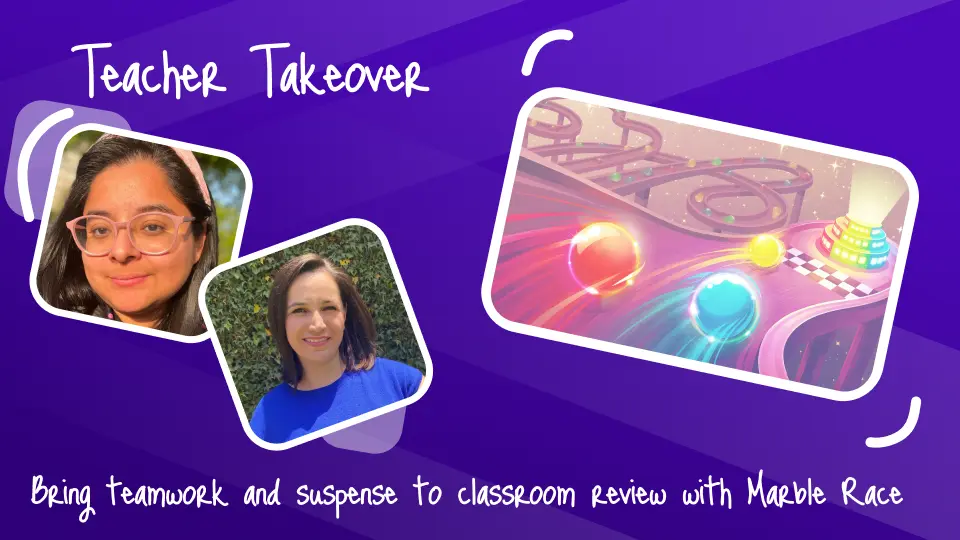
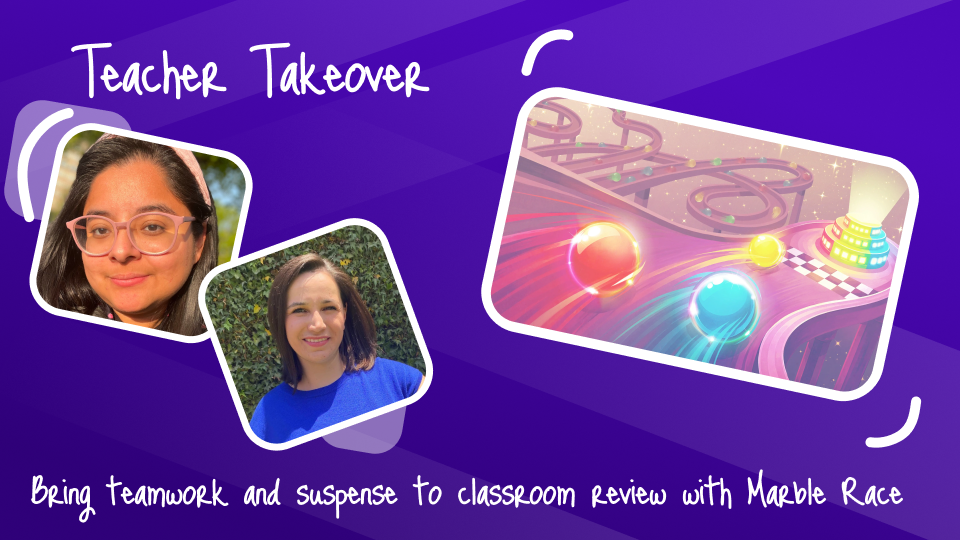
Enter Marble Race, a transformative new game mode from Kahoot! designed to fundamentally alter classroom dynamics. By decoupling academic accuracy from mere reaction time and introducing a pinball-inspired, randomized team competition, Marble Race shifts the educational focus from "who can click the fastest" to "who truly understands the material." Educators across the globe—from New York City to Jakarta and Mexico City—are reporting a profound shift in classroom culture. By replacing rigid, unforgiving leaderboards with dynamic visual narratives and unpredictable finishes, this new tool is proving that academic review can be both intellectually rigorous and genuinely collaborative.
Detailed Chronology: The Shift from Speed-Driven Podiums to Inclusive Play
To understand the breakthrough represented by Marble Race, one must examine the evolution of educational gaming tools over the past decade.
For years, digital formative assessment tools relied on a linear scoring model: the faster a student answered correctly, the higher their points. While this injected a video-game aesthetic into classrooms, teachers frequently noted unintended consequences. Students who fell behind early in a quiz often checked out mentally, convinced that the leaderboard was mathematically insurmountable. The podium at the end of the session typically celebrated the same top three fastest responders, leaving the broader classroom feeling like spectators rather than active participants.
Recognizing these pedagogical limitations, educational developers began exploring mechanics that could reward mastery over reflexes. The conceptualization of Marble Race marked a pivotal departure from traditional design paradigms. Instead of instantaneous point tallies dictating final outcomes, gameplay was bifurcated into two distinct phases:
- The Cognitive Phase: Students answer curriculum-aligned questions at a pace that prioritizes accuracy and comprehension over raw speed. Correct answers earn marbles for their randomized teams.
- The Kinetic Phase: Between question rounds, the entire class pauses to watch their collected marbles tumble through a physics-based, pinball-style course.
This structural separation of answering and racing effectively dismantled the anxiety of the ticking clock. By turning abstract points into physical, tumbling objects on a screen, developers created an entirely new pacing rhythm for the modern classroom—one that values sustained attention, collaborative investment, and unpredictable excitement.
Supporting Context & Metrics: Why Mechanics Matter in Cognitive Retention
The educational psychology underpinning Marble Race addresses several core tenets of student motivation and cognitive load theory. When students are subjected to relentless time pressures, cortisol levels can rise, inhibiting working memory and executive function. By removing the penalty for slower, deliberate thought, Marble Race mitigates performance anxiety, allowing students to channel their full cognitive capacity toward problem-solving.
Furthermore, the integration of randomized teams introduces the psychological benefits of cooperative learning within a competitive framework. Traditional competitive models foster individualistic or hyper-competitive environments that can isolate struggling learners. Conversely, randomized team assignments in Marble Race foster collective efficacy. Because every correct answer contributes to a shared pool of marbles—and because the physical course introduces randomized obstacles and turns—every single student remains a vital asset to their team’s potential victory.
Classroom deployment data and educator observations highlight several key operational benefits:
- Zero Prep Overhead: Because the game mode integrates seamlessly with pre-existing quizzes in a teacher’s digital library, educators face zero friction in adopting the format. Lessons do not need to be rebuilt or redesigned.
- Versatility Across Disciplines: Whether utilized for STEM concept reinforcement, vocabulary review in language arts, or formative checks for understanding mid-lecture, the mode adapts effortlessly to diverse pedagogical goals.
- Sustained Attention Spans: Qualitative feedback from pilot classrooms indicates that students remain visually and mentally invested through the final question, largely due to the suspense generated by the physical mechanics of the race track.
Official Statements & Global Perspectives
The rollout of Marble Race has elicited enthusiastic responses from educators spanning diverse cultural and institutional backgrounds. The global teacher community has embraced the mode not merely as a novelty, but as a sophisticated instructional instrument.
Ika M., a middle school educator and Kahoot! Ambassador in Indonesia, emphasized the democratic nature of the new format:
"The best part is that it levels the playing field. It successfully captures the excitement of a live game while shifting the focus from ‘who is the fastest clicker’ to ‘who actually understands the material.’ It creates a healthy, high-energy competition where everyone feels they still have a chance to catch up."
Elaborating on the transition from abstract metrics to visual storytelling, Ika added:
"Teachers will love it because it transforms abstract scores into a dynamic visual narrative. Instead of students just staring at shifting numbers on a leaderboard, they see a live race driven by their knowledge. It naturally promotes healthy competition, turns repetitive review sessions into an exciting classroom event, and requires zero extra prep time from the teacher since it applies to any existing quiz."
In the United States, Elisabeth Lainez, a STEM educator based in New York City, observed immediate impacts on student focus and instructional momentum:
"The most beneficial aspect of Marble Race was its ability to motivate students to participate and stay focused on answering questions. Students were excited by the marble racing theme and were eager to see how their performance would influence the outcome of the race."
This sentiment of suspense and inclusive involvement was echoed internationally. Jisun Lee, an Ambassador and primary school educator in South Korea, highlighted the unpredictable nature of the racecourse:
"The fun part is that it’s hard to predict the outcome because the rankings change depending on where the beads land."
From an institutional administrative perspective, the psychological redefinition of competition has proven equally valuable. Carla C., a Director of Innovation in Mexico City, noted the emotional relief the format provides to students:
"It changes the traditional concept of the leaderboard and podium… it shifts students’ attention away from points and winning while they are answering the questions, allowing them to focus more on participation and accuracy."
Future Outlook: The Next Frontier in Interactive Pedagogy
As educational technology continues to converge with advanced game design principles, innovations like Marble Race signal a broader maturation of digital learning tools. The industry is moving past the era of superficial gamification—where basic point systems and leaderboards were deemed sufficient to capture student interest—toward deeply considered mechanics that respect cognitive development and emotional safety in the classroom.
The success of this rollout suggests several future trajectories for classroom engagement tools:
- Pervasive Integration of Physics Engines: Future educational software will likely leverage more sophisticated, dynamic physics simulations to visually represent student achievement, making abstract academic data increasingly tangible and exciting.
- Advanced Equity Algorithms: As platforms refine randomized team mechanics and adaptive scoring, the gap between high-performing and developing students will continue to narrow during collaborative activities, fostering environments of radical inclusion.
- Frictionless Educator Adoption: Tools that respect teachers’ time by operating seamlessly on legacy content—much like Marble Race utilizing existing quiz libraries—will become the gold standard in ed-tech development.
Ultimately, Marble Race demonstrates that the most effective technological interventions in education are those that amplify human connection. By engineering a finish line that remains delightfully uncertain until the very last second, the platform transforms a routine quiz into a shared communal experience. When the entire classroom leans forward in unison, watching the final marbles tumble toward the goal, the true objective of modern pedagogy is realized: a shared, joyous celebration of collective learning.

