
Executive Overview
In the modern educational landscape, educators constantly face the challenge of sustaining student attention, mitigating test anxiety, and fostering an inclusive classroom culture. Traditional gamified learning platforms have long relied on speed-based metrics, podium finishes, and individual leaderboards to motivate students. While effective for some, this hyper-competitive model often alienates learners who process information more deliberately, causing them to disengage early if they feel mathematically locked out of the top ranks.
Enter Marble Race, a pioneering game mode introduced by Kahoot! that fundamentally reimagines how students interact with review sessions and formative assessments. By decoupling excitement from raw clicking speed and anchoring team success to intellectual accuracy, Marble Race transforms knowledge acquisition into a shared cinematic spectacle.
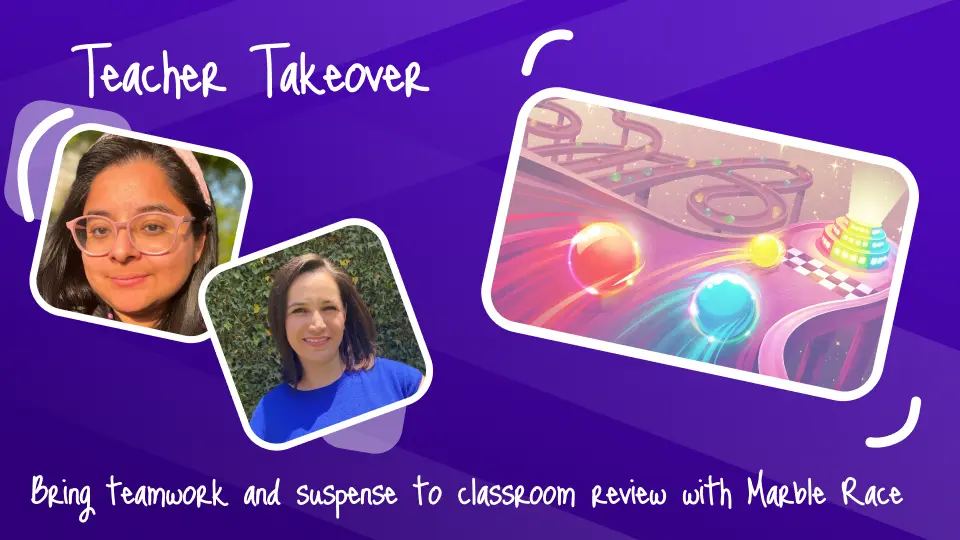
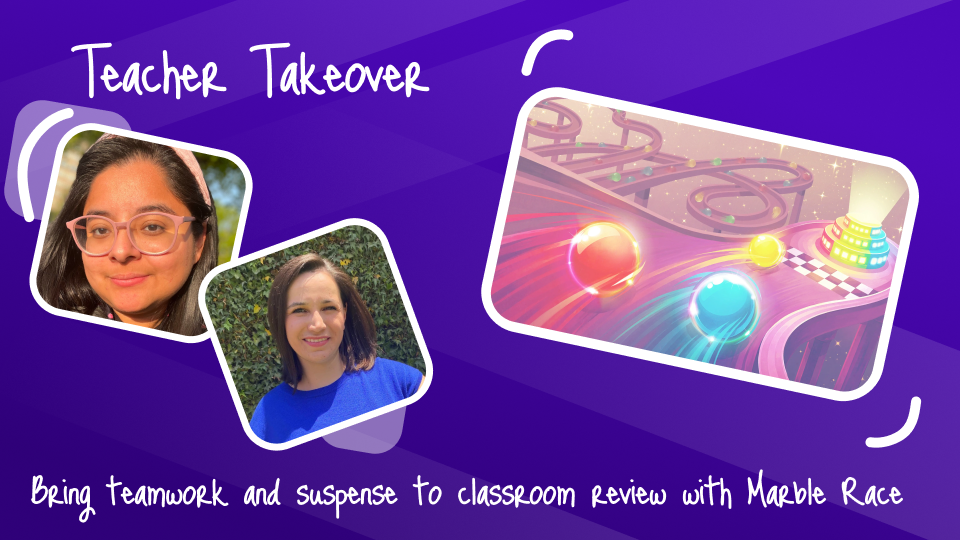
As students correctly answer curriculum-aligned questions, they earn marbles for randomized teams. Between question rounds, the entire classroom pauses to watch these marbles tumble through a vibrant, pinball-inspired physics course. Every bounce, turn, and near-miss creates an unpredictable narrative arc where early deficits can be instantly erased. Educators across the globe—from New York City to Jakarta and Mexico City—are reporting a paradigm shift: students are spending less time anxiously monitoring shifting numeric leaderboards and more time deeply focused on mastering the core material. Crucially, because Marble Race integrates seamlessly with existing educational content libraries, teachers can deploy this high-engagement format with zero additional preparation time.
Detailed Chronology: The Evolution of Classroom Gamification and the Birth of Marble Race
To understand the profound impact of Marble Race, one must examine the trajectory of digital gamification in K-12 and higher education over the past decade.
Phase One: The Rise of Speed-Centric Competition
When digital quiz platforms first disrupted traditional lecturing, the dominant mechanic was speed-plus-accuracy scoring. The faster a student clicked the correct answer, the more points they accumulated. This approach successfully injected high-octane energy into otherwise routine quiz sessions, but it inadvertently created unintended psychological barriers:
- The "First-Round Deficit": Students who struggled to read quickly or process complex multi-step problems rapidly fell behind in the opening seconds, frequently leading to disengagement for the remainder of the session.
- Anxiety and Pressure: The hyper-focus on individual performance often amplified test anxiety, turning what should have been a low-stakes formative check into a high-stress performance review.
Phase Two: The Shift Toward Strategic and Collaborative Play
Recognizing these limitations, educational developers began experimenting with team modes and strategy-based mechanics. Educators demanded tools that rewarded comprehension rather than mere twitch-reflexes. However, many alternative modes struggled to maintain suspense; once a dominant team established a commanding mathematical lead midway through a session, the remaining rounds often felt like a foregone conclusion, dampening class-wide enthusiasm.
Phase Three: The Marble Race Breakthrough
Kahoot!’s development and rollout of Marble Race addressed these structural shortcomings by merging three distinct design philosophies:
- Accuracy-Driven Accumulation: Correct answers uniformly feed a team’s inventory, ensuring that intellectual rigor remains the primary currency of success.
- Dynamic Physics-Based Variance: By interspersing question rounds with randomized, physics-driven obstacle courses, the platform introduces controlled chaos. A team that struggled in the early trivia rounds can experience a sudden surge during the marble descent due to lucky bounces or strategic course layouts.
- Radical Inclusion: Randomized team allocation breaks down pre-existing social cliques, compelling students to collaborate, strategize, and celebrate collectively.
Early testing phases across international pilot schools revealed unprecedented engagement metrics, prompting a rapid global rollout embraced by the platform’s certified Ambassador network.
Supporting Context & Metrics: Why Marble Race Works Pedagogically
The enthusiastic adoption of Marble Race by educators is underpinned by solid pedagogical principles regarding motivation, cognitive load, and emotional safety in learning environments.
Leveling the Playing Field
Cognitive science suggests that anxiety severely impairs working memory. By removing the ticking clock penalty for slower responses, Marble Race lowers affective filters. Students report feeling psychologically safe to think critically about complex STEM problems or nuanced linguistic queries without the looming fear of public failure on a live leaderboard.
As highlighted by educators during field trials, this structural change democratizes participation. The student who takes their time to carefully parse a biology diagram contributes just as much value to their randomized team as the rapid-fire responder.
Sustaining Attention from First Question to Final Taps
In traditional lecture formats or static review sessions, attention decay typically sets in after the 15-minute mark. Marble Race alters the pacing of the classroom rhythm through a cycle of focused cognitive output followed by high-reward visual payoff:
- Cognitive Phase: Students concentrate intensely on answering questions accurately to secure resources.
- Cinematic Phase: The class collectively watches the marble descent, releasing dopamine and resetting cognitive fatigue before the next intellectual challenge.
This cyclical cadence keeps students anchored to the lesson narrative from the opening question to the final tumble.
Zero-Friction Implementation for Educators
Teacher burnout and time poverty are critical bottlenecks in modern education. New ed-tech tools often fail to achieve widespread adoption if they require hours of curriculum redesign or content rebuilding. Marble Race solves this adoption hurdle through backward compatibility. Educators can access any pre-existing quiz housed within their personal Kahoot! library—whether built years ago or curated this morning—and instantly launch it in the Marble Race format with a single click.
Official Statements & Insights from Global Educators
The true measure of any educational innovation lies in the lived experiences of practitioners on the front lines of teaching. International educators and Kahoot! Ambassadors have shared compelling testimonials regarding the transformative impact of Marble Race on their daily classroom dynamics.
"The best part is that it levels the playing field. It successfully captures the excitement of a live game while shifting the focus from ‘who is the fastest clicker’ to ‘who actually understands the material.’ It creates a healthy, high-energy competition where everyone feels they still have a chance to catch up."
— Ika M., Middle School Educator, Indonesia
Ika’s observation speaks directly to the equity of the game mode. By decoupling speed from scoring, the platform ensures that academic competence remains the true north of the exercise.
"The most beneficial aspect of Marble Race was its ability to motivate students to participate and stay focused on answering questions. Students were excited by the marble racing theme and were eager to see how their performance would influence the outcome of the race."
— Elisabeth Lainez, STEM Educator, United States
For STEM subjects—which frequently require methodical calculation, structural analysis, and step-by-step problem-solving—Elisabeth’s experience underscores how Marble Race maintains high morale during rigorous content delivery.
"It changes the traditional concept of the leaderboard and podium… it shifts students’ attention away from points and winning while they are answering the questions, allowing them to focus more on participation and accuracy."
— Carla C., Director of Innovation, Mexico City
Carla points to a profound psychological shift: when students are not hyper-fixated on individual rankings during a quiz, their cognitive bandwidth is fully liberated for actual learning and content retention.
Additional commentary from international practitioners highlights the sheer entertainment value and suspense of the mechanic. Jisun Lee, a primary school educator in South Korea, noted that the inherent unpredictability of the bead trajectories ensures that rankings remain fluid and exciting until the final second. Meanwhile, New York-based educator Alex L. emphasized the electric classroom atmosphere during the final marble descent, describing it as a unifying moment of shared joy.
Future Outlook: The Next Frontier of Immersive Classroom Design
As educational technology continues to converge with immersive design principles, features like Marble Race signal a broader evolution in how digital tools support human-centric learning environments.
1. Moving Beyond Gamification to Narrative Engagement
Future iterations of classroom tools are expected to lean further into narrative-driven mechanics. Rather than treating gamification as a superficial layer of points, badges, and leaderboards slapped onto standard quizzes, developers are learning that students crave meaningful stakes and collective narratives. The physical journey of the marble acts as a visual metaphor for collective student progress—a narrative arc where individual contributions aggregate into a shared community outcome.
2. Deepening Data Analytics for Formative Assessment
While students experience Marble Race as an exhilarating team sport, educators are quietly leveraging the underlying data architecture. Future expansions of such game modes will likely offer teachers deeper, real-time diagnostic insights—mapping team-level marble performance back to individual misconception tracking, allowing for targeted remediation immediately following the game.
3. Fostering Social-Emotional Learning (SEL)
As schools increasingly prioritize Social-Emotional Learning alongside academic mastery, collaborative game modes that rely on randomized teams will play a crucial role. By compelling students to work alongside peers they might not typically interact with, supported by a shared visual objective, platforms like Kahoot! are actively building empathy, communication, and peer encouragement within diverse classrooms.
Conclusion
In an era where educators must continually compete with an array of digital distractions for the attention of digital-native students, Marble Race offers a masterclass in thoughtful educational design. By replacing anxiety-inducing speed trials with inclusive, accuracy-focused collaboration and unpredictable visual narratives, it proves that learning can be both rigorously academic and electrifyingly fun.
Ultimately, the enduring image of a Marble Race session is not a lone victor standing atop a solitary podium, but an entire classroom leaning forward in unison, cheering as the final marbles tumble toward an unpredictable finish line—proving that in the modern classroom, when students learn together, everyone wins.

