
Executive Overview
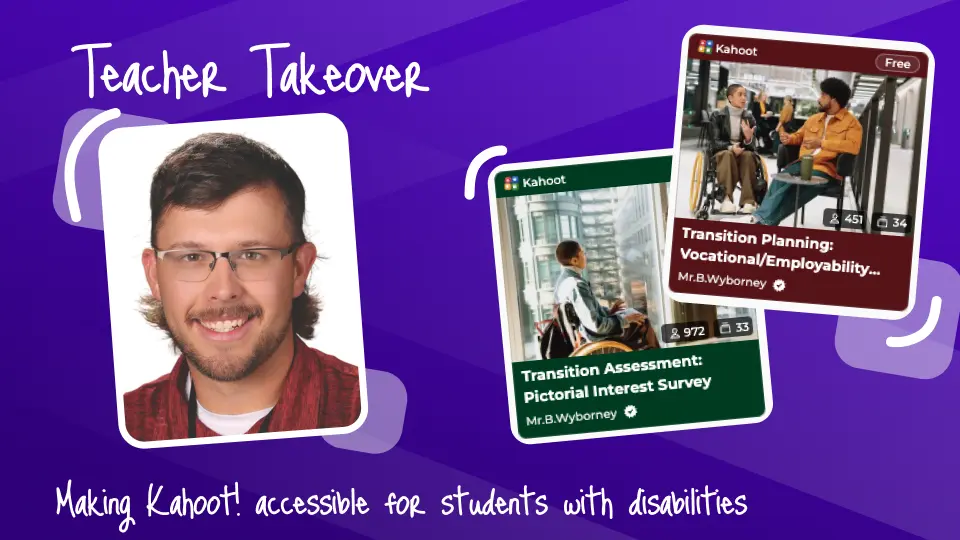
In the landscape of modern educational technology, digital tools are frequently designed with general education environments in mind. However, a growing movement among pioneering educators is reshaping these platforms to serve diverse, complex learning needs. Brett Wyborney, an experienced educator spanning eight years across Alaska and Washington state, stands at the forefront of this inclusive pedagogy. Serving as a Kahoot! Ambassador, Wyborney has spent his career adapting mainstream gamified learning platforms to better accommodate functional academics, students with moderate-to-severe disabilities, and learners with specific learning impairments.
Wyborney’s pedagogical innovations center on a critical challenge in special education: the scarcity of age-appropriate, accessible materials for students aged 14 to 22. By ingeniously modifying Kahoot!—a platform traditionally known for fast-paced, competitive trivia—Wyborney has turned it into a robust tool for daily instruction, formative assessment, and life-skills transition planning. His methodology removes traditional reading, writing, and fine-motor barriers, allowing nonspeaking, nonreading, and neurodivergent students to independently demonstrate mastery, express personal preferences, and engage meaningfully with their peers. This report explores Wyborney’s framework for inclusive educational technology, detailing how strategic modifications to digital assessments can revolutionize functional academics and data collection in special education.
Detailed Chronology & Evolution of Practice
The Genesis of a Problem: Finding Accessible Curriculum
Brett Wyborney’s journey toward digital inclusion began years ago when he stepped into a functional academics classroom designed for students with significant disabilities aged 14 to 22. Immediately, he encountered a systemic bottleneck: the market was heavily saturated with early childhood materials that lacked age-appropriate dignity for teenagers and young adults, or alternatively, advanced texts that were inaccessible to students with complex learning profiles.
In a typical classroom comprising six to eight students, the diversity of needs was vast. Most students required one-on-one para-educator support; many were nonreaders or nonspeaking; some lived with visual impairments; and others came from homes where English was an additional language. Crafting a cohesive lesson plan that engaged every student simultaneously felt Sisyphean.
Rather than abandoning digital engagement tools, Wyborney chose to reimagine them. He recognized that Kahoot!’s interactive interface possessed the underlying architecture required to bridge the gap between complex curricula and students’ unique cognitive and physical motor profiles.
Iterative Adaptation in the Classroom
Over his multi-year tenure, Wyborney systematically deconstructed the traditional Kahoot! experience, rebuilding it through a lens of universal design for learning (UDL). His iterative process involved moving away from text-heavy prompts and standard four-option multiple-choice formats. By introducing visual symbols, reducing cognitive load via binary choices, and optimizing the platform for touch-screen technology, Wyborney cultivated an environment where students could interact with academic content autonomously.
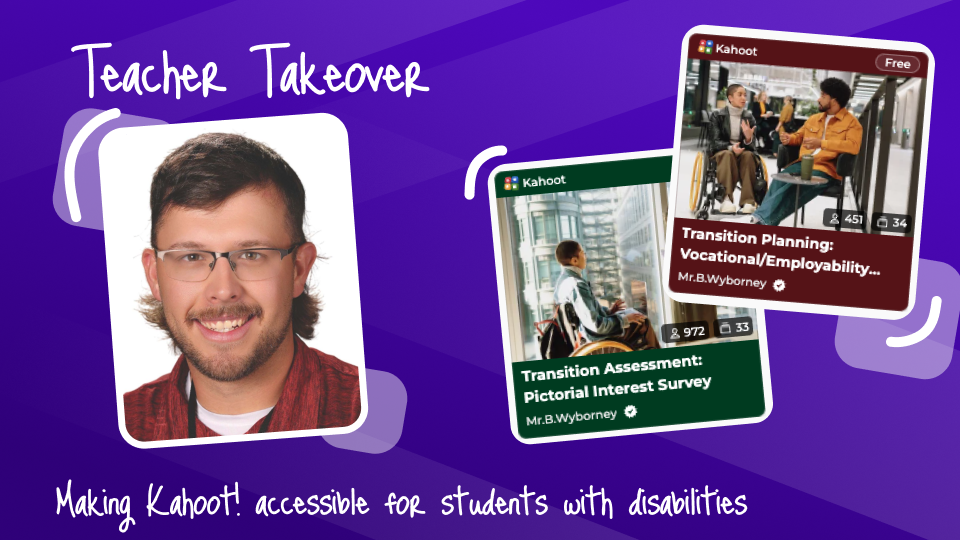
This evolution culminated in the creation of specialized resources, most notably the Transition Assessment: Pictorial Interest Survey. Designed specifically for secondary students with severe disabilities, this tool bypassed traditional literacy hurdles, allowing teenagers to map out their post-secondary futures through intuitive visual choices.
Supporting Context & Mechanics of Accessible Gamification
To successfully implement gamified learning in a functional academics setting, educators must dismantle physical and cognitive barriers. Wyborney’s methodology relies on four core pillars of adaptation:
1. Utilizing Images as Answer Options
Traditional quizzes rely heavily on literacy skills, which can isolate nonreading students or those with processing delays. Wyborney integrated pictures, Picture Exchange Communication System (PECS) symbols, photographs, and familiar icons as direct answer choices.
- Accessibility Impact: Nonreading students can independently participate in academic and behavioral assessments.
- Hardware Synergy: These picture-based answers pair exceptionally well with touch-screen tablets and interactive displays. Many students struggle with the fine-motor dexterity required to operate a traditional computer mouse or trackpad; touch screens restore autonomy, allowing direct, physical interaction with choices.
2. Reducing the Number of Answer Options
While standard trivia games utilize four distinct choices, excess options can create cognitive overload and visual clutter for neurodivergent learners. Wyborney recommends scaling down to two choices (e.g., distinguishing a mammal between a dog and a fish) to streamline decision-making.
- Cognitive Scaffolding: Fewer choices enlarge the visual buttons on screen, aiding students with visual impairments or motor challenges.
- Flexibility: The framework remains scalable; educators can graduate students to three or four options as their confidence and processing capabilities grow, ensuring the goal remains barrier removal rather than artificial simplification.
3. Incorporating Multiple Correct Answer Options
To foster a positive psychological climate and accommodate personal preference, Wyborney leverages questions with multiple correct answers.
- Fostering Autonomy: When surveying students on hobbies (e.g., selecting preferred activities like art, music, reading, or sports), marking all options as correct ensures that no student receives a "wrong" score for expressing personal taste.
- Equitable Competition: Unlike traditional poll formats, assigning points to all valid preferences allows every student to experience the thrill of climbing the leaderboard, building classroom morale and engagement.
4. Facilitating Transition Assessments
High school transition plans are mandatory for special education students preparing for life after graduation. However, standard transition surveys rely on heavy verbal or written disclosures. By deploying pictorial interest surveys via Kahoot!, Wyborney enabled students to register preferences using simple visual feedback (such as thumbs-up or thumbs-down indicators), capturing authentic vocational and life goals without linguistic friction.
Official Insights & Practitioner Perspective
The integration of digital tools into special education is often viewed through a lens of skepticism—specifically regarding whether technology can genuinely replace human judgment. Wyborney is quick to clarify that digital platforms serve as amplifiers, not replacements, for expert educator oversight.
"I realized that Kahoot! could be the perfect platform for creating materials that were appropriate for my students’ unique needs." — Brett W., Washington, USA
Furthermore, the logistical burden of data collection in special education—documenting Individualized Education Program (IEP) goals and tracking progress—historically consumed countless hours of instructional time. Wyborney highlights how automated reporting systems alleviate this strain:
"Kahoot! wasn’t replacing professional judgment or other transition assessment methods. Instead, it became one additional tool for collecting meaningful student data in a way that was accessible to my students."
By utilizing built-in platform analytics, educators can instantly log student responses, track longitudinal growth, and repeat assessments across multiple sessions without the friction of administering manual, one-on-one protocols. This repeatability allows teachers to analyze consistency in student preferences and cognitive retention with unprecedented efficiency.
Future Outlook: The Next Wave of Inclusive Educational Technology
As educational technology continues to evolve, the methodologies pioneered by educators like Brett Wyborney offer a blueprint for developers and school districts alike. The future of special education technology lies in native accessibility—building platforms from the ground up that seamlessly incorporate universal design principles, rather than relying on retroactive educator modifications.
Key Takeaways for the Future of Inclusive Tech:
- Universal Design as Standard: Future digital quiz and assessment tools must incorporate drag-and-drop, pin-drop, and touch-optimized image-based inputs as core features rather than workarounds.
- Automated Longitudinal Tracking: The fusion of gamified assessment with automated data reporting will likely expand, giving special educators deeper insights into non-verbal and neurodivergent learning patterns.
- Empowering the Educator-Ambassador Model: The collaboration between tech platforms and frontline practitioners ensures that tool development remains rooted in real-world classroom challenges rather than theoretical assumptions.
Ultimately, Wyborney’s work demonstrates that when technology is coupled with pedagogical empathy and creative adaptation, the digital divide narrows. By transforming a competitive quiz platform into an inclusive canvas for functional academics, educators can unlock new dimensions of autonomy, assessment, and achievement for students of all abilities.

