
Executive Overview
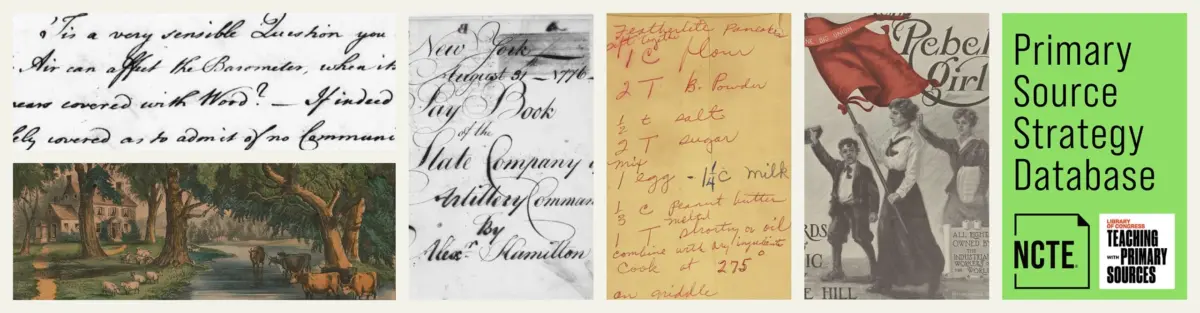
In an era defined by rapid digital information exchange and evolving educational paradigms, the National Council of Teachers of English (NCTE) has embarked on a vital collaborative initiative with the Library of Congress. Operating as an active participant in the Teaching with Primary Sources Consortium, the NCTE is spearheading an ambitious nationwide effort to seamlessly embed primary source material into the daily pedagogical habits, lesson plans, and critical thinking frameworks of literacy teachers and their students.
At the heart of this partnership lies a newly expanded, searchable database designed to unlock the immense educational value hidden within more than 150 specific artifacts housed in the Library of Congress’s vast digitized collections. Crafted by over two dozen distinguished educators, English language arts (ELA) leaders, and curriculum specialists, these instructional strategies are not merely academic exercises. They are rigorous, standards-aligned blueprints that articulate the distinct literacy merits of historical documents, offering educators clear pathways to integrate primary sources into thematic units, interdisciplinary curriculums, and state-mandated academic standards.
By utilizing robust tagging mechanics—spanning categories such as picturebook, argument, vocabulary, and media literacy—educators can pinpoint resources that foster historical empathy, media analysis, and rhetorical evaluation. Among the crown jewels of this database is a deeply revealing, historically rich archival document from The Salt Lake Tribune. Originally dispatched as a "Special Cable to The Tribune" from London-based author Rupert Neville, the article chronicles the extraordinary, defiant lives of women who lived as men—figures like Marie LeRoy, Madame Velasquez, Hannah Snell, Mary Ann Talbot, Catherine Coome, and Marion Edwards.
This deep dive examines how the NCTE and the Library of Congress are transforming the landscape of history and literacy education. It highlights the profound instructional value of recovering erased or marginalized historical narratives, details the alignment with rigorous content standards such as those in New Mexico, and outlines the broader societal implications of challenging traditional gender roles within contemporary classrooms.
Detailed Chronology and Archival Recovery
The journey of bringing marginalized historical narratives out of the archives and into the modern classroom requires a meticulous reconstruction of both historical events and educational methodologies. To understand the significance of the primary source materials now accessible through the NCTE database, one must examine the timeline of archival preservation, journalistic reporting, and pedagogical evolution.
The Historical Artifact: Late-19th-Century Journalism
The focal primary source within this specific NCTE instructional module originates from the late nineteenth century. Published in The Salt Lake Tribune under the byline of London correspondent Rupert Neville, the article represents a fascinating glimpse into how historical deviance from gender norms was reported, perceived, and consumed by the American public during that era.
Neville’s dispatches—designated as specialized international cable transmissions—shone a rare public light on women who had crossed geographic, social, and gender boundaries to survive, fight, work, and thrive in societies engineered to exclude them. The article meticulously details the exploits of several historical figures:
- Marie LeRoy and Madame Velasquez, women whose complex narratives involved navigating military environments or adopting male identities to traverse hostile social terrains.
- Hannah Snell and Mary Ann Talbot, celebrated figures of British military lore who enlisted in the armed forces disguised as men, participating in combat and enduring the brutal realities of eighteenth-century military life before their biological sexes were publicly revealed.
- Catherine Coome and Marion Edwards, lesser-known individuals whose lives underscore the systemic erasure experienced by women who stepped outside the prescribed boundaries of Victorian and pre-Victorian social expectations.
For decades, accounts of these women existed either as sensationalized journalism, localized folklore, or obscure footnotes buried deep within institutional archives. Their systematic exclusion from mainstream historical curricula meant generations of students grew up with an incomplete, homogeneous understanding of human agency, gender construction, and societal control.
The Modern Pedagogical Integration
The contemporary timeline of this project began with the establishment of the Library of Congress’s Teaching with Primary Sources (TPS) Partner Program. Recognizing that raw historical data requires sophisticated pedagogical scaffolding to be effective in K-12 classrooms, the Library of Congress engaged professional organizations like the NCTE to bridge the gap between archival collections and ELA classrooms.
Through a rigorous collaborative process, more than two dozen educators and ELA leaders convened to design, test, and refine instructional strategies for over 150 digitized items. Their goal was to move beyond rote memorization of dates and names, equipping teachers with tools to cultivate critical literacy skills. By curating articles like Rupert Neville’s Salt Lake Tribune dispatch and pairing them with targeted instructional frameworks, the initiative created a dynamic bridge between nineteenth-century journalism and twenty-first-century media literacy.
Supporting Context and Educational Metrics
The integration of primary sources into literacy instruction is supported by extensive educational research demonstrating that encounters with authentic historical texts significantly enhance reading comprehension, critical thinking, and civic engagement. The NCTE-Library of Congress database provides quantitative and qualitative frameworks that allow educators to measure student growth across multiple cognitive domains.
Instructional Value and Curriculum Impact
The primary source focusing on women who lived as men carries profound instructional value for modern classrooms. The individuals documented in Rupert Neville’s article systematically defied the social norms, legal restrictions, and economic limitations placed upon women of their respective eras. Introducing these narratives into the curriculum yields several distinct educational benefits:
- Deconstruction of Gender Roles: By examining the lives of historical figures who operated outside traditional gender binaries, students are actively encouraged to question historical and contemporary gender roles. Classroom discussions interrogate how societal expectations constrain human potential and how individuals negotiate those boundaries.
- Combating Historical Erasure: Many women, particularly those whose life choices challenged prevailing moral codes, were intentionally written out of mainstream historical accounts or reduced to caricatures. Bringing these figures into the light provides students with a more complete, nuanced, and accurate understanding of human history.
- Fostering Empathy and Perspective-Taking: Confronting the severe institutional and social challenges these women faced helps students build deep empathy for individuals who defy societal norms in the ongoing, historical struggle for human rights and equality.
Standards Alignment: A Case Study in Rigor
To ensure that the exploration of these complex historical texts meets state and national educational mandates, the NCTE instructional modules are explicitly mapped to rigorous content standards. For example, the New Mexico Adopted Content Standards for Reading and Literacy in History/Social Studies serve as a benchmark for how these primary sources drive academic achievement.
| Curriculum Area | Standard Identifier | Standard Description & Pedagogical Application |
|---|---|---|
| English Language Arts (Reading) | RI.9-10.1 | Cite strong and thorough textual evidence to support analysis of what the text says explicitly as well as inferences drawn from the text. (Applied when students analyze Rupert Neville’s claims about individual identities). |
| English Language Arts (Reading) | RI.9-10.8 | Delineate and evaluate the argument and specific claims in a text, assessing whether the reasoning is valid and the evidence is relevant and sufficient; identify false statements and fallacious reasoning. (Applied when evaluating 19th-century journalistic bias). |
| History/Social Studies Literacy | RH.11-12.2 | Determine the central ideas or information of a primary or secondary source; provide an accurate summary that makes clear the relationships among the key details and ideas. (Applied when synthesizing multi-layered historical narratives). |
Furthermore, the database utilizes a sophisticated tagging system that enables teachers to filter content based on specific pedagogical needs. Tags such as Vocabulary, Media Literacy, Writing Process, Reading Fluency, Listening, Minilesson, and Collaboration ensure that historical inquiry is inextricably linked to fundamental language arts skill development.
Official Statements and Institutional Vision
The partnership between the National Council of Teachers of English and the Library of Congress represents a shared commitment to democratizing historical access and elevating the quality of literacy instruction nationwide.
Leadership across both institutions has consistently emphasized that primary sources are not mere illustrative decorations for textbooks; they are active catalysts for inquiry-based learning. While specific organizational announcements highlight the ongoing expansion of the Teaching with Primary Sources Consortium, educational stakeholders have articulated a unified vision for the initiative.
"Primary sources force students out of passive consumption and into active historical detectives," notes curriculum frameworks developed within the TPS Consortium. "When students examine historical journalism, diaries, photographs, and legislation, they are no longer just learning about the past—they are learning how to weigh evidence, interrogate bias, and construct reasoned arguments that mirror the demands of modern civic life."
By providing teachers with peer-reviewed, classroom-tested strategies—such as those created by the consortium’s cadre of ELA leaders—the NCTE ensures that educators do not have to navigate the monumental digital archives of the Library of Congress alone. The searchable database acts as an intellectual bridge, translating massive institutional repositories into accessible, high-yield classroom assets that respect both historical complexity and pedagogical reality.
Future Outlook: The Evolution of Literacy and Historical Inquiry
As educational landscapes continue to adapt to technological innovations and shifting societal dynamics, the initiative between the NCTE and the Library of Congress points toward a more inclusive, inquiry-driven future for K-12 education.
Expanding the Digital Archive and Teacher Network
Looking ahead, the Teaching with Primary Sources Consortium plans to continually expand its searchable database, incorporating additional artifacts from the Library of Congress’s millions of digitized items. Future phases of the project will likely focus on:
- Deepening Interdisciplinary Connections: Bridging English language arts, social studies, art history, and media studies through cross-curricular primary source units.
- Enhancing Digital Literacy Tools: Integrating advanced media literacy frameworks to help students navigate not only nineteenth-century cable dispatches like Rupert Neville’s, but also twenty-first-century digital information ecosystems rife with misinformation and artificial intelligence-generated content.
- Professional Development Outreach: Scaling nationwide workshops and professional learning communities to train educators in the effective deployment of primary source-based literacy strategies.
Cultivating Critical Thinkers for a Complex World
Ultimately, the integration of diverse, challenging, and marginalized primary sources into the curriculum addresses a fundamental mandate of modern education: preparing students to think critically, independently, and empathetically about the world around them.
By unearthing stories of historical defiance—such as the women who navigated restrictive gender norms centuries ago—educators empower students to examine their own societal structures with a discerning eye. Through the continued collaboration of the NCTE, the Library of Congress, and dedicated classroom teachers across the nation, the silenced voices of the past are finding new life, proving that history is not a static monument, but an ongoing conversation about human dignity, justice, and truth.

