
Executive Overview
In the landscape of modern early childhood education, bridging the gap between foundational phonological awareness and joyful, play-based learning remains a primary objective for educators and curriculum developers. As schools increasingly align their reading curricula with the Science of Reading, the demand for evidence-based, highly engaging classroom resources has skyrocketed.
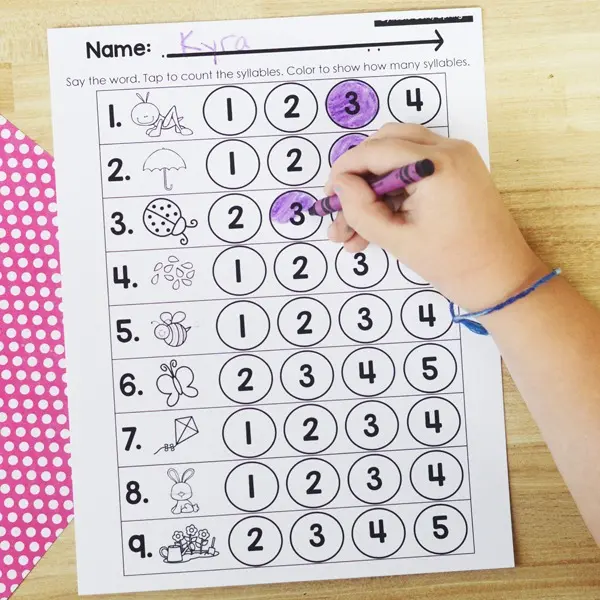
Enter the Spring Syllable Sort and its comprehensive counterpart, the Four Seasons Syllable Sort curriculum expansions. Developed to address critical auditory discrimination and phonological processing skills in preschool and kindergarten students, these printable literacy tools transform abstract linguistic concepts into tangible, interactive experiences. By combining visual picture clues with kinesthetic actions—such as clapping and tapping—these activities allow young learners to isolate and segment word parts successfully.
This report provides an in-depth examination of the pedagogy behind syllable sorting, explores the architecture of these seasonal learning packs, reviews their structural integration into modern literacy centers, and evaluates the broader future outlook for play-based phonics instruction in early education.

Detailed Chronology: The Evolution of Play-Based Phonological Awareness
To understand the significance of the Spring Syllable Sort, one must examine the evolution of early literacy strategies over the past two decades.
- Early 2000s—The Rote Memorization Era: Early childhood classrooms traditionally relied heavily on sight-word memorization and basic alphabet recognition. Phonological awareness—the ability to recognize and manipulate the spoken parts of sentences and words—was often treated as an incidental skill rather than a foundational pillar.
- The Mid-2010s—The Shift Toward the Science of Reading: As cognitive neuroscientists and literacy researchers published comprehensive data regarding how the human brain learns to read, educational frameworks shifted dramatically. Phonemic and phonological awareness took center stage, emphasizing auditory processing before moving on to grapheme-phoneme correspondence.
- Late 2010s to 2020—The Rise of Multi-Sensory Classrooms: Educators recognized that young children require multi-sensory engagement to master abstract concepts. Clapping, tapping, and stomping syllables became common classroom interventions to help students physically feel the rhythms of language.
- January 2025—Introduction of Targeted Seasonal Syllable Sorts: To support educators implementing these advanced methodologies without sacrificing the joy of early childhood play, specialized thematic resources emerged. The launch of the Spring Syllable Sort and the expansive Four Seasons Syllable Sort standardized these phonological exercises around seasonal vocabulary, giving teachers ready-to-print tools designed specifically for Pre-K and Kindergarten learners.
Supporting Context & Metrics: Why Syllable Segmentation Matters
Phonological awareness is widely recognized by reading specialists as a primary predictor of future reading and spelling success. Before children can decode written letters into sounds, they must first master the sounds of spoken language.
The Cognitive Mechanics of Syllable Sorting
Syllables represent units of pronunciation centered around a vowel sound. When children segment words—breaking them down into manageable chunks—they engage multiple cognitive pathways simultaneously:

- Auditory Processing: Listening carefully to the spoken vocabulary word.
- Kinesthetic Integration: Physically clapping, tapping, or moving objects to represent each word part.
- Analytical Sorting: Categorizing the word based on its syllable count (e.g., separating one-syllable words like sun from multi-syllable words like tulip or butterfly).
Curricular Versatility and Classroom Metrics
The pedagogical framework of the Spring Syllable Sort is built for versatility across various learning environments:
- Literacy Centers: Small group stations where children collaborate or work independently with picture and counting cards.
- Take-Home Practice: Bridging the gap between the classroom and the home environment by providing families with accessible, low-prep phonological games.
- Independent Assessment: Optional black-and-white worksheets that allow educators to quickly gauge individual student comprehension and mastery.
The Comprehensive 42-Page Seasonal Framework
Expanding beyond a single season, the broader educational suite incorporates a 42-page pack dedicated to the changing year. This comprehensive module ensures that phonological awareness remains consistent across all four seasons, utilizing thematic vocabulary to keep children engaged year-round.
Official Statements and Pedagogical Insights
Early childhood literacy experts emphasize that explicit vocabulary introduction is a vital prerequisite for successful phonological activities.

"Before expecting students to independently segment and sort words based on their structural parts, educators must explicitly introduce the vocabulary," notes curriculum design documentation accompanying the Spring Syllable Sort. "Ensuring that young learners clearly understand the objects represented in the picture cards removes cognitive friction, allowing them to focus entirely on the sound structure of the words rather than guessing the identity of the image."
Furthermore, aligning these activities with the Science of Reading ensures that schools are meeting modern benchmarks for explicit, systematic instruction. By deliberately focusing on auditory sounds and visual picture clues—rather than pushing premature decoding of complex written text—these resources respect the developmental readiness of Pre-K and Kindergarten children.
Future Outlook: The Direction of Early Childhood Literacy Resources
As educational paradigms continue to evolve, the integration of digital accessibility with high-quality physical printables is reshaping how teachers design their lesson plans.

1. Hybrid Learning Integration
While hands-on, tactile manipulation remains irreplaceable in early childhood education (such as clapping hands and sorting physical cards), future iterations of phonological tools will increasingly offer hybrid components. Teachers can expect complementary digital slide decks and interactive whiteboard activities that mirror the success of physical syllable sorts.
2. Differentiated Seasonal Curricula
The success of the Four Seasons Syllable Sorts signals a broader trend toward comprehensive, year-round thematic bundles. Educators are moving away from isolated worksheet packets in favor of cohesive, holistic unit studies where literacy, science (nature observation during seasonal changes), and math seamlessly intersect.
3. Increased Focus on Equity and Access
Providing free, high-quality foundational resources—such as the introductory Spring Theme Syllable Sort—democratizes access to elite educational materials. Teachers in underfunded districts or homeschooling parents alike can access printables that meet rigorous modern literacy standards without placing a financial burden on classrooms.

Conclusion
The introduction of specialized literacy tools like the Spring Syllable Sort and the comprehensive Four Seasons collection represents a significant step forward in early childhood education. By merging playful, hands-on activities with rigorous phonological frameworks, educators can equip young learners with the essential listening and segmentation skills they need to become confident, proficient readers. As schools continue to embrace the Science of Reading, such innovative, joy-filled resources will remain cornerstones of effective Pre-K and Kindergarten instruction.

