
Executive Overview
In the landscape of early childhood education, mastering the foundational mechanics of reading remains one of the most critical developmental milestones for young learners. Educators and literacy specialists continually search for pedagogical tools that bridge the gap between auditory processing—specifically phonemic awareness—and visual symbol recognition, known as phonics.
Addressing this crucial instructional need, educational resource creator This Reading Mama has released a brand-new, comprehensive suite of instructional aids: FREE Ending Digraph Puzzles. Designed to target children in the foundational stages of literacy development, these interactive puzzles seamlessly blend auditory skill-building with tactile, visual learning.
This report provides an in-depth examination of the pedagogy behind ending digraphs, analyzes how these newly released puzzles operate within a classroom or home-school environment, explores the distinction between phonics and phonemic awareness, and assesses the broader implications of utilizing gamified, hands-on resources to combat early reading deficits.
Detailed Chronology of Literacy Development: From Sounds to Symbols
The journey of learning to read is not a single leap, but rather a carefully sequenced evolutionary process. To fully understand the utility of the Ending Digraph Puzzles, one must trace the developmental milestones that prepare a child’s brain to process written language.
Phase 1: Phonological and Phonemic Awareness (The Auditory Foundation)
Long before a child ever looks at a flashcard or attempts to decode a printed word, they must master the sounds of spoken language. Phonological awareness encompasses a broad ability to recognize and manipulate parts of spoken language, such as words, syllables, and onset-rime units.

Drilling down further, phonemic awareness—a sub-category of phonological awareness—is the specific ability to notice, think about, and work with individual sounds (phonemes) in spoken words. Before children can map letters to sounds, they must realize that words are made up of discrete sound units. For example, hearing the distinct terminal sound /k/ in the spoken words "sock," "duck," or "truck" requires acute auditory discrimination.
Phase 2: Introducing Digraphs and Trigraphs
Once a child can identify individual phonemes, they encounter combinations of letters that produce a single unique sound. A digraph is defined as a pair of characters used together to represent a single sound, such as the "sh" in fish or the "ck" in duck. In addition to traditional digraphs, early literacy programs must also introduce complex variations, such as trigraphs (three letters making one sound, such as "-tch" in catch).
Mastering ending digraphs is often a stumbling block for early readers. Because the English language relies heavily on these multi-letter phonemes at the terminal ends of words, children frequently default to sounding out individual letters rather than recognizing the consonant team as a singular cohesive unit.
Phase 3: The Phonics Bridge (Connecting Graphemes to Phonemes)
Phonics is the methodology that teaches the relationship between the letters of written language (graphemes) and the individual sounds of spoken language (phonemes). It is the bridge that connects what a child hears to what a child reads.
The newly released Ending Digraph Puzzles capitalize directly on this transitional phase. By requiring learners to physically manipulate and match puzzle pieces containing images to their corresponding ending digraph letters, the resource transforms abstract linguistic concepts into a tangible, kinesthetic experience.

Supporting Context & Metrics: The Mechanics of the Puzzle Pack
To evaluate the effectiveness of the Ending Digraph Puzzles, one must examine the specific linguistic components included in the curriculum and the methodology behind their deployment.
Linguistic Scope of the Free Resource
The puzzle pack has been curated to focus exclusively on terminal (ending) letter combinations that frequently appear in foundational vocabulary. The specific phonetic components covered within the resource include:
- ch (e.g., bench, lunch)
- sh (e.g., brush, fish)
- th (e.g., path, bath)
- ck (e.g., sock, duck)
- ph (e.g., graph)
- tch (e.g., watch, match—operating as a core trigraph component)
Step-by-Step Implementation Methodology
The instructional framework designed by This Reading Mama relies on a multi-step cognitive sequence that engages both auditory and visual pathways:
- Picture Identification (Auditory Processing): Educators lay out the picture puzzle pieces first. The learner must name each object aloud, tuning their auditory focus to isolate the terminal sound. For instance, when looking at a picture of a duck, the child articulates the word and isolates the final /k/ phoneme.
- Letter-Sound Matching (Phonics Integration): Next, the learner is provided with the corresponding puzzle pieces displaying the ending digraph letters. They must systematically match the letter piece to the correct picture piece.
- Kinesthetic Reinforcement: The physical act of interlocking the puzzle pieces serves as immediate cognitive feedback, cementing the connection between the visual grapheme (-ck) and the spoken phoneme (/k/).
Comparative Analysis: Blends vs. Digraphs
A common point of confusion among early educators and parents alike is the distinction between consonant blends and consonant digraphs.
| Feature | Consonant Blends (e.g., st, bl, pr) | Consonant Digraphs (e.g., sh, ch, ck) |
|---|---|---|
| Sound Production | Each letter retains its own distinct individual sound when spoken rapidly together. | The letters combine to create an entirely new single, unique sound. |
| Separability | Can be segmented into individual phonemes with relative ease. | Cannot be segmented into separate distinct letter sounds; they operate as a unified phonetic team. |
| Cognitive Load | Requires blending strategies. | Requires direct memorization and pattern recognition. |
The creator emphasizes that understanding this nuance is vital for literacy instruction, providing supplementary video and written guides to assist educators in navigating these differences.

Official Statements and Educational Insights
The release of these resources aligns with broader movements in educational reform emphasizing systematic, explicit phonics instruction—often referred to in academic literature as the "Science of Reading."
"Using these puzzles allows learners to practice phonemic awareness—specifically isolating and segmenting individual sounds—while simultaneously bridging directly into structural phonics," notes literacy developer Becky in her release documentation. "When children physically connect the sound they hear at the end of a word to the letters printed on the page, deep cognitive mapping occurs."
Educational psychologists have long advocated for multi-sensory learning models. When children engage in tactile activities like puzzle-assembly while simultaneously processing phonetic rules, neural pathways in the brain’s reading network (such as the visual word form area) are reinforced far more effectively than through rote memorization or passive worksheet completion.
Furthermore, by offering the resources freely to educators, homeschoolers, and parents, the initiative seeks to democratize access to high-quality, research-based early intervention tools, bypassing commercial paywalls that often restrict access to premium instructional aids.
Future Outlook: The Evolution of Early Literacy Tools
As educational technology and print-based resources continue to converge, the demand for targeted, low-preparation, high-impact instructional aids is projected to surge. Programs that emphasize explicit phonics instruction are increasingly recognized as essential tools for preventing reading failure in early elementary grades.

Expanding Access Through Digital Libraries
In addition to standalone freebies, initiatives like The Library—an exclusive, ad-free repository managed by This Reading Mama—highlight a shifting trend in how educators curate teaching materials. By centralizing hundreds of vetted, phonics-based resources into streamlined, single-click access portals, educators can significantly reduce administrative preparation time and focus squarely on instructional delivery.
Upcoming Developments in Phonological Assessments
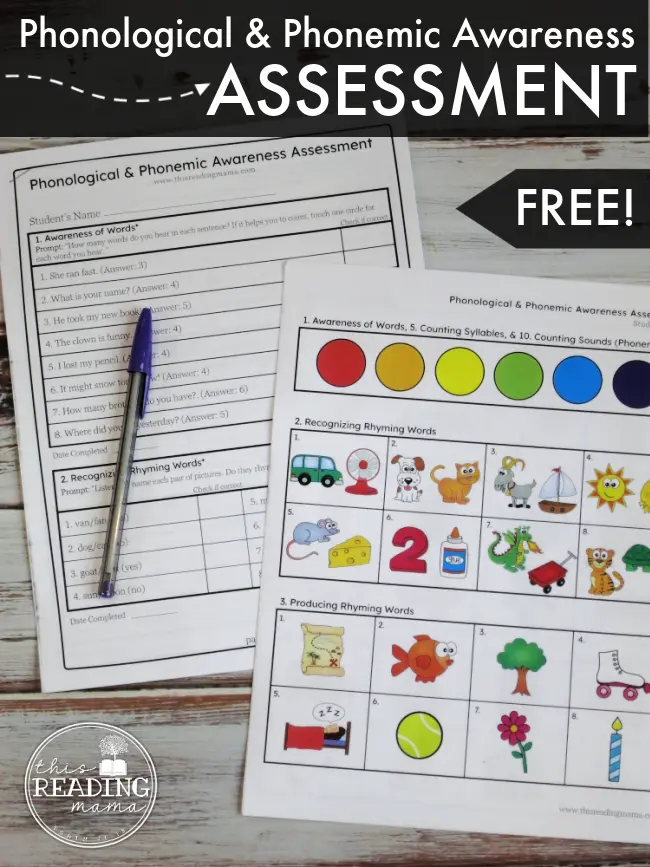
Complementary tools, such as the Phonological and Phonemic Awareness Assessment, are slated for integration alongside resources like the Ending Digraph Puzzles. These diagnostic assessments allow educators to establish baseline metrics for individual learners, identifying specific auditory processing gaps before introducing targeted puzzle interventions.
Conclusion
The introduction of the FREE Ending Digraph Puzzles represents a significant, practical win for early childhood educators and parents striving to build robust foundational reading skills. By ingeniously combining phonemic awareness, phonics, and kinesthetic play into an intuitive puzzle format, this resource successfully transforms a traditionally challenging phonetic milestone into an engaging, accessible learning experience. As the educational community continues to embrace evidence-based literacy practices, tools of this caliber will remain instrumental in shaping the next generation of confident, proficient readers.

