
Executive Overview
In modern education, the traditional focus on core subjects—reading, writing, and arithmetic—is undergoing a profound evolution. While academic content remains essential, educators and cognitive scientists increasingly recognize that the underlying engine driving a student’s academic and personal success is a suite of brain-based capabilities known as executive functioning (EF) skills. Far from being an isolated component of special education or behavioral therapy, executive functioning is now understood to be the foundational bedrock of all learning.
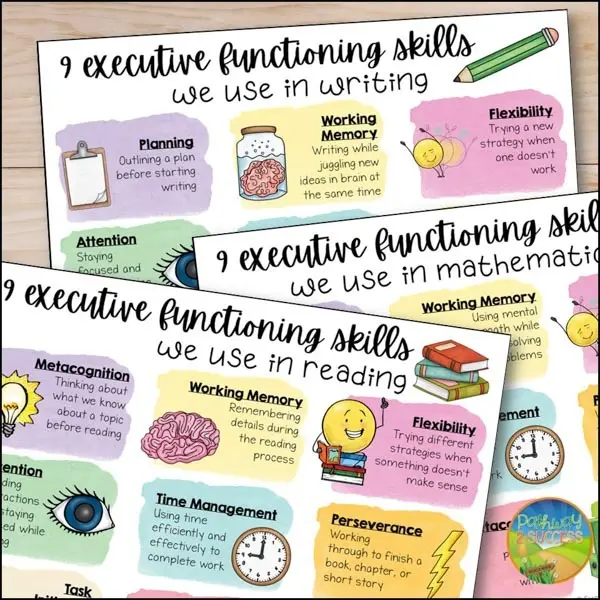
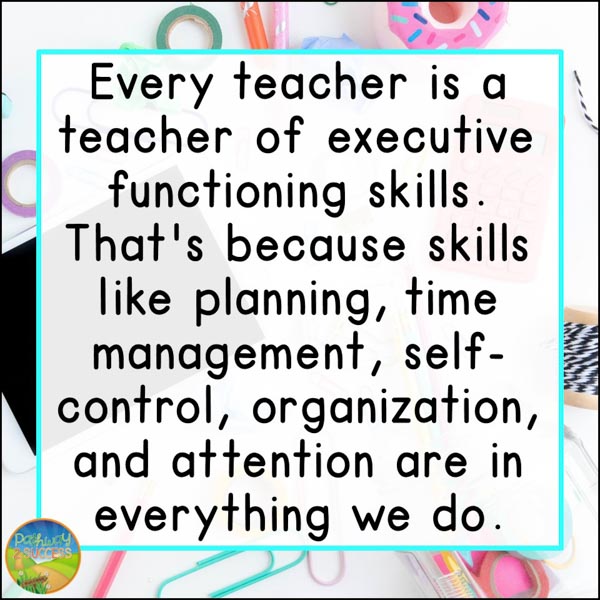
Every educator, from the kindergarten teacher guiding a phonics exercise to the high school physics instructor managing a complex lab, is inherently a teacher of executive functioning. These cognitive processes—which include planning, organization, sustained attention, time management, working memory, and self-regulation—are the invisible scaffolding upon which all academic achievement is built.
Yet, as classrooms grow increasingly complex and digital distractions multiply, students are facing unprecedented challenges in self-regulation and task execution. Integrating executive functioning strategies directly into existing curricula is no longer an optional pedagogical luxury; it is an urgent necessity. By intentionally embedding EF instruction into daily lessons and dedicating brief micro-moments to direct skill-building, educators can transform dependent learners into independent, resilient, and highly capable problem-solvers equipped for lifelong success.
Detailed Chronology: The Paradigm Shift in Classroom Pedagogy
To understand how executive functioning became a focal point of modern educational strategy, it is helpful to examine the historical trajectory of cognitive integration in schools.
- Late 20th Century – The Era of Compartmentalization: Historically, cognitive and behavioral challenges were viewed through a medicalized lens, often isolated to specialized classrooms or individualized education programs (IEPs). General education teachers focused strictly on content delivery, assuming that cognitive skills like organization and planning would develop organically over time.
- Early 2000s – The Rise of Brain-Based Research: As neuroscience advanced, researchers began mapping the development of the prefrontal cortex—the region of the brain responsible for executive control. Educational psychologists established a direct correlation between strong executive functioning skills and higher academic performance, prompting early calls for classroom-level interventions.
- 2010s – The Social-Emotional Learning (SEL) Integration: Schools nationwide began embracing Social-Emotional Learning frameworks. While SEL initially focused heavily on emotional regulation and interpersonal relationships, educators soon realized that emotional control is deeply intertwined with cognitive regulation, leading to a natural convergence of SEL and executive functioning strategies.
- Present Day – Seamless Curricular Integration: Today, the educational paradigm has shifted toward proactive, universal design. Rather than treating executive functioning as a separate curriculum, leading educators are weaving micro-strategies into everyday lesson plans. Concepts like "metacognition" (thinking about thinking) and "task initiation" are now daily touchpoints in math, science, and the humanities alike.
Supporting Context & Metrics: Why Executive Functioning Matters
Executive functioning encompasses a complex set of mental processes coordinated primarily by the prefrontal cortex. These skills allow individuals to plan, focus attention, remember instructions, and juggle multiple tasks successfully.
The Core Pillars of Executive Functioning in Academics
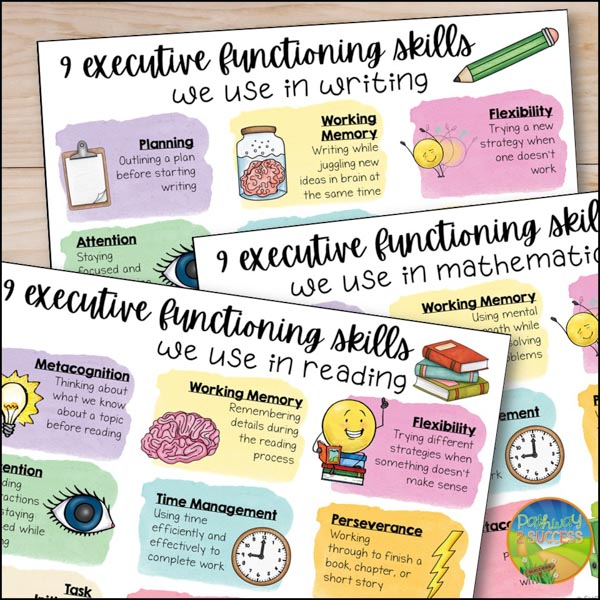
- Planning & Organization: The ability to conceptualize a goal and map out sequential steps to achieve it, while keeping physical and digital materials orderly.
- Task Initiation & Time Management: The capacity to overcome procrastination, begin tasks in a timely manner, and estimate how long assignments will take.
- Attention & Working Memory: The power to maintain focus amidst distractions and hold information in mind while manipulating it.
- Self-Monitoring & Self-Control: Checking in on one’s own progress toward a goal and exercising impulse control to pause and think before acting.
- Perseverance & Flexible Thinking: Working through frustrating obstacles and adapting to shifting rules, perspectives, or environments.
The Impact on Student Success
Data from developmental psychology underscores the predictive power of executive functioning. Longitudinal studies frequently demonstrate that early childhood and adolescent EF skills are stronger predictors of academic achievement than IQ scores.
Furthermore, the modern classroom environment presents unique hurdles. With the proliferation of screens and rapid-fire digital media, students’ baseline spans for sustained attention face unprecedented stress. By intentionally teaching executive functioning strategies—such as breaking large writing assignments into manageable 10-minute milestones or utilizing "mindfulness pauses" for self-control—teachers provide students with the cognitive armor needed to navigate both academic rigor and real-world complexities.
Official Statements & Pedagogical Frameworks
Educational leaders and curriculum developers advocate for a dual-pronged approach to executive functioning: integration within content and explicit micro-instruction.
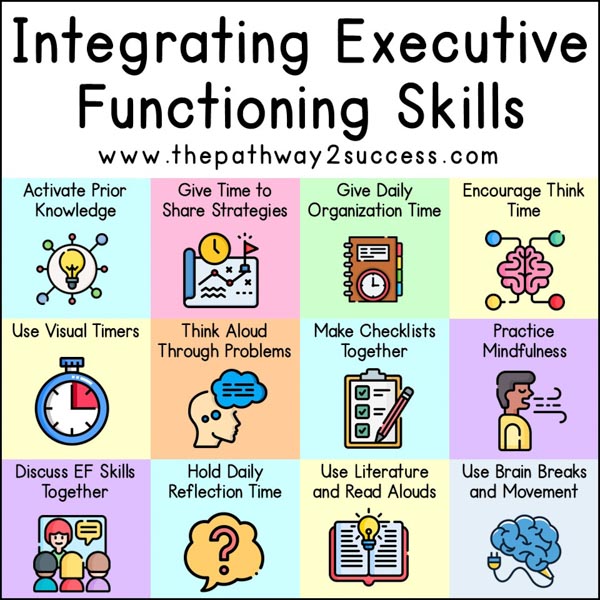
"Every teacher is a teacher of executive functioning skills because these abilities are embedded in every single academic task we ask students to undertake," notes curriculum design specialists in contemporary educational literature. "Whether a student is drafting an eighth-grade English essay or solving a multi-step fourth-grade math problem, they are relying on working memory, planning, and mental flexibility."
Practical Strategies for Content Integration
Teachers do not need to overhaul their lesson plans to support executive functioning. Instead, they can subtly weave EF supports into existing academic frameworks:
- For Planning: Provide graphic organizers not just for writing, but for mapping out multi-step science experiments or history research projects. Teach students to work backward from a due date to set intermediate milestones.
- For Task Initiation: Combat the paralyzing "blank page syndrome" by utilizing visual timers, collaborative goal-setting, and clearly defined first steps (e.g., "Your first task is simply to write down three potential topics on a sticky note").
- For Metacognition: Implement "think-alouds" where teachers model their own internal problem-solving processes out loud. Ask students reflection questions at the end of a lesson, such as: "What strategy helped you solve that difficult math equation today?"
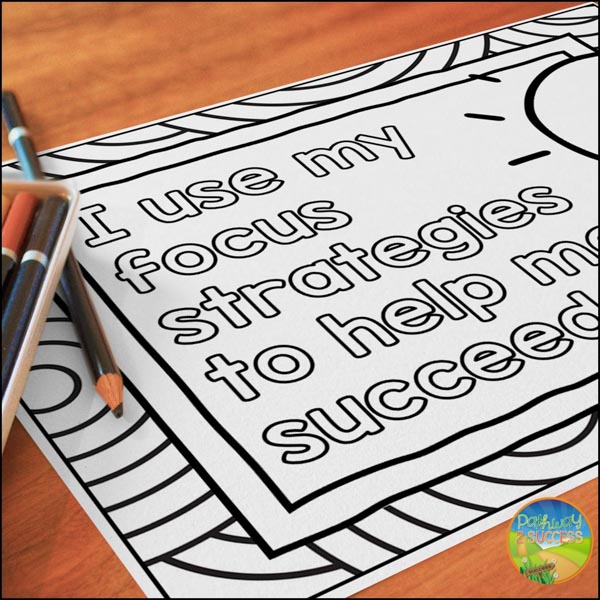
- For Attention and Working Memory: Incorporate movement breaks, chunk complex instructions into smaller verbal and written directives, and encourage the use of positive self-talk coloring pages or focus cues.
- For Perseverance: Reframe mistakes not as failures, but as valuable data points demonstrating neuroplasticity—the brain’s ability to grow stronger through repeated effort and challenge.
Micro-Lessons and Daily Bell-Ringers
In addition to embedded content strategies, schools are finding immense success with brief, dedicated daily routines that explicitly build cognitive skills:
- Executive Functioning Word of the Day: Introduce vocabulary terms like adapt, momentum, routine, and self-discipline. Use guided questions to help students connect these words to their daily lives.
- Quote of the Day: Start the morning with motivational bell-ringers focused on resilience, organization, and problem-solving, dedicating three to five minutes to discussion.
- Read-Aloud Integration: Utilize literature across all grade levels to analyze character choices, emotional regulation, and how fictional protagonists persevere through adversity.
Future Outlook: The Long-Term ROI of Cognitive Skill-Building
As we look toward the future of education, the integration of executive functioning skills represents a vital investment in human capital. The modern workforce demands workers who are adaptable, capable of managing their own time, resilient in the face of setbacks, and skilled at problem-solving in rapidly changing environments.
By shifting our educational focus from rote memorization and passive content delivery to active cognitive skill-building, we prepare students for far more than standardized tests. We prepare them for life.
When schools systematically prioritize executive functioning, the return on investment is clear: reduced classroom behavioral disruptions, decreased student anxiety surrounding high-stakes testing, and a dramatic increase in academic autonomy. Ultimately, teaching executive functioning isn’t about adding one more item to an already overloaded teacher checklist—it is about providing the master key that unlocks every other area of learning and development.

