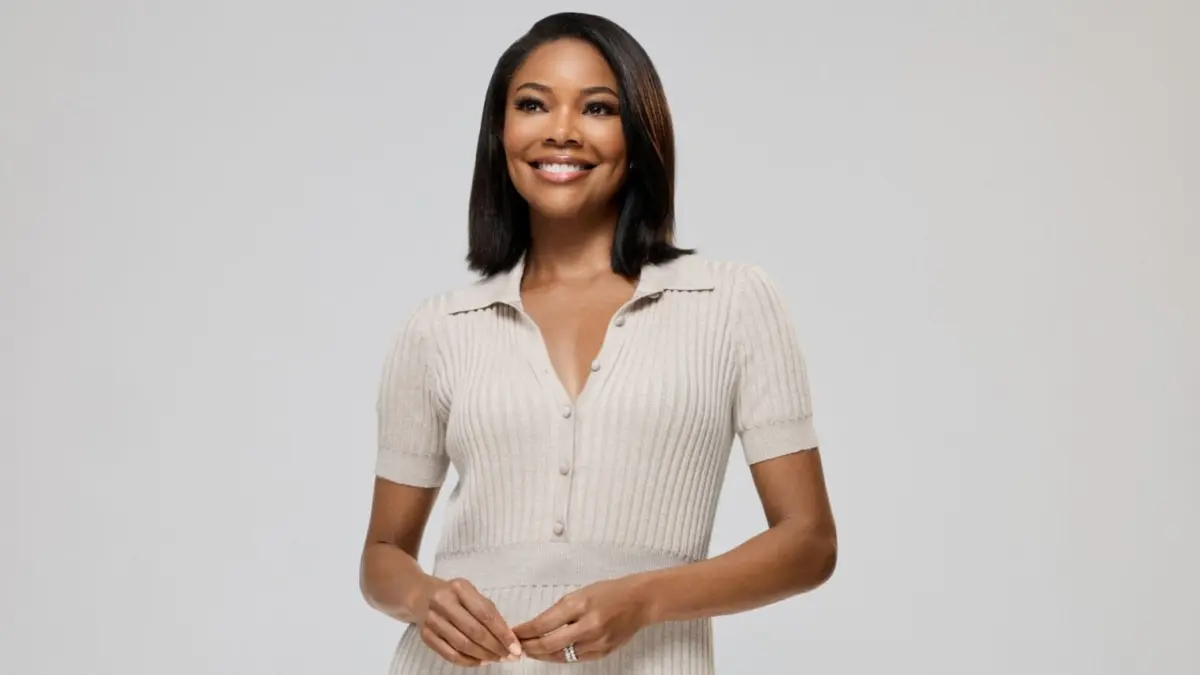
In an industry built on the relentless pursuit of eternal youth, actress, producer, and entrepreneur Gabrielle Union-Wade is choosing a radically different path: total transparency. Stripping away the archaic secrecy that has historically shrouded women’s hormonal transitions, Union-Wade is spearheading a cultural shift regarding perimenopause and menopause.
Her public advocacy—most recently highlighted by her partnership with Bayer’s "Life Doesn’t Stop for a Hot Flash" campaign—comes at a critical intersection of women’s health, corporate accountability, and social conditioning. Millions of women experience menopausal symptoms annually, with hot flashes and cognitive disruptions often persisting for up to a decade. Yet, society has routinely relegated these biological inevitabilities to whispered conversations behind closed doors.
Joined by women’s health nurse practitioner Barbara Dehn (widely known as "Nurse Barb"), Union-Wade’s recent disclosures offer a masterclass in reclaiming bodily autonomy. From experiencing severe perimenopausal symptoms in her 30s while navigating high-pressure film sets to modeling open, shame-free communication for her young daughter, Union-Wade’s narrative is both an individual triumph and a broader call to action for systemic change in women’s healthcare.
Detailed Chronology: The Journey From Unexpected Symptoms to Public Advocacy
The trajectory of Gabrielle Union-Wade’s advocacy began long before the public eye caught wind of her biological transition. Her journey serves as an illuminating timeline of the gaps present in modern clinical care and professional environments.
Phase 1: The Silent Onset in Her Late 30s
Unlike the societal script that dictates menopause as a late-life occurrence, Union-Wade’s encounter with perimenopause began abruptly in her late 30s. At a time when most women are focused on career acceleration or family planning, Union-Wade received the news via routine fertility bloodwork.
"I just felt like I had more time," she reflects. The blood markers told a different story, but the reality didn’t truly hit home until the physical manifestations materialized. The early symptoms arrived unannounced, introducing themselves not as subtle shifts, but as jarring physiological disruptions. Among the minor yet persistent annoyances were rogue chin hairs sprouting overnight—prompting a lifestyle adjustment of keeping tweezers stashed in every vehicle—followed quickly by unmistakable, severe hot flashes.
Phase 2: On-Set Vulnerability and Corporate Blind Spots
The collision of biological reality and professional expectation culminated in a striking incident on a Hollywood film set. While filming a romantic scene opposite a co-star two decades her junior, a severe hot flash struck precisely as the director called action.
In an environment where "time is money," the physical manifestation of her internal heat—sweating, flushed skin, and visible distress—was misinterpreted by crew members and observers. "The way it was reading to other people was like I was scared or nervous," Union-Wade recalls. "And honey, I am old hat at this."
With nowhere to hide and no pause button available on a professional clock, she was forced to improvise. From stashing improvised cold packs (meant for sprained ankles) inside her wardrobe to utilizing portable handheld fans between takes, Union-Wade managed the crisis manually before seeking clinical intervention. Ultimately, her collaboration with a medical professional led her to explore non-hormonal therapeutic options, such as Lynkuet, helping her regain control over her physical comfort without compromising her career.
Phase 3: Shifting the Cultural Paradigm
Recognizing that her private struggles were shared by millions of women globally, Union-Wade transitioned from managing her symptoms privately to organizing public advocacy. By lending her voice to national campaigns, she began dismantling the pervasive narrative that aging equals obsolescence. Her public platform became a megaphone for systemic reform, pushing healthcare providers, employers, and families to acknowledge menopause as a normal, manageable stage of life rather than a medical condition to be endured in isolation.
Supporting Context & Metrics: The Scale of the Menopause Crisis
To understand the weight of Union-Wade’s advocacy, one must examine the broader epidemiological and socioeconomic landscape of women’s midlife health.
The Numbers Behind the Transition
The Scale: According to aggregate health data, an estimated 2 million American women reach menopause every year.
Duration of Symptoms: Vasomotor symptoms, commonly known as hot flashes and night sweats, are not brief inconveniences; they can persist for anywhere from 7 to 10 years for a significant portion of women.
The Economic Impact: The financial toll of unmanaged menopausal symptoms—expressed through lost productivity, reduced work hours, and premature retirement—runs into the billions of dollars annually. Despite this staggering economic footprint, corporate America has been notoriously slow to implement menopause-friendly workplace accommodations.
The Healthcare Knowledge Gap
According to Barbara Dehn (Nurse Barb), the medical community shares a heavy burden of responsibility for the isolation women experience. Historically, medical schools allocated minimal instructional hours to menopause management. Consequently, generations of women presenting with symptoms ranging from brain fog and fatigue to sleep disturbances and joint pain have been dismissed, misdiagnosed, or offered inadequate reassurance.
"So many women have been dismissed. They’ve been minimized," Nurse Barb notes. Symptoms like nocturnal awakenings accompanied by a clammy neck—classic signs of night sweats—are frequently misattributed to anxiety, stress, or thyroid imbalances, leaving patients to navigate a labyrinth of unhelpful medical encounters before finding a knowledgeable provider.
Official Statements and Expert Perspectives
The intersection of celebrity influence and clinical expertise provides a robust framework for addressing the multi-layered challenges of perimenopause.
Gabrielle Union-Wade on Identity and Empowerment
Union-Wade is resolute in her refusal to allow society to shrink her identity. Addressing the common microaggressions directed at women in midlife, she notes the absurdity of comments implying she doesn’t "look like" she’s in menopause.
"Going through menopause doesn’t mean you’re less sexy," Union-Wade states firmly. "It doesn’t make a woman less sharp, less wanted, or less deserving of the promotion. I’m still me. And as you go through menopause, you’re still you."
Her message to struggling women is designed to reframe the transition entirely: "You’re not alone. This isn’t the end. This is a new beginning. It’s a spring awakening. This is your power, claim it. And you’re going to be all right."
Nurse Barb on Navigating the Medical System
Nurse Dehn emphasizes that because symptoms manifest differently in every individual—ranging from severe vasomotor disruptions to subtle shifts in mood and metabolism—a one-size-fits-all approach is doomed to fail.
"What helps is different for everyone," Dehn explains, underscoring the necessity of patient-provider dialogue. Her primary directive to women facing medical dismissal is simple yet vital: Keep looking until a provider takes you seriously. Persistence is often the dividing line between prolonged suffering and effective, tailored treatment.
Future Outlook: Breaking Intergenerational Cycles of Silence
Perhaps the most profound dimension of Union-Wade’s advocacy lies in her home life. Parenting her young daughter, Kaavia, Union-Wade is consciously rewriting the script on how bodies are discussed within the family unit.
When a hot flash hits at home, Kaavia is neither shielded from the event nor taught to view it with discomfort. Instead, the young girl acts as a self-appointed helper, fetching ice water and towels while asking how she can assist. By removing the shroud of secrecy, shame, and taboo that previous generations treated as mandatory, Union-Wade is fostering an environment of radical honesty.
This intergenerational transmission of openness serves a dual purpose. First, it normalizes natural biological processes for young minds, ensuring that children grow up viewing aging as a natural evolution rather than a source of dread. Second, it equips the next generation with the vocabulary and confidence to advocate for their own health needs long before they encounter them in their own lives.
Moving Forward
As public figures like Gabrielle Union-Wade continue to pull back the curtain on perimenopause and menopause, the cultural tide is slowly turning. The demand for specialized healthcare providers, comprehensive corporate wellness policies, and open peer-to-peer dialogue is at an all-time high.
The era of suffering in silence is drawing to a close. By demanding better medical care, speaking candidly in group chats, and refusing to let society dictate their worth based on reproductive status, women are reclaiming their narratives—proving definitively that life, power, and vitality do not stop for a hot flash.