
Executive Overview
The landscape of family entertainment has long possessed a glaring blind spot: the seasonal "on-ramp" horror film. While cinema offers an abundance of content for adults and mature teenagers—ranging from psychological thrillers to high-octane slashers—and a select few foundational gateway pictures like Hocus Pocus and The Nightmare Before Christmas, parents find themselves remarkably short on options. Year after year, households exhaust the same narrow rotation of spooky-adjacent classics, reciting lines in their sleep while waiting for children to age into content that will not induce clinical terror.
Enter Aardman Animations. The legendary British claymation studio behind Wallace and Gromit and Chicken Run is once again expanding its cinematic universe with Shaun the Sheep: The Beast of Mossy Bottom. Arriving in theaters on September 18, this latest stop-motion feature deliberately targets the vanishingly small intersection between genuine Halloween atmosphere and audience-appropriate family viewing. Co-directed by industry veterans Steve Cox and Matthew Walker, the film introduces a rich, handmade aesthetic to the genre, leaning on classic horror tropes, universal slapstick, and peerless visual storytelling.
This deep dive examines the creative genesis of The Beast of Mossy Bottom, the unique structural challenges of executing horror without dialogue, the sparse economic landscape of children’s Halloween cinema, and what this release signals for the future of family-friendly seasonal programming.
Detailed Chronology: From Late-Night Sneak Peeks to Mossy Bottom
To understand the cultural necessity of a film like The Beast of Mossy Bottom, one must trace the historical trajectory of how children are introduced to the macabre. For generations, the initiation into horror has been an accidental or illicit affair. Whether sneaking into a living room to catch glimpses of Child’s Play or IT over an older sibling’s shoulder—often leaving lasting, generation-defining aversions to dolls and clowns—millennials and older generations remember a time before "age-appropriate" spooky media was widely curated.
The evolution of stop-motion animation at Aardman provides a contrasting path. The studio’s lineage stretches back to the late 1980s with Nick Park’s A Grand Day Out, introducing the eccentric inventor Wallace and his pragmatic, long-suffering dog, Gromit. The claymation technique—painstakingly moving physical models frame by frame—imbued these British comedies with a tactile, living warmth that set them apart from early computer-generated imagery.
In 1995’s A Close Shave, audiences met Shaun the Sheep, a quick-witted, woolly protagonist who immediately captured the public imagination and earned a rare, unblemished 100% rating on Rotten Tomatoes. Shaun’s subsequent transition into feature films resulted in critically acclaimed outings, establishing Mossy Bottom Farm as a pastoral universe defined by slapstick chaos, domestic absurdity, and meticulous visual gags.
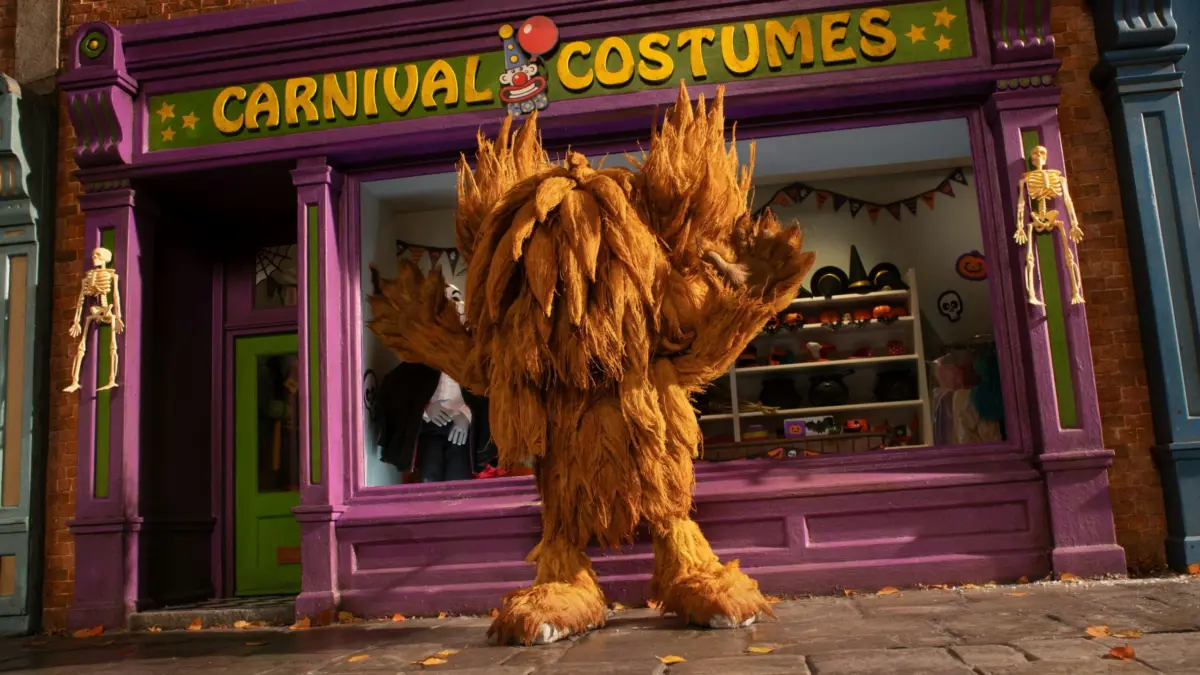
The Beast of Mossy Bottom represents the third major cinematic outing for the Shaun the Sheep property. The narrative kicks into motion when the chronically bewildered farmer develops a budding crush on the local veterinarian. Struggling with a severe case of midlife insecurity regarding his receding hairline, the distracted farmer clumsily destroys the meticulous pumpkin patch cultivated by Shaun and the flock for their Halloween festivities.
Determined to rectify the disaster, Shaun adopts a "mad scientist" persona, initiating a chain reaction of tinkering that collides directly with the farmer’s vanity. The result is a hairy, chaotic escalation that channels classic monster movie tropes through the lens of farmyard slapstick.
Supporting Context & Metrics: The Great Family Horror Desert
The decision to pivot Shaun the Sheep toward the horror genre was not merely a creative whim; it was a response to a profound market scarcity. When co-directors Steve Cox and Matthew Walker began assembling reference materials for the project, they encountered an unexpected hurdle: the library of family-friendly, Halloween-themed cinema was practically nonexistent.
[The Family Horror Landscape]
Adult/Teen Horror  <-- (Massive Library: Slashers, Psychological, Gore)
------------------ [ THE CLIFF / THE GREAT GAP ] ------------------
Gateway Classics   <-- (Very Limited: Hocus Pocus, Nightmare Before Christmas)
Early Childhood    <-- (Shaun the Sheep: The Beast of Mossy Bottom enters here)
As Cox noted during production, the realization struck the creative team early:
"In making this film, we realized there aren’t that many Halloween films for families and for kids, because we were trying to find them to use as reference. ‘How did they do that?’ Oh, nobody’s done this before."
This gap presents a logistical challenge for modern parents. Outside of a handful of seasonal mainstays, the cinematic landscape drops off a cliff. On one side are mild, pre-school-appropriate autumn specials; on the other are horror films wholly unsuitable for an eight-year-old. Consequently, families are locked into a continuous loop of rewatching the same three titles every October.
Furthermore, The Beast of Mossy Bottom operates within a distinct stylistic constraint: the complete absence of dialogue. Operating in the tradition of classic silent cinema and the broader Shaun the Sheep catalog, the film relies entirely on visual cues, physical comedy, musical scores, and expressive character animation. Executing a genre defined by psychological dread and tension-building without spoken exposition is an extraordinary technical hurdle.
As Cox explained regarding the challenge:
"If we were making A Quiet Place with Shaun where nobody speaks, it would have been easy. No, the fact that Shaun doesn’t speak is always a challenge to deliver a story that’s understandable."
Official Statements: Behind the Scenes with Cox and Walker
Maintaining the delicate balance between genuine atmospheric tension and accessible family comedy required rigorous calibration. Co-directors Steve Cox and Matthew Walker approached the project with a dual mandate: honor the foundational traditions of horror cinema while ensuring the material remained palatable for viewers as young as four years old.
Discussing the target demographic, Cox emphasized the inclusive ambitions of the production:
"We set out to design this film for all ages, and we always joke that Shaun the Sheep is for a 4-year-old to a 94-year-old. That’s what we’re saying: This film is good for tiny little kids as well as older people."
To achieve this broad appeal without alienating either end of the spectrum, the directors utilized a comedic release valve. Walker elaborated on the mechanics of blending scares with laughs:
"We know the Shaun the Sheep audience starts very young. And now we’re making a Halloween film and we’re playing with horror tropes, but we were very conscious of not being too scary for the younger audience. There’s a little bit of tension and the odd jump scare, but we’re always undercutting it with comedy."
This structural approach relies on timing. When an audience member’s shoulders begin to tighten in response to cinematic suspense, an abrupt piece of physical comedy—a sheep reacting with characteristic absurdity—disarms the tension, transforming potential terror into shared laughter. To validate this approach, Aardman conducted extensive test screenings with children, ensuring that the psychological threshold was correctly met before finalizing the animation.
Beyond the slapstick designed for younger viewers, the film is heavily layered with adult-targeted Easter eggs and cinematic homages. Opening with a direct nod to Michael Jackson’s Thriller, the movie weaves references ranging from The Simpsons and The 40-Year-Old Virgin to deep cuts from Universal Monsters and Hammer Horror. This multifaceted approach ensures that while six-year-olds enjoy the kinetic physical comedy, teenagers and adults find genuine humor in the sophisticated intertextuality.
Future Outlook: Establishing a New Autumn Tradition
The release of Shaun the Sheep: The Beast of Mossy Bottom on September 18 arrives at a time when audiences increasingly crave tangible, tactile media. In an era dominated by hyper-polished, algorithmic CGI, Aardman’s insistence on physical stop-motion animation offers a distinct form of aesthetic comfort—a phenomenon often described in modern pop-culture lexicon as "cozycore."
The painstaking, handmade nature of claymation provides a rich visual texture that mirrors the sensory experience of seasonal transitions, evoking the warmth of autumn rituals. As Matthew Walker noted regarding his own household traditions, watching scary movies on Halloween night is a cherished ritual, yet one constantly threatened by inventory depletion.
The long-term impact of The Beast of Mossy Bottom may well be its contribution toward building a sturdier bridge across the family entertainment gap. By proving that horror tropes can be successfully translated into dialogue-free, all-ages slapstick without sacrificing artistic integrity, Aardman has provided a blueprint for future creators.
For parents exhausted by endless re-runs of late-20th-century nostalgia properties, the arrival of Mossy Bottom Farm’s latest escapade offers a welcome reprieve. It is a film engineered to be embraced not merely as a one-off viewing, but as a permanent addition to the annual autumn rotation—bridging generations through shared laughter, harmless scares, and the timeless magic of stop-motion craftsmanship.

