
Executive Overview
In classrooms across the globe, educators face an escalating challenge: students are arriving with a greater need for support in self-regulation, attention, organization, and goal-directed persistence. Often grouped under the umbrella of "executive functioning skills," these mental processes serve as the neurological foundation for academic achievement and lifelong success. Traditional direct instruction can sometimes feel clinical or disconnected to growing minds, prompting educators to seek innovative pedagogical tools. Enter the humble quotation. By pairing thoughtfully selected quotes with guided inquiry, teachers are transforming daily bell-ringer routines into dynamic cognitive workouts. This article explores how language, reflection, and strategic dialogue are reshaping the way kids and teens develop executive functioning, turning abstract concepts into actionable life skills.
Detailed Chronology: The Evolution of Executive Functioning in Modern Classrooms
To understand why quotes have emerged as a powerful medium for cognitive development, it is helpful to trace how schools have approached executive functioning over the past few decades.
Phase 1: Implicit Expectation (Late 20th Century)
Historically, schools assumed that executive functioning skills—such as planning, working memory, and mental flexibility—would develop organically as children matured. Teachers expected students to inherently know how to organize binders, initiate tasks without prompting, and maintain focus through long lectures. Little to no explicit instruction was dedicated to teaching how to think, organize, or regulate. Students who struggled were frequently mislabeled as unmotivated or undisciplined rather than understood as having developing or unsupported executive functioning systems.
Phase 2: The Neuroscientific Shift (Early 2000s)
As brain-imaging technology advanced, neuroscientists confirmed what cognitive psychologists had long suspected: the prefrontal cortex—the command center for executive functions—is the last region of the human brain to fully mature, continuing its development well into a person’s mid-twenties. Schools began recognizing that children and teens literally possess growing, incomplete neurological frameworks. Special education and psychology departments spearheaded early interventions, but these programs were often siloed away from general education classrooms, failing to reach the broader student population.
Phase 3: Universal Design and the Search for Accessible Tools (2010s)
Recognizing that every student benefits from strong executive functioning skills, progressive educators began looking for ways to integrate these concepts into daily curricula without adding heavy burdens to an already packed school day. Researchers and curriculum developers experimented with visual cues, metacognitive check-ins, and mindfulness routines. The goal shifted from isolated remediation to proactive, school-wide cultivation of cognitive flexibility, self-control, and task initiation.
Phase 4: The Quote-Based Integration Era (Present Day)
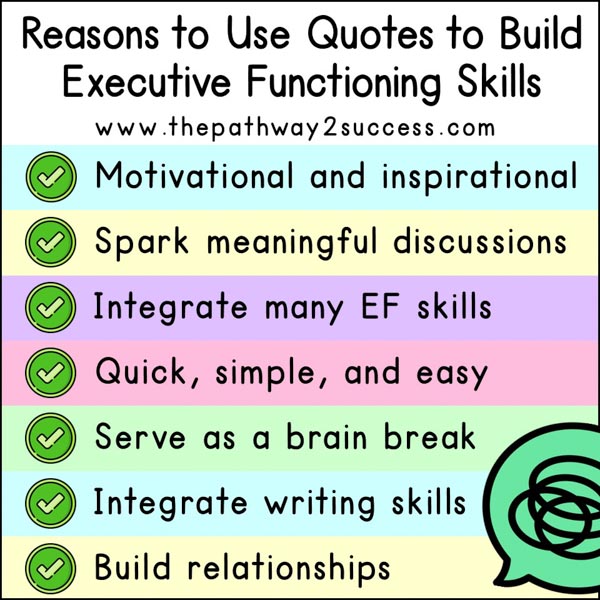
Most recently, educators have tapped into the power of literacy and rhetoric. By utilizing daily motivational quotes as bell-ringers or advisory prompts, teachers have bridged the gap between abstract psychological theory and student-friendly discourse. Quotes provide a low-stakes, high-impact entry point for learners of all ages to examine their own thought processes, discuss emotional regulation, and build a vocabulary around self-improvement.
Supporting Context & Metrics: Why Executive Functioning is the Root of Success
To fully appreciate the methodology behind quote-based interventions, one must examine the critical role executive functions play in human development. Experts frequently compare executive functioning skills to the root system of a tree: invisible beneath the surface, yet entirely responsible for supporting the trunk, branches, and leaves.
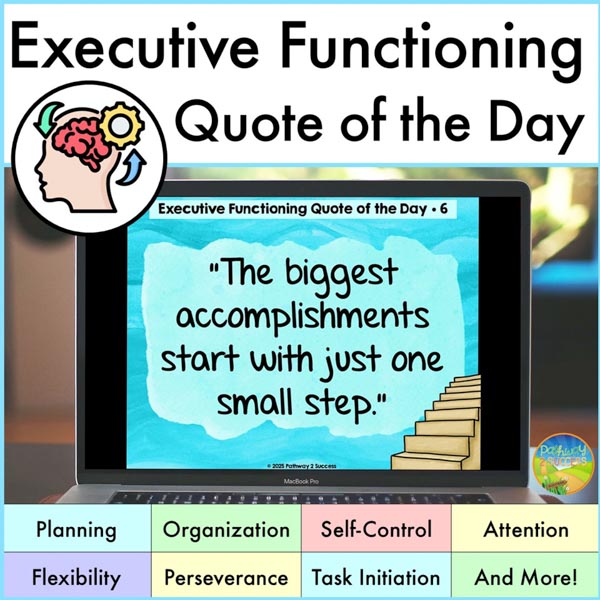
The Core Pillars of Executive Functioning
- Planning and Organization: The ability to sequence steps to reach a goal and keep materials or thoughts structured.
- Task Initiation: The capacity to take the first step on a project or chore, even when motivation is low.
- Self-Control: The power to inhibit impulses, pause before reacting, and make choices that benefit future outcomes.
- Attention: The ability to sustain focus on a given stimulus while filtering out distractions.
- Perseverance (Working Through Challenges): The tenacity to stick with a difficult task until completion.
- Flexibility: The mental agility to adapt to unexpected changes, consider multiple perspectives, and brainstorm alternative problem-solving paths.
Statistical Realities in Modern Education
Educational research underscores an urgent need for targeted executive functioning support:
- The Attention Deficit: According to various pedagogical studies, modern students face a barrage of digital distractions that reduce sustained attention spans, making explicit metacognitive training more critical than ever.
- Academic Correlation: Longitudinal studies consistently indicate that executive functioning skills are often stronger predictors of academic performance and lifetime well-being than traditional IQ scores.
- The Prevention Paradigm: Educators report that when students are equipped with explicit tools for self-regulation and task initiation, behavioral referrals decrease while classroom engagement and emotional resilience increase.
Official Strategies: How to Implement Quotes for Cognitive Growth
Integrating quotes into a classroom or homeschooling environment does not require an overhaul of existing lesson plans. Instead, it relies on consistency, intentional selection, and open-ended dialogue. Experts recommend a structured, four-step implementation process:
Step 1: Strategic Selection
Do not choose quotes merely because they sound inspiring. Select quotations that directly target specific executive functioning domains—such as patience, mental flexibility, or the courage to begin a difficult task.
Step 2: Display and Introduce
Present the quote clearly at the start of the class period (e.g., on a whiteboard, digital slide, or morning meeting screen). Allow students a moment to read it independently, letting the words settle.
Step 3: Guided Inquiry and Discussion
Rather than telling students what the quote means, act as a facilitator. Pose open-ended questions that bridge the quotation to the student’s lived reality. Encourage them to analyze the underlying mechanics of the thought process described in the text.
Step 4: Metacognitive Application
Ask learners to identify one concrete way they can apply the quote’s underlying principle to their current schoolwork, personal projects, or social interactions that very day.
Practical Examples: Deconstructing Quotes by Skill Domain
To assist educators and parents in executing this strategy, consider the following sample quotes, their underlying definitions, and the guided discussion questions designed to unlock deep cognitive reflection.
1. Understanding Executive Functioning Skills as a Whole
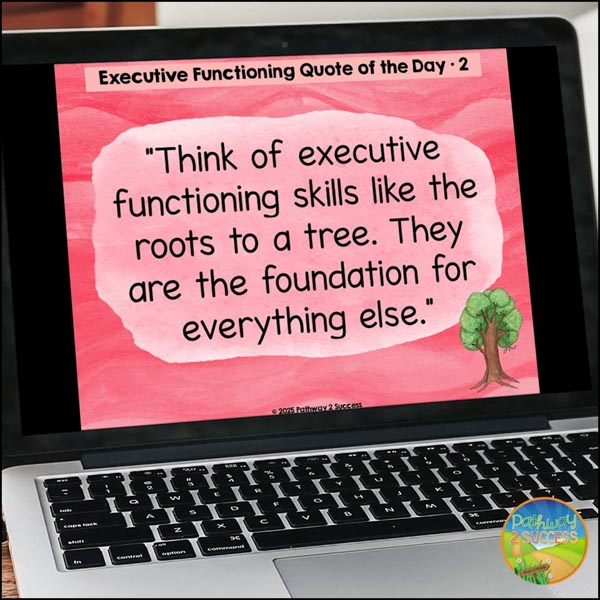
- The Quote: "Think of executive functioning skills like the roots to a tree. They are the foundation for everything else."
- The Deeper Meaning: Executive functioning skills are the invisible mental processes that govern our ability to plan, organize, manage time, and navigate obstacles. Just as roots anchor a tree, these skills undergird every single action we take—from starting homework to maintaining a focused conversation.
- Guided Discussion Questions:
- What are some of your favorite daily activities or hobbies?
- How do skills like planning, focus, and organization help you succeed in those activities?
- Why is it empowering to understand that our brains possess these foundational "roots"?
2. Cultivating Self-Control
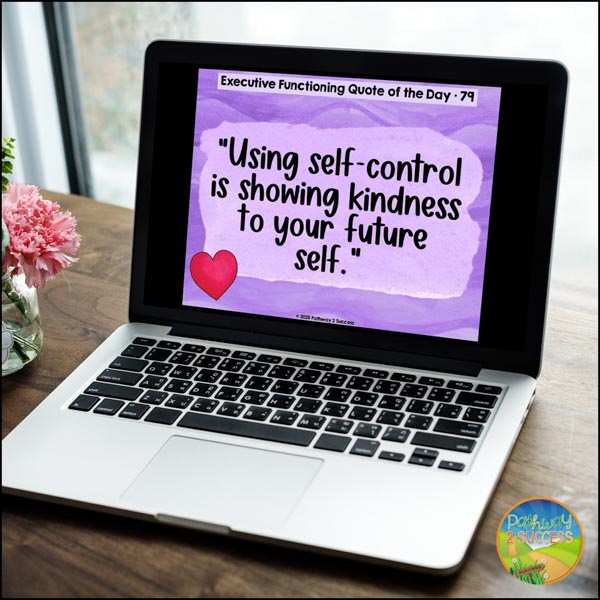
- The Quote: "Using self-control is showing kindness to your future self."
- The Deeper Meaning: Self-control is not merely about restriction or punishment; it is the active pause before making a choice. By practicing self-control—such as organizing a binder or studying ahead of an exam—students make life easier and less stressful for the person they will be tomorrow. It is an act of self-care.
- Guided Discussion Questions:
- How would you define self-control in your own words?
- In what ways can practicing self-control actually be a form of kindness toward yourself?
- What is one practical way you can show kindness to your future self today?
3. Overcoming Procrastination via Task Initiation
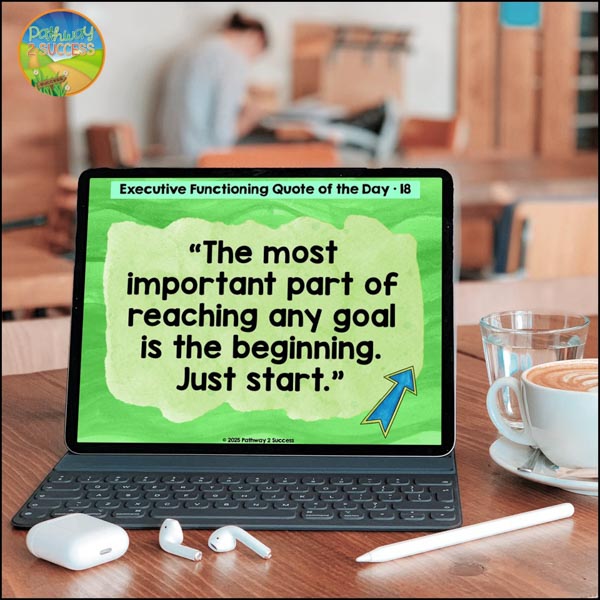
- The Quote: "The most important part of reaching any goal is the beginning. Just start."
- The Deeper Meaning: Task initiation is frequently the highest hurdle for young minds facing a daunting assignment. Over-analyzing a project leads to mental paralysis. Once the initial friction of starting is overcome, natural momentum takes over.
- Guided Discussion Questions:
- Why do you think starting a new task is often the hardest part of the process?
- What mental tricks or physical strategies do you use to push past the hesitation of starting?
- How does momentum help you keep going once you take that first step?
4. Harnessing Attention Through Mindfulness
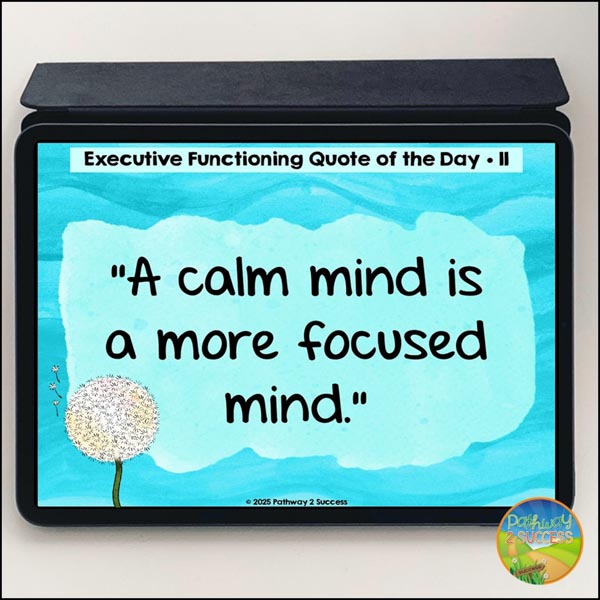
- The Quote: "A calm mind is a more focused mind."
- The Deeper Meaning: Emotional regulation and cognitive focus are deeply intertwined. When a student is overwhelmed, anxious, or angry, their prefrontal cortex goes offline. Developing calming strategies directly bolsters one’s capacity for sustained attention and clear thinking.
- Guided Discussion Questions:
- Why is it so difficult to focus when you are feeling upset, stressed, or overwhelmed?
- What specific relaxation or breathing strategies help clear your mind and prepare it for focus?
- How can you help bring your mind to a calm state before tackling a difficult test or assignment?
5. Fostering Perseverance in the Face of Adversity
- The Quote: "Perseverance isn’t always easy, but it’s simple. Just keep going."
- The Deeper Meaning: Perseverance is the commitment to see a goal through to the end, regardless of the roadblocks encountered. While the emotional and physical labor of persistence can feel heavy, the conceptual directive remains straightforward: do not stop.
- Guided Discussion Questions:
- What does the word perseverance mean to you personally?
- Can you share an example of a difficult challenge you successfully worked your way through?
- What internal or external support systems help you keep going when you feel like quitting?
6. Embracing Cognitive Flexibility
- The Quote: "Every problem has a solution. Most have many."
- The Deeper Meaning: Mental flexibility requires stepping outside rigid thinking patterns. When faced with a roadblock, flexible thinkers realize there is rarely only one "right" way forward. Brainstorming multiple solutions builds cognitive resilience and adaptability.
- Guided Discussion Questions:
- Think of a recent problem you encountered. What were several different ways you could have resolved it?
- Why do people sometimes get stuck looking for only one way to fix a problem?
- How does keeping an open, flexible mindset make challenges feel less intimidating?
Future Outlook: The Next Wave of Cognitive Literacy in Schools
As educational psychology continues to merge with everyday classroom practices, the use of targeted language tools like quote-based bell-ringers is poised to expand. Experts anticipate several key developments in the coming years:
- Mainstream Metacognitive Curricula: Schools are moving away from treating executive functioning as an accommodation for neurodivergent learners alone and are instead adopting universal frameworks that benefit all students. Metacognitive exercises will likely become a standard fixture of homeroom and advisory periods nationwide.
- Digital Integration and Personalized Reflections: With the proliferation of educational technology, students may soon engage with interactive digital journals where they respond to daily executive functioning prompts, tracking their personal growth in self-regulation and goal-setting over time.
- Home-School Bridges: Educators are increasingly sharing these reflective quotes with families, enabling parents to use the exact same vocabulary at home. When a child hears about "kindness to their future self" at the dinner table and in the classroom, the neurological reinforcement deepens exponentially.
Conclusion
Building executive functioning skills does not require complex machinery or grueling drills. By harnessing the timeless power of well-crafted quotes, educators can spark profound reflections that resonate with kids and teens on a human level. Whether teaching the roots of mental organization, the self-kindness of self-control, or the sheer momentum of task initiation, quotes offer an elegant, low-barrier pathway to cognitive mastery. As classrooms continue to evolve, intentional dialogue around these foundational skills will remain one of the most effective ways to prepare students not just for academic testing, but for the complex challenges of life beyond the school gates.

