
Executive Overview
The transition from the laid-back rhythm of summer to the hyper-structured, high-velocity schedule of the academic year is a notoriously stressful juncture for households worldwide. Between shifting sleep routines, heavy academic pressures, and general back-to-school anxiety, children and parents alike face a significant psychological and physiological toll.
Compounding these standard seasonal hurdles is an environmental shift of dramatic proportions: dozens—sometimes hundreds—of children packed into sealed, climate-controlled classrooms. For pathogens, these spaces serve as ideal incubators. Consequently, the onset of autumn reliably triggers a predictable wave of sniffles, coughs, fevers, and stomach bugs that sweep rapidly through schools and cross the threshold into family homes.
While parents routinely dedicate hours and substantial budgets to acquiring fresh pencils, binders, composition notebooks, and seasonal wardrobes, a critical preparatory step is frequently overlooked: auditing and replenishing the home medicine chest. Waiting until 11:00 p.m. to discover that your child’s fever is spiking, your only digital thermometer has a dead battery, and your cold and flu medicine expired three winters ago is a uniquely stressful parenting milestone—one that can be entirely avoided.
Drawing on over a decade of firsthand parental experience navigating the annual gauntlet of childhood illnesses, this guide outlines the indispensable wellness arsenal every household needs before the autumn germ wave hits. By taking a proactive, methodical inventory of your home medical supplies now, you can spare yourself frantic late-night pharmacy runs, mitigate the severity of seasonal bugs, and establish a resilient line of defense for the entire family.
Detailed Chronology: The Seasonal Pathogen Timeline and Preparation Window
Understanding the mechanics of the autumn germ wave requires examining the temporal progression of family health challenges from late August through the dead of winter.
Phase 1: Late Summer Audit (Mid-to-Late August)
The ideal preparation window opens weeks before the first school bell rings. During this period, households should perform a rigorous audit of existing medical supplies.
- Expiration Checks: Liquid children’s analgesics, prescription ointments, and over-the-counter (OTC) cough suppressants degrade over time. Checking expiration dates now prevents administering ineffective or potentially compromised medications.
- Leftover Summer Stock Preservation: Items heavily utilized during outdoor summer months—such as adhesive bandages, triple antibiotic ointments (Neosporin), and hydrocortisone creams—should be assessed. While these items remain relevant, they should be moved to the front of the medicine cabinet to make room for respiratory and immune-focused supplies.
Phase 2: The Initial Onset (September to Early October)
As classrooms reconvene, children are introduced to a barrage of viral strains cultivated over the summer break. During the first four to six weeks of the semester, mild upper respiratory infections, rhinovirus exposures, and environmental allergies peak.
- This is the phase when gentle interventions—such as saline nasal mists, throat-soothing lozenges, and digestive enzymes for stress-induced tummy aches—are deployed most frequently.
Phase 3: The Deep Winter Escalation (November through February)
As ambient temperatures drop and windows remain firmly shut to retain heat, seasonal influenza, respiratory syncytial virus (RSV), and more virulent strains of the common cold take hold.
- This period tests the durability of your home stockpile. Robust cold and flu medications, high-performance vapor-delivery systems, and accurate diagnostic tools (such as non-invasive thermometers) transition from convenience items to absolute necessities.
Supporting Context & Metrics: The Physiology of Back-to-School Illness
The correlation between the start of the school year and a sudden spike in pediatric illness is not merely anecdotal; it is backed by extensive public health data and physiological research.
The Classroom Vector
According to epidemiological observations from public health agencies, children under the age of twelve experience an average of six to eight upper respiratory infections per year, with the vast majority concentrated between the months of September and April. When children enter a classroom environment, they exist in close proximity, sharing high-touch surfaces like desks, keyboards, and art supplies. Combined with developing immune systems and inconsistent hand-hygiene habits, this environment accelerates viral transmission rates exponentially.
The Stress-Immunity Axis
Anxiety and stress are heavily linked to physiological vulnerability. The abrupt shift from unstructured summer days to strict academic schedules induces a mild, chronic state of cortisol elevation in many children and adolescents. Elevated cortisol levels over prolonged periods can suppress immune function, making the body less efficient at fighting off minor pathogens before they manifest as full-blown illnesses.
Furthermore, somatic manifestations of anxiety—particularly in younger children—frequently target the gastrointestinal tract. Nervousness about a new teacher, a difficult subject, or social dynamics often translates into acute stomachaches, nausea, and general digestive distress. Distinguishing between a somatic stress response and an actual gastrointestinal bug requires versatile pantry and medicine chest tools capable of addressing both mechanical digestion and systemic comfort.
The Essential Medicine Chest Inventory
To combat the multifaceted challenges of the autumn and winter germ seasons, a well-stocked family medicine cabinet should feature the following core categories of care:
1. Throat-Soothing Solutions (Lollipops and Lozenges)
A scratchy, raw throat is often the very first indicator of an impending cold. For children, traditional medicated cough drops can pose choking hazards or feature unpalatable medicinal flavors that induce resistance.
- Specialized Relief: Brands like Lolleez have revolutionized throat relief for younger demographics by formulating soothing, organic throat lozenges on a stick. These products utilize gentle, natural ingredients like honey and pectin to coat the throat safely and effectively.
- Bonus Benefit: Their appeal is universal; many parents admit to borrowing these pleasant-tasting remedies when seasonal ailments hit adult household members as well.
2. Advanced Decongestion via Shower Steamers
Traditional baths infused with essential oils can be messy, and as children grow older, they frequently transition exclusively to showers, rendering traditional bath bombs obsolete.
- Targeted Vapor Therapy: Shower steamers represent an innovative evolution in home congestion relief. Products such as Vicks VapoShower tablets are engineered to be placed on the floor of the shower stall, where dissolving water activates the release of therapeutic vapors—including eucalyptus and menthol—directly into the steam.
- Mechanism of Action: Inhaling this medicated steam helps open up nasal passages, loosen upper respiratory mucus, and provide immediate, non-drowsy relief for severe nighttime congestion without requiring topical chest rubs.
3. Therapeutic Aromatherapy and Essential Oils
Environmental stressors and physical discomfort can severely disrupt household sleep quality. Maintaining a curated collection of pure essential oils offers a dual-action benefit for both mood and respiration.
- Lavender for Anxiety and Sleep: Lavender oil is clinically associated with calming the nervous system, reducing perceived stress, and encouraging restful sleep—a critical asset for anxious parents and overtired children alike.
- Eucalyptus for Airway Support: Eucalyptus oil provides potent antimicrobial and decongesting properties when dispersed into the air.
- The Recommended Delivery System: Rather than relying on open flames or complex heating apparatuses, utilize a cool-mist ultrasonic humidifier that doubles as an aromatherapy diffuser. This maintains optimal ambient humidity in bedrooms—preventing dry nasal passages that invite viral invasion—while scenting the home with a soothing, spa-like atmosphere after a high-stress day.
4. Gastrointestinal Comfort and Digestive Enzymes
Because anxiety frequently manifests physically in children as abdominal distress, having specialized digestive aids on hand is non-negotiable.
- Papaya Enzymes: Chewable papaya enzyme supplements (such as American Health Chewable Super Papaya Enzyme Plus) offer a natural, gentle way to support digestion. They act quickly, taste palatable, and are mild enough for younger school-aged children experiencing mild stomach upset due to stress or heavy meals.
- Bismuth Subsalicylate: For more pronounced stomach bugs, nausea, or digestive complaints in older children and adults, chewable Pepto-Bismol tablets provide rapid, reliable symptomatic relief.
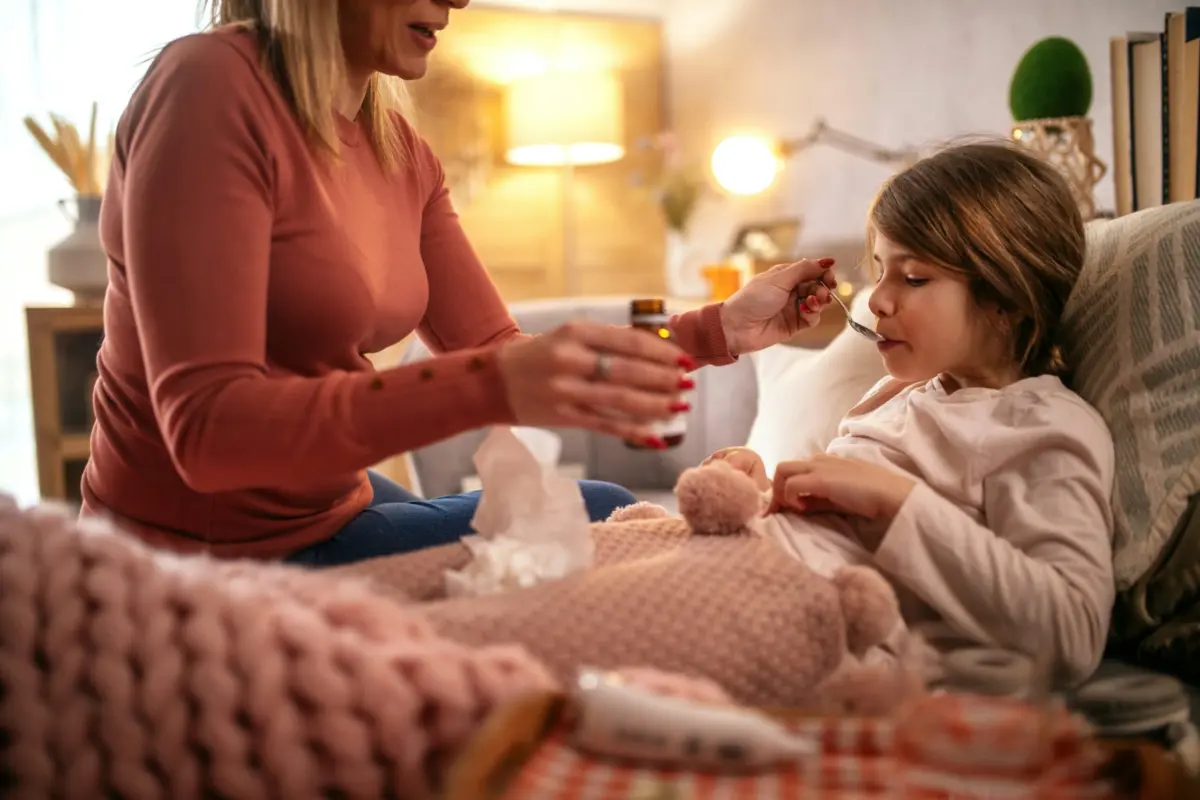
5. Pediatric and Adult Cold & Flu Therapeutics
When a fever spikes or a cough becomes intractable, over-the-counter symptom management is vital for preserving the restorative sleep necessary for healing.
- The Expiration Trap: As noted earlier, cold and medication stocks degrade over time. Review formulations to ensure you have age-appropriate liquid ibuprofen and acetaminophen, as well as multi-symptom cold formulations where applicable.
- Fever Management Strategy: Keeping appropriate dosages on hand prevents emergency trips to the pharmacy when symptoms peak overnight. Always verify weight-based dosing charts with your pediatrician for children under twelve.
6. Gentle Saline Nasal Irrigators
While traditional Neti pots are highly effective for adult sinus irrigation, their use can be intimidating or uncomfortable for children.
- Saline Mists: Pediatric-friendly saline nose mists deliver a gentle, micro-fine aerosolized mist of sterile saline solution to flush out irritants, loosen dried mucus, and moisturize nasal passages naturally without harsh chemical decongestant sprays that can cause rebound congestion.
- Hygiene Protocol: Never share a saline mist canister among multiple family members. Assign individual bottles to each person to prevent cross-contamination, and discard them promptly once the household illness has resolved.
7. Reliable, Precision Thermometers
Operating without a functioning thermometer during a late-night health scare is a classic parenting nightmare.
- Investment in Accuracy: Ensure you possess at least one high-grade, fast-reading digital or infrared thermometer with fresh batteries installed. A reliable temperature reading is the single most important metric for determining whether a childhood illness can be managed at home with supportive care or requires direct medical intervention.
Official Statements & Expert Guidance
Public health authorities and pediatric organizations consistently emphasize that preparation and preventative hygiene are the cornerstones of managing seasonal illness outbreaks.
According to pediatric specialists, while it is impossible to entirely insulate a child from the microbial ecosystem of a modern school, proactive symptom management significantly reduces the duration and intensity of illnesses.
"The goal of a well-stocked home medical kit is not to artificially suppress every minor immune response, but to provide immediate, targeted comfort measures that allow the body to rest, recover, and avoid secondary complications," notes pediatric care literature.
Furthermore, medical professionals emphasize the importance of parental self-care during high-stress transition periods. Caregiver burnout can impair decision-making capabilities when managing a sick household. By organizing medical inventories well in advance of the autumn peak, parents reduce their own cognitive load, establishing an environment of calm, controlled preparedness.
Future Outlook: Building Long-Term Household Resilience
As we look toward the broader horizon of public health and seasonal transitions, the paradigm of family wellness is shifting from reactive treatment to proactive defense. The lessons learned during intense periods of seasonal illness highlight the value of foundational health infrastructure within the home.
Looking ahead, households that integrate systematic wellness audits into their calendar—treating medicine cabinet restocking with the same routine importance as buying school supplies or scheduling annual check-ups—will find themselves better equipped to handle biological shifts. By prioritizing high-quality tools, safe natural remedies, and reliable diagnostics, families can transform the chaotic autumn germ season from a period of high-stress crisis management into a manageable, routine component of the academic year.
Disclaimer: Some products listed may be suitable for older children and adults but inappropriate for toddlers or infants. Always carefully review product packaging labels and consult your family pediatrician before administering new over-the-counter medications or supplements to young children.

