

Executive Overview
In a landmark collaborative move that reshapes the enterprise software and cybersecurity landscapes, NVIDIA and 36 other major technology, cloud computing, and enterprise software giants have officially launched the Open Secure AI Alliance. This ambitious multi-vendor initiative is designed to address a glaring vulnerability in the current artificial intelligence boom: while considerable market energy has historically been channeled into securing the underlying large language models (LLMs) themselves, the sprawling ecosystem and infrastructure surrounding autonomous AI agents have remained dangerously exposed.
Rather than concentrating solely on algorithmic safety or model weights, the Open Secure AI Alliance targets the entire operational perimeter of AI-driven systems. This includes foundational layers such as digital identity, granular permissions, runtime isolation, execution harnesses, guardrails, comprehensive logging, and rigorous evaluation frameworks. By moving beyond siloed, proprietary security models, the alliance aims to build an open-source defense stack capable of operating seamlessly across hybrid, multi-vendor cloud architectures.
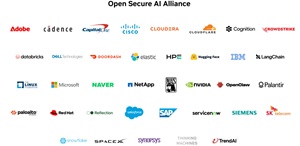
The coalition boasts an unprecedented roster of 37 inaugural members, pulling industry heavyweights from across the technology spectrum—including Adobe, Capital One, Cisco, Cloudera, Cloudflare, CrowdStrike, Databricks, Dell Technologies, Hewlett Packard Enterprise (HPE), Hugging Face, IBM, the Linux Foundation, Microsoft, NetApp, Palo Alto Networks, Red Hat, Salesforce, SAP, ServiceNow, Siemens, Snowflake, and Synopsys.
As enterprises increasingly transition from passive chat-based AI interfaces to autonomous agents capable of reading databases, executing transactions, and modifying codebases in real-time, the attack surface has expanded exponentially. The Open Secure AI Alliance seeks to neutralize these threats by anchoring agent operations in proven cloud-native security paradigms, notably extending cloud workload identity—such as SPIFFE and SPIRE—down to the agent layer.

Detailed Chronology & Industry Context
The genesis of the Open Secure AI Alliance can be traced back to the rapid architectural evolution of enterprise computing over the past three years. As organizations moved past proof-of-concept deployments of generative AI, they encountered a severe operational bottleneck: shadow AI, unauthorized agentic workflows, and a lack of verifiable provenance for actions executed by autonomous software agents.
The Shift from Models to Agents
In the early phases of the generative AI boom, security conversations were dominated by prompt injection, data poisoning, and model inversion attacks. Enterprises spent billions fortifying the neural networks themselves. However, the paradigm shifted dramatically as companies began deploying AI agents—autonomous software entities designed to string together multiple tool calls, query internal APIs, and execute multi-step business logic without constant human intervention.
These agents do not live in a vacuum. They rely on complex orchestration harnesses, memory stores, execution environments, and downstream integrations with enterprise resource planning (ERP) systems and cloud databases. This created a profound security paradox: an organization could secure its AI model against malicious prompts, yet remain entirely vulnerable if an autonomous agent with broad enterprise permissions was hijacked via an insecure harness or compromised API connection.
The Multi-Vendor Imperative
Recognizing that no single vendor could secure this multi-layered, highly dynamic stack, industry leaders began holding private consortium talks to establish a unified baseline. The core thesis championed by NVIDIA and its co-founders was simple: open source underpins modern cloud computing, and defenders require security systems they can inspect, adapt, and run on infrastructure they completely control.
A proprietary, single-vendor security platform would inevitably create single points of failure and vendor lock-in—two anathemas to modern enterprise IT strategies. Consequently, the alliance was formulated not around a single monolithic software product, but as an open collaborative framework designed to harmonize security protocols across diverse hardware accelerators, cloud providers, and software ecosystems.
While the alliance has formally debuted with 37 founding partners, the group’s initial phase is intentionally focused on architectural alignment and community building. As of its launch, the alliance has not yet published a single integrated platform, a formal reference architecture, or a definitive timeline for software releases. Instead, the immediate focus remains on standardizing the foundational principles of agent defense.
Cloud Workload Identity Moves to the Agent Layer
One of the most profound technical contributions to the alliance’s early roadmap is the adaptation of cloud-native workload identity standards to the realm of artificial intelligence. Hewlett Packard Enterprise (HPE), a prominent inaugural member, has brought its extensive work with the Secure Production Identity Framework for Everyone (SPIFFE) and the SPIFFE Runtime Environment (SPIRE) projects directly into the alliance’s architectural crosshairs.
The Mechanics of SPIFFE and SPIRE
Originally developed to solve the complex challenge of microservices authentication in containerized and cloud-native environments, SPIFFE and SPIRE provide a robust, standardized mechanism for cryptographically verifying the identity of software workloads.

- SPIFFE defines an open standard for securely authenticating software systems in heterogeneous environments through platform-independent cryptographic identities (known as SPIFFE IDs).
- SPIRE is a production-ready implementation of the SPIFFE specifications that performs node and workload attestation, issuing short-lived X.509 certificates or JSON Web Tokens (JWTs) to verify precisely who or what is running.
By extending these frameworks to the AI layer, the alliance addresses a critical vulnerability: how does an enterprise database, API gateway, or downstream service verify that an incoming request genuinely originated from an authorized AI agent—and not an impostor process or a malicious man-in-the-middle?
Zero-Trust Architecture for Autonomous Workflows
According to technical documentation and statements released by HPE, modern enterprise AI systems depend heavily on an intricate web of agent frameworks, execution harnesses, guardrails, and governance mechanisms. These components constantly interact with sensitive enterprise data stores.
By integrating SPIFFE and SPIRE into the agent layer, organizations can establish a strict zero-trust operational posture:
- Cryptographic Verification: Every AI agent and associated service is assigned a verifiable SPIFFE ID, allowing peer-to-peer services to cryptographically verify identities before exchanging data.
- Granular Access Control: Only authorized agent workloads are permitted to communicate with designated enterprise resources, effectively halting lateral movement if a single agent is compromised.
- Cross-Platform Interoperability: Because SPIFFE/SPIRE operates across heterogeneous infrastructures—spanning on-premises private data centers, virtual machines, and public cloud providers such as AWS, Microsoft Azure, and Google Cloud—agents can maintain secure identities as they orchestrate workflows across hybrid environments.
Furthermore, the SPIFFE/SPIRE ecosystem boasts deeply entrenched integrations with foundational cloud-native infrastructure, including Kubernetes, service meshes like Istio and Envoy, security tooling like Sigstore, policy engines like Open Policy Agent (OPA), and orchestration tools like HashiCorp Consul and Dapr. By bridging these established technologies with AI agent architectures, the Open Secure AI Alliance provides a clear, production-tested pathway toward secure agentic automation.

Official Statements & Industry Perspectives
The formation of the Open Secure AI Alliance has elicited widespread commentary from executives across the 37 founding organizations, highlighting the urgency of collective defense in an era of rapidly evolving cyber threats.
Industry leaders have universally emphasized that the velocity of AI adoption has far outpaced traditional perimeter security models. By pooling expertise from cybersecurity stalwarts (such as CrowdStation, Palo Alto Networks, and Cisco), cloud infrastructure giants (such as Microsoft, HPE, and Dell Technologies), and enterprise software titans (such as Salesforce, SAP, and ServiceNow), the alliance bridges historical silos between developer operations, security operations (SecOps), and AI engineering teams.
NVIDIA’s foundational framing of the initiative underscores the necessity of open-source inspection. In an era where automated agents possess the autonomy to read, write, and execute code, enterprises can no longer afford black-box security mechanisms. Security teams must have complete visibility into how agent harnesses operate, how permissions are evaluated, and how logs are audited.
Similarly, enterprise data and cloud platforms—including Databricks, Snowflake, Cloudera, and NetApp—have stressed that data governance and AI security are now inextricably linked. An AI agent is only as secure as the data pipeline it feeds upon; thus, securing the infrastructure surrounding agents must inherently include securing data access layers, vector databases, and retrieval-augmented generation (RAG) pipelines.

Future Outlook: Challenges and Strategic Roadmap
As the Open Secure AI Alliance looks toward the horizon, its ultimate success will depend on its ability to translate high-level architectural alignment into practical, widely adopted open-source standards.
Key Milestones Ahead
- Standardization of the Agent Defense Stack: The alliance must transition from conceptual frameworks to concrete technical specifications. This will likely involve defining open APIs for agent harnesses, standardized logging schemas for AI transactions, and universal guardrail protocols.
- Deepening Cloud-Native Integrations: Expanding the deployment of SPIFFE/SPIRE and complementary zero-trust tools across mainstream AI orchestration frameworks (such as LangChain, Semantic Kernel, and custom enterprise agent loops) will be critical for developer adoption.
- Bridging Compliance and Governance: Enterprises operating in highly regulated sectors—such as finance, healthcare, and government defense—will require certified reference architectures that align alliance standards with regulatory mandates like the European Union AI Act, HIPAA, and SOC 2.
Potential Roadblocks
Despite the impressive roster of founding members, the alliance faces notable challenges. Coordinating 37 enterprise technology giants with competing commercial interests is inherently difficult. Ensuring that open-source contributions remain genuinely open and do not devolve into a fragmented landscape of proprietary extensions will require disciplined governance, likely spearheaded by neutral bodies like the Linux Foundation.
Additionally, developer friction remains a primary obstacle in cybersecurity. If the security guardrails, identity frameworks, and isolation harnesses introduced by the alliance are overly complex or introduce noticeable latency into agent execution loops, developers may bypass them in favor of speed. The alliance’s success will ultimately hinge on creating security mechanisms that are as frictionless and developer-friendly as they are cryptographically robust.
Conclusion
The launch of the Open Secure AI Alliance marks a mature turning point in the enterprise AI lifecycle. By pivoting the industry’s focus from isolated model evaluation to comprehensive, multi-vendor infrastructure security, the alliance is laying the necessary plumbing for the autonomous enterprise. If successful, the initiative will transform AI agents from high-risk operational liabilities into predictable, verifiable, and deeply secure components of the modern digital workforce.

