
Executive Overview
In the modern educational landscape, the integration of educational technology is no longer a futuristic experiment—it is a daily operational reality. For Debbie Bohanan, a Video and Media teacher at Zenith Accelerated Academy in Orlando, Florida, digital tools have long served as the scaffolding for her classroom pedagogy. A veteran user of interactive learning platforms, Bohanan has embedded Kahoot! into her daily instructional rhythm, utilizing it consistently for conceptual review, formative evaluation, and active knowledge reinforcement.
When the local school district mandated a complete transition to digitized end-of-year assessments for the 2025–2026 academic year, many educators anticipated a disruptive operational hurdle. For Bohanan, however, the district-wide mandate represented a seamless evolution. Thanks to a decade-long foundation of formative assessment—evidenced by more than 2,100 individual Kahoot! reports generated over her career—her students were already fluent in digital evaluation.
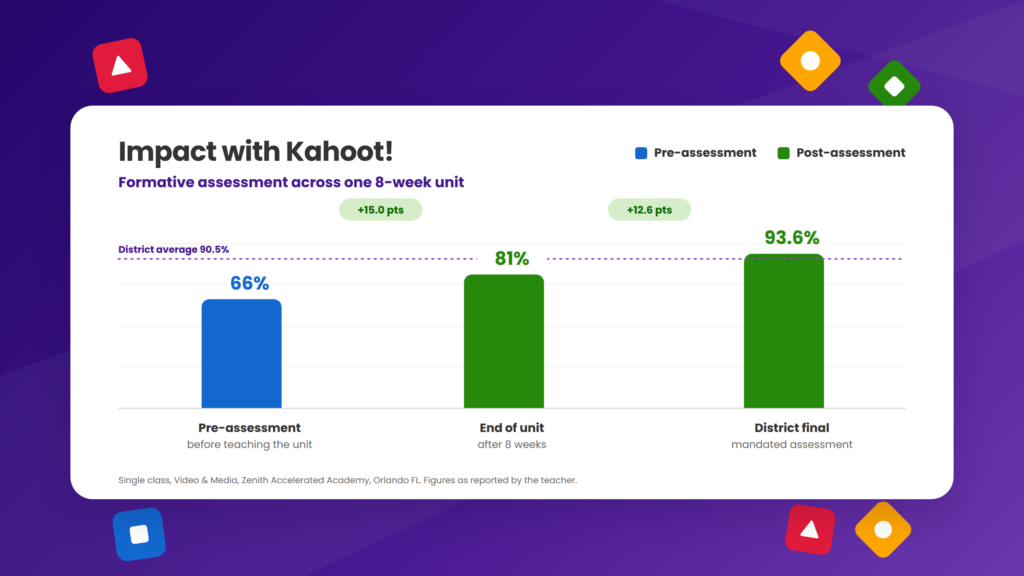
By leveraging advanced digital tools such as automated PDF question extraction, Bohanan bridged the gap between legacy paper evaluations and high-engagement digital learning spaces. The resulting instructional cycle yielded a remarkable academic progression: her students advanced from an initial baseline average of 66% on pre-assessments to 81% following an intensive eight-week instructional cycle, ultimately culminating in a 93.6% class average on the district-mandated final examination. This performance placed her students 3.1 percentage points above the broader district average. This comprehensive case study examines the precise methodology, technological integrations, and instructional philosophies that drove these exceptional outcomes.
Detailed Chronology: The Journey from Baseline to Benchmark
The academic success observed in Bohanan’s classroom did not happen by chance; it was the product of a deliberate, iterative instructional timeline.
Phase 1: Establishing the Baseline (The Initial Pre-Assessment)
At the outset of the instructional unit, Bohanan administered a comprehensive pre-assessment that established a class baseline average of 66%. In traditional educational settings, a score in the mid-sixties is frequently viewed with apprehension—a stark reminder of pedagogical gaps and student deficits. However, within Bohanan’s framework, this score served as an objective starting line rather than a final verdict.
Because Bohanan’s students interacted with Kahoot! daily, the pre-assessment was frictionless. There was no technological learning curve; students did not have to waste cognitive bandwidth trying to understand how to navigate an unfamiliar interface, interpret digital buttons, or submit answers online. Instead, they approached the baseline evaluation with the comfort and familiarity of a routine classroom activity. This immediate technological fluency allowed Bohanan to pivot instantly to what mattered most: analyzing the data to isolate specific conceptual misunderstandings and orchestrating targeted remediation strategies.
Phase 2: The Eight-Week Instructional and Practice Cycle
Over the ensuing eight weeks, Bohanan implemented a rigorous, multi-tiered instructional cycle designed to move students from initial exposure to deep mastery. Recognizing that human memory relies on spaced repetition and active retrieval, she systematically avoided the academic trap of single-session "cramming" prior to high-stakes testing.
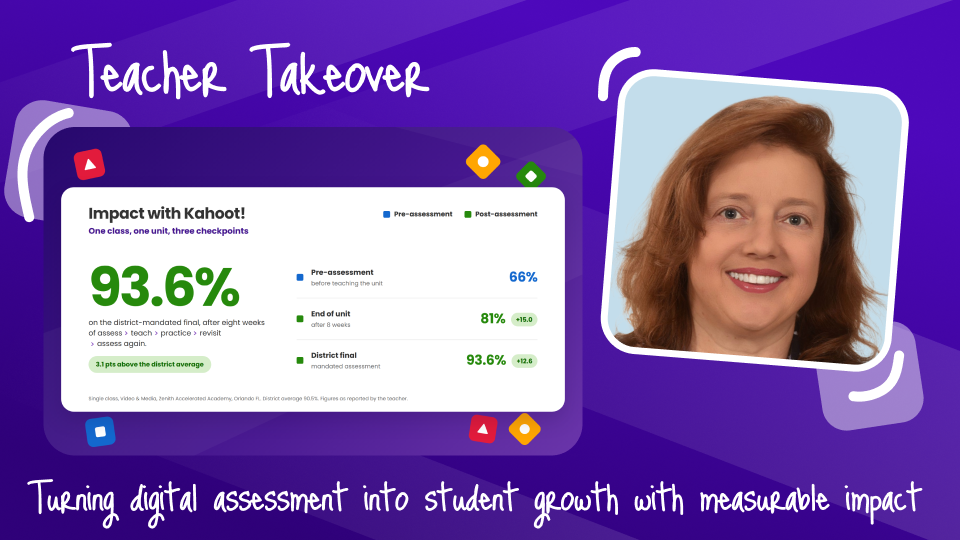
Instead, key curriculum concepts were woven continuously into daily classroom instruction, live interactive review sessions, and independent digital assignments. Students encountered complex media and video concepts repeatedly, approaching the material through varying game modes and interactive formats. This repetitive exposure transformed abstract theories into internalized knowledge. By the conclusion of the eight-week unit, a post-unit assessment revealed a class average of 81%—representing a dramatic 15-percentage-point gain from the initial baseline.
Phase 3: Overcoming the Paper-to-Digital Content Barrier
A critical logistical challenge emerged midway through the planning phase: the district-mandated assessment comprised 50 complex questions. Because these evaluations were tied directly to standardized district reporting metrics, the digital review materials had to mirror the exact vocabulary, syntax, and conceptual framing of the official exam.
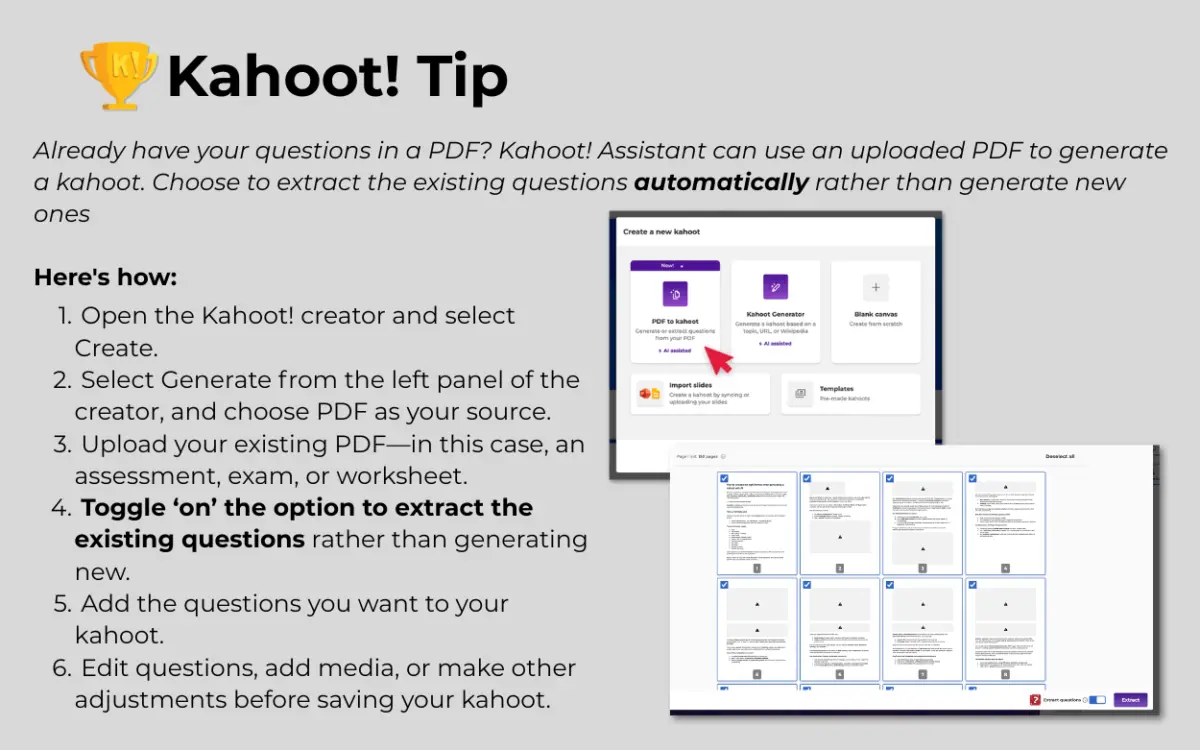
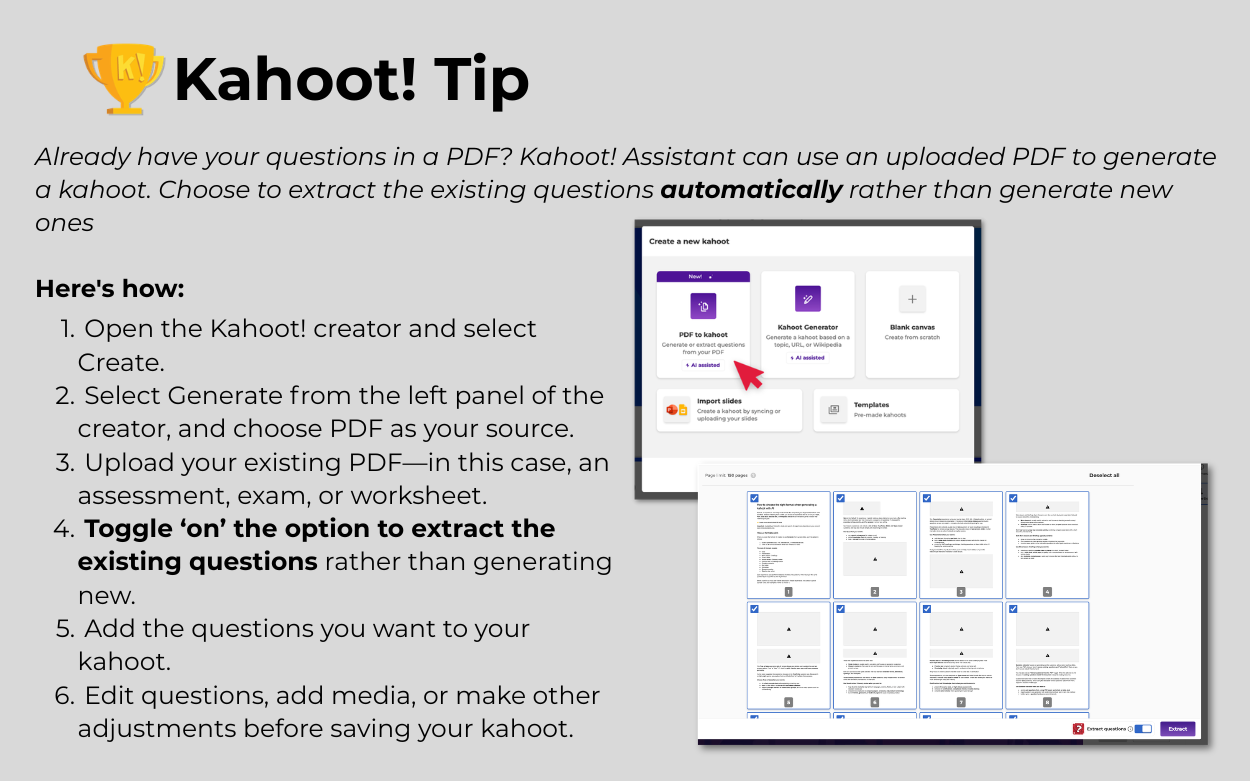
For an educator operating within standard planning periods, manually transcribing 50 rigorous questions—complete with accurate multiple-choice options—into a digital format would have consumed hours of after-hours labor. To bypass this bottleneck, Bohanan utilized Kahoot!’s advanced PDF question extraction capability.
By uploading the existing paper-based assessment document directly into the platform, the system instantaneously transformed static text into an interactive digital review game. This technological shortcut preserved the exact linguistic integrity of the district’s questions while injecting the engagement, immediacy, and flexibility of gamified practice. What could have been a grueling, multi-day administrative chore was completed in seconds, granting Bohanan immediate access to a bespoke review tool perfectly aligned with high-stakes evaluation metrics.
Phase 4: Independent Reinforcement Beyond Classroom Walls
Learning at Zenith Accelerated Academy did not halt when the final school bell rang. Understanding that knowledge retention requires continuous practice, Bohanan assigned asynchronous game modes for home study.
By extending the digital review environment beyond school hours, students were given autonomous control over their study habits. They could revisit challenging questions, identify their individual areas of weakness, and strengthen their mastery of the material at their own pace. This seamless bridge between synchronous classroom instruction and asynchronous independent study formed the backbone of Bohanan’s continuous loop: Measure where students are, identify what they need, provide targeted and repeated practice, measure growth, and apply learning to the common assessment.
Phase 5: The District Benchmark
The final and most rigorous benchmark arrived when Bohanan’s students sat for the district-mandated end-of-year assessment. Comprising the full breadth of the curriculum and administered uniformly across all schools in the district, this standardized evaluation served as the ultimate test of the instructional model.
When the scores were tallied, Bohanan’s class achieved an exceptional 93.6% average, outperforming the broader district average of 90.5% by a definitive 3.1 percentage points. This achievement underscored the efficacy of a learning model where digital tools amplify, rather than replace, sound pedagogical strategies.
Supporting Context and Metrics: Analyzing the Data
While raw data rarely tells the entire human story of a classroom, the quantitative trajectory observed in Bohanan’s Video and Media courses provides a compelling blueprint for modern instructional design.
[Initial Baseline] ---> [8-Week Post-Unit] ---> [District Mandated Exam]
      66.0%          --->       81.0%        --->         93.6%
(Zero Tech Friction)   (15-Point Gain)      (3.1 Points Above District)
The Statistical Overview
- Initial Pre-Assessment Average: 66.0%
- Post-Instruction Unit Average: 81.0%
- Net Unit Progression: +15.0 percentage points
- Final District-Mandated Assessment Average: 93.6%
- District Benchmark Average: 90.5%
- Comparative Performance Spread: +3.1 percentage points above district norms
- Historical Platform Engagement: Over 2,100 individual Kahoot! reports generated over a decade of use.
Contextualizing the Growth
Educational researchers frequently debate the direct causality of technological interventions in student achievement. Student success is fundamentally multifaceted, driven by a complex interplay of teacher efficacy, curriculum design, socioeconomic factors, student motivation, and institutional support.
However, Bohanan’s metrics highlight a clear, reproducible pattern of academic acceleration. The data reveals that when students are introduced to low-stakes, high-frequency digital formative assessments early and often, the anxiety surrounding high-stakes testing diminishes. Familiarity with the digital interface breeds confidence, allowing cognitive resources to be dedicated entirely to problem-solving and critical thinking rather than technological navigation.
Furthermore, the data demonstrates the profound efficiency gains achieved when administrative burdens—such as manual question transcription—are mitigated by intelligent software features like PDF extraction. By reclaiming hours of planning time, the educator was able to pivot her focus from clerical data entry to high-impact instructional delivery and targeted student mentorship.
Official Perspectives and Professional Implications
The ripple effects of Bohanan’s methodology extended far beyond her own classroom walls, ultimately capturing the attention of her academic peers and administrative colleagues at Zenith Accelerated Academy.
Replication and Collaborative Professionalism
Following the publication and review of the class’s terminal assessment scores, peer educators approached Bohanan to request access to her pre-assessment and post-assessment structures. Educators within her department sought to understand how she had structured her review cycles and integrated digital tools to achieve such robust mastery scores.
This organic professional collaboration serves as one of the most powerful qualitative indicators of the case study’s success. An instructional strategy is truly exceptional when it transcends the individual classroom and becomes an institutional model that peers actively seek to replicate. By designing a workflow that reduced administrative friction while maximizing student engagement, Bohanan inadvertently authored a scalable blueprint for digital assessment integration.
Redefining the Purpose of Assessment
At its core, Bohanan’s pedagogical philosophy challenges traditional educational paradigms regarding testing. For decades, standardized testing has been treated primarily as an audit mechanism—a tool designed solely to measure student knowledge at the termination of a unit, offering little to no actionable runway for remediation.
Bohanan’s approach inverts this paradigm entirely. By utilizing continuous formative digital assessments, evaluation is transformed from a passive measuring stick into an active catalyst for learning. Assessment becomes the compass that dictates daily lesson plans, highlights persistent knowledge gaps, and dictates immediate instructional adjustments. As Bohanan’s classroom experience demonstrates, assessment is at its absolute zenith when it refuses to merely document what students know, but instead empowers educators to decide what to teach next.
Future Outlook: The Evolution of Digital Classrooms
As school districts across the United States continue to grapple with the digital transformation of educational standards, the experiences of educators like Debbie Bohanan offer valuable insights for the future of K-12 schooling.
The successful transition from paper-based legacy assessments to automated, high-engagement digital environments highlights several key directives for the evolution of modern pedagogy:
- Prioritizing Technological Fluency: Educational technology yields the highest dividends when it is integrated into the daily pedagogical fabric rather than introduced as an eleventh-hour intervention before high-stakes exams. Familiarity eliminates anxiety.
- Embracing Administrative Automation: As artificial intelligence and document processing tools (such as PDF question extractors) become increasingly sophisticated, the administrative burden on teachers must be systematically reduced. Reclaiming teacher planning hours directly correlates with enhanced instructional focus and student outcomes.
- Fostering Continuous Feedback Loops: The traditional cycle of "teach, test, and move on" is fundamentally inadequate for deep conceptual mastery. Future classrooms must lean into iterative cycles of baseline measurement, targeted practice, asynchronous reinforcement, and cyclical re-evaluation.
Ultimately, the story of Zenith Accelerated Academy’s Video and Media department is a testament to the symbiotic relationship between dedicated teaching professionals and innovative digital tools. When pedagogical expertise is paired with intelligent technology, the result is not merely higher test scores, but a more confident, capable, and engaged student body ready to meet the challenges of an increasingly digital world.

