
Executive Overview
In the landscape of early childhood education, foundational literacy remains the absolute cornerstone of academic achievement. Educators and parents alike constantly search for innovative, engaging, and scientifically proven methods to help children grasp complex phonics rules. Among the most challenging hurdles for young readers is mastering long vowel teams—combinations of vowels that work together to produce a single long vowel sound, such as the "ea" in bread or meat, the "oa" in boat, and the "ai" in rain.
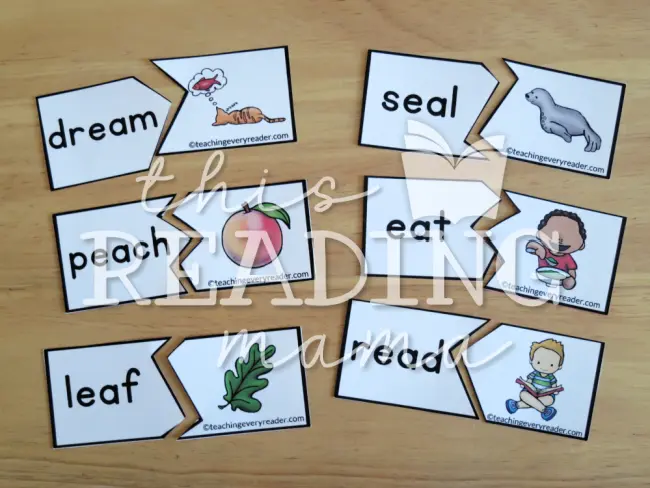
To bridge the gap between abstract phonics rules and joyful, hands-on learning, literacy advocate and educational resource creator Becky has released a comprehensive set of FREE Long Vowel Team Puzzles. Designed specifically for early learners, kindergarteners, and primary school students, these printable activities transform traditional, rote spelling and reading drills into interactive puzzles. By merging tactile manipulation with visual and auditory phonemic awareness, this resource offers a dual-purpose approach: teaching children not only how to read these complex words fluently but also how to spell them accurately.
This report provides an in-depth look at the newly released Long Vowel Team Puzzles, examining their pedagogical structure, the inclusion of advanced phonics patterns, best practices for classroom and home implementation, and the broader implications of utilizing gamified learning resources in modern education.
Detailed Chronology: The Evolution of Targeted Phonics Interventions
The journey toward developing accessible, high-yield phonics tools like the Long Vowel Team Puzzles reflects a broader shift in pedagogical science over the past several decades.

The Shift Toward Systematic Phonics
For years, the debate surrounding early reading instruction fluctuated between whole-language approaches and systematic phonics instruction. Contemporary educational consensus, heavily supported by the "Science of Reading" movement, strongly favors explicit, systematic phonics instruction. Children must learn the predictable relationships between letters and spoken sounds to decode unfamiliar words successfully.
However, moving from short vowel sounds (such as the a in cat or the i in sit) to long vowel teams represents a cognitive leap. When two vowels go walking, the first one traditionally does the talking—though English orthography is notoriously full of exceptions. Recognizing that traditional worksheets often fail to maintain a child’s engagement during this critical developmental stage, educators began developing manipulative-based learning tools.
Development and Release of the Puzzles
The newly launched Long Vowel Team Puzzles were designed to address specific pain points identified by teachers and homeschooling parents:
- Lack of tactile engagement: Standard flashcards and worksheets often bore young learners, leading to cognitive fatigue.
- Disconnection between reading and spelling: Many curricula teach reading recognition and spelling production separately, whereas cognitive science proves they reinforce each other when taught concurrently.
- Paucity of high-quality, free resources: Educators often find themselves paying out-of-pocket for classroom materials or navigating ad-heavy, low-quality websites.
By packaging these puzzles into a streamlined, free downloadable format, the release marks a significant milestone in making differentiated, high-quality literacy aids universally accessible. Furthermore, the creator has tied this release to broader curriculum support structures, including The Library—an exclusive, ad-free digital repository—and the popular K-3 Summer Learning Games Bundle, establishing a continuous pipeline of educational engagement.

Supporting Context & Mechanics: Decoding the Science Behind Vowel Teams
To fully appreciate the utility of the Long Vowel Team Puzzles, one must examine the specific mechanics of what they teach. Phonics patterns involving long vowels can be notoriously tricky for developing readers due to cognitive load and orthographic irregularities.
Beyond Basic Vowel Pairs
While standard long vowel teams like ai, ay, ee, ea, oa, and ow form the core of the curriculum, the resource expands its scope to encompass essential advanced variations. The puzzles thoughtfully incorporate:
- Trigraphs: Specifically patterns like igh (as in light or night), which require children to process three letters as a single sound unit.
- VCC Phonics Patterns: Long vowel patterns influenced by subsequent consonants (often found in words with hidden or modified long vowel rules).
- Final y as a Long E: Addressing instances where the letter y acts as a vowel at the end of multi-syllable words, such as happy and baby.
The Dual-Purpose Methodology: Reading vs. Spelling
A standout feature of these puzzles is their adaptability. They are meticulously designed to serve two distinct phases of literacy acquisition:
-
Reading Mastery (Decoding):
When utilizing the puzzles for reading practice, children are presented with segmented puzzle pieces that display graphemes (letter combinations). By physically assembling the puzzle, they piece together the visual representation of the word and synthesize the individual phonemes into a cohesive, blended sound. This tactile assembly reinforces left-to-right eye movement and visual tracking, which are vital precursors to fluent reading.
-
Spelling Mastery (Encoding):
Conversely, when shifting focus to spelling, the dynamic reverses. Learners must recall the phonemic structure of a spoken word and physically select, sequence, and lock together the correct vowel team pieces to construct it. Encoding requires a higher cognitive load than decoding, making these puzzles an exceptional bridge from passive recognition to active writing capability.
Pedagogical Guidelines: Ensuring Readiness and Preventing Frustration
One of the most critical warnings emphasized in the framework of these puzzles is the necessity of learner readiness.
The Danger of Premature Introduction
Educational psychologists and reading specialists consistently warn against pushing children into tasks for which they lack foundational prerequisites. Handing a child a complex puzzle featuring the igh trigraph or the ea vowel team before they have mastered basic short vowels and consonant blends can trigger severe academic frustration.
Frustration in early literacy does more than stall progress; it can actively foster a psychological aversion to reading. When a task is excessively difficult, the child’s working memory becomes overloaded, shutting down the cognitive pathways necessary for learning.

Best Practices for Implementation
To maximize the efficacy of the Long Vowel Team Puzzles, educators and parents are advised to follow a structured rollout plan:
- Diagnostic Assessment: Verify that the learner can comfortably decode and spell simple closed-syllable words (CVC words) before introducing open syllables and vowel teams.
- Explicit Modeling: Adults should demonstrate how the puzzle pieces fit together while verbalizing the phonics rule aloud (e.g., "When we see ‘ea’ together, we say the long /ē/ sound like in ‘eat’").
- Scaffolding: Start with familiar, high-frequency vowel teams (like ee or ai) before introducing complex exceptions and trigraphs.
- Multi-Sensory Integration: Encourage children to say the word, spell it out loud, trace the letters with their fingers, and write the word on a whiteboard after successfully completing the puzzle.
Future Outlook: The Digital Resource Ecosystem and Teacher Support
As educational paradigms shift toward more targeted, resource-rich, yet accessible models, platforms that empower educators and parents are poised to shape the future of foundational learning.
The Move Toward Ad-Free, Streamlined Resources
The modern educator faces an overwhelming digital landscape filled with paywalls, distracting advertisements, and unverified teaching materials. Initiatives like The Library—which offers hundreds of exclusive, ad-free educational resources in a single click—represent a vital counter-movement. By prioritizing user experience and stripping away digital clutter, creators are helping teachers reclaim valuable instructional planning time.
Sustaining Summer Learning and Preventing the "Slide"
Tools like the Long Vowel Team Puzzles and the K-3 Summer Learning Games Bundle play an indispensable role in combating the academic "summer slide." When children step away from structured classroom environments for extended periods, reading regression is a well-documented phenomenon. Gamified, hands-on learning resources ensure that children maintain their phonics dexterity through play, keeping neural pathways active and robust without feeling like they are sitting in a traditional classroom.
Conclusion
The release of the FREE Long Vowel Team Puzzles is much more than a simple printable activity; it is a masterclass in effective, developmentally appropriate early literacy intervention. By bridging the gap between decoding and encoding, incorporating advanced phonics patterns, and emphasizing readiness and joyful play, this resource equips the next generation of readers with the tools they need to succeed. Whether deployed in a bustling primary classroom or at a kitchen table during homeschooling hours, these puzzles stand as a testament to the power of thoughtful, accessible educational design.

