
Executive Overview
The landscape of higher education is undergoing a quiet, high-stakes evolution. As lecture halls increasingly play host to Generation Z—a demographic born between 1997 and 2012 marked by digital fluency, habitual multitasking, and preference for dynamic interactivity—traditional pedagogical models are buckling under pressure. Nowhere is this strain more acutely felt than in healthcare education. Medical, dental, and nursing programs have long relied on dense, marathon-style lectures and rigid slide decks. However, this approach has coincided with alarming trends: declining physical attendance, surging disengagement, and well-documented crises of burnout, depression, and anxiety among healthcare students and professionals.
A landmark study published in Medical Science Educator by Argus-Calvo et al. (2026) offers a compelling lens through which to examine this pedagogical crisis. The researchers sought to evaluate whether introducing game-based learning—specifically the interactive platform Kahoot!—into a wellness curriculum could bridge the engagement gap without sacrificing academic rigor.
While comparative analysis of the data revealed that both traditional lecture formats and game-based workshops produced statistically comparable outcomes in terms of student self-efficacy and psychological quality of life, the qualitative findings told a radically different story. Students immersed in the game-based modules reported substantially higher levels of engagement, motivation, and peer-to-peer connection.
This piece explores the core findings of the Argus-Calvo et al. study, places them within the broader context of modern educational psychology, and evaluates how medical schools and professional training institutions can adapt their curricula to meet the needs of a new generation of healthcare providers.
Detailed Chronology: The Evolution and Execution of the "Well-Teach" Study
To understand the implications of the Argus-Calvo et al. (2026) study, one must examine how the research was structured, executed, and evaluated. The project centered on a specialized wellness workshop entitled Well-Teach, designed specifically to address the emotional health, stress management, and coping mechanisms of healthcare trainees.
The Curriculum and the Cohorts
The study investigated two distinct student cohorts across consecutive academic years (2023 and 2024), encompassing a total of 437 medical and dental students split almost evenly between the groups (216 in the 2023 cohort; 221 in the 2024 cohort). Crucially, the fundamental architecture of the Well-Teach workshop remained entirely identical across both iterations. The same two instructors delivered the course, utilizing the exact same theoretical content, practical exercises, and experiential activities.
The sole variable between the two groups was the delivery mechanism and temporal structure of the instruction:
- The 2023 Traditional Cohort: This group experienced the wellness curriculum delivered across two intensive 2-hour sessions. The format relied heavily on slide presentations and traditional lectures, supplemented by standard active-learning techniques such as case studies, group discussions, and one-on-one feedback from instructors.
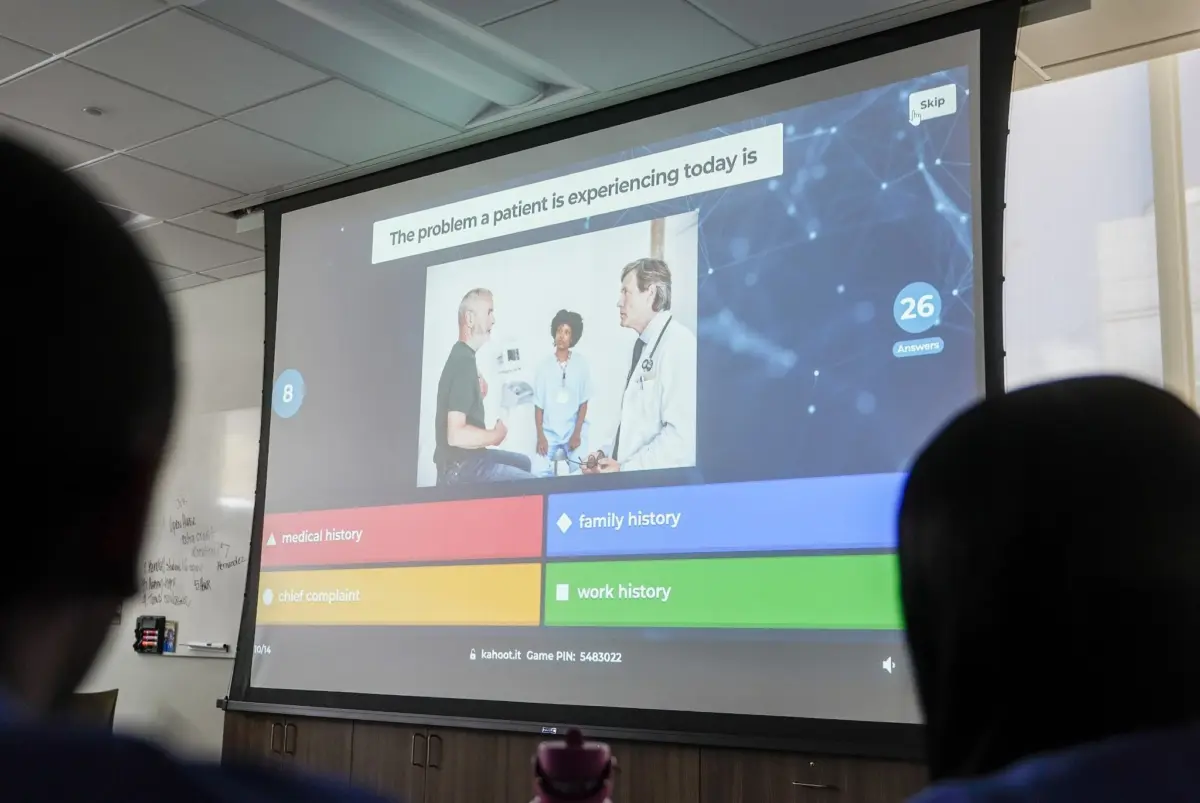
- The 2024 Game-Based Cohort: This group covered the exact same slide decks and theoretical points one year later. However, the schedule was restructured into four concise 1-hour sessions, interspersed with interactive Kahoot! quiz checkpoints. Students used their personal digital devices to answer real-time prompts, with aggregate classroom results instantly projected back to the group to drive immediate discussion.
Methodological Approach and Evaluation Metrics
Because the cohorts were evaluated in consecutive years rather than through randomized, parallel control groups, the researchers framed the study as a robust observational comparison rather than a randomized controlled trial.
To measure the impact of the interventions, both cohorts completed comprehensive baseline and post-workshop assessments. The metrics tracked included:
- Self-Efficacy: Measured via validated psychological scales capturing students’ confidence in their ability to manage stress and emotional challenges.
- Psychological Quality of Life: Evaluated through standardized health metrics encompassing emotional health, anger management, and overall wellness.
- Qualitative Feedback: Collected via open-ended survey questions designed to capture students’ subjective experiences of engagement, community building, and cognitive load.
Supporting Context & Metrics: Data, Psychology, and the Generation Z Dilemma
The impetus for the Argus-Calvo et al. study stems from a convergence of educational psychology, generational shifts, and the unique pressures inherent to medical training.
The Gen Z Cognitive Profile and Academic Performance
Generation Z students enter higher education with distinct cognitive profiles shaped by a lifetime of hyper-connectivity. Argus-Calvo et al. (2026) frame this challenge through the lens of cognitive load theory. Gen Z learners are habitual multitaskers—a behavioral pattern that, when exposed to dense, unbroken blocks of didactic lecturing, can easily elevate cognitive load, fracture attention spans, and impair long-term memory retention.
When medical training requires students to digest complex pharmacological pathways, anatomical structures, and clinical guidelines alongside wellness paradigms, traditional lecture formats frequently induce passivity. The result is a vicious cycle: disengaged students tune out, attendance drops, and retention suffers.
Quantitative Outcomes: Efficacy vs. Experience
When the researchers analyzed the quantitative data from the Well-Teach workshops, the results challenged a common pedagogical assumption: that engaging formats inherently produce vastly superior test scores or psychological shifts over traditional lectures.
Both cohorts demonstrated statistically significant improvements across nearly all measured domains:
- Self-Efficacy Scores: Rose from 20.36 to 21.82 in the traditional lecture group, and from 20.32 to 21.98 in the game-based Kahoot! group.
- Psychological Quality of Life: Increased from 13.74 to 14.34 in the traditional format, and from 14.20 to 15.04 in the game-based format.
While the game-based learning format exhibited marginally elevated mean changes across several metrics and saw a higher percentage of participants reporting perceived improvements in emotional health and stress management, these disparities were not statistically significant. In short, both formats were comparably efficacious in transmitting the core wellness curriculum.
The Qualitative Divide: Engagement and Community
If the quantitative metrics showed parity, the qualitative feedback revealed a stark divergence in student experience. When researchers coded open-ended responses, "engagement and interactivity" emerged as the single most frequently mentioned theme across the entire study, racking up 85 distinct mentions. Students specifically lauded the Kahoot! sessions for transforming passive listening into active competition and participation.
Furthermore, a sense of community—fostered by sharing the interactive sessions with classmates—was cited 25 times. One student’s feedback encapsulated the sentiment:
"The Kahoot! games. I learned a lot and was motivated to play because I liked the prizes."
This qualitative edge is vital. In healthcare education, where student burnout rates are notoriously high, emotional connection, peer support, and active engagement are not merely "nice-to-have" classroom perks; they are psychological buffers against professional distress.
Official Statements and Expert Perspectives on Game-Based Learning
The findings of the Argus-Calvo et al. study do not exist in a vacuum. They align with a growing body of literature examining the integration of gamification into higher education and professional health training.
The Broader Research Landscape
Supporting the efficacy of interactive platforms, a comprehensive meta-analysis by Özdemir (2025) examining 43 independent studies found profound positive correlations between the use of Kahoot! and substantial gains in knowledge retention and academic achievement across diverse educational settings.
Furthermore, educational theorists emphasize that game-based learning leverages fundamental principles of motivation:
- Immediate Feedback Loops: Unlike traditional exams where students wait weeks for grades, gamified platforms provide instant validation of correct answers and highlight knowledge gaps in real time.
- Low-Stakes Assessment: Gamification reframes testing from a source of anxiety into a playful challenge, lowering affective filters and encouraging trial-and-error learning.
- Active Retrieval Practice: Answering questions under timed conditions forces active cognitive retrieval, which neuroscience research consistently shows builds stronger neural pathways than passive re-reading of notes.
Addressing the Healthcare Burnout Crisis
The stakes of student engagement in healthcare programs extend far beyond the classroom walls. Medical and dental students face punishing workloads, clinical pressures, and emotional traumas that often lay the groundwork for chronic burnout.
By embedding wellness education into interactive, community-building formats, institutions signal that mental health is as vital to professional competency as clinical knowledge. When students are actively engaged in discussing emotional health rather than passively copying slides, the curriculum moves from theoretical abstraction to lived practice.
Future Outlook: Transforming Medical Education Without Starting from Scratch
As faculties across higher education grapple with the realities of teaching Generation Z—and eventually, Generation Alpha—the temptation can be to assume that wholesale, disruptive overhauls are required to modernize a curriculum. The insights from Argus-Calvo et al. suggest otherwise.
Practical Strategies for Instructors
Revishaing a syllabus does not mean entirely scrapping traditional lectures or abandoning foundational slide presentations. Instead, medical educators and university faculty can implement incremental, high-impact adjustments:
- Strategic Punctuation: Break up long lecture blocks by inserting interactive checkpoints every 15 to 20 minutes. A quick poll or gamified quiz resets attention spans and resets cognitive load.
- Low-Barrier Interactivity: Utilize digital tools that students can access directly from their smartphones or laptops, eliminating the friction of specialized hardware.
- Inquiry-Based Openings: Start a session not with a summary of objectives, but with a provocative clinical scenario or a thought-provoking gamified question that forces students to take an intellectual stance before the lecture even begins.
- Peer-Led Discussion Loops: Use the data generated by real-time quizzes to trigger peer discussions. When a classroom splits on a complex ethical or diagnostic question, turning the results over to small-group debates fosters clinical reasoning and community connection.
Conclusion: The Best of Both Worlds
The research by Argus-Calvo et al. (2026) offers an encouraging message to medical and higher education institutions: traditional lectures remain a viable vessel for delivering complex theoretical content, but they no longer suffice as an experiential model for modern learners.
By marrying robust academic curricula with the engagement, interactivity, and community-building power of game-based learning, educators can meet Gen Z students where they are. In doing so, universities can cultivate not only more focused, motivated learners, but healthier, more resilient healthcare professionals equipped for the demands of modern medicine.
For a comprehensive library of independent research and institutional case studies regarding the impact of interactive learning, explore the research database at kahoot.com/research.

