

Executive Overview
Every morning, knowledge workers face a universal ritual of digital dread: opening an inbox overflowing with unread messages, missed notifications, and high-priority requests. For many professionals, managing email has evolved into a secondary occupation—one that consumes hours of cognitive bandwidth before the workday even truly begins. Into this landscape of digital exhaustion steps Fyxer AI, a London-based artificial intelligence assistant engineered to intercept, sort, draft, and summarize the daily influx of professional correspondence.
Rather than acting as a simple spam filter or static folder organizer, Fyxer operates as an autonomous executive assistant. By integrating directly with Gmail or Outlook, it prioritizes incoming messages, filters out up to 50% of communication "noise," drafts context-aware replies matching the user’s specific voice, joins virtual meetings to capture automated notes, and orchestrates follow-ups.

This comprehensive review explores a hands-on journey with Fyxer AI, detailing its setup process, feature ecosystem, security posture, and real-world performance. Furthermore, this report contextualizes Fyxer’s market position by comparing it against leading industry alternatives—SaneBox, Shortwave, and Superhuman Mail—while examining its hyper-growth trajectory, financial backing, and long-term implications for modern workplace productivity.
Detailed Chronology: A Week Inside the Fyxer Ecosystem
To evaluate Fyxer’s real-world efficacy, the platform was connected to an active, high-volume professional inbox for a comprehensive trial period. The onboarding and operational chronology reveals how the software transforms raw communication channels into streamlined workflows.
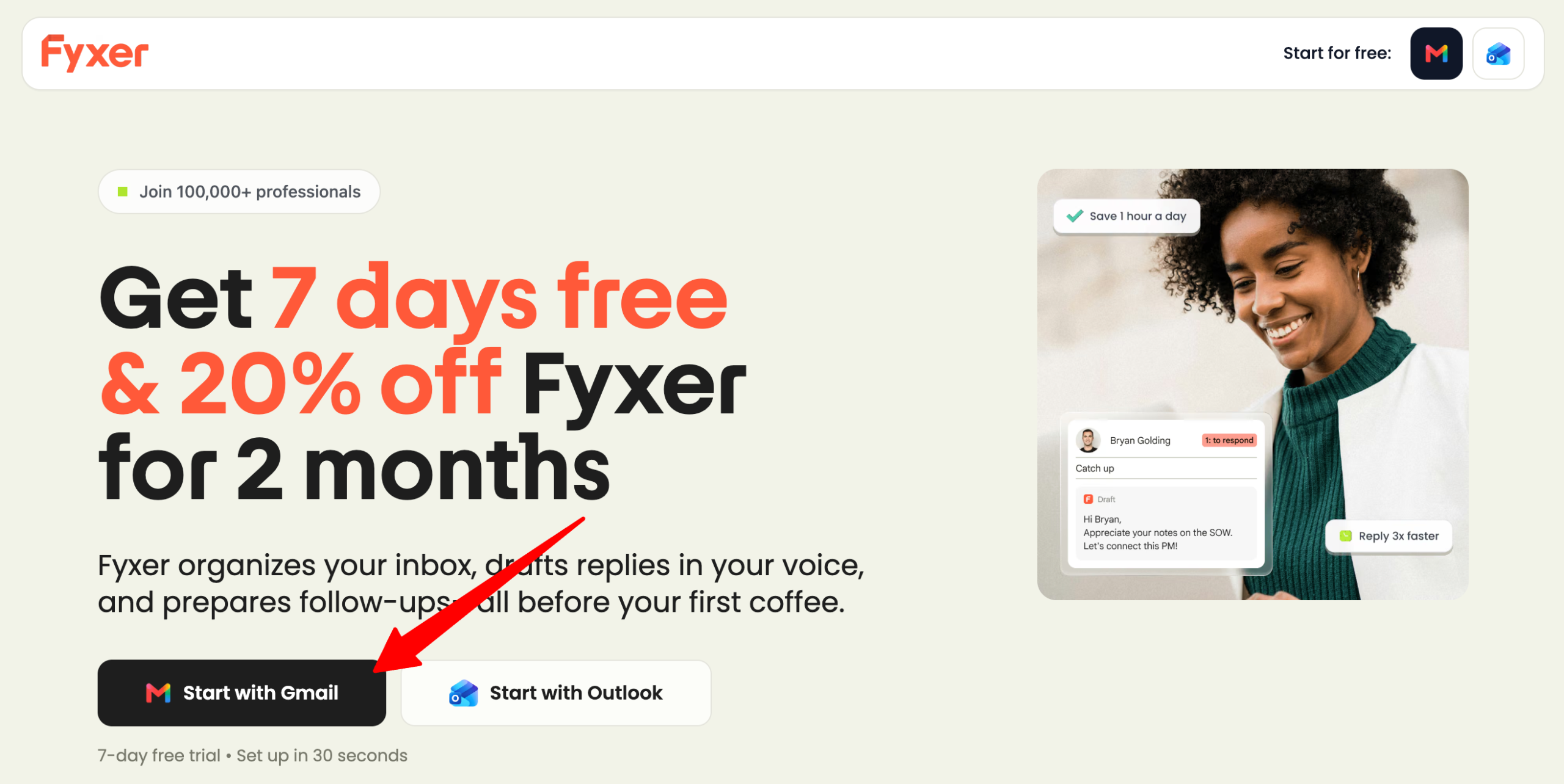
Step 1: Account Initialization and Setup
The journey began at the official Fyxer portal to initiate a 7-day free trial. Requiring only a work email address, the registration process bypasses complex configuration screens, immediately directing users toward workspace integration.
Step 2: Inbox Integration (Gmail and Outlook)
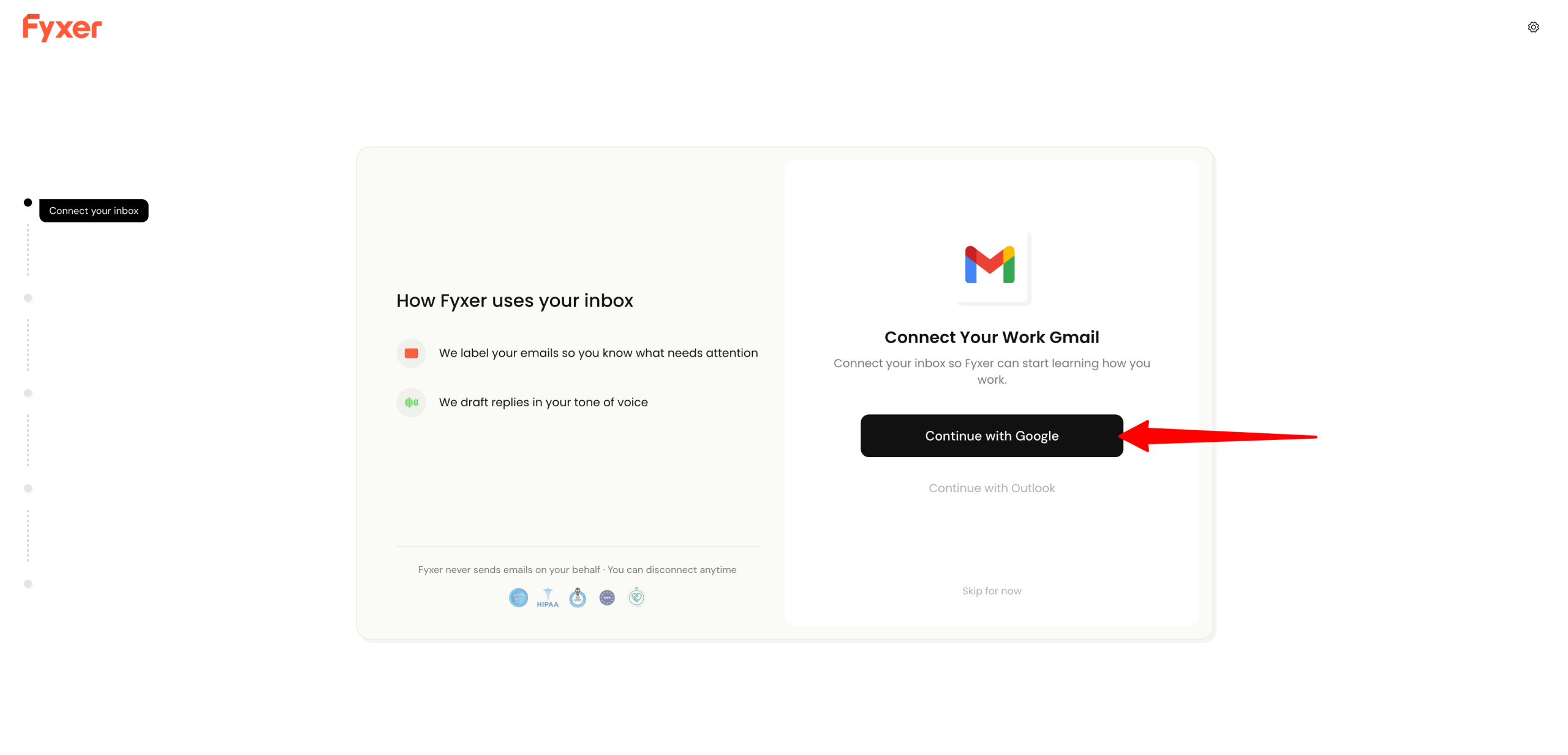
Fyxer supports both major enterprise mail ecosystems—Gmail and Microsoft Outlook. Connecting the test inbox required standard OAuth authorization. Because Fyxer operates natively via API integration rather than manual data migration, the synchronization completed in under sixty seconds, immediately allowing the AI to scan and analyze historical writing patterns and communication rhythms.
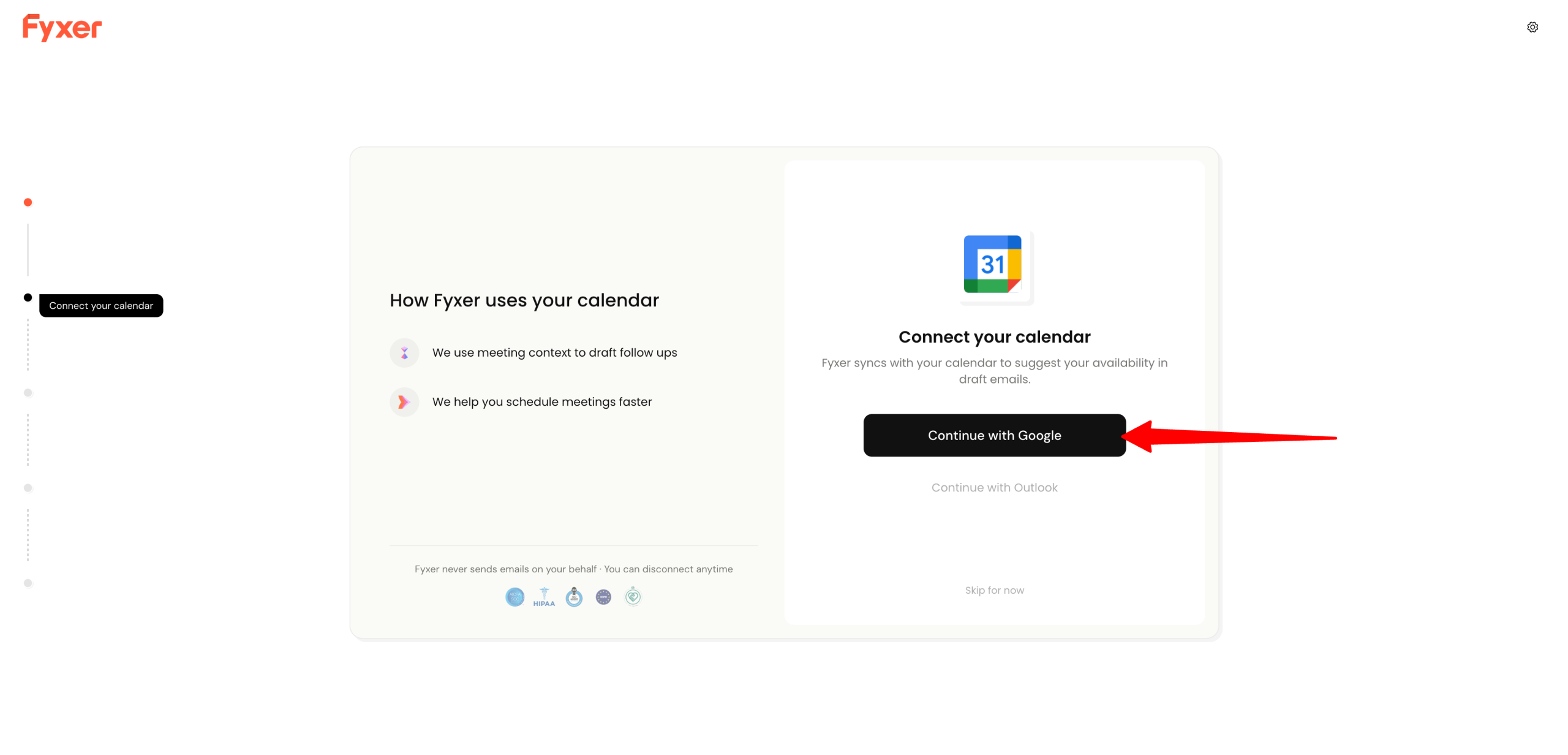
Step 3: Calendar and Meeting Permissions
To leverage Fyxer’s auxiliary capabilities—specifically its meeting notetaker and scheduling engine—calendar permissions were granted. While this step is entirely optional for users seeking strictly email-based organization, unlocking calendar access enables the platform to bridge the gap between asynchronous messaging and synchronous face-to-face collaboration.
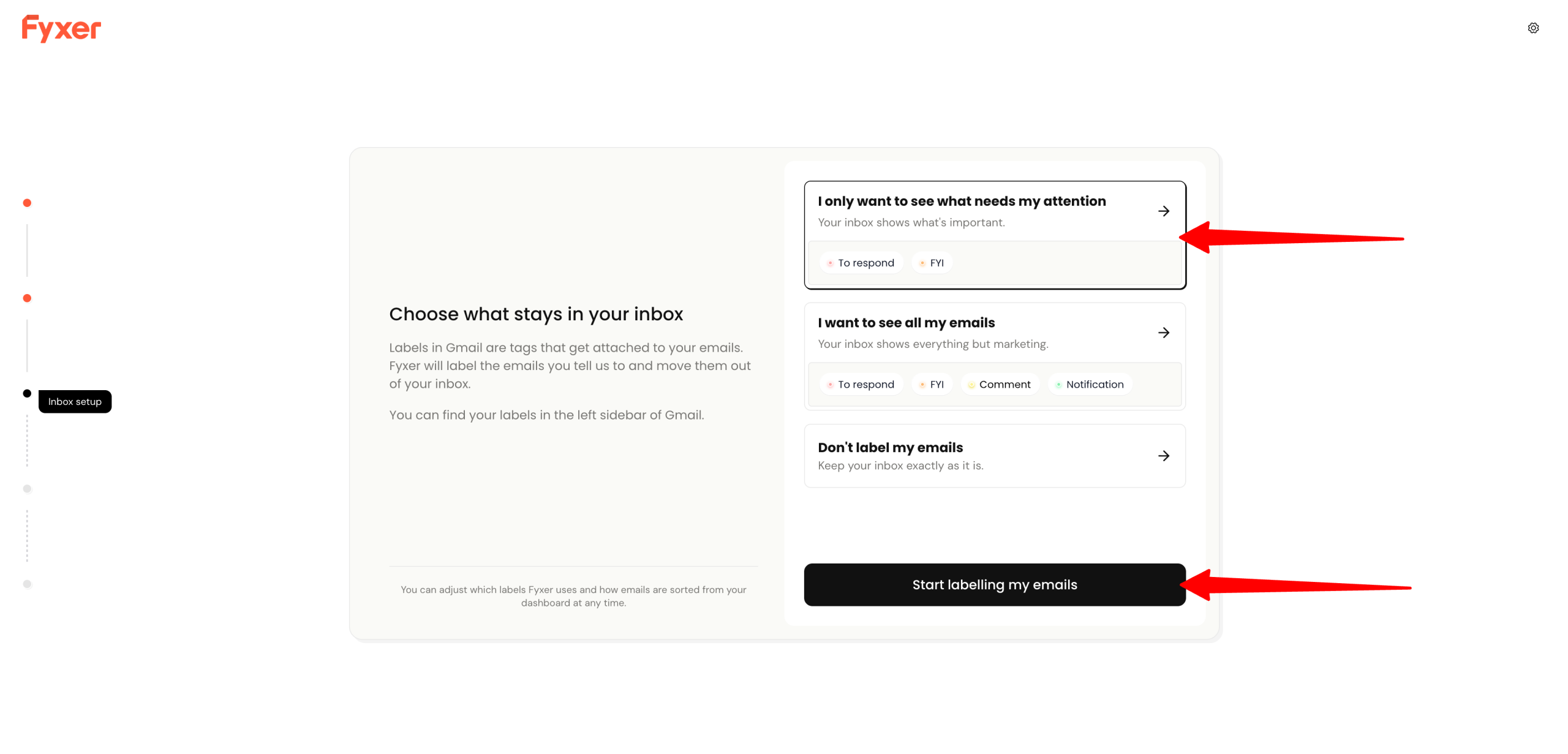
Step 4: Configuring Inbox Noise Reduction
During setup, Fyxer prompts users to define their organizational philosophy using customized label hierarchies. The platform presents structured triage options, ranging from comprehensive all-message visibility to aggressive filtering that displays only items requiring immediate human intervention. For this test, the highest-priority setting was selected to isolate actionable items from background noise.
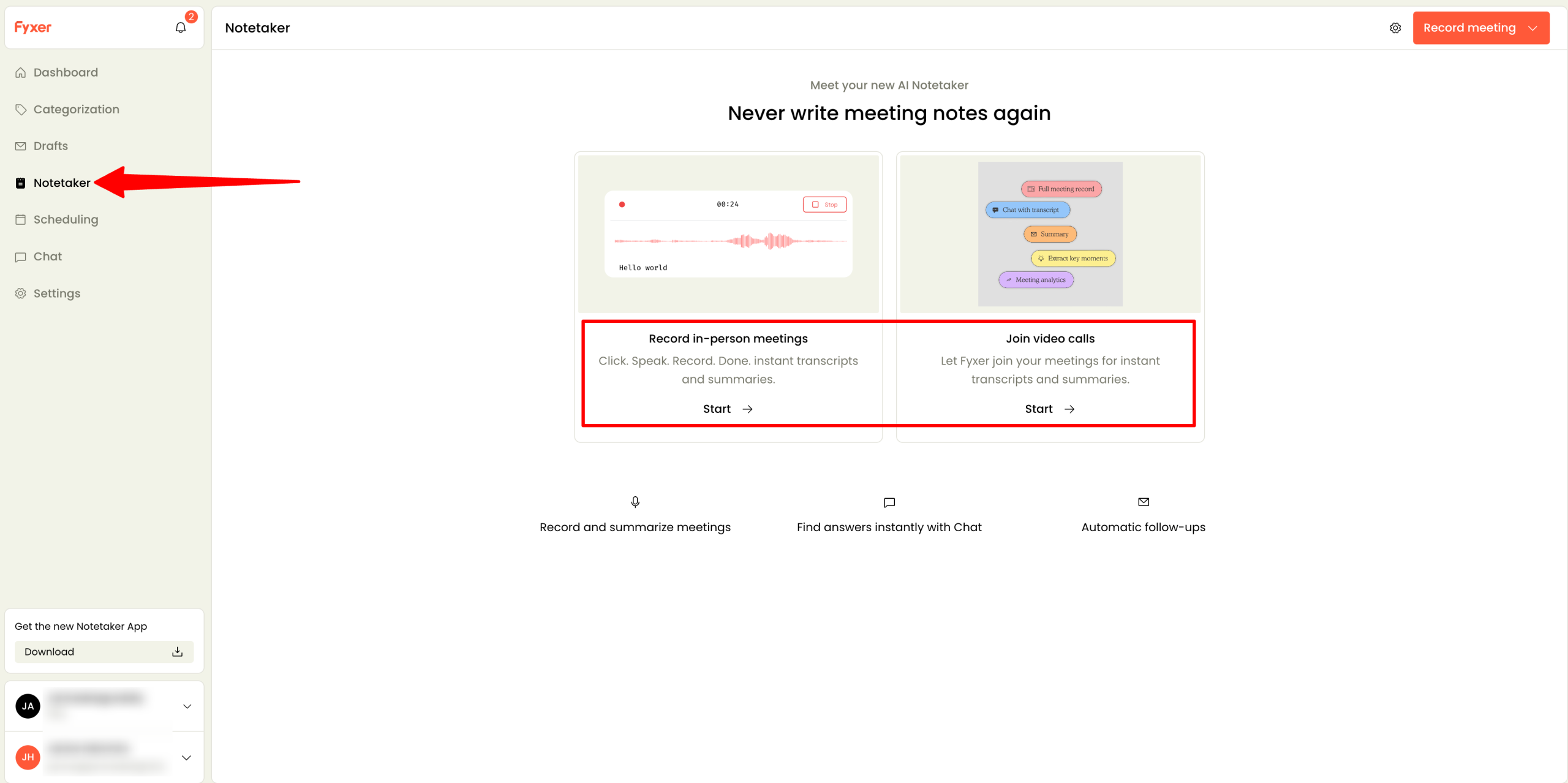
Step 5: Activating the Automated Meeting Notetaker
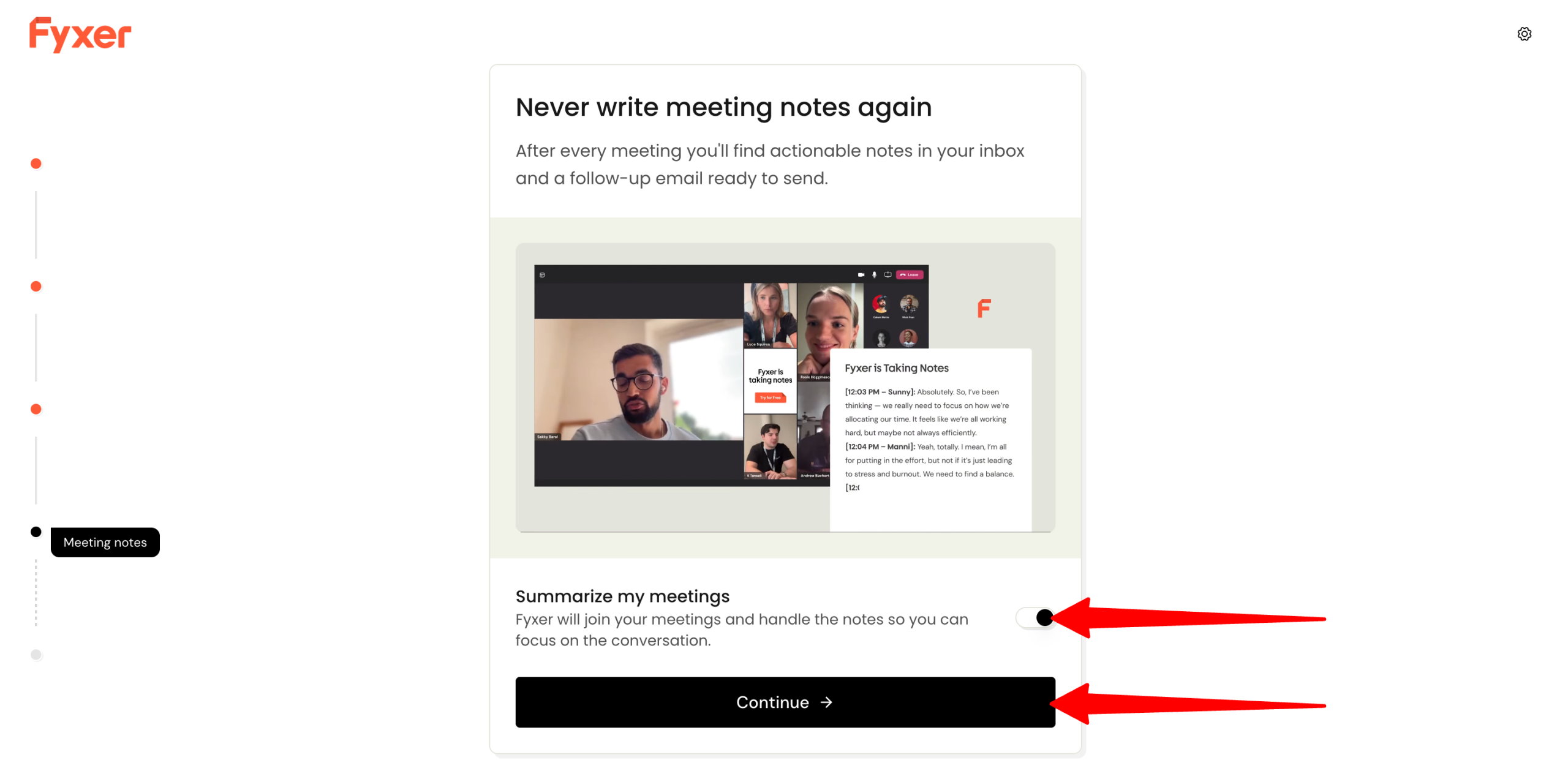
Fyxer’s meeting assistant feature was enabled to observe its handling of virtual conferences. The platform is configured to silently join scheduled video calls, transcribe dialogue, extract key takeaways, isolate action items, and queue up automated follow-up drafts within the user’s email queue before the conference call has even concluded.
Step 6: Dashboard Analytics and Initial Throughput
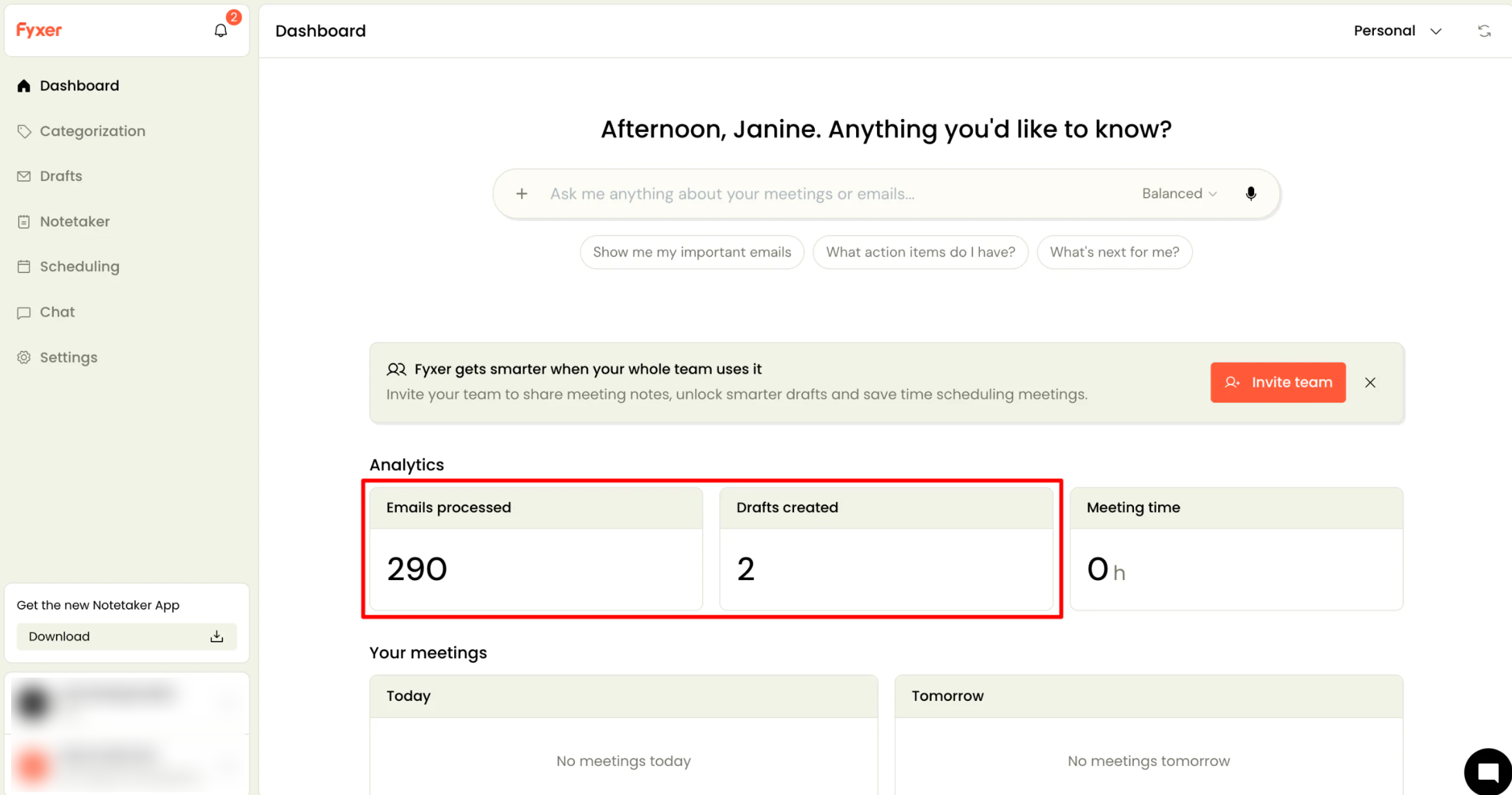
Upon reaching the central Fyxer dashboard, initial operational metrics were immediately visible. Within moments of connection, the system reported processing 290 historical and incoming threads and auto-generating initial contextual email drafts. The speed of initial ingestion highlighted the robust processing architecture humming beneath the software’s user interface.
Step 7: Reviewing the Sorted Inbox
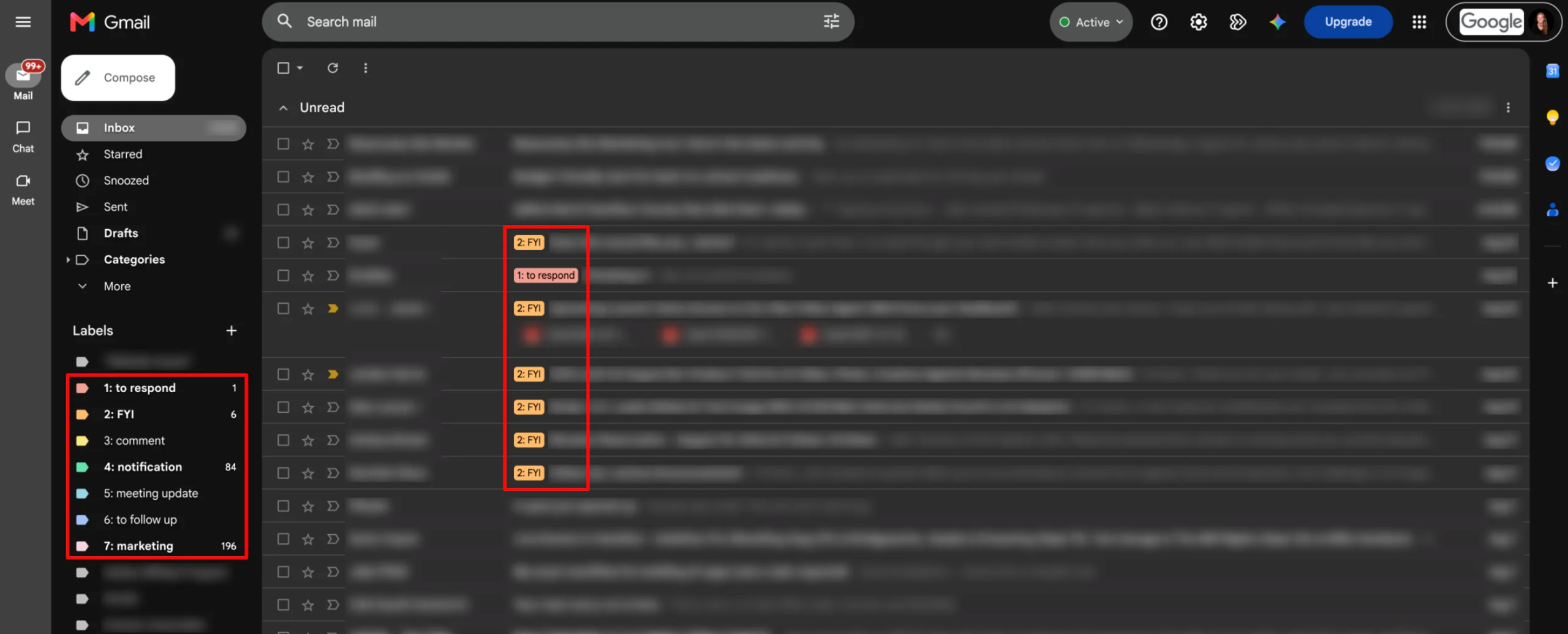
Within the native email client interface, Fyxer deployed color-coded priority labels. The inbox was successfully partitioned: urgent client requests, direct colleague communications, and critical updates were separated from automated newsletters, promotional alerts, and low-priority CC threads. This drastically reduced cognitive load by presenting a curated queue of actionable tasks.
Step 8: Evaluating AI-Generated Drafts
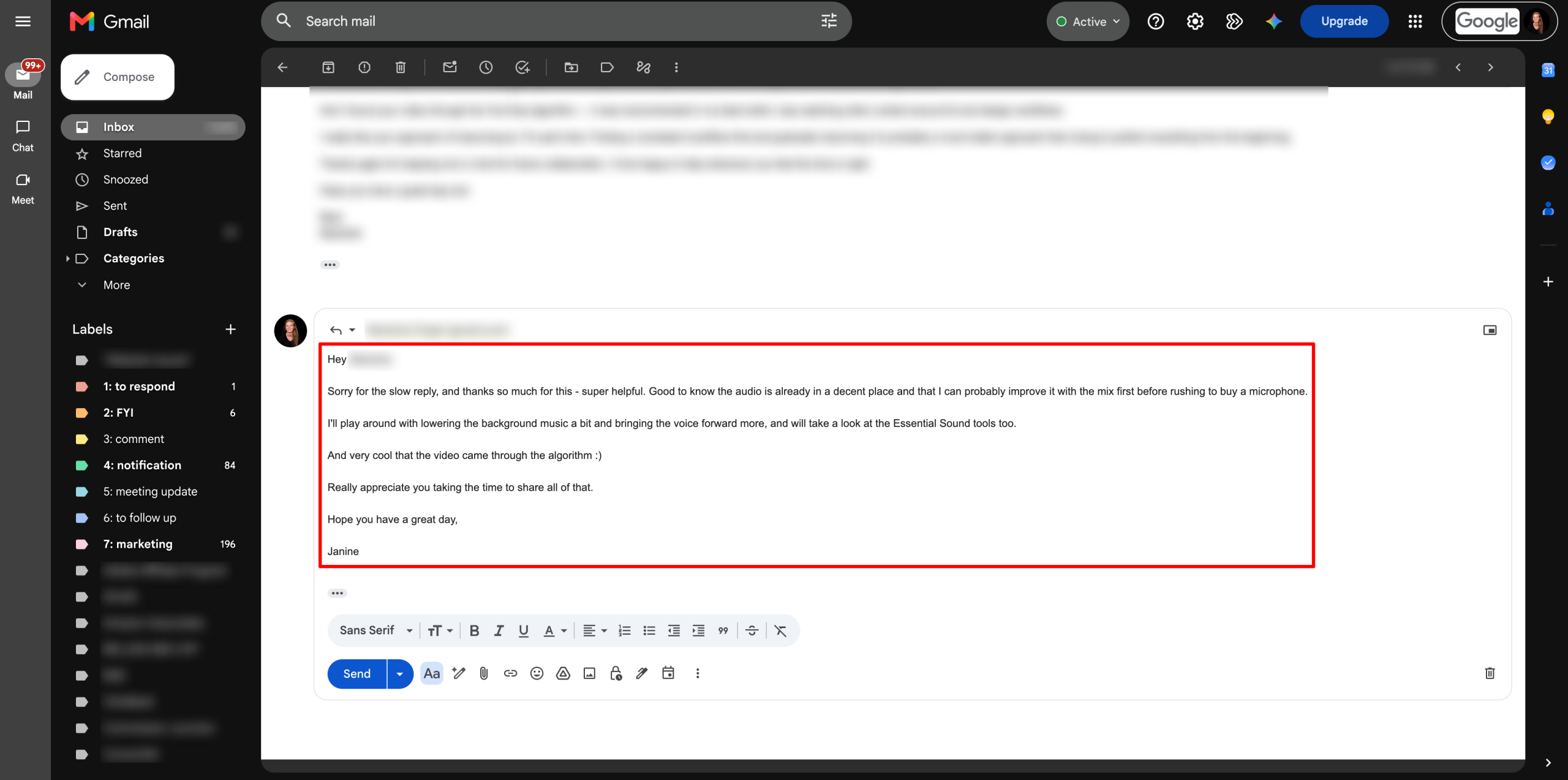
For messages requiring outward communication, Fyxer prepared pre-written replies waiting directly in the drafts folder. Impressively, the generative models successfully mirrored the user’s historical cadence, vocabulary, and professional tone. Minor stylistic edits were occasionally required, but the core messaging was accurate, saving substantial typing time.
Step 9: Testing the Autonomous Notetaker
Navigating back to the web dashboard, the Notetaker module was deployed on a live test call. Following the meeting, Fyxer delivered a concise, structured brief containing actionable takeaways and bulleted summaries. This eliminated the need to scrub through lengthy transcripts or raw audio recordings, compressing post-meeting administrative chores into a sub-minute review.
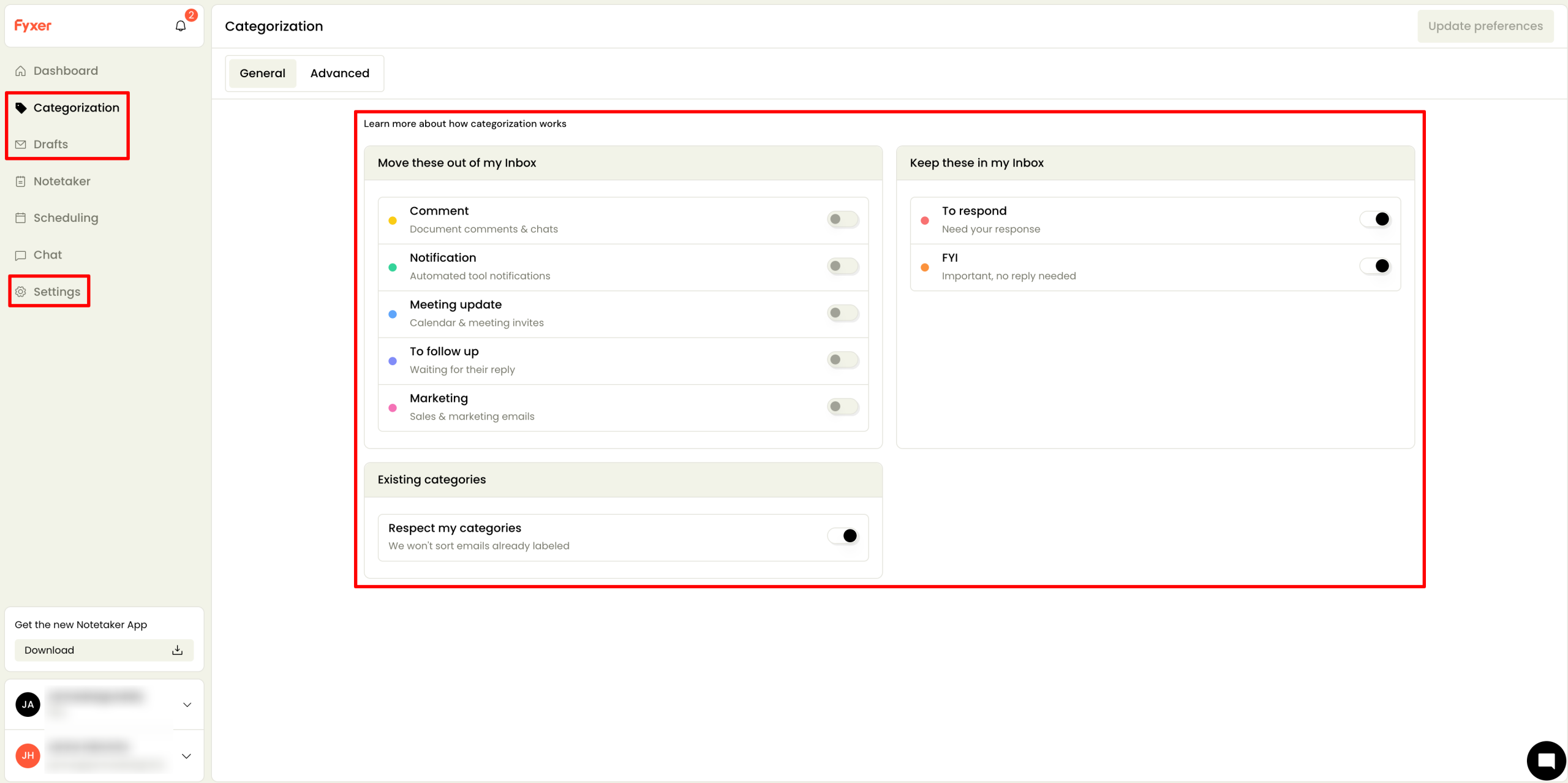
Step 10: Fine-Tuning Categorization Settings
Through the platform’s settings tab, users retain granular control over the AI’s aggression levels. The categorization and drafts menu allowed adjustments to how strictly Fyxer filters low-priority messages and how bold its automated drafts should be, ensuring a comfortable balance between automation and human oversight.
Step 11: Engaging the Integrated AI Chat
Finally, the native AI chat interface was queried with general requests regarding daily schedules and outstanding communications. The assistant successfully cross-referenced calendar commitments with urgent email threads, generating an executive brief that highlighted critical tasks, pending replies, and potential scheduling conflicts.
Supporting Context, Company Metrics, and Market Position
Fyxer’s rapid rise is not merely a product of clever marketing; it is backed by aggressive venture capital deployment and exceptional commercial growth metrics.
Company Background and Financial Growth
Headquartered in London and led by CEO Richard Hollingsworth, Fyxer has quickly become a darling of the European and Silicon Valley tech sectors. The startup has secured a total of $40 million in venture funding, anchored by pivotal capital injections:
- March 2025: A $10 million Series A round featuring backing from high-profile technology luminaries, including Salesforce founder Marc Benioff.
- September 2025: A $30 million Series B funding round led by Madrona Venture Group, with additional participation from Lakestar.
This robust financial backing has fueled extraordinary revenue expansion. Industry reports indicate that Fyxer scaled its Annual Recurring Revenue (ARR) from $1 million to $17 million in roughly eight months, an explosive growth rate that places the company among the fastest-growing SaaS startups in the productivity space. Today, Fyxer serves over 100,000 active users, boasting an impressive 90% three-month retention rate—a testament to its stickiness in enterprise environments.
Security and Compliance Architecture
Because autonomous email assistants require deep, credentialed access to corporate inboxes, calendars, and sensitive internal communications, security is a paramount concern for IT decision-makers. Fyxer addresses these vulnerabilities by maintaining rigorous enterprise-grade compliance standards, including:
- SOC 2 Type II Certification
- ISO 27001 Compliance
- HIPAA Compliance (making it viable for healthcare-adjacent workloads)
- GDPR Compliance for European data sovereignty and privacy protections.
These safeguards ensure that user data is encrypted, handled securely, and never improperly utilized to train public foundational models without institutional authorization.
Official Insights and Comparative Analysis
While Fyxer represents a comprehensive approach to executive digital management, the market features several distinct philosophies on inbox optimization. Understanding how Fyxer compares to its primary competitors helps clarify its ideal use case.
Fyxer AI vs. SaneBox
- The Philosophy: SaneBox focuses primarily on folder-based triage, automatic noise reduction, and smart email snoozing. While it includes "SaneDrafts" for voice-matched reply generation, its core competency remains organization.
- The Verdict: Choose SaneBox if your primary goal is a decluttered, cleanly organized inbox without heavy reliance on automated drafting or meeting transcription. Choose Fyxer if you require a comprehensive assistant that handles writing, meeting summaries, and follow-ups end-to-end.
Fyxer AI vs. Shortwave
- The Philosophy: Shortwave acts as a complete email client replacement built natively on top of Gmail. It introduces powerful message-searching tools, workspace integrations, and writing assistants within a reimagined user interface.
- The Verdict: Choose Shortwave if you are willing to abandon your native email app for a completely redesigned, search-optimized client. Choose Fyxer if you prefer to retain your existing Gmail or Outlook interface while allowing an intelligent background layer to manage the heavy lifting.
Fyxer AI vs. Superhuman Mail
- The Philosophy: Superhuman prioritizes raw speed and keyboard-driven efficiency. Featuring split inboxes and rapid navigation shortcuts, its AI helps users quickly compose, shorten, or expand messages manually.
- The Verdict: Choose Superhuman Mail if you are a power user obsessed with velocity and manual keyboard shortcuts. Choose Fyxer if you want to offload the actual writing, summarizing, and scheduling work entirely to an autonomous agent.
Future Outlook: The Autonomous Office
As artificial intelligence matures from a novelty tool into core enterprise infrastructure, software like Fyxer points toward the future of white-collar work. The traditional paradigm—where humans manually process every piece of digital data entering an organization—is increasingly unsustainable in the face of mounting communication volumes.
Tools that blend asynchronous messaging management with synchronous meeting intelligence represent the next evolutionary step in productivity software. However, widespread adoption will hinge on two critical factors: trust and transparency. Users must remain comfortable relinquishing granular control over outgoing correspondence, trusting that the underlying models accurately reflect their professional voice without introducing hallucinations or socially awkward errors.
For professionals drowning in administrative overhead, fragmented meeting notes, and endless email chains, Fyxer provides a compelling glimpse into a more efficient workday. While it requires a financial investment and a willingness to surrender traditional inbox habits, its capacity to reclaim hours of lost time each week marks it as a formidable contender in the modern AI landscape.

