

Executive Overview
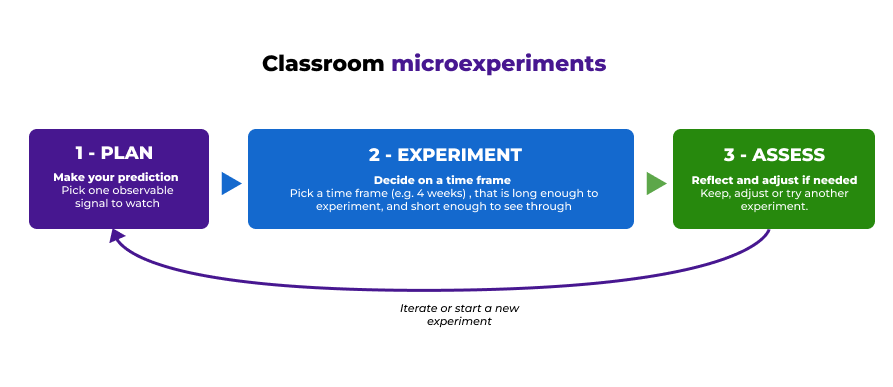
In the rapidly evolving landscape of modern pedagogy, educators face a persistent balancing act: how to introduce innovative teaching methods without overwhelming an already packed curriculum or burning out from endless routine overhauls. Enter the concept of the classroom micro-experiment—a low-stakes, highly targeted pedagogical strategy designed to test specific educational interventions within a short, fixed window of time.
Rather than committing to sweeping, semester-long curriculum changes that can be difficult to sustain, micro-experiments empower teachers to act as educational researchers within their own classrooms. They run a short test, analyze the empirical and qualitative results, and make a data-driven decision: keep the new routine, iterate on the design, or discard it entirely.
This installment marks Part 3 of our Back-to-School series on classroom micro-experiments. While previous installments explored the implementation of weekly formative checks (Part 1) and shifting the creation of review materials directly to the students (Part 2), Part 3 tackles a fundamental structural shift: how students interact with content during review sessions by moving from solo play to collaborative small-group discussions.
By examining the cognitive science behind peer-to-peer learning, this article outlines a rigorous, four-week micro-experiment designed to harness the power of team-based gamification—specifically utilizing collaborative platforms like Kahoot!—to foster deeper conceptual understanding, critical thinking, and social-emotional growth in students of all ages.
Detailed Chronology: The Evolution of the Four-Week Micro-Experiment
To understand the practical application of this pedagogical shift, educators must view the transition not as a one-off activity, but as a carefully structured, four-week chronological journey. Implementing a micro-experiment requires discipline, clear framing, and systematic observation. Below is the chronological breakdown of how teachers can execute a month-long team-based review experiment in their classrooms.
Week 1: Establishing the Baseline and Introducing Team Dynamics
- Objective: Introduce the concept of team-based review without overwhelming the students with complex new rules.
- Action Steps:
- Divide the class into heterogeneous small groups (ideally 3 to 4 students per team to ensure everyone has a voice).
- Explain the ground rules: teams cannot simply lock in the first answer shouted out; every member must agree, and individuals must be prepared to justify their reasoning to teammates.
- Run a standard 10-to-15-minute review session using a team-mode game experience (such as Kahoot!’s team modes or specialized cooperative interfaces like Lost Pyramid).
- Teacher Observation: Take notes on how groups organize themselves. Are certain students dominating the conversation while others remain silent? Do groups finish discussions well before the timer expires, or do they rush through without talking?
Week 2: Refining Communication and Cognitive Friction
- Objective: Deepen the quality of peer discussions by introducing specific prompts for justification.
- Action Steps:
- Before launching the weekly review, explicitly remind students of the goal: “Don’t just guess; explain why you think your answer is right.”
- Incorporate rounds where teams must actively debate divergent viewpoints. If a team is split between two answers, mandate that one proponent from each side make a 30-second case for their selection before the team locks in their choice.
- Teacher Observation: Monitor the energy in the room. Look for signs of "productive struggle"—moments where confusion leads to deeper inquiry rather than frustration. Note whether students are beginning to use subject-specific vocabulary when convincing their peers.
Week 3: Peer-to-Peer Teaching and Remediation
- Objective: Leverage student-to-student explanations to bridge gaps in foundational knowledge.
- Action Steps:
- Intentionally construct groups to pair students who have shown mastery of recent concepts with those who may be struggling.
- Observe how higher-performing students explain complex ideas in accessible, peer-to-peer language.
- Keep the duration strict (10–15 minutes) to maintain high engagement and focus.
- Teacher Observation: Evaluate formative assessment data generated by the platform. Compare the team accuracy rates this week against the individual assessment data from Part 1 of this series. Are struggling students performing better on concepts discussed collectively than they did on solo quizzes?
Week 4: Assessment, Reflection, and Iteration
- Objective: Conclude the micro-experiment, measure outcomes, and decide on the long-term viability of the routine.
- Action Steps:
- Run a final cumulative team review session.
- Conduct a brief 5-minute exit ticket survey asking students about their experience: Did working in teams help you understand the material better? Did you feel more or less stressed compared to solo reviews?
- Analyze your teaching notes, platform analytics, and student feedback to decide whether to institutionalize team-based reviews moving forward.
Supporting Context & Metrics: The Cognitive Science of Peer Discussion
Why transition from solo work to collaborative small groups during review sessions? To answer this, we must examine the cognitive limitations of traditional individual assessment and the expansive benefits of social constructivism in education.
The Illusion of Solo Understanding
In a traditional individual review setting—whether conducted via digital gamification or pen-and-paper worksheets—a student binary is established: either a student knows the answer, or they do not. However, this binary obscures a critical pedagogical nuance. A correct answer may be the result of a lucky guess, rote memorization, or superficial pattern recognition rather than deep conceptual mastery. Conversely, an incorrect answer might stem from a minor miscalculation rather than a fundamental misunderstanding of the core principle.
Furthermore, individual review offers limited insight into how a student arrived at their conclusion. In a whole-class discussion format, teachers attempt to uncover this reasoning, but systemic barriers immediately emerge:
- Anxiety: Many students experience performance anxiety or fear of public speaking, preventing them from sharing their thoughts in front of the entire class.
- Time Constraints: In a 45-minute class period with 30 students, it is mathematically impossible to hear the reasoning of every single learner.
The Power of the Small Group Dynamic
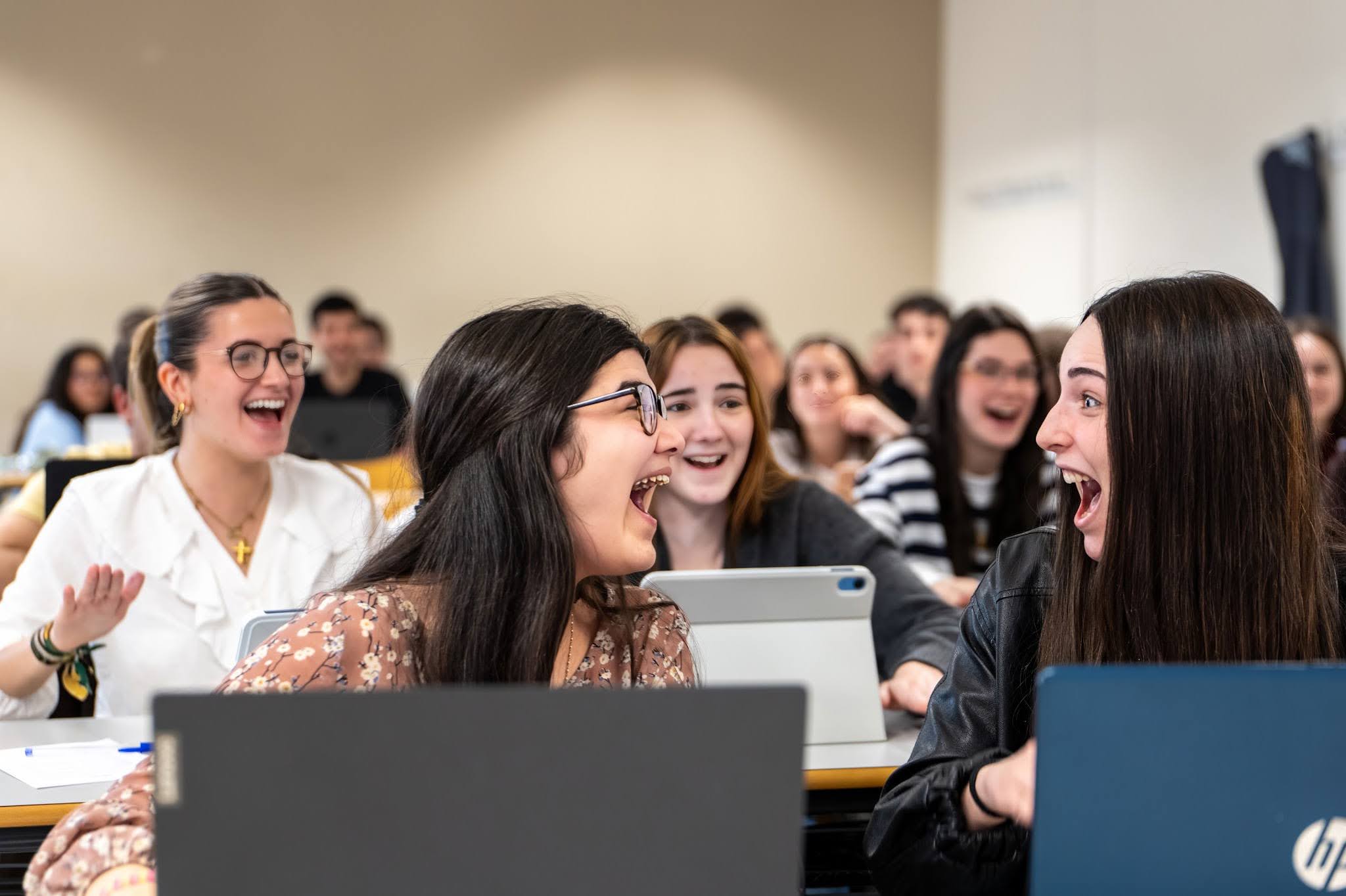
By breaking the classroom into small, collaborative teams (3–4 students), educators exponentially increase the number of active cognitive touchpoints. Research into collaborative learning highlights several distinct psychological and academic advantages:
- Forced Articulation (The Protean Effect): When students must explain their thinking to teammates, they are forced to organize disjointed thoughts into a coherent, linear narrative. This act of verbalization requires metacognition—thinking about one’s own thinking—which solidifies memory traces in the brain.
- Peer-Led Translation: Textbooks and teachers often utilize formal, academic registers that can alienate struggling learners. When a peer translates that same concept into colloquial, peer-level language, it frequently "clicks" in a way that formal instruction could not achieve.
- Healthy Cognitive Conflict: Disagreements within teams are not setbacks; they are catalysts for learning. When teammates advocate for conflicting answers, they must weigh evidence, evaluate assumptions, and defend their positions. This cognitive friction forces students to upgrade their mental models.
[Individual Review] ---> Binary Outcome (Right/Wrong) ---> Superficial Mastery Risk
[Small Group Review] --> Collaborative Debate ---> Metacognition ---> Deeper Conceptual Retention
Quantitative and Qualitative Metrics to Track
When running this four-week micro-experiment, educators should evaluate success through a dual-lens framework:
- Quantitative Metrics: Platform analytics tracking team accuracy trends over the 4-week period, time-to-answer metrics (showing whether discussions led to more deliberate, slower, and ultimately more accurate choices), and subsequent summative assessment scores on units reviewed via teamwork vs. solo work.
- Qualitative Metrics: Student engagement levels, observed peer-to-peer instructional interactions, anxiety reduction indicators, and student self-reporting regarding confidence in the subject matter.
Official Statements: Educator Insights and Best Practices
To ensure maximum efficacy when transitioning from solo to team-based reviews, veteran educators and instructional designers emphasize the importance of intentional structure. Teamwork does not happen by accident; it must be scaffolded with clear behavioral and academic expectations.
Defining Clear Goals for Peer Discussion
Instructional experts stress that teachers must define what success looks like before launching a collaborative micro-experiment.
"You cannot simply tell students to ‘work together’ and expect high-level academic discourse to spontaneously occur," notes a leading curriculum designer specializing in gamified learning. "You must explicitly model what a productive team discussion sounds like. Show them how to disagree politely, how to ask clarifying questions when a teammate is confused, and how to synthesize multiple opinions into a single collective choice."
This shift from solo play to team play asks a significantly higher cognitive lift from students. Instead of passively retrieving information from memory, students must actively negotiate meaning with their peers. To support educators in executing this shift seamlessly, modern platforms allow any standard review activity—such as a custom Kahoot! quiz—to be instantly converted into a collaborative team experience with a single click.
Best Practices for Successful Team-Based Reviews
- Optimize Group Composition: Avoid allowing students to always self-select groups, which can lead to social siloing. Mix groups strategically to balance academic strengths and communication styles.
- Time-Boxing the Debate: Keep discussion windows tight (e.g., 30 to 45 seconds per question). This creates a sense of playful urgency that prevents over-analysis while maintaining intense focus.
- Reframing Competition: Emphasize that the goal of the team competition is collective growth and fun, not ruthless outperformance. Celebrate teams that show the most improvement week-over-week, regardless of whether they finished in first place.
Future Outlook: What Lies Ahead in the Micro-Experiment Series
As classrooms continue to embrace agile, iterative methodologies, the classroom micro-experiment proves that meaningful instructional improvement does not require a complete reinvention of the educational wheel. By breaking innovations down into manageable, four-week tests, teachers can systematically optimize their practice while keeping student engagement at an all-time high.
However, the journey of pedagogical exploration does not stop here.
In Part 4 of our Back-to-School series, we will push the boundaries of classroom timing and preparation even further. We will ask a provocative question: What if the review happened before class even started?
Stay tuned as we test the impact of deploying a short, pre-class learning check, analyze how it alters the traditional rhythm of the school day, and discover what vital instructional space it unlocks for deep, hands-on learning during live class time.

