
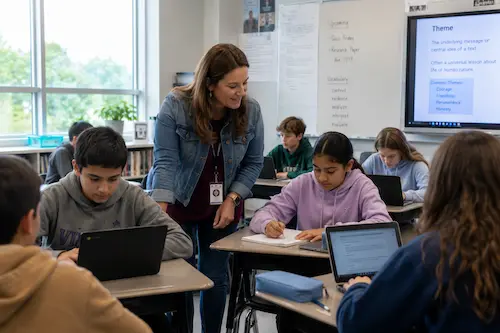
Executive Overview
Every academic year, school administrators and classroom educators grapple with a persistent core challenge: how to bridge the gap between complex curriculum demands and actual student retention. As educators navigate classrooms populated by students at vastly different achievement levels, the search for sustainable, evidence-based instruction has never been more urgent.
A growing movement within educational neuroscience offers a definitive answer. Harnessing the Science of Learning, authored by Dr. Nathaniel Swain, a senior lecturer in Learning Sciences at La Trobe University School of Education in Australia, has emerged as a cornerstone text in this movement. Moving beyond theoretical academics, the work translates cognitive research into actionable classroom methodology.
Endorsed by leading instructional experts—including Miriam Williams, M.Ed., Professional Development Manager at 3P Learning and a 23-year veteran of public school leadership—Swain’s framework addresses the operational realities of modern schooling. Rather than burdening educators with transient instructional fads, the Science of Learning provides a streamlined, research-backed model designed to optimize working memory, reduce cognitive overload, and restructure both student learning and adult professional development.
       +-------------------------------------------------------+
       |             THE SCIENCE OF LEARNING FRAMEWORK          |
       +-------------------------------------------------------+
                                   |
         +-------------------------+-------------------------+
         |                                                   |
         v                                                   v
+-----------------------------+             +-----------------------------+
|   COGNITIVE LOAD THEORY     |             |  INSTRUCTIONAL DESIGN       |
| • Limit Working Memory Load |             | • "I Do, We Do, You Do"     |
| • Eliminate Visual Clutter  |             | • Explicit Instruction      |
| • Systematic Scaffolding    |             | • Spaced Retrieval Practice |
+-----------------------------+             +-----------------------------+
         |                                                   |
         +-------------------------+-------------------------+
                                   |
                                   v
       +-------------------------------------------------------+
       |   SYSTEMIC APPLICATION: CLASSROOMS & ADULT PD         |
       +-------------------------------------------------------+
Detailed Chronology: The Evolution of Educational Neuroscience in Practice
To understand the impact of Dr. Swain’s work, one must examine the evolution of instructional design over the past four decades, tracking how cognitive science transitioned from laboratory experiments to daily classroom application.
   1980s–1990s               2010s                     2020s
+-----------------+       +-----------------+       +-----------------+
|  COGNITIVE LOAD | ----> | TRANSLATIONAL   | ----> | EDUCATOR-CENTRIC|
|  THEORY         |       | LEARNING SCIENCE|       | INTEGRATION     |
|  (Sweller)      |       | (Make It Stick) |       | (Swain)         |
+-----------------+       +-----------------+       +-----------------+
The Foundations of Cognitive Load Theory (1980s–1990s)
In the late 20th century, Australian educational psychologist John Sweller formulated Cognitive Load Theory (CLT). Sweller’s research identified human working memory as extremely limited in capacity and duration when processing novel information, whereas long-term memory is virtually limitless. Early pedagogical models often overlooked this bottleneck, overwhelming students with unguided discovery tasks and excessive visual stimuli.
The Self-Directed Learning Era (2010s)
By the middle of the 2010s, works such as Make It Stick: The Science of Successful Learning popularizing concepts like spaced repetition, retrieval practice, and interleaving. While foundational, these publications largely targeted self-directed adult learners, college students, and individual study habits. They left K–12 classroom teachers to figure out how to translate cognitive principles into systemic, real-time group instruction.
The Educator-Centric Shift (Present)
Dr. Nathaniel Swain’s Harnessing the Science of Learning represents the latest evolution in this timeline. By shifting the perspective directly to K–12 practitioners, Swain synthesizes cognitive load management, explicit instruction, and whole-class responsive teaching into a single operational roadmap. Today, this methodology is reshaping instructional coaching, curriculum purchasing, and school leadership strategies across public, charter, and international education systems.
Supporting Context & Metrics: Cognitive Mechanics and Implementation Frameworks
1. Deconstructing Cognitive Load in the Classroom
The human brain’s architecture dictates that working memory can hold only a small number of items simultaneously. When novel concepts are introduced, any non-essential cognitive processing—known as extraneous cognitive load—competes for the same finite resources needed to absorb core content.
| Cognitive Load Category | Description | Pedagogical Risk | Mitigation Strategy |
|---|---|---|---|
| Intrinsic Load | The inherent complexity of the learning material itself. | Student frustration if foundational knowledge is missing. | Break complex tasks into small, sequential steps. |
| Extraneous Load | Mental effort spent processing non-essential stimuli (e.g., visual clutter, complex layouts). | Cognitive exhaustion and distraction from core concepts. | Adopt a "no bells and whistles" visual and instructional design. |
| Germane Load | Mental work dedicated to processing, constructing, and automating schemas in long-term memory. | Lack of long-term retention if germane load is underutilized. | Use structured retrieval practice and systematic reflection. |
For early readers and students with learning differences or executive function challenges, extraneous load poses a significant barrier. Eliminating visual distractions, non-essential graphics, and cluttered digital interfaces directly improves learning acquisition.
Visual Clutter & Unstructured Tasks ──► Extraneous Load Spikes ──► Working Memory Overwhelmed ──► Encoding Fails
Streamlined Content & Direct Steps  ──► Extraneous Load Drops  ──► Working Memory Focused   ──► Long-Term Retention
2. The Mechanics of Gradual Release: "I Do, We Do, You Do"
To manage cognitive load, Swain emphasizes the structured, direct instruction model known as the Gradual Release of Responsibility. Premature independent practice can reinforce misconceptions, forcing educators to dedicate valuable time to unlearning wrong habits later.
       [ I DO ]      --> Teacher Models Explicitly
          │
          ▼
       [ WE DO ]     --> Guided Practice with Continuous Feedback
          │
          ▼
[ YOU DO ] --> Independent Practice for Automation- I Do (Explicit Modeling): The teacher demonstrates the concept clearly, verbalizing internal thinking processes and focusing working memory strictly on the core task mechanics.
- We Do (Guided Practice): The class works through examples collectively under active guidance. The teacher asks targeted questions, monitors understanding, and provides real-time correction before errors consolidate in long-term memory.
- You Do (Independent Practice): Students work independently only after demonstrating mastery during guided practice. This phase automates skills and builds authentic self-confidence.
3. Reimagining Professional Development Metrics
Traditional professional development (PD) models often fail because they violate the very cognitive principles teachers are asked to use with students. Standard PD often delivers dense information through passive lectures, expecting teachers to implement complex strategies independently without guided support.
TRADITIONAL PD MODEL (Low Implementation Rate):
[ Mass Passive Information Transfer ] ──► [ Unassisted Classroom Execution ] ──► Implementation Failure

SCIENCE OF LEARNING PD MODEL (High Efficacy Rate):
[ Explicit Demonstration ] ──► [ Co-Planning & Practice ] ──► [ Guided Feedback ] ──► Sustained Mastery
Applying Science of Learning principles to adult learning yields a far more effective framework:
- Explicit Modeling: Instructional coaches and administrators demonstrate specific pedagogical techniques in context rather than presenting abstract theory.
- Co-Planning and Practice: Teachers collaborate with coaches to practice techniques, receive constructive feedback, and refine delivery prior to classroom implementation.
- Spaced Retrieval and Reflection: Professional learning is structured as an ongoing, iterative process with built-in reflection cycles, rather than isolated, one-off workshops.
Official Statements and Expert Perspectives
To understand the real-world impact of Dr. Swain’s work, consider the perspectives of prominent educational leaders who evaluate and implement these methodologies across diverse school environments.
"Every summer, I find myself in conversations with teachers and administrators trying to figure out why their current pedagogical practices are or aren’t working. Once I came across Harnessing the Science of Learning by Nathaniel Swain, Ph.D., I haven’t been able to stop recommending it."
— Miriam Williams, M.Ed., Professional Development Manager at 3P Learning
Reflecting on her 23-year career leading Title I schools and managing charter networks, Williams highlights how Swain’s work directly addresses the core questions facing educators today:
"Teachers ask, ‘I have so many kids at different learning levels. How do I help them all grow?’ They also want to know, ‘How do I help students feel confident while meeting state standards?’ Administrators question, ‘How do I help my teachers be successful and reduce their load?’ They want practical guidance and techniques that feel sustainable. That’s exactly what Swain’s book provides."
— Miriam Williams, M.Ed.
Analyzing the cognitive dynamics of classroom tools, Williams emphasizes the necessity of distraction-free instructional environments:
"Managing cognitive load is crucial for young learners, whose working memory capacity is developing, and for students with learning differences, who may already be managing extra cognitive demands. Swain’s recommendation of distraction-free environments may seem suspiciously simple, but I can vouch for its efficacy. In fact, we’ve incorporated the ‘no bells and whistles’ principle as well as explicit, systematic instruction into our content to support the success of early readers."
— Miriam Williams, M.Ed.
Addressing the challenge of educational technology, Williams points out how Swain’s balanced stance helps administrators evaluate EdTech tools effectively:
"Swain neither dismisses nor celebrates educational technology. He asks the same questions of technology that he asks of any instructional tool or practice: Does it reduce cognitive load or add to it? Does it support explicit instruction, or substitute passive exposure? Does it extend or merely duplicate what a teacher can do?"
— Miriam Williams, M.Ed.
Concluding her assessment, Williams underscores the overall professional impact of adopting evidence-based frameworks:
"It would be easy for already-stretched educators to view the Science of Learning as just another new set of demands. But when implemented thoughtfully, these evidence-based practices reduce unnecessary complexity and help educators focus their energy on what moves the needle for student learning. It’s purposeful habit-building that leaves teachers feeling capable and in charge."
— Miriam Williams, M.Ed.
Future Outlook: Systemic Implementation and EdTech Evaluation
As educational systems increasingly adopt evidence-based practices, the integration of cognitive science will continue to shape curriculum design, professional development, and educational technology.
                        +------------------------------------+
                        |  THE FUTURE OF INSTRUCTIONAL DESIGN |
                        +------------------------------------+
                                          |
          +-------------------------------+-------------------------------+
          |                               |                               |
          v                               v                               v
+-------------------+           +-------------------+           +-------------------+
| DISTRICT-WIDE     |           | CRITERIA-BASED    |           | REDUCED TEACHER   |
| ALIGNMENT         |           | EDTECH INTEGRATION|           | BURNOUT           |
| Unified, science- |           | Tech vetted for   |           | Focus on high-    |
| backed instruction|           | cognitive load    |           | impact strategies |
+-------------------+           +-------------------+           +-------------------+
1. Unified District-Wide Alignment
School districts are moving away from fragmented instructional initiatives in favor of unified, science-backed frameworks. By aligning elementary literacy, secondary math instruction, and administrative coaching under shared cognitive principles, districts can create coherent learning environments across all grade levels.
2. A New Standard for Educational Technology
The rapid growth of digital tools in classrooms has highlighted the need for rigorous evaluation standards. EdTech tools will increasingly be judged on whether they align with key cognitive principles:
- Cognitive Clarity: Does the user interface minimize visual clutter, or does it overload working memory?
- Explicit Support: Does the software provide systematic, scaffolded guidance, or does it leave students to navigate complex tasks without support?
- Active Encoding: Does the digital experience promote meaningful retrieval practice, or does it rely on passive interaction?
3. Sustainable Workload and Teacher Retention
By streamlining instructional strategies and eliminating low-impact practices, the Science of Learning offers a sustainable path forward for educator retention. When teachers use clear, structured frameworks, instructional planning becomes more efficient, classroom management improves, and student achievement rises.
Rather than being treated as a temporary trend, cognitive science provides a durable foundation for modern education—giving teachers and administrators the clarity, confidence, and tools needed to foster lasting student success.

