

Executive Overview
In an era defined by instantaneous digital connectivity, theological information—and misinformation—travels at unprecedented speeds. Believers navigating the modern internet landscape are met with an endless stream of digital sermons, Christian lifestyle blogs, social media devotionals, and theological podcasts. While this technological accessibility has democratized biblical education, it has simultaneously opened the floodgates for false teaching, heresy, and subtle doctrinal distortion.
Addressing this critical spiritual vulnerability, hosts Becky and Amy of the Read, Do, & Tell podcast dedicated a comprehensive multi-episode series—culminating in Episode 28, titled "Look out for False Teachers!"—to equipping believers with the tools necessary for spiritual discernment. Rather than merely cataloging individual false teachers or pointing out specific isolated heresies, the hosts shift the focus toward a proactive approach: identifying the behavioral red flags, character flaws, and tactical patterns common to wolves in sheep’s clothing.
False teaching, defined biblically and historically as the intentional distortion or contradiction of the pure gospel revealed in Scripture, is treated as a matter of gravest importance by both the historic Christian church and scriptural mandates. This investigative overview explores the foundational definitions of heresy, details the core behavioral red flags outlined in Episode 28, examines the broader cultural and technological context enabling modern deception, highlights official pastoral warnings, and provides a forward-looking perspective on how the global church can fortify its defenses.
Detailed Chronology: The Evolution of the Read, Do, & Tell Discipleship Series
The release of Episode 28 did not occur in a vacuum; it represented the culmination of a deliberate, progressive examination of doctrinal integrity spearheaded by podcast hosts Becky and Amy. Understanding the chronological rollout of this series illuminates the systemic threat that false teaching poses to contemporary congregations.
Phases of the Teaching Series:
- The Foundation (Episodes 23 & 24): The hosts initiated their deep dive into biblical fidelity by examining the historical prevalence of false teachings within the early church and how subtle shifts in theological emphasis can lead to profound departures from historic orthodoxy. Listeners were introduced to the concept that deception rarely arrives wearing obvious villainous garb; instead, it frequently masquerades as innovative, culturally relevant, or hyper-spiritual insight.
- Case Studies in Heresy (Episodes 26 & 27): Moving from theoretical theology to practical application, Becky and Amy examined specific examples of contemporary false teachings and contextualized modern deviations from scriptural authority. By analyzing these case studies, the hosts demonstrated how specific ministries compromise the core tenets of the gospel, such as the exclusivity of Christ, the authority of Scripture, and the reality of sin and redemption.
- Equipping for Discernment (Episode 28): Recognizing that naming individual teachers can become an endless endeavor ("until we’re blue in the face," as Becky noted), the hosts pivoted in Episode 28 to a systematic framework. Rather than forcing believers to memorize an exhaustive list of compromised figures, the episode focused on teaching the underlying behavioral patterns, character flaws, and red flags shared by purveyors of false doctrine across platforms—whether encountered online through social media algorithms or locally within real-life faith communities.
Through this structured progression, the Read, Do, & Tell podcast has systematically moved its audience from passive listeners to active, discerning Bereans capable of evaluating incoming spiritual messaging against the unchanging standard of the Word of God.
Supporting Context & Metrics: The Anatomy of Modern Heresy
To fully grasp the urgency behind the warnings issued in Episode 28, it is vital to examine what constitutes false teaching, why it succeeds in the modern cultural climate, and how digital ecosystems amplify its reach.
Defining Heresy in the Biblical Context
Historically and theologically, heresy is not merely a minor disagreement over secondary or tertiary theological matters—such as church governance styles, eschatological timelines, or the mechanics of communion. Instead, true heretical teaching intentionally distorts or contradicts God, His character, and the pure gospel revealed in Scripture.
The Greek root hairesis, from which "heresy" is derived, originally meant a choice or a faction. In the New Testament epistles, it describes opinions and doctrines destructive to the unity and truth of the body of Christ. Those who deliberately promulgate these distortions are designated biblically as false teachers, deceivers, and wolves in sheep’s clothing. They subvert the foundational truths of the Christian faith, often twisting grace into license, minimizing repentance, or elevating human experience and emotionalism above objective biblical revelation.

The Nine Behavioral Red Flags of False Teachers
While theological errors can sometimes be subtle, character patterns are far harder to conceal over the long term. In Episode 28, Becky and Amy outline nine distinct behavioral characteristics and red flags that serve as warning signs for discerning believers:
- Pride and Arrogance: False teachers frequently display an unwarranted sense of intellectual or spiritual superiority, demanding unquestioned loyalty and positioning themselves as exclusive conduits of divine revelation.
- Financial Exploitation: A disproportionate focus on material wealth, prosperity theology, and aggressive fundraising tactics often characterizes ministries built on false foundations.
- Avoidance of Accountability: True Christian leadership operates within communities of mutual accountability. False teachers typically resist oversight from fellow elders, denominational bodies, or historic creeds.
- Twisting of Scripture Out of Context: Utilizing proof-texting—extracting Bible verses from their historical, literary, and grammatical contexts—to validate personal agendas or novel theological innovations.
- Appeal to Sensationalism and Novelty: Presenting "secret knowledge," newly discovered truths, or sensational spiritual experiences that allegedly eluded the church for two millennia.
- Compromise on Essential Doctrines: Minimizing foundational Christian tenets, such as the virgin birth, the substitutionary atonement, the physical resurrection of Christ, and the absolute sinfulness of humanity.
- Flattery and Exploitation of Vulnerable Demographics: Manipulating emotional vulnerabilities, insecurities, or relational struggles to build a loyal, uncritical following.
- Divisive Behavior: Creating factions, splitting churches, and fostering an "us versus them" mentality that isolates followers from historic Christian fellowship.
- Lack of Spiritual Fruit: Exhibiting a lifestyle devoid of genuine humility, patience, self-control, and Christ-like love, often marked instead by defensiveness, manipulation, and worldly ambition.
The Digital Amplification Effect
The modern media landscape acts as an accelerant for false teaching. Algorithms on platforms like YouTube, Instagram, and TikTok are designed to promote emotional engagement, sensationalism, and charismatic personalities over sound theological depth. Consequently, slick production values and high-energy delivery can easily mask doctrinal bankruptcy. Podcasts, online streaming ministries, and self-published digital devotionals allow teachers to bypass traditional institutional filters and accountability structures, reaching millions of isolated believers who lack immediate pastoral guidance.
Official Statements & Ministerial Insights
The dangers posed by false teachers have drawn urgent commentary from theologians, historians, and pastoral leaders throughout church history—concerns that echo strongly in the mission of resources like the Read, Do, & Tell podcast.
Reflecting on the timeless relevance of scriptural warnings, church historian and theologian reflections consistently emphasize that the church is most vulnerable when it abandons rigorous biblical literacy in favor of cultural relevance. As the Apostle Paul warned the elders of Ephesus in Acts 20:29–30:
"I know that after my departure fierce wolves will come in among you, not sparing the flock; and from among your own selves will arise men speaking twisted things, to draw away the disciples after them."
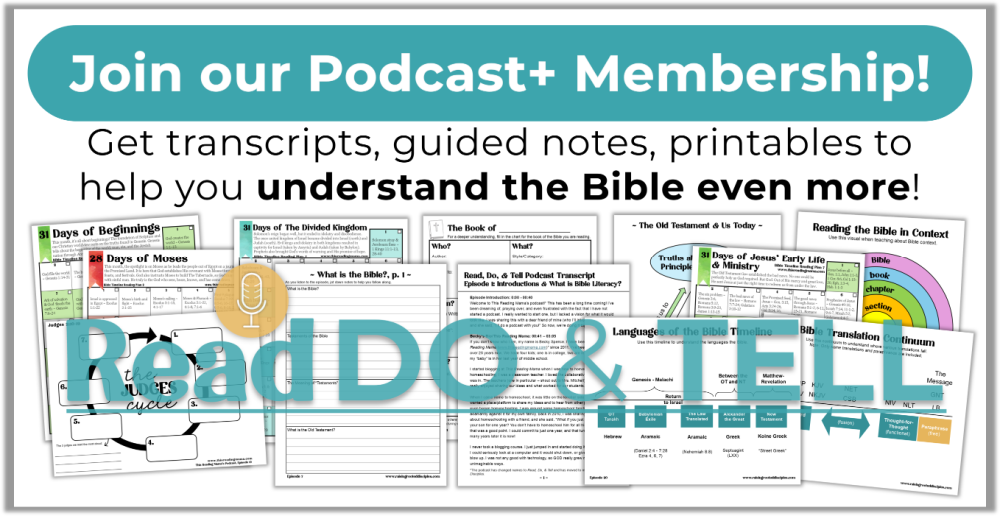
Becky and Amy underscore this exact dynamic in their ministry. By providing structured study tools—such as guided notes, transcripts, Bible reading plans, and exclusive printables available through their Podcast+ Membership—they actively combat theological illiteracy. Their ongoing emphasis mirrors the historical determination of Ezra, who "set his heart to study the Law of the Lord, and to do it and to teach his statutes and rules in Israel" (Ezra 7:10).
Furthermore, pastoral organizations and contemporary apologetics ministries reinforce that discernment is not a matter of hyper-critical suspicion, but rather a vital spiritual discipline. True discernment acts as an immune system for the body of Christ, protecting believers from toxic doctrines that promise spiritual vitality while delivering spiritual ruin.
Future Outlook: Strengthening the Church Against Deception
As the digital landscape continues to evolve—introducing new mediums, interactive platforms, and increasingly sophisticated methods of communication—the challenge of identifying and resisting false teaching will only intensify. Artificial intelligence, deepfake media, and hyper-personalized online algorithms will make the simulation of orthodox, charismatic Christian leadership easier than ever before.
To safeguard the global church and future generations of believers, several strategic imperatives must be prioritized:
1. A Return to Rigorous Expository Study
Believers must move beyond surface-level, verse-of-the-day devotionals that divorce Scripture from its overarching redemptive-historical context. Embracing disciplined, systematic Bible reading plans and studying the whole counsel of God remains the primary defense against deceptive interpretations.
2. Cultivating Intergenerational Discipleship
The isolation fostered by digital consumption must be counteracted by deep, local, face-to-face Christian community. Mentorship, local church oversight, and accountable relationships provide the relational guardrails necessary to test spiritual insights against mature, godly wisdom.
3. Equipping the Next Generation
Ministries focused on raising rooted disciples—such as the Read, Do, & Tell podcast and its associated educational materials—play a vital role in instilling discernment early. By teaching children, teens, and young adults how to ask probing, scripturally grounded questions, the church can inoculate its future leadership against the sophisticated heresies of tomorrow.
4. Valuing Character Over Charisma
The church must fundamentally re-evaluate how it elevates leaders. Shifting the metrics of ministerial success away from digital metrics, platform size, entertainment value, and charismatic presentation—and returning them to the biblical qualifications outlined in pastoral epistles (such as character, humility, theological soundness, and proven godliness)—will starve false teachers of the platforms they crave.
Conclusion
The release of Episode 28 of the Read, Do, & Tell podcast serves as both a timely warning and an empowering toolkit for modern Christians. False teaching is not a relic of ancient church history; it is an active, pervasive threat amplified by modern technology and human pride. By learning to recognize the behavioral red flags of deception, anchoring their lives in the rigorous study of Scripture, and leaning into accountable Christian community, believers can stand firm against spiritual manipulation.
As Becky reminds her listeners, let us be resolutely determined—just like Ezra—to read the Word, do the Word, and tell the Word of the Lord with clarity, courage, and unwavering biblical fidelity.

