
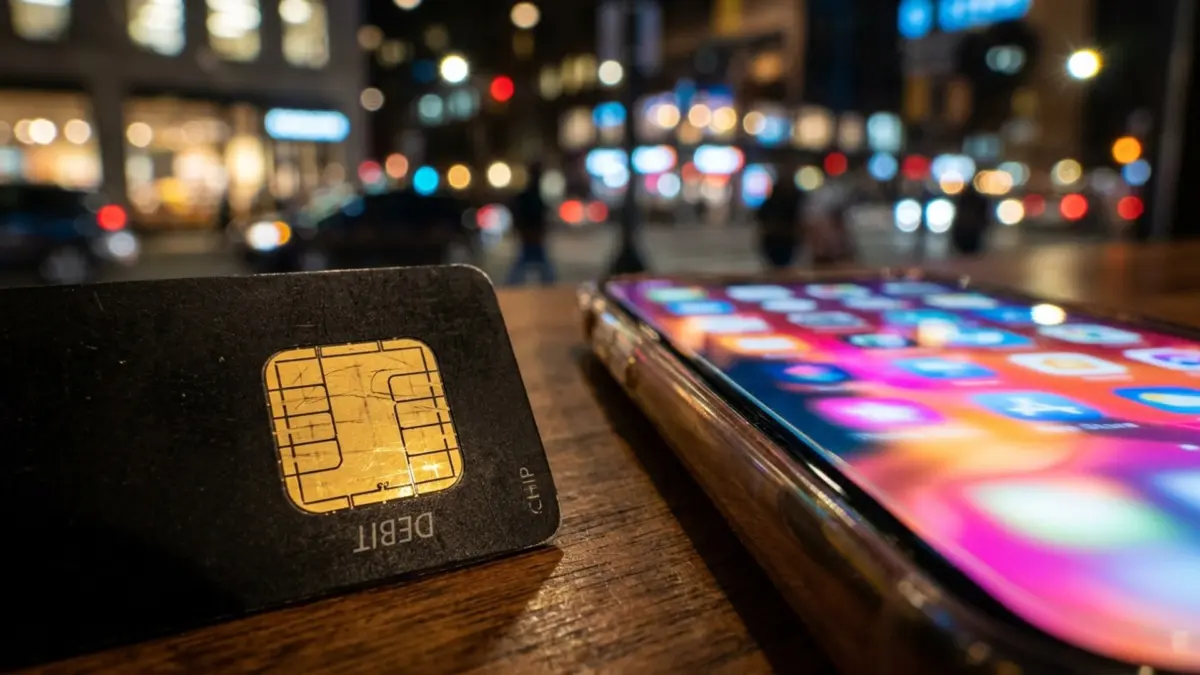
BEIJING/GUANGZHOU — In a quiet yet profound shift in how artificial intelligence is monetized, Chinese financial institutions, telecommunications giants, and local governments have begun packaging AI compute power into everyday consumer products. No longer confined to developer consoles, data centers, and back-end application programming interfaces (APIs), the fundamental unit of artificial intelligence—the "token"—is rapidly being reframed as a retail commodity.
Across official corporate product rollouts and local government policy documents, AI usage is now being metered, bundled, and traded much like airline frequent-flyer miles, mobile data allowances, and revolving credit lines. From co-branded luxury-tier credit cards offering monthly AI memberships to state-backed cellular carriers selling million-token data buckets, and municipal governments utilizing compute consumption as collateral for commercial loans, China is pioneering a radical consumer-facing "token economy."
This structural evolution transforms AI from an enterprise software category into a foundational utility of daily consumer and small-business life. By embedding compute quotas into traditional financial products and telecommunications packages, these institutions are systematically lowering the barrier to entry for advanced generative AI models while establishing entirely new metrics for creditworthiness and consumer loyalty.
Executive Overview: From Developer Consoles to the Retail Counter
For the past several years, the commercial lifecycle of a large language model (LLM) followed a standardized pathway: developers registered for an API key, integrated it into software, and paid fractions of a cent per token consumed—the foundational text unit generated or parsed by a neural network. For the average consumer, interacting with AI meant navigating subscription paywalls for web interfaces or standalone mobile apps.
That model is shattering. A series of synchronized initiatives launched by market leaders in mid-2026 demonstrates that artificial intelligence is undergoing a transition similar to the maturation of mobile data in the early 2010s. Just as cellular carriers once sold megabytes and gigabytes as distinct add-on packages before ultimately folding them into limitless, everyday mobile plans, China’s corporate and public sectors are now merchandising AI tokens directly to retail banking customers, mobile subscribers, and regional startups.
The strategy relies on three distinct pillars:
- Financial Product Integration: Major lenders are partnering with domestic AI unicorns to tie model subscriptions and compute credits directly to credit card loyalty programs and spending thresholds.
- Telecommunications Bundling: State-owned telecom carriers are treating tokens as a direct extension of broadband and wireless connectivity, selling tiered monthly token buckets alongside cloud computing hardware.
- Municipal Financial Innovation: Local governments are overhauling traditional corporate lending criteria, establishing "Token Loans" that utilize a firm’s computational output and algorithmic consumption as core indicators of credit risk, replacing rigid requirements for physical collateral.
Together, these developments signal a pivotal transition in the global AI race: the shift from infrastructure buildout and model training to consumer saturation and financial integration.
Detailed Chronology: The Summer of 2026 Token Rollouts
The commercialization of AI tokens as retail currency crystallized over a concentrated period in mid-2026, driven by aggressive corporate maneuvers and municipal policy interventions.
July 2026: The AI-Native Credit Card Arrives
On July 10, 2026, Moonshot AI—one of China’s premier foundational model developers—joined forces with the Agricultural Bank of China (ABC) to launch a specialized financial product: the "Kimi–American Express–ABC Tri-Party Co-Branded Card." Available exclusively within mainland China, the card was explicitly marketed as the world’s first "AI-native credit card."
The launch was backed by intensive promotional campaigns running through September 30, 2026, with strict qualification criteria designed to target affluent digital consumers and early adopters:
- The Premium Platinum Tier: Aimed at first-time primary-card applicants who accumulate at least RMB 5,888 in transaction volume within the approval month plus the following two calendar months. Successful applicants—capped at the first 1,000 recipients—receive a co-branded NFC plush charm alongside two "Kimi Allegretto" monthly memberships.
- The New Customer Gift Tier: Designed for first-time ABC credit card account holders who execute three transactions of at least RMB 18 each within the same structural window. This tier rewards 5,000 recipients with an NFC plush charm and three "Kimi Andante" monthly memberships.
To access these rewards, customers were required to redeem their activation codes by December 31, 2026. Crucially, the card is not merely a promotional gimmick; it structurally embeds Kimi’s model credits, agent quotas, and prompt-engineering courses directly into the bank’s points-based spending ledger.
May 2026: Telecoms Treat Tokens Like Mobile Data
Several weeks prior to the credit card launch, state-owned telecommunications giant China Telecom fundamentally altered the utility landscape on May 17, 2026, by introducing commercial token packages. Capitalizing on its massive infrastructure network, China Telecom structured these offerings to mirror traditional mobile data plans.
The carrier divided its offerings into distinct consumer brackets, pairing token allocations with robust network security and uplink acceleration. For developers and micro-enterprises, China Telecom deployed a three-tier Token Plan integrating its proprietary Xingchen large model and GLM5 with hybrid computing resources. For individual and household consumers, the carrier rolled out tiered plans centered on the Xingchen model and DeepSeek V3.2, tailored for everyday office tasks, academic studies, and automated writing.
Management of these assets was centralized within the company’s Xingchen TokenHub operations platform. This infrastructure allows consumers to aggregate loyalty points, convert them into token allowances, and synchronize their computational quotas seamlessly across multiple hardware devices and software agents.
August 2026: Guangzhou’s Haizhu District Redefines Lending
While national banks and telecom operators focused on retail consumers, local government authorities in Guangzhou took the token economy into the realm of enterprise finance.
On August 15, 2026, the Haizhu District Investment Promotion Bureau released a landmark policy framework accompanied by an array of eight structural support measures. The centerpiece of this package was the "Token Loan"—a specialized financial instrument designed to bypass the traditional brick-and-mortar collateral requirements that historically choked young, software-first artificial intelligence companies.
Instead of evaluating startups based on fixed assets like real estate, manufacturing plants, or heavy machinery, participating state and commercial lenders—including the Bank of China, China CITIC Bank, and the Bank of Guangzhou—began underwriting loans using a startup’s computational output. Under this framework, a company’s active token consumption, commercial platform qualifications, payment-collection progress, and upstream customer acquisition metrics serve as the primary indicators of creditworthiness.
Supporting Context & Metrics: Unpacking the Token Tiers
To understand how ordinary consumers and micro-businesses interact with these new products, it is necessary to examine the specific structural parameters of the token buckets and memberships being sold.
The Kimi Membership Matrix
The structural foundation of the Moonshot AI and Agricultural Bank of China credit card offering rests on two distinct software membership tiers, each tailored to different intensities of cognitive labor:
-
The Andante Tier (Everyday Consumer Grade):
- Designed for general office file processing, preliminary research tasks, and automated website deployment.
- Includes foundational access to Kimi Code development assistance.
- Features scheduled execution capabilities for routine tasks via Kimi Work.
-
The Allegretto Tier (Professional Grade):
- Engineered for intensive, multi-threaded knowledge work.
- Triples the agent processing quota of the Andante tier and delivers 20 times the Kimi Code operational capacity.
- Empowers users with multi-task parallel agents capable of handling complex operational workflows.
- Introduces Kimi Claw, a dedicated cross-platform feature deployable seamlessly across cloud environments, Android mobile devices, and desktop operating systems.
China Telecom’s Retail Pricing Strategy
In the telecommunications sector, the commercialization of tokens has achieved unprecedented consumer price points. According to industry metrics released during the rollout of China Telecom’s Tianyi Cloud ecosystem, the entry-level consumer tier is priced at an accessible 9.9 yuan per month, which grants the user an allocation of 10 million tokens.
Consumers can access these tokens through two primary avenues:
- BYOD (Bring Your Own Device): Utilizing their personal hardware configurations coupled with an authorized API key connected to China Telecom’s backend infrastructure.
- Cloud-Native Access: Running applications through Tianyi AI cloud computers that come preloaded with advanced autonomous agent frameworks, including TeleClaw, OpenClaw, and Hermes.
Furthermore, China Telecom announced the impending deployment of Tianyi Token currency—a unified loyalty unit that allows subscribers to seamlessly convert accumulated mobile and broadband reward points into computational power, bridging the gap between traditional telecommunication perks and advanced cognitive labor.
Haizhu District’s Eight Token Measures
The municipal policy framework in Guangzhou’s Haizhu district represents the most aggressive state-backed intervention in the token economy to date. As of August 2026, Haizhu had successfully clustered more than 8,000 artificial intelligence-related enterprises, hosting 53 registered foundational large models and 482 verified algorithmic models.
To stimulate this ecosystem, the district’s "eight token measures" established a comprehensive financial subsidy architecture:
- Model Efficiency Subsidies: Up to 1.5 million yuan annually for qualifying foundational model companies that successfully optimize and improve their token output efficiency per hardware chip.
- Platform Business Grants: Up to 4 million yuan for infrastructure and platform-as-a-service providers.
- Application Project Subsidies: Up to 5 million yuan for commercial deployment projects that scale AI adoption across vertical industries.
- Consumption Cost Offsets: Up to 2 million yuan per year directly subsidizing the token consumption costs of digital marketing, media, and entertainment firms operating within the district.
Official Statements and Institutional Perspectives
The institutional convergence of banking, telecommunications, and municipal governance around a unified digital unit has generated significant commentary from industry leaders and regulatory architects.
Proponents within the Chinese banking sector argue that the shift toward token-based credit underwriting is an overdue modernization of risk assessment. In an interview following the launch of the ABC-Kimi credit card, senior retail banking strategists emphasized that traditional credit models are fundamentally blind to the modern digital economy.
"For decades, our lending frameworks were anchored in tangible collateral—real estate, factory floors, and heavy equipment," noted a senior retail credit director at the Bank of China’s Guangzhou branch. "In the age of artificial intelligence, a software startup’s true capital is its computational throughput and the efficiency with which it converts raw tokens into marketable intellectual property. By recognizing token consumption as a verifiable business metric, we are aligning our balance sheets with the actual engines of the 21st-century economy."
Telecommunications executives share a similar vision of structural convergence. Representatives from China Telecom’s Xingchen operations division highlighted that the integration of large models directly into cellular and broadband networks is designed to eliminate friction for small and micro-enterprises.
"We are moving past the era where artificial intelligence required a specialized developer console, separate credit cards, and isolated billing pipelines," a China Telecom product lead stated during the May 2026 rollout. "By wrapping our Xingchen and DeepSeek models into the same monthly statement that covers your fiber-optic broadband and mobile data, we are turning AI into a foundational civic utility—as ubiquitous, reliable, and accessible as electricity or running water."
Municipal officials in Guangzhou framed the Haizhu District’s "Token Loan" initiatives as a necessary competitive maneuver to cement regional dominance in the global artificial intelligence supply chain. By directly subsidizing compute consumption and tying municipal credit guarantees to algorithmic output, local authorities aim to insulate homegrown startups from the volatility of traditional venture capital markets.
Future Outlook: The Global Implications of the Token Economy
As the experiment with tokenized retail products, telecom bundles, and algorithmic credit expands across mainland China throughout late 2026 and beyond, international technology markets are watching closely. The implications of this trend extend far beyond domestic consumer finance, offering a potential blueprint for how artificial intelligence monetization may evolve globally.
Several critical trajectories are beginning to emerge:
1. The Commoditization of Cognitive Labor
When tokens can be earned through routine credit card spending, redeemed via cellular loyalty programs, or utilized as collateral for commercial bank loans, cognitive labor ceases to be an exclusive corporate software expense. It becomes a universally circulating currency. This dynamic risks creating a two-tiered consumer society where access to advanced reasoning agents, automated file processing, and autonomous coding assistants is dictated by one’s tier of banking loyalty or telecommunications subscription.
2. Infrastructure Strain and Power Dynamics
The aggressive retail packaging of token consumption—symbolized by China Telecom’s 10-million-token monthly buckets and Haizhu’s multi-million-yuan municipal consumption subsidies—places unprecedented demand on underlying data center infrastructure and semiconductor supply chains. As millions of retail consumers and small businesses begin running continuous background agents (such as Kimi Claw or TeleClaw) on mobile devices and cloud computers, energy grids and GPU clusters will face severe stress tests, potentially forcing carriers to reevaluate pricing models or implement dynamic peak-hour throttling.
3. A Potential Blueprint for Global FinTech
If financial institutions in Western markets observe that co-branded AI credit cards and compute-backed loans successfully capture younger, tech-savvy demographics while minimizing loan default rates through algorithmic performance tracking, similar financial products may emerge globally. The integration of LLM subscriptions into revolving credit and rewards programs could quickly become a standard feature of international digital banking.
Conclusion
The convergence of AI tokens, retail banking, state-backed telecommunications, and municipal credit policy in mid-2026 marks a watershed moment in the commercialization of artificial intelligence. By stripping away the technical complexity of developer APIs and recasting compute units as familiar consumer rewards and billable commodities, China’s institutions have initiated the normalization of the token economy. Whether this architecture will successfully democratize artificial intelligence for the masses or create new systemic vulnerabilities within the financial and energy sectors remains to be seen; however, the boundary line separating digital intelligence from everyday consumer life has officially been erased.

