
Executive Overview
In a landmark transaction that underscores the meteoric rise of embodied artificial intelligence, XPENG’s robotics division has officially entered into share purchase agreements to raise more than $900 million in a single-round private financing. Announced on August 24, 2026, the milestone capital injection values the subsidiary at an impressive post-money valuation exceeding $6.3 billion.
According to market analysts and industry insiders, this unprecedented financial event marks the largest single-round private financing ever recorded within China’s burgeoning embodied AI sector. The funding round was spearheaded by prominent venture capital heavyweight IDG Capital, with significant financial backing from Gaorong Ventures. Furthermore, the round attracted substantial strategic participation from tech titans Tencent and Alibaba, bridging the gap between cutting-edge automotive manufacturing, cloud infrastructure, and advanced robotics.
Crucially, this event represents the robotics unit’s first-ever external funding round. Rather than spinning off the company into an independent entity, XPENG will retain strict controlling ownership of the robotics business upon the deal’s final closure. The subsidiary will remain fully consolidated within the broader group’s financial statements.
Beyond simply generating capital, the transaction establishes an official market valuation for XPENG’s robotics arm, creating robust long-term incentive frameworks for senior executives and premier engineering talent. As autonomous systems rapidly transition from theoretical computer science labs to high-precision manufacturing floors and consumer-facing environments, this colossal cash infusion positions XPENG to spearhead the global commercialization of humanoid robotics.
Detailed Chronology: From Quadruped Ponies to Humanoid Powerhouses
To fully grasp the magnitude of XPENG’s latest financial milestone, it is essential to trace the developmental trajectory of the company’s robotics ambitions. The narrative began in earnest during July 2022, when the division—then operating under the banner of XPENG Robotics—closed a Series A funding round exceeding $100 million.
That initial effort was similarly led by IDG Capital, with participation from XPENG and other long-term institutional backers. At the time, that $100 million Series A stood as the single largest financing round recorded across China’s bionic robotics sector over a two-year window. However, the physical embodiment of the technology looked starkly different; the product focus back then centered around a quadruped robotic pony designed primarily for household entertainment and interactive consumer use.
Fast forward four years, and the same lead investor—IDG Capital—is pricing a fundamentally evolved, humanoid-focused enterprise at more than nine times the size of that foundational Series A round. This pivot from quadrupedal animals to bipedal, highly dexterous humanoid workers mirrors a broader market maturation.
The competitive landscape has shifted dramatically. Rival humanoid ventures have achieved similarly staggering valuations; for instance, DeepSeek’s recent high-profile investment in Unitree’s Shanghai IPO valued that competitor at an estimated $9 billion. Meanwhile, other international players—such as Gravis Robotics, which recently secured a $200 million Series A to scale autonomous heavy machinery—demonstrate that while global interest in robotics is peaking, XPENG’s latest nine-figure haul sits comfortably in a league of its own.
Supporting Context & Metrics: Inside the Hardware and AI Stack
The $6.3 billion valuation assigned to XPENG’s robotics business is not built on speculative promises alone; it is anchored by deeply sophisticated hardware engineering and proprietary artificial intelligence architectures. The centerpiece of this ecosystem is IRON, XPENG’s next-generation humanoid robot.
The Anatomy of IRON
IRON is an engineering marvel designed to replicate human biomechanics while operating under punishing industrial and commercial workloads. Key technical specifications include:
- Degrees of Freedom (DoF): A staggering 76 degrees of freedom distributed across its entire body, complemented by 21 degrees of freedom in each hand to enable hyper-precise, human-like dexterity.
- On-Device Compute: Powered by three proprietary Turing AI chips, delivering up to 2,250 TOPS (Tera Operations Per Second) of local computing power.
- Autonomous Execution: Unlike robots reliant on teleoperation or cloud-tethered processing, IRON executes complex tasks entirely autonomously by running XPENG’s Physical AI foundation model directly on the device.
The Technology Stack
Unveiled during XPENG’s comprehensive AI Day presentation, the underlying technological framework relies on an advanced tripartite model combination: VLT + VLA + VLM (handling conversational reasoning, navigation/walking, and visual-language interaction, respectively).
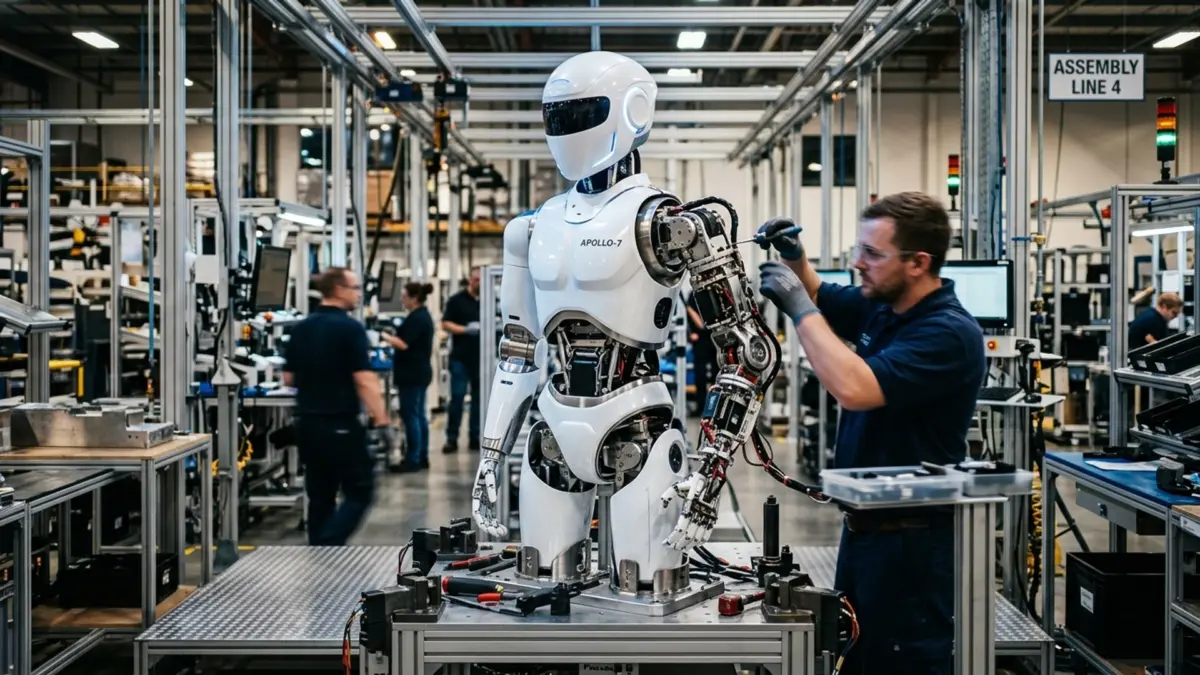
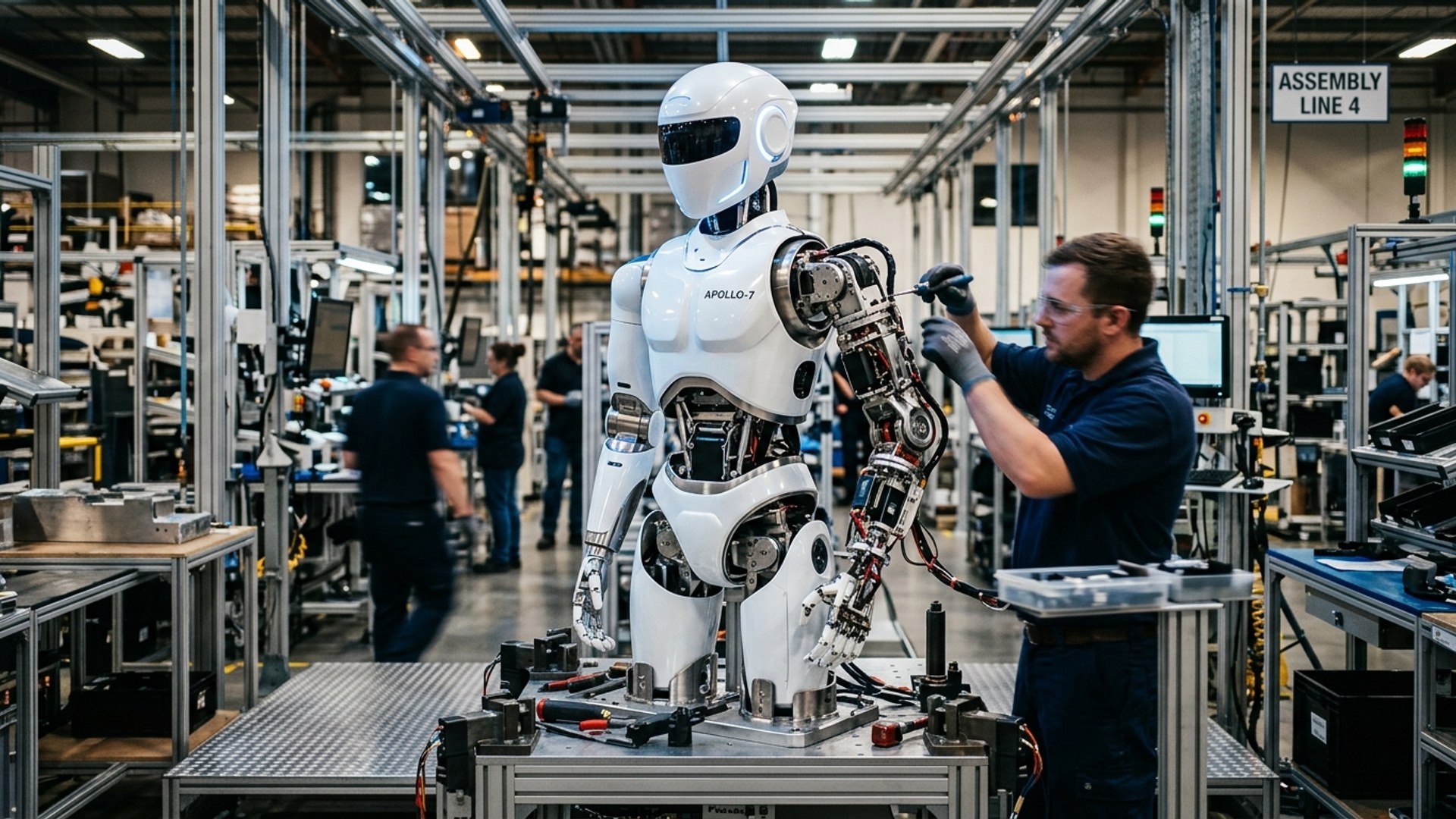
Physically, the robot features a specialized humanoid spine equipped with bionic muscles and a fully covered flexible skin. It operates on advanced all-solid-state batteries and utilizes an enclosed flexible lattice structure. This design philosophy deliberately balances human-like aesthetic form with operational safety, ensuring the machine can navigate environments natively built for human beings.
The Automotive Synergy and Data Flywheel
The strategic logic cited by both XPENG leadership and its institutional investors rests upon the seamless technological carryover from the company’s core electric vehicle (EV) business. Chips, motion controllers, dynamic motion modules, and dexterous hands are all developed in-house. Furthermore, XPENG applies rigorous automotive-grade quality standards and its existing, highly optimized EV mass-production infrastructure directly to the assembly of its humanoid robots.
Gaorong Ventures emphasized this exact competitive moat, noting that XPENG is successfully translating over a decade of full-stack research and development, supply chain mastery, and manufacturing prowess from smart EVs into the realm of general-purpose robotics.
Equally critical to the $6.3 billion valuation is the concept of the data flywheel. Because IRON’s physical form factor mirrors human movement, XPENG can draw rich behavioral datasets generated through everyday human activity. Every deployed unit feeds back into a centralized training loop, systematically refining the foundational AI models.
This mirrors a broader industry consensus: when companies like Veeda AI secure massive funding rounds for world-model training data, investors recognize data as the ultimate scarce asset in physical AI. XPENG’s distinct advantage lies in its vertically integrated ecosystem—owning both the robot fleet operating in the field and the physical factories capable of mass-producing them.
Official Statements and Strategic Vision
Leadership at XPENG and its premier financial backers have articulated clear strategic visions for how this $900 million war chest will be deployed.
He Xiaopeng, Chairman and CEO of XPENG, emphasized the company’s twelve-year history of full-stack, in-house R&D as the bedrock of this financing triumph. Pointing to the company’s proprietary physical world foundation models, Turing AI chips, and robust AI infrastructure, he stated:
"Our ambition is for IRON to become a trusted partner for people and a meaningful part of everyday work and life."
IDG Capital elaborated on the broader macro-shift currently underway within the robotics industry, noting that embodied AI has officially graduated from theoretical laboratory breakthroughs to scalable manufacturing and commercial deployment. According to IDG, XPENG’s unique ability to combine edge AI processors, proprietary foundation models, and complete robotic hardware systems places the company at the vanguard of this industrial revolution.
Strategic investors Tencent and Alibaba further validate this trajectory. By integrating their formidable cloud computing and digital distribution assets with XPENG’s physical hardware expertise, the coalition creates an end-to-end ecosystem capable of supporting millions of autonomous robotic agents worldwide.
Future Outlook: The Road to 2027 and Beyond
With the share purchase agreements officially inked, XPENG has mapped out an aggressive, highly structured deployment timeline. The newly acquired capital will be systematically funneled into several core pillars:
- Software and Hardware R&D: Deepening the capabilities of the Turing AI chips and expanding physical AI model iterations.
- Data Generation: Scaling high-quality synthetic and real-world data pipelines to feed the machine learning models.
- Mass Production Facilities: Constructing end-to-end manufacturing infrastructure designed to bring automotive-level scaling to humanoid robotics.
- Global Commercial Expansion: Building out international distribution channels, supply chains, and localized support networks.
Chronological Milestones Ahead
- Late 2026: IRON is scheduled to officially enter mass production. Initial deployments will take place internally across XPENG’s own retail stores, corporate campuses, and smart manufacturing plants to stress-test the units in real-world environments.
- 2027: The official commercial launch and customer deliveries will commence, targeting both the domestic Chinese market and key international overseas territories.
As the transaction clears its final regulatory and closing hurdles, XPENG’s robotics division stands as a titan of the new technological era. By successfully bridging the worlds of electric mobility, silicon chip design, and embodied artificial intelligence, XPENG is not merely participating in the future of automation—it is actively engineering it.

