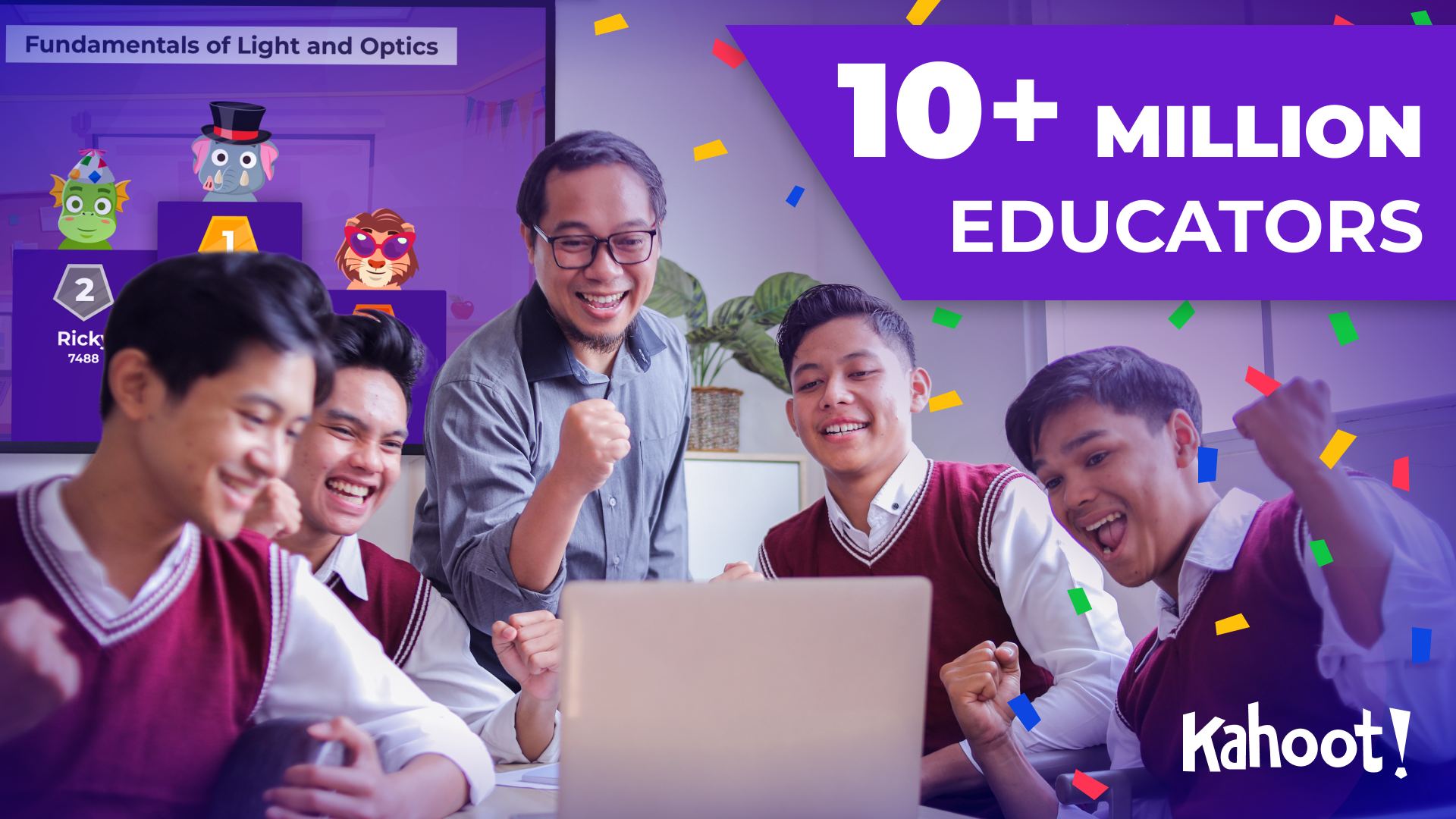
In the rapidly evolving landscape of 21st-century education, the demand for dynamic, engaging, and measurable instructional tools has never been more acute. Recently, Kahoot!, the globally renowned game-based learning platform, achieved a monumental milestone: surpassing 10 million registered educators within its worldwide community. This demographic represents a diverse coalition of K-12 teachers, university professors, and educational leaders who collectively champion the philosophy that learning should be inherently engaging, highly participatory, and demonstrably effective.
This milestone is not merely a quantitative achievement in software adoption; it signals a fundamental paradigm shift in instructional design. Traditional, passive lecture models are increasingly yielding to interactive, gamified methodologies that leverage real-time feedback, formative assessment, and collaborative competition. By bridging the gap between digital native students and curriculum objectives, Kahoot! has entrenched itself as an indispensable utility in modern pedagogical strategy. This article explores the implications of this milestone, examines the mechanics of sustained student engagement throughout the academic year, features perspectives from international educators, and outlines the future trajectory of gamified learning technologies.
Detailed Chronology: The Evolution of Classroom Interactivity
To fully comprehend the significance of the 10-million-educator milestone, one must trace the trajectory of educational technology over the past decade.
The Inception of Gamified Learning (Mid-2010s): Initially introduced as an experimental platform designed to bring play into the classroom, early iterations of Kahoot! focused primarily on simple, competitive quizzes projected onto smartboards. Educators quickly realized that the time-pressured, points-based mechanics dramatically altered classroom dynamics, turning reticent students into vocal participants.
Expansion into Higher Education and Blended Learning (Late 2010s): As broadband infrastructure improved and mobile devices became ubiquitous in lecture halls, the platform expanded its utility. University professors began utilizing anonymized polling and complex diagnostic quizzes to gauge comprehension in large-scale lecture auditoriums, moving beyond simple trivia to address advanced academic concepts.
The Remote and Hybrid Era (2020–2022): The global shift to remote learning catalyzed exponential growth. Educators sought reliable digital lifelines to maintain student focus across screen fatigue and asynchronous schedules. Kahoot! adapted by introducing features tailored for remote conferencing, self-paced challenges, and comprehensive analytics reports.
The Post-Pandemic Consolidation and 10-Million Milestone (2023–Present): Returning to physical classrooms did not diminish the demand for digital tools; rather, educators sought hybrid models that combined tactile classroom interactions with digital enhancements. Reaching 10 million educators reflects this consolidation, proving that interactive learning is no longer a temporary trend but a permanent fixture of modern pedagogy.
Supporting Context & Metrics: The Science of Engagement
The core value proposition of platforms like Kahoot! lies in their alignment with established cognitive psychology and educational research. Modern neuroscience indicates that dopamine pathways associated with play and reward significantly enhance memory consolidation and information retention.
Key Pedagogical Drivers:
Formative Assessment in Real-Time: Unlike traditional summative testing—which evaluates learning long after a unit has concluded—interactive polling allows educators to identify learning gaps instantaneously. If a majority of a class answers a concept check incorrectly, the instructor can pivot and reteach the material immediately.
Anonymity and Psychological Safety: Many students experience performance anxiety when questioned directly in front of peers. Features such as anonymous polling and self-paced challenges lower affective filters, encouraging hesitant learners to participate without the fear of public embarrassment.
Intrinsic vs. Extrinsic Motivation: While leaderboards provide a gamified, extrinsic incentive, the deeper engagement stems from the autonomy students feel when interacting with dynamic content, collaborative team modes, and creative challenges where they become the content creators.
Statistical internal metrics from educational software adoption studies highlight that classrooms utilizing regular gamified formative assessments report notable improvements in attendance, class morale, and material retention across diverse socio-economic demographics.
Official Statements and Educator Perspectives
The true impact of this global milestone is best understood through the experiences of the educators on the front lines of teaching.
"I love using the Kahoot! platform because with it I can create engaging and interactive content that enriches both my classes and my students’ learning experience. I use Kahoot! to teach new concepts, review content, reinforce learning, and check whether students have understood."
— Pam Ganley, Middle and High School Teacher, Arizona, USA
Ganley’s testimony underscores the versatility of the tool. It transitions seamlessly from an introductory hook to a mid-unit formative check and a final summative review.
The utility of the platform extends far beyond primary and secondary education. In higher education, where maintaining engagement in vast lecture halls presents a notorious challenge, professors are finding innovative applications:
"Kahoot! has transformed the way I deliver didactic content in higher education. The use of anonymous polls and real-time feedback has been instrumental in helping me, as an educator, continuously assess where my students are in their learning journey."
— Kurt Naicker, Senior Lecturer, University of Johannesburg
By integrating these tools into university curricula, educators like Naicker bridge the gap between traditional academic rigor and the expectations of a digitally fluent student body.
A persistent challenge in instructional design is maintaining high engagement levels across the entirety of an academic calendar. Educators frequently encounter predictable dips in student focus—such as the post-holiday slump, mid-semester fatigue, or the restlessness preceding summer breaks.
Relying solely on high-stakes testing is insufficient to combat this cyclical fatigue. Sustainable engagement requires a diversified toolkit designed to invigorate the classroom environment from the first day of the school year to the final bell.
1. Setting the Tone at the Start of the Term
The initial weeks of an academic year establish the psychological contract between teacher and student. Utilizing interactive icebreakers and diagnostic games helps demystify the curriculum, assesses baseline knowledge without inducing test anxiety, and establishes a classroom culture rooted in collaboration and enthusiasm.
2. Combating Mid-Term Fatigue
As curricula grow denser and workloads increase, cognitive overload sets in. Integrating short, low-stakes interactive quizzes breaks up long lecture formats, transforming passive listeners into active participants and re-energizing the room’s collective focus.
3. Review and Reinforcement Prior to Examinations
Rather than relying on rote memorization or exhaustive study guides, gamified review sessions turn preparation into an engaging collaborative experience. Teams can work together to solve complex problems, leveraging peer-to-peer instruction where advanced students help clarify concepts for their classmates.
Future Outlook: The Next Decade of Interactive Education
As Kahoot! and similar educational technologies look beyond the 10-million-educator milestone, the horizon is shaped by several emerging technological and pedagogical trends:
Artificial Intelligence (AI) Integration: AI-assisted content generation is streamlining lesson planning. Educators can now transform complex syllabus documents, textbooks, or research papers into interactive quizzes and flashcards in a fraction of the time it previously required.
Advanced Analytics and Adaptive Learning: Future iterations of educational platforms will offer increasingly sophisticated diagnostic reports, integrating machine learning to predict which students may require targeted intervention before they fall behind.
Immersive and Collaborative Environments: As augmented reality (AR) and virtual reality (VR) technologies mature, gamified learning platforms are poised to move beyond flat screens, offering immersive spatial environments where students can collaboratively solve complex, real-world problems.
A Sincere Acknowledgment
Reaching 10 million educators is a testament to the resilience, creativity, and unwavering dedication of teachers worldwide. In an era where education faces complex socioeconomic and structural challenges, these professionals continue to innovate, ensuring that learning remains an inspiring and transformative experience.
For educators wishing to join this expanding global community and explore new methodologies for classroom engagement, resources and registration are available directly through platforms like Kahoot!. As the academic year progresses, the mission remains clear: to make learning both profoundly effective and exceptionally rewarding for every student, everywhere.