
By Theo Nash
Reviewed by the Unite.AI Editorial Team
Executive Overview
WhiteFiber, a rapidly scaling AI infrastructure provider, has officially closed an upsized $310.0 million private placement of 5.00% convertible senior notes due 2032. The transaction, finalized on August 21, 2026, includes the full exercise of a $40.0 million overallotment option granted to the initial purchasers.
The capital raise marks a critical milestone for the company as it navigates the capital-intensive demands of the generative AI boom. Out of the approximately $298.5 million in net proceeds generated by the offering, roughly $118.5 million was immediately deployed to fund a concurrent debt exchange, retiring the vast majority of its existing 2031 convertible notes. The remaining $180 million provides a vital liquidity injection earmarked directly for data center construction, site acquisitions, energy service agreements, and high-performance computing (HPC) hardware—specifically GPU servers for WhiteFiber’s expanding cloud business.
Against a backdrop of surging power demands and hyper-competitive real estate markets for artificial intelligence workloads, WhiteFiber’s latest financial maneuver underscores the playbook currently dominating the sector: leveraging corporate-level convertible debt to secure land, power, and long-lead equipment ahead of formal, project-level financing. With CEO Sam Tabar aiming to bring over 100 megawatts (MW) of additional capacity online across the company’s development pipeline by 2027, this $310 million war chest is designed to de-risk execution timelines and protect the company’s aggressive delivery schedule.
Detailed Chronology of the Offering
The path to WhiteFiber’s $310 million closing was marked by rapid scaling, strong institutional demand, and strategic balance sheet re-engineering over a single week in August 2026.
From Proposal to Upsized Pricing
The transaction initially came to light earlier in the week when WhiteFiber proposed a $250.0 million private placement of convertible senior notes. Driven by robust institutional interest from qualified buyers, the offering was quickly upsized to $270.0 million when it officially priced on August 19, 2026.
The momentum did not stop there. The initial purchasers exercised their $40.0 million greenshoe option in full, pushing the final aggregate principal amount to $310.0 million by the August 21 closing date.
The notes were issued carrying a 5.00% annual coupon, payable in semiannual installments beginning March 1, 2027, with a final maturity date of September 1, 2032. Significantly, the offering was priced at an initial conversion price of approximately $33.84 per share. This represents a substantial 25% premium over WhiteFiber’s last reported sale price on the Nasdaq Capital Market on August 18, 2026. In terms of equity structure, this translates to an initial conversion rate of 29.5530 ordinary shares per $1,000 of principal amount.
The Debt Exchange: Retiring the 2031 Layer
Simultaneously with the pricing and execution of the new notes, WhiteFiber executed a complex debt-for-debt and debt-for-equity swap. The company targeted its existing 4.500% convertible senior notes due 2031, exchanging $198.15 million in aggregate principal with certain existing holders.
To retire this debt, WhiteFiber utilized:
- Approximately $118.5 million in cash (inclusive of accrued and unpaid interest).
- Approximately 6.3 million newly issued ordinary shares.
This transaction successfully eliminated roughly 86% of a convertible debt layer that WhiteFiber had established just seven months prior. By trading away the 2031 notes, the company achieved two major financial objectives:
- It pushed the bulk of its near-term debt maturity and conversion exposure out to September 2032—well past the critical 2027 target date when its primary capacity expansions are scheduled to be fully operational and leased.
- It cleared immediate refinancing hurdles, albeit by replacing the retired paper with debt that matures a year later and carries a 0.50% higher coupon.
Supporting Context & Metrics: Where the Money Goes
To understand the strategic necessity of WhiteFiber’s latest capital raise, one must examine the burn rate and capital expenditure profile detailed in the company’s recent regulatory filings.
Balance Sheet Realities and Cash Burn
WhiteFiber’s quarterly report for the period ending March 31, 2026, paints a clear picture of a company transitioning aggressively from a development-stage entity to an industrial-scale infrastructure builder.
During that single quarter, WhiteFiber reported:
- Revenue: $21.9 million total, comprising $16.8 million from cloud services and $4.8 million from colocation.
- CapEx: $169.2 million spent on purchases of and deposits for property, plant, and equipment (PP&E).
- Asset Growth: Total PP&E expanded to $432.0 million, up sharply from $336.6 million just three months prior.
- Liquidity: Cash and cash equivalents stood at $75.8 million at the close of the first quarter.
With roughly $180 million in net proceeds remaining after the 2031 note exchange, WhiteFiber has secured roughly one additional quarter of capital expenditure at its current aggressive build pace. This bridge funding is critical as the company awaits the closing of larger, project-level financing vehicles tailored for individual facilities.
The Project Financing Playbook
WhiteFiber is executing a financing architecture that has rapidly become standard practice among tier-one AI data center developers:
- Corporate-Level Convertibles: Use high-yield or convertible debt to secure site control (land acquisition), initial zoning, energy service agreements, and long-lead electrical equipment (such as transformers and switchgear).
- Project-Level Debt: Once a facility is constructed, pre-leased to creditworthy hyperscale or AI enterprise tenants, and generating predictable cash flows, secure non-recourse project financing against the facility itself at lower interest rates.
- De-risking the Balance Sheet: By clearing the 2031 notes off the books and extending maturities to 2032, WhiteFiber ensures that its corporate debt obligations will not collide with the heavy construction and lease-up phases of its primary development pipeline.
The North Carolina Test: NC-1
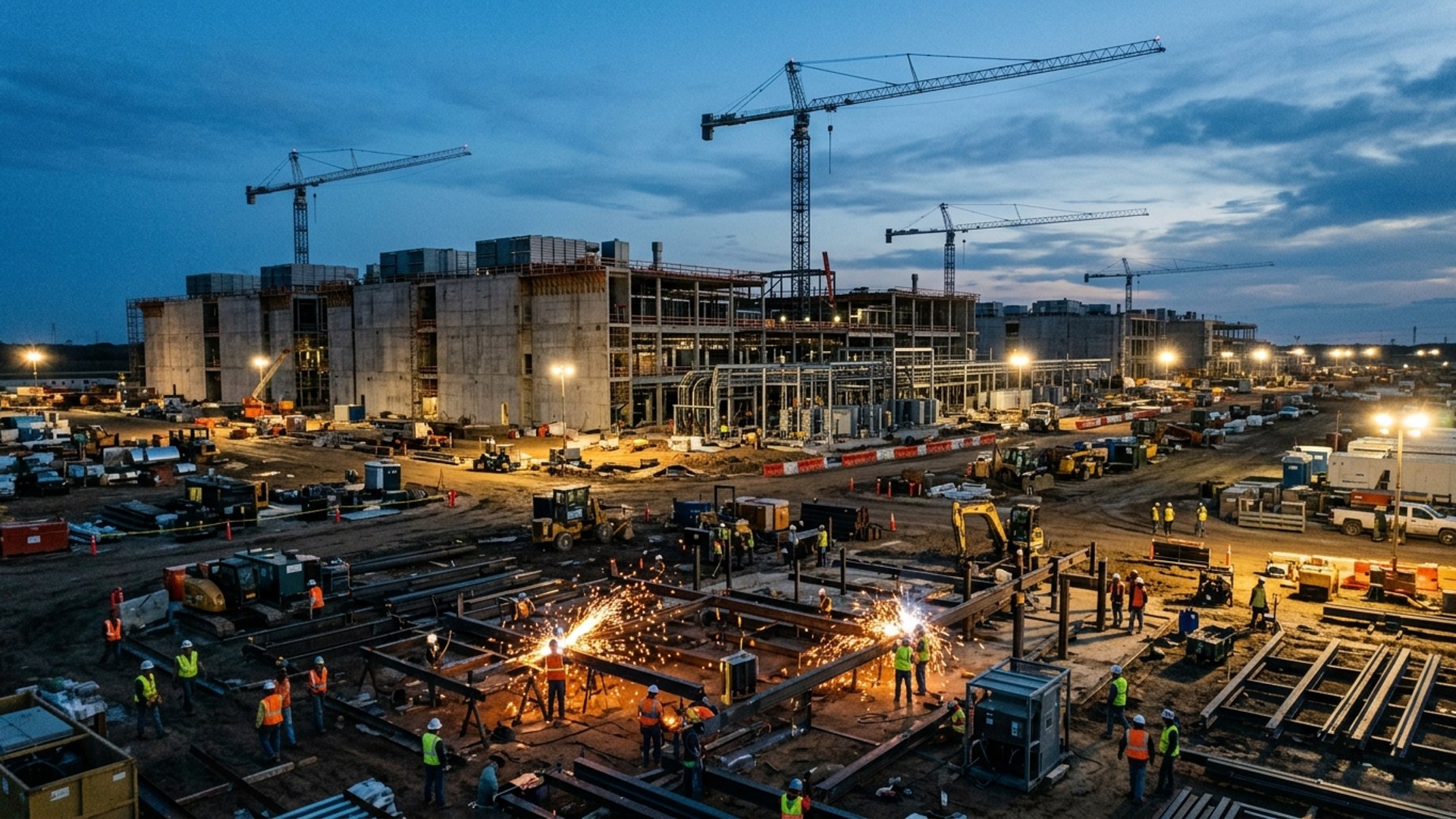
The immediate beneficiary of this capital influx is the NC-1 development site in North Carolina. Serving as the primary testing ground for WhiteFiber’s operational model, NC-1 represents the vanguard of the company’s capacity expansion.
By funding site preparation, long-lead equipment procurement, and foundational civil engineering ahead of formal project financing closures, WhiteFiber is proactively insulating its construction schedules against supply chain bottlenecks.
Official Statements and Leadership Vision
Announcing the successful closure of the offering, WhiteFiber Chief Executive Officer Sam Tabar emphasized the operational runway the transaction provides.
"Completing this transaction now materially enhances our liquidity and provides greater capital certainty as we complete the first phase of NC-1 and prepare for the next phase of WhiteFiber’s colocation growth," said Tabar.
Tabar explicitly tied the capital raise to the company’s aggressive deployment roadmap. WhiteFiber has targeted bringing more than 100 MW of additional capacity online across its aggregate development pipeline throughout 2027. Crucially, the company is aiming to execute long-term, multi-year leases for this upcoming capacity during the fourth quarter of 2026, creating immediate visibility into future revenue generation.
By front-running procurement and site readiness, Tabar noted that WhiteFiber aims to drastically reduce schedule execution risk—a vital consideration in an AI market where delays in power interconnects or hardware deliveries can cost millions in lost first-mover advantage.
Future Outlook and Market Implications
As WhiteFiber looks toward late 2026 and the pivotal delivery year of 2027, several structural and market dynamics will shape the company’s trajectory.
Operational Milestones Ahead
The next six to twelve months will test WhiteFiber’s ability to execute on multiple fronts:
- Lease Execution: Securing long-term hyperscale or enterprise commitments for the 100+ MW pipeline targeted for 2027.
- NC-1 Completion: Delivering the first phase of the North Carolina data center on time and within budget.
- Project-Level Financial Closures: Successfully transitioning from expensive corporate convertible debt to cheaper project-level debt once facility leases are locked in.
Equity Dynamics and Near-Term Volatility
The transaction carries distinct mechanical implications for WhiteFiber’s equity holders. In its offering disclosures, the company explicitly warned that institutional holders participating in the 2031 note exchange are expected to unwind existing hedge positions and liquidate the approximately 6.3 million ordinary shares they received in the swap.
Given the volume of these shares relative to WhiteFiber’s average daily trading volume, this activity could introduce temporary downward pressure or heightened volatility on the company’s share price in the immediate aftermath of the transaction.
Despite this potential near-term friction, WhiteFiber’s long-term equity narrative has shifted dramatically since its public debut. WhiteFiber officially went public on August 8, 2025, at an initial public offering (IPO) price of $17.00 per share, following a transaction where Bit Digital contributed its high-performance computing (HPC) and cloud businesses to the entity. Bit Digital maintained a dominant ownership stake, holding approximately 70.1% of WhiteFiber as of the March 2026 filings.
With the new convertible notes pricing at a conversion price of $33.84 per share—nearly double the company’s IPO price achieved just one year prior—the market has validated WhiteFiber’s pivot into dedicated AI infrastructure. However, this higher valuation also raises the stakes: investors are no longer pricing WhiteFiber merely as a speculative cloud newcomer, but as an essential physical layer provider in the global race for artificial intelligence compute.
As power constraints tighten across traditional data center hubs, WhiteFiber’s ability to convert its $310 million war chest into energized, leased-out megawatts by 2027 will ultimately determine whether this aggressive capital structure delivers on its ambitious promises.

