
Executive Overview
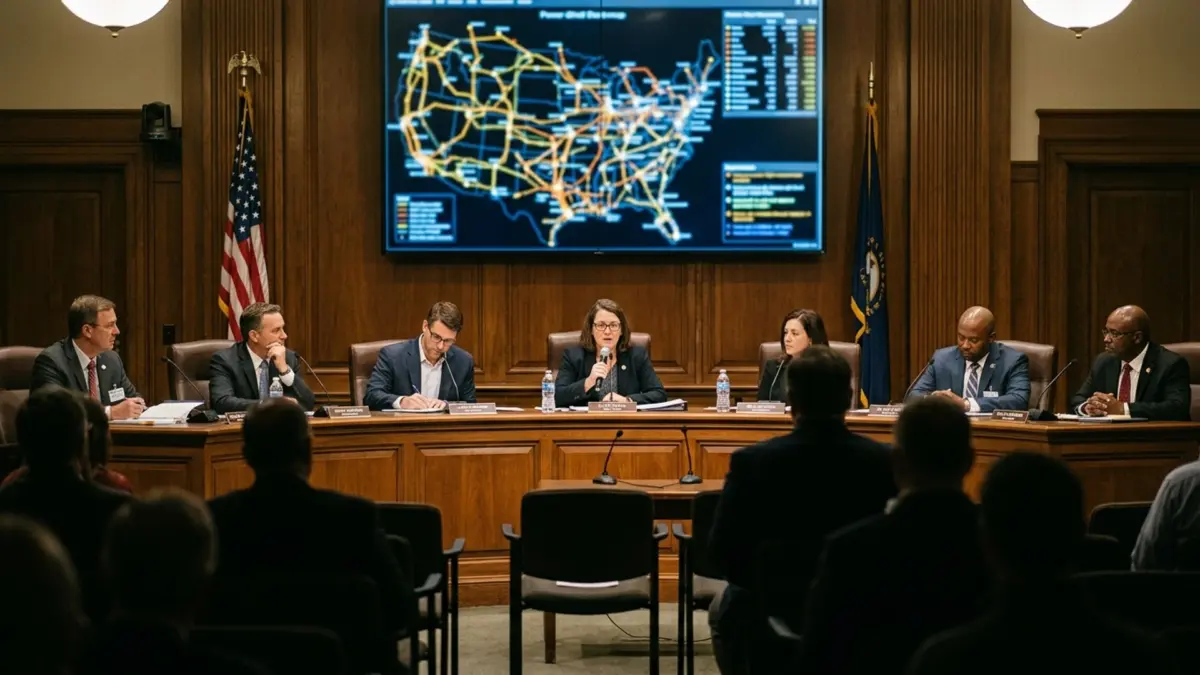
The intersection of artificial intelligence and physical infrastructure has reached a pivotal juncture. As hyperscale data centers expand at an unprecedented rate to support the massive computational demands of large language models and machine learning clusters, public and private power utilities are scrambling to adapt. On August 20, 2026, the Board of Directors of the Tennessee Valley Authority (TVA)—the largest public power supplier in the United States—took a definitive stand during its quarterly meeting in Memphis.
The board approved a comprehensive strategic package that fundamentally reshapes how power is priced, generated, and distributed across its seven-state service territory. Most notably, the TVA enacted a dedicated wholesale rate class specifically engineered for data centers. This makes the federal utility one of the very first major U.S. power providers to implement a targeted tariff addressing AI-driven energy loads directly.
Alongside this groundbreaking rate structure, the TVA board formally adopted its 2026 Integrated Resource Plan (IRP) and greenlit a fiscal 2027 budget that commits over $13 billion in planned generation and transmission capital spending through fiscal year 2029. These measures are designed to preemptively shield everyday residential consumers and small businesses from footing the bill for the astronomical energy demands of the tech sector.
With data center developments rapidly accelerating across the American Southeast—exemplified by massive regional construction contracts and multi-billion-dollar hyperscale campuses nationwide—the TVA’s decisions offer a compelling blueprint for how the U.S. power grid can balance the explosive growth of artificial intelligence with long-term economic stability and grid reliability.
Detailed Chronology & Policy Mechanics
The journey toward the August 20, 2026 board decisions reflects months of intense regulatory calculus, intergovernmental alignment, and strategic planning. The regulatory framework began crystallizing weeks earlier when the TVA signed the Ratepayer Protection Pledge on July 23, 2026. Born out of administrative energy initiatives, this pledge requires hyperscale and AI companies operating within participating utility footprints to commit to procuring entirely new power supplies, funding the specific transmission upgrades required for their facilities, and paying for dedicated infrastructure regardless of whether they ultimately utilize its full capacity.
The October 1, 2026 Rate Implementation
According to the official board presentation materials released in Memphis, the newly approved rate class becomes effective on October 1, 2026. Under this framework, any new or expanding data center load exceeding 5 megawatts will fall under a newly instituted Capacity Commitment Charge.
Unlike legacy utility models that lump industrial loads into broad commercial categories—thereby socializing the cost of grid expansion across all rate payers—this charge is specifically tailored to recover the incremental capacity costs introduced exclusively by high-density data centers. To cushion the economic blow for incoming tech developers while maintaining structural integrity, the TVA structured the tariff to phase in over three consecutive fiscal years, resulting in an estimated all-in average billing impact of approximately 10% for these specialized customers.
Power Interruption Provisions and Development Pipelines
To alleviate the immense pressure on interconnection queues that AI developers have generated across the Southeast, the new rate package introduces a Power Interruption Provision. This provision applies directly to data centers that request to come online before the physical generation capacity required to serve them has been successfully brought on-grid.
Furthermore, data centers already moving through the TVA’s development pipeline must clear rigorous criteria to qualify for transitional provisions. The utility has maintained flexibility, stating it will collaborate with developers seeking to bring their own behind-the-meter or localized generation sources. However, any such private power arrangements must strictly align with the Ratepayer Protection Pledge.
The policy overhaul does not stop at data centers. The TVA board also utilized the August meeting to tighten contract-demand rules, ensuring that all large commercial and industrial customers sit in rate classes that accurately reflect their real-time usage patterns. Additionally, the board introduced a stability-focused contract option designed specifically for legacy manufacturers with loads exceeding 5 megawatts and updated internal policies governing any new power requirements that surpass the monumental 100-megawatt threshold.
Supporting Context, Infrastructure Metrics, and Financial Commitments
The urgency behind the TVA’s policy pivot is rooted in hard data regarding regional growth and surging electricity demand. According to the newly approved 2026 Integrated Resource Plan, the Tennessee Valley region faces an unprecedented surge in electricity consumption driven primarily by explosive population growth and the relentless build-out of artificial intelligence data centers.
The 2026 Integrated Resource Plan (IRP)
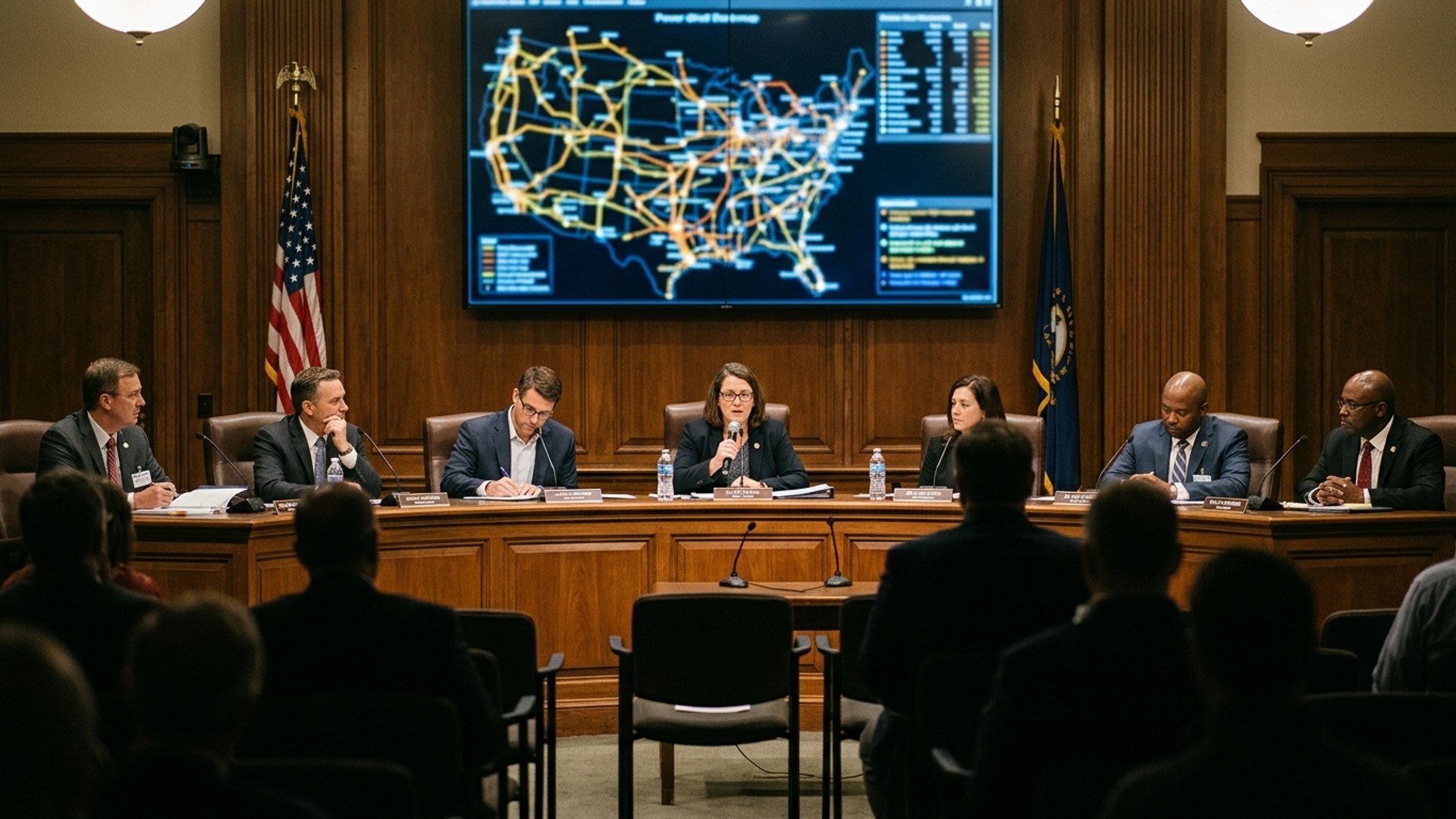
The IRP’s long-range supply study concludes that the Valley will require between 11 and 32 gigawatts (GW) of additional generation capacity by 2040. To meet this massive requirement without compromising grid reliability, the resource plan models a diversified portfolio:
- Natural Gas: 7 to 26 gigawatts of new capacity to provide immediate, dispatchable baseline power.
- Nuclear: Up to 5 gigawatts of advanced or traditional nuclear generation for carbon-free baseload energy.
- Renewables: 2 to 5 gigawatts of solar and wind generation.
- Energy Storage: 1 to 5 gigawatts of battery and pumped-storage solutions to manage peak intermittency.
The board has directed TVA staff to actively pursue these recommended actions while continuously monitoring market conditions, federal policy shifts, and emerging energy technologies to ensure the resource portfolio remains adaptable.
Breaking Down the $13 Billion Capital Expenditure
To finance this sweeping operational evolution, the TVA budget earmarks more than $13 billion in capital spending through fiscal year 2029. More than $1 billion of this capital will be injected annually directly into maintaining and upgrading the existing generation fleet and transmission grid.
The utility currently has 4,120 megawatts of new TVA-owned capacity under active construction, with an additional 3,000 megawatts currently under rigorous evaluation. Specific infrastructure projects funded by the budget include:
- A 1,500-megawatt gas energy complex located in Kingston, Tennessee.
- A 1,450-megawatt combined-cycle natural gas plant in Cumberland, Tennessee.
- A 500-megawatt combustion turbine project in Mississippi.
- A 350-megawatt combustion turbine in Brownsville, Tennessee.
- A 200-megawatt aeroderivative unit situated in Memphis to provide rapid-response peak capacity.
- 100 megawatts of new solar generation in Kentucky.
- A 20-megawatt battery energy storage system (BESS) installation in Vonore, Tennessee.
To maintain financial flexibility throughout this intensive build-out, the budget establishes a financing shelf allowing for up to $4 billion in long-term bonds, alongside a $300 million direct contribution to the utility’s employee retirement system to secure long-term fiscal health.
Official Statements & Industry Perspectives
Leadership at the Tennessee Valley Authority has emphasized that protecting the economic competitiveness of the region is the primary driver behind these aggressive policy changes.
"Maintaining low rates and high reliability for customers is our first priority," stated TVA Chair Mitch Graves during the Memphis meeting. "As AI and advanced industries consume more electricity, TVA’s Board is making sure that hardworking American families and small businesses aren’t left carrying the cost."
Echoing these financial priorities, TVA Chief Financial Officer Tom Rice underscored the delicate balance between rapid infrastructure expansion and fiscal prudence:
"Affordability and reliability remain at the center of every budget decision we make."
The Broader National Landscape
The TVA enters this capital-intensive build cycle from a historically advantageous cost position. Its 12-month rolling residential rate sits at 13.42 cents per kilowatt-hour (kWh)—comfortably below the national top-quartile median of 18.76 cents cited in federal data. Meanwhile, industrial customers in the TVA footprint enjoy competitive power priced at 6.14 cents per kWh. This low-cost baseline is precisely what the new data center tariff is designed to defend as gigawatt-scale loads come online.
The pressures facing the Tennessee Valley are symptomatic of a nationwide energy crunch driven by the generative AI boom. Across the United States, industrial real estate and energy markets are experiencing unprecedented capital deployment. For instance, high-profile initiatives—such as NVIDIA’s financial backing of up to $105 billion for an 8-gigawatt Ohio AI campus leased by OpenAI—illustrate the staggering scale of modern single-site power demand. Concurrently, heavy engineering and construction firms like Skanska, which recently secured a $1.2 billion contract to build four data centers in the Southeast, are actively transforming rural and suburban landscapes across TVA-adjacent territories into dense digital hubs.
Future Outlook
As the October 1, 2026 effective date for the new data center tariff approaches, all eyes in the utility and technology sectors will be fixed on the Tennessee Valley. The phased-in Capacity Commitment Charge will serve as a vital stress test for whether public power providers can successfully partner with big tech without destabilizing legacy ratepayer economics.
With the Capacity Commitment Charge rolling out progressively over the next three fiscal years and the TVA Board of Directors scheduled to convene next on November 10, 2026, the utility is charting a proactive course. By combining strict ratepayer protection pledges, forward-looking capacity pricing, and a multi-billion-dollar generation build-out, the TVA is establishing a new national standard for managing the collision between the artificial intelligence revolution and the physical realities of the electrical grid.

