
Executive Overview
In the rapidly evolving technological landscape of East Africa, human capital is the ultimate currency. Across bustling urban centers and university campuses in Uganda, a new wave of tech enthusiasts, developers, entrepreneurs, and students are congregating to build the digital infrastructure of tomorrow. Yet, as attendance numbers at regional tech meetups swell past the critical threshold of fifty participants, organizers face a formidable sociological bottleneck: large-scale passivity.
Traditional conference formats—characterized by unidirectional lectures, static slide decks, and intimidating Q&A sessions—frequently alienate introverted participants, stifle organic dialogue, and reduce passionate attendees to passive consumers of information. At scale, human engagement does not happen by accident; it must be architected.
Enter Benjamin Wakida, a prominent Kahoot! Ambassador, tech educator, and business computing student at Makerere University Business School (MUBS). Through his leadership across high-profile initiatives—including AWS Student Community Day Uganda, AWS Student Builder Groups, Notion community meetups, and various blockchain workshops—Wakida has pioneered a transformative methodology for community building. By weaponizing playful, gamified competition through platforms like Kahoot!, he has demonstrated that the most effective tool for teaching complex cloud architectures, Web3 protocols, and productivity workflows is not a lecture, but a shared game.
This article investigates how Wakida has transformed the pedagogy of tech education in Uganda. By examining the structural challenges of large-scale meetups, the psychological mechanics of gamification, and the evolution of initiatives like Akilithon, we explore how a simple quiz can dismantle social barriers, democratize technical knowledge, and transform a room of strangers into an enduring, collaborative professional ecosystem.
Detailed Chronology: From Silent Classrooms to Interactive Ecosystems
To understand the profound impact of gamification in Ugandan tech spaces, one must first examine the typical lifecycle of a technology event in the region.
The Status Quo: The Anatomy of a Silent Room
For years, the standard template for technology meetups in Kampala and surrounding academic hubs followed a predictable script. Event organizers would secure a venue, invite industry practitioners or student leaders to speak, and draw crowds ranging from fifty to upwards of 150 eager participants. These attendees—comprising aspiring software engineers, cloud architects, blockchain developers, and curious novices—would arrive with high ambitions, laptops open, notebooks primed, and eyes fixed forward.
However, a recurring phenomenon invariably materialized within the first sixty minutes. Despite the undeniable value of the content and the expertise of the speakers, the energetic temperature of the room would plummet. The atmosphere would settle into a polite, passive attentiveness.
At a scale of fifty attendees or more, the informal social dynamics that naturally lubricate small-group conversations completely break down. The psychological barriers of a large room take hold:
- The shy participant becomes invisible.
- The introvert retreats further into their digital workspace.
- A small cohort of confident, vocal attendees dominates the discourse, effectively reducing the remaining majority to a silent audience.
Wakida, having stood at the podium of numerous tech symposia, observed this friction firsthand. The participants were intrinsically motivated—they had given up their weekends voluntarily to learn—yet the rigid, antiquated structures of academic and corporate presentations were actively working against their engagement.
The Turning Point: Introducing the Countdown Music
The paradigm shifted when Wakida began experimenting with interactive intervention strategies. The integration of live, competitive quizzing platforms—specifically Kahoot!—into the middle of technical workshops served as an immediate social catalyst.
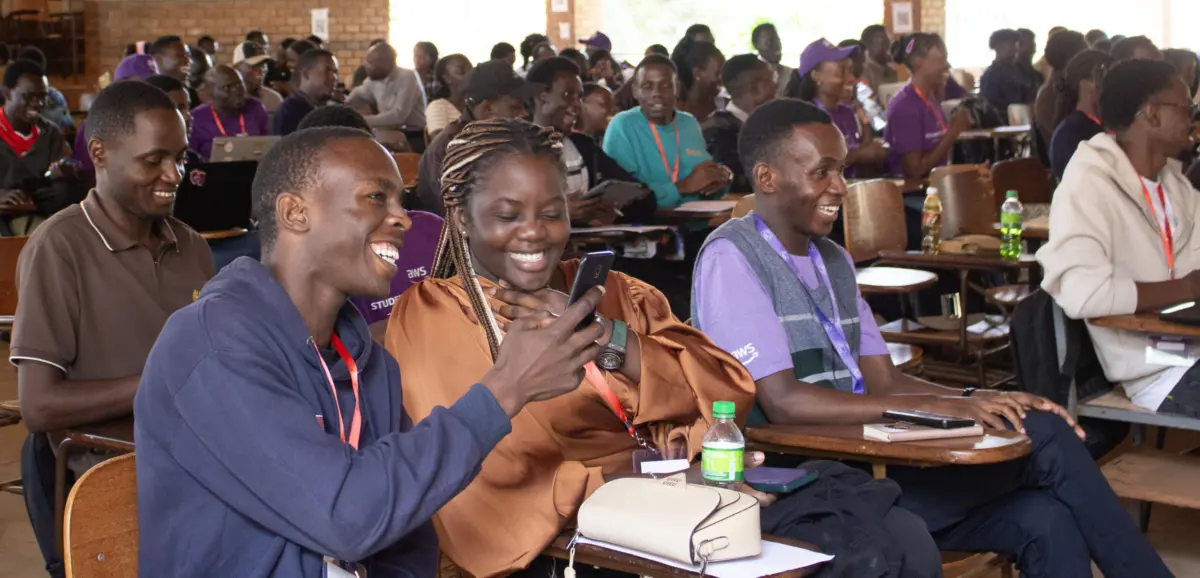
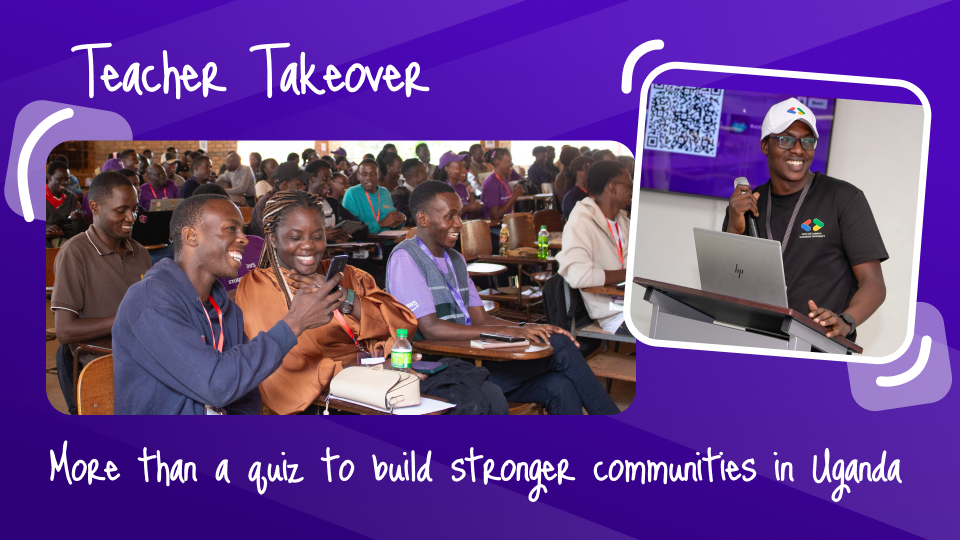
In initial trials with groups of forty to fifty participants, the introduction of the iconic countdown music produced an almost instantaneous physical reaction. Slumped postures straightened; mobile phones were raised in both hands; and a wave of collective laughter rippled through a room of people who, moments earlier, had been complete strangers.
As questions flashed on the screen, answering patterns emerged simultaneously across the room. Leaderboards updated in real time, transforming passive listeners into active participants. Spontaneous debates erupted in the back rows over correct cloud configurations or database schemas. Crucially, participants who had remained entirely silent throughout the morning lectures found themselves laughing, debating, and engaging with their neighbors. The medium had successfully leveled the playing field, proving that engagement could be systematically engineered rather than passively hoped for.
Supporting Context & Metrics: Scaling Engagement Across Uganda
The deployment of gamified learning strategies was not restricted to a single classroom; it was rigorously tested and refined across a diverse spectrum of high-impact technology events throughout Uganda.
AWS Student Community Day Uganda
At the AWS Student Community Day Uganda, organizers welcomed more than 150 attendees for a comprehensive, full-day deep dive into cloud computing. Managing attention spans across an all-day technical conference is a universally recognized challenge for event producers.
Wakida integrated Kahoot! sessions as strategic punctuation marks between rigorous presentations covering AWS core services, Identity and Access Management (IAM) concepts, and complex distributed cloud architectures. These intermittent quizzes functioned simultaneously as:
- Cognitive Reinforcement: Immediate formative assessments that tested whether theoretical concepts had genuinely translated into practical comprehension.
- Energy Resets: Physiological interventions that broke up long blocks of cognitive fatigue, re-engaging participants who had been passively absorbing data for forty-five minutes.
The Notion Community Event & Developer Meetups
At a specialized Notion Community Event, Wakida facilitated a session bridging the gap between absolute beginners and seasoned power users. Here, the gamified quiz yielded an unexpected sociological outcome: it flattened the hierarchy of expertise.
Beginners discovered they could accurately answer foundational workflow questions with complete confidence. Conversely, advanced power users were frequently tripped up by nuanced edge cases and obscure features they had never personally explored. The competition was fundamentally decoupled from external status or prior experience; it was a pure contest between the participant and the material.
Across subsequent blockchain meetups, Web3 developer workshops, and AWS Student Builder Group sessions at Makerere University Business School (MUBS), this behavioral pattern repeated with absolute consistency. Introverted developers who consistently demurred during open-ended Q&A sessions emerged as ruthless, highly competitive contenders on the leaderboard, validating their technical prowess through an anonymous, gamified digital interface.
Official Statements & Insights
The philosophical foundation underpinning Wakida’s work highlights a critical evolution in how modern educators view community development. Engagement is no longer treated as a byproduct of good content; it is recognized as a primary design challenge.
"At 50 people, engagement is no longer something that happens naturally. It has to be designed."
— Benjamin Wakida, Tech Educator and Kahoot! Ambassador
In modern technology ecosystems, particularly within emerging markets like Uganda, technical proficiency alone is insufficient to build a thriving industry. The human infrastructure—the professional networks, mentorship pipelines, and peer support systems—is equally vital. Wakida emphasizes that the true value of these interventions transcends the mechanics of a simple quiz:
"Kahoot! gave the quietest person in the room the loudest voice on the leaderboard… It was never really about the quiz. It was always about what the quiz made possible—the laughter, the debate, the connection, the moment when 50+ strangers stopped being an audience and started being a community."
This sentiment captures the core thesis of community-driven education: platforms that lower the psychological barrier to participation act as social catalysts. When participants collectively groan at a maliciously tricky question or cheer as the leaderboard shuffles in the final seconds of a game, shared vulnerability dissolves social friction. Strangers forge bonds that extend far beyond the physical venue, migrating organically into post-event networking breaks, luncheon conversations, and enduring professional WhatsApp groups.
Future Outlook: From Single Events to the Akilithon Movement
The success of gamified interventions in localized meetups has catalyzed a broader structural evolution within Uganda’s tech landscape. Recognizing that sporadic engagement yields transient results, community builders are institutionalizing these methods into permanent, recurring programs.
The Birth of Akilithon
Inspired by the palpable energy and educational efficacy of these live quiz sessions, Wakida and his collaborators have launched a dedicated monthly quizzing initiative known as Akilithon.
Akilithon represents a deliberate scaling of the gamified learning model. Operating via digital platforms, the initiative hosts recurring, technology-focused competitive challenges designed to:
- Continuously test and benchmark technical competencies across various software disciplines.
- Celebrate regional talent through structured leaderboards and community recognition.
- Maintain year-round engagement, ensuring that learners do not slip back into isolation between major conferences.
- Foster a sustainable culture of peer-to-peer accountability and continuous learning.
The Future of Tech Communities in East Africa
As the tech ecosystem in Uganda and the broader East African region matures, the emphasis is steadily shifting toward hyper-inclusive, community-first models of capacity building. The traditional model of top-down education is giving way to participatory ecosystems where learners co-create their educational experiences.
Initiatives like Akilithon and the continued advocacy of ambassadors like Benjamin Wakida signal a new paradigm for global tech education. By proving that advanced technical topics—from cloud computing to decentralized ledgers—can be mastered through collaborative, joyful competition, these leaders are redefining what a classroom can be.
Ultimately, the metrics of a successful technology event are no longer measured solely by the volume of information transmitted from the stage, but by the number of attendees who leave feeling a profound sense of belonging. Through the strategic implementation of gamified learning, the door has been opened; the community is now successfully building the house together.

