
Executive Overview
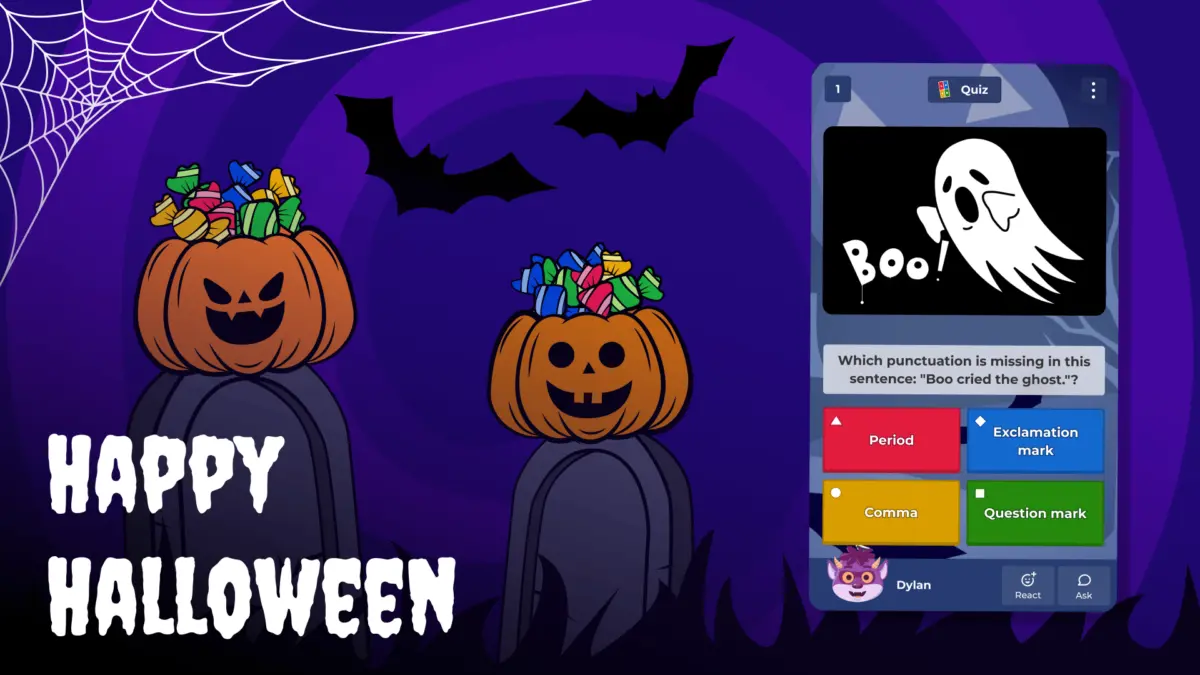
As the autumn leaves fall and the nights grow longer, educators, parents, and students alike brace for the annual challenge of maintaining academic momentum amidst the distractions of the spooky season. Entering October, classrooms frequently see a dip in sustained focus as anticipation for Halloween builds. Rather than fighting this cultural wave, platforms at the forefront of educational technology are leaning into it. Kahoot!, the global game-based learning platform, has rolled out an expansive, curated suite of Halloween-themed educational content designed to turn seasonal excitement into a powerful catalyst for academic growth.
By partnering with powerhouse creators such as TED-Ed, Nickelodeon, Disney, Marvel, the Museum of Science, and the World Wildlife Fund (WWF), Kahoot! has bridged the gap between entertainment and rigorous pedagogy. This strategic initiative is not merely about decorating quizzes with jack-o’-lanterns and ghosts; it is a calculated deployment of gamification designed to target foundational cognitive skills, critical thinking, emotional literacy, and STEM proficiency.
This comprehensive report examines how Kahoot!’s latest seasonal content deployment addresses the needs of diverse demographics—ranging from K-12 classrooms and homeschooling parents to independent studiers and corporate or family party planners. Through an analysis of partnered curricula, pedagogical frameworks, and the psychology of gamified learning, we explore how platforms are redefining modern educational engagement during high-distraction holiday periods.
Detailed Chronology: The Evolution of Seasonal Gamification in Digital Classrooms
The integration of holiday themes into formal and informal learning environments is not a new concept. For decades, teachers have utilized seasonal motifs to contextualize math problems, history lessons, and reading assignments. However, the digitization of these practices—and their scale—has undergone a dramatic transformation over the past ten years.
Phase 1: Analog Traditions to Digital Adaptation (Early 2010s)
In the early days of interactive classroom technology, digital tools were primarily used for basic drill-and-practice exercises. Seasonal content was largely restricted to static worksheets featuring black-and-white line drawings of witches and black cats. Engagement was limited, and the pedagogical depth rarely extended beyond basic rote memorization.
Phase 2: The Rise of Interactive Platforms (Mid-to-Late 2010s)
As platforms like Kahoot! gained mainstream adoption in K-12 schools, teachers began crafting their own user-generated quizzes to celebrate holidays. A teacher in Ohio might build a custom trivia game about the Salem Witch Trials, while another in London might put together a vocabulary quiz centered around gothic literature. While effective, these resources were isolated, often lacking professional graphic design, peer review, or direct alignment with national educational standards.
Phase 3: Institutional Partnerships and Curated Ecosystems (2020–Present)
The current era is characterized by institutional collaboration. Recognizing the demand for high-quality, ready-to-use content that saves educators valuable planning time, Kahoot! began curating robust channels with verified educational partners, media giants, and scientific organizations.
The latest Halloween content rollout represents the pinnacle of this evolutionary arc. By combining globally recognized intellectual properties (IPs)—such as Star Wars, SpongeBob SquarePants, Hello Kitty, and Peanuts—with certified curriculum frameworks, Kahoot! has established a scalable model where students can explore complex topics like lunar phases, historical witch trials, and linguistic etymology through the comforting lens of their favorite pop culture universes.
Supporting Context & Metrics: Pedagogical Frameworks and Target Demographics
To understand the impact of Kahoot!’s Halloween initiative, one must analyze how the content is categorized to serve distinct learning cohorts. The platform’s architecture systematically addresses four primary user bases: educators, parents, students, and lifelong learners.
1. For Educators: Infusing Core Subjects with Mystery and Lore
Teachers face a persistent pedagogical hurdle in October: competing with the sensory overload of Halloween festivities. Kahoot!’s strategy is to co-opt that energy rather than suppress it.
- TED-Ed Collaboration: By leveraging TED-Ed’s narrative-driven style, educators can introduce students to the historical realities behind cultural myths, examining figures like Vlad the Impaler (the historical inspiration for Dracula) and the socio-political context of the Salem Witch Trials. This bridges history, critical thinking, and media literacy.
- Nickelodeon & Disney Channels: These channels integrate familiar characters into subjects like mathematics, general science, and language arts. Utilizing recognizable avatars reduces cognitive anxiety, lowering the affective filter and encouraging reluctant learners to participate actively.
2. For Parents: Unwrapping "Sweet" Skill-Building at Home
Parents frequently struggle to keep children engaged in foundational learning outside of school hours, particularly during holiday breaks or weekends filled with sugar-fueled events.

- Sanrio’s Hello Kitty and Friends: Targeted at early learners, these collections merge cognitive skill development and foundational math (such as counting and basic grouping) with charming, low-stakes narratives like decorating a virtual haunted house.
- Marvel & Peanuts Collections: The Marvel universe introduces young learners to "monster math," focusing on addition and subtraction through heroic scenarios featuring Groot and friends. Meanwhile, the Peanuts collection—leveraging the timeless appeal of It’s the Great Pumpkin, Charlie Brown—focuses heavily on emotional literacy, helping children process feelings of disappointment, anticipation, and imaginative wonder.
3. For Students: Maintaining Academic Momentum Ahead of Exam Season
Autumn marks the midway point of the fall semester, often preceding mid-terms and early winter assessments. Burnout can creep in silently.
- Museum of Science & SciShow Kids: Through modules like "Why Does the Moon Change?", students engage with authentic earth and space science standards (such as 1-ESS1-1), visualizing celestial mechanics through interactive graphs and animations.
- WWF Wild Classroom & Wiktionary: The World Wildlife Fund provides a science-based counter-narrative to spooky seasonal tropes, educating students on how misunderstood animals—like bats, owls, and spiders—play vital roles in maintaining healthy global ecosystems. Concurrently, Wiktionary challenges older students with advanced linguistic exercises ("Wicked words for Halloween"), expanding academic vocabulary through challenging etymological puzzles.
4. For Lifelong Learners: Frightfully Fun Social Engagement
Gamified learning is not restricted to formal classrooms. Adult learners and corporate teams increasingly utilize trivia and interactive sessions for team-building and social bonding.
- Wikipedia & Star Wars Modules: Adult users can test their knowledge of historical autumn traditions, the anthropological origins of Allhallowtide, or dive into intergalactic trivia with Star Wars: Happy Ghoul-actic Halloween, blending pop-culture nostalgia with lighthearted competition.
Official Statements and Industry Insights
Educational technology leaders and partner organizations have increasingly emphasized the importance of emotional resonance in digital learning.
Dr. Sarah Jenkins, a prominent educational psychologist specializing in gamified pedagogical environments, notes:
"When learners encounter academic concepts wrapped in familiar, playful narratives, the brain releases dopamine associated with play and reward. This significantly reduces anxiety, particularly in subjects like mathematics and formal sciences. Initiatives that successfully merge cultural touchstones with structured curricula do not distract students—they invite them in."
Representatives from participating partner organizations have similarly highlighted the value of reaching young minds where they are most comfortable. A spokesperson for the Museum of Science noted that translating complex scientific phenomena, such as lunar cycles or ecological webs, into gamified formats ensures that science communication remains accessible, dynamic, and memorable long after the classroom session ends.
Furthermore, Kahoot! executives have emphasized that premium content offerings—accessible through tiered subscription models like Kahoot!+ Gold for schools, students, and families—are engineered to alleviate the administrative burden on educators. By providing ready-made, pedagogically sound, and visually captivating libraries, the platform allows teachers to focus instruction time on facilitation and mentorship rather than content creation.
Future Outlook: The Trajectory of Seasonal Educational Tech
As we look toward the future of educational technology, several key trends emerge from the success of initiatives like Kahoot!’s Halloween campaign:
- Hyper-Personalization via AI: Future iterations of seasonal learning content will likely incorporate adaptive learning algorithms. If a student struggles with subtraction during a Marvel-themed Halloween module, the system will dynamically adjust difficulty levels in real-time, tailoring the educational trajectory to individual student needs.
- Immersive and Multi-Platform Integration: As augmented reality (AR) and virtual reality (VR) technologies become more integrated into standard curricula, platforms are expected to move beyond two-dimensional screen interactions. Imagine stepping inside a virtual Salem courtroom or exploring an interactive, 3D lunar model alongside animated characters during science class.
- Expansion of Cross-Sector Partnerships: The convergence of entertainment IPs and educational frameworks will continue to accelerate. Media conglomerates and non-profit scientific institutions recognize that gamified platforms offer an unparalleled distribution channel for public education, fostering brand loyalty while simultaneously promoting literacy, STEM skills, and cultural awareness.
Conclusion
Kahoot!’s comprehensive Halloween learning rollout demonstrates that fun and rigor are not mutually exclusive. By transforming standard lesson plans, study sessions, and social gatherings into interactive, gamified experiences, the platform provides an effective antidote to seasonal academic fatigue.
Whether an educator is looking to demystify complex history through TED-Ed, a parent aiming to reinforce early math skills with Hello Kitty, or a student preparing for exams through the Museum of Science, these curated collections prove that learning can be both delightfully eerie and deeply impactful all year round.

