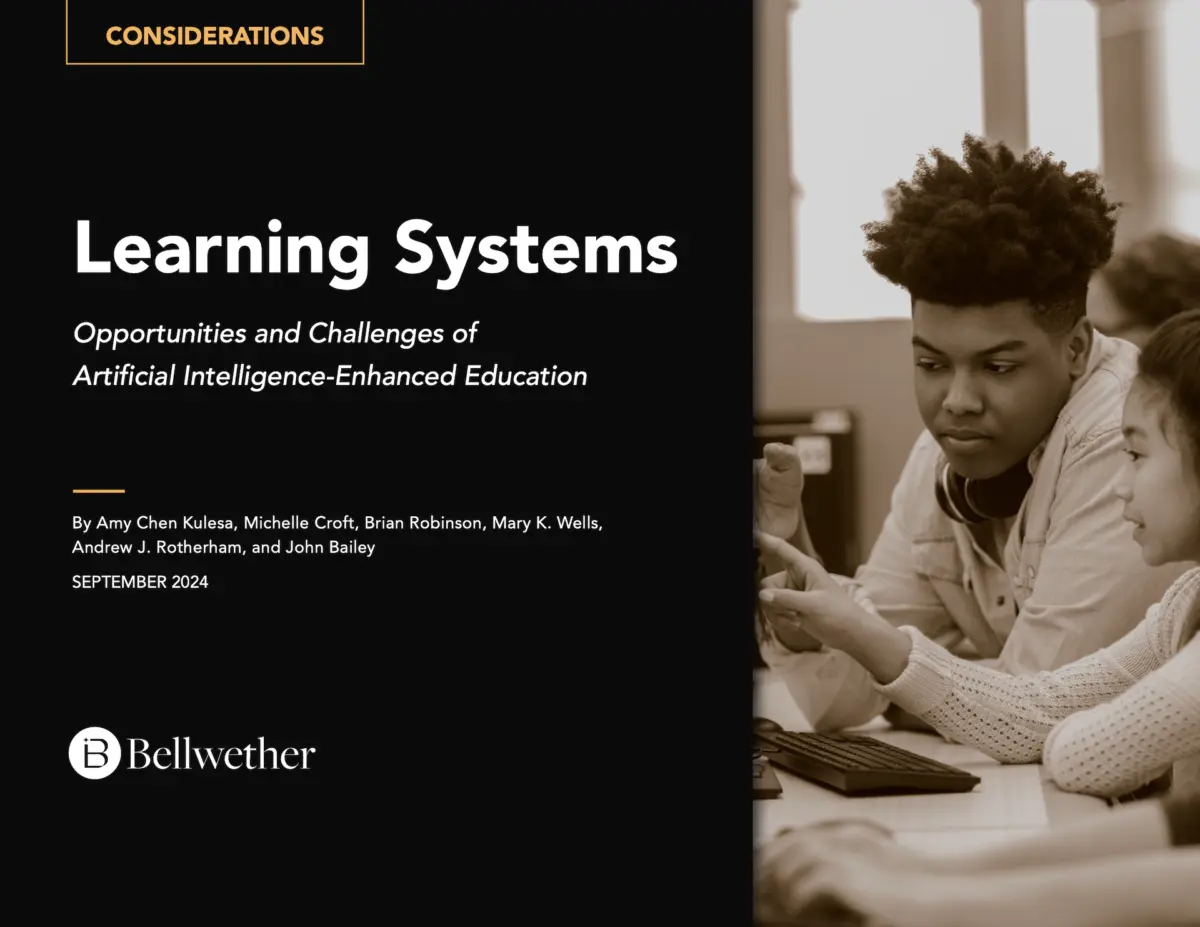
In the rapidly evolving landscape of modern education, the need to bridge persistent opportunity gaps has never been more urgent. At the forefront of this national conversation is Bellwether, a prominent nonprofit organization dedicated to transforming educational systems so that all young people—particularly those furthest from opportunity—can achieve outcomes leading to fulfilling lives and flourishing communities.
Over the course of a multi-year initiative spanning critical releases from September 2024 through August 2026, Bellwether has produced a robust body of research, policy analysis, and strategic insights. This sustained effort has been made possible through the generous financial backing, strategic guidance, and intellectual contributions of a broad coalition of philanthropic powerhouses, including the Bezos Family Foundation, the Chan Zuckerberg Initiative, the Charles and Helen Schwab Foundation, the Charter School Growth Fund, the Oak Foundation, the Overdeck Family Foundation, the Raikes Foundation, and the Walton Family Foundation.
By convening education leaders, analyzing nontraditional and out-of-school learning models, and influencing program design, Bellwether continues to address education’s most pressing challenges. This article provides a comprehensive look at the collaborative milestones, institutional leadership, and forward-looking vision driving Bellwether’s ongoing mission to reshape American education.
Detailed Chronology: A Multi-Year Roadmap of Research and Impact
Bellwether’s recent body of work did not materialize overnight; it represents a meticulously sequenced timeline of project editions, targeted funding rounds, and rigorous investigative releases. Understanding this chronology illustrates how sustained philanthropic investment translates into actionable educational reform.
September 2024: Laying the Groundwork
The initiative gained significant momentum in September 2024 with the launch of the project’s foundational phase. Supported by early commitments from major philanthropic partners—including the Bezos Family Foundation, Chan Zuckerberg Initiative, Charles and Helen Schwab Foundation, Charter School Growth Fund, Oak Foundation, Overdeck Family Foundation, and Raikes Foundation—this initial rollout established baseline metrics for examining out-of-school learning models and educational equity. Researchers focused on identifying structural bottlenecks in traditional schooling pipelines and mapping out emerging alternative learning ecosystems.
May 2025: Expanding the Scope
Building upon the momentum of the previous fall, the May 2025 edition expanded the project’s empirical scope. Driven by ongoing financial support from the core philanthropic collaborative, this phase integrated qualitative interview data from educators, policymakers, and community leaders. By capturing diverse perspectives on the ground, the May 2025 release provided a clearer picture of how nontraditional educational frameworks could be scaled effectively without compromising equity or quality.
January 2026: Mid-Term Synthesis and Policy Adjustments
As systemic shifts in learning models accelerated, the January 2026 edition served as a critical mid-term checkpoint. This phase evaluated the viability of alternative school designs and synthesized data collected across the preceding sixteen months. Researchers analyzed how shifting demographics and post-pandemic educational recovery efforts were altering student outcomes, offering timely policy recommendations for institutional leaders nationwide.
August 2026: The Final Phase and Future Horizons
The culmination of this multi-year initiative arrived in August 2026, supported by targeted funding from the Charter School Growth Fund and the Walton Family Foundation. This final edition synthesized years of empirical research, expert interviews, and case studies into an authoritative roadmap for the future of nontraditional learning. It emphasized actionable strategies for scaling impact, ensuring that institutional innovations directly benefit marginalized student populations.
Supporting Context & Metrics: Behind the Scenes of Educational Transformation
Behind every Bellwether publication lies an extensive network of research, peer review, and editorial oversight. The depth and credibility of these reports stem from a collaborative culture that brings together seasoned analysts, external fellows, and rigorous copyediting teams.
The Collaborative Engine
The production of reports spanning the 2024–2026 timeline required input from a multidisciplinary team. Bellwether colleagues—including Alex Spurrier, Daniela Torre Gibney, Christine Wade, Lynne Wells Graziano, Mark Baxter, Priyanka Patel, and Alexis Richardson—provided vital analytical input and structural feedback. Additionally, the project benefited from the foundational support of former colleagues Shruti Nagarajan, Zoe Cuddy, Mandy Berman, Kaitlin Beeson, and Janine Sandy, whose early contributions shaped the research methodology.
To ensure that these complex findings reached a broad national audience, a dedicated dissemination and communications team—comprising Amy Ribock, Kate Stein, Andy Jacob, McKenzie Maxson, Esta Sherr, Temim Fruchter, Julie Nguyen, and Amber Walker—worked alongside professional entities such as Super Copy Editors to refine the messaging.
Methodological Rigor and Accountability
While the contributions of interview participants, philanthropic partners, and internal staff significantly enhanced the quality and scope of the work, Bellwether maintains a strict policy of editorial independence. As noted in the project’s official disclosures, any errors in fact or analysis remain strictly the responsibility of the authors. This commitment to objective inquiry ensures that policymakers and educational leaders can rely on Bellwether’s findings to draft legislation, allocate funding, and restructure programs with absolute confidence.
Official Statements & Leadership Insights
The driving force behind Bellwether’s mission consists of visionary leaders and senior researchers who have spent decades analyzing the intersection of policy, practice, and equity in education.
Mary K. Wells: Championing Nontraditional Learning
As a co-founder and senior partner at Bellwether, Mary K. Wells leads the organization’s pioneering work on nontraditional and out-of-school learning. Wells has consistently argued that the four walls of a traditional classroom are no longer sufficient to meet the diverse needs of modern students.
"To truly serve young people furthest from opportunity, we must look beyond conventional schooling and embrace dynamic, community-embedded learning models that meet students where they are," Wells has emphasized in discussions surrounding the organization’s strategic priorities.
Through her leadership, Bellwether has mapped out innovative pathways that integrate community resources, digital learning, and experiential education into cohesive student support systems.
Andrew J. Rotherham: Navigating Policy and Systemic Change
Andrew J. Rotherham, also a co-founder and senior partner at Bellwether, brings a wealth of policy expertise and historical perspective to the organization’s initiatives. Rotherham’s work focuses on systemic reform, accountability, and the political economy of education. By bridging the gap between high-level policy discussions and grassroots implementation, Rotherham helps leaders navigate the complex tradeoffs inherent in educational transformation. His insights ensure that Bellwether’s publications do not merely diagnose systemic challenges, but offer pragmatic, politically viable solutions for reform-minded leaders.
John Bailey: Bridging Technology, Policy, and Practice
Adding an external research dimension to the initiative is John Bailey, a nonresident senior fellow at the American Enterprise Institute (AEI) and a key collaborator on Bellwether’s recent projects. Bailey’s extensive background in education technology, policy, and innovation has been instrumental in evaluating how emerging tools and systemic reforms intersect. His cross-institutional collaboration exemplifies Bellwether’s philosophy: that solving education’s most entrenched challenges requires a unified front of diverse intellectual perspectives and institutional partnerships.
Future Outlook: Where American Education Goes From Here
As the dust settles on the August 2026 completion of this multi-year research initiative, the broader education sector faces a pivotal moment of reckoning. The findings generated by Bellwether and its philanthropic partners—the Bezos Family Foundation, Chan Zuckerberg Initiative, Charles and Helen Schwab Foundation, Charter School Growth Fund, Oak Foundation, Overdeck Family Foundation, Raikes Foundation, and Walton Family Foundation—provide a clear blueprint for the road ahead.
Scaling Innovation Equitably
The primary challenge for education leaders in the post-2026 era will not be a lack of innovative ideas, but rather the equitable execution and scaling of those ideas. Traditional school districts, charter networks, and out-of-school providers must find sustainable ways to collaborate. Bellwether’s research underscores that nontraditional learning environments cannot remain niche options for privileged populations; they must be integrated into public education funding and policy frameworks to serve low-income students and communities of color effectively.
A Creative Commons Legacy for the Greater Good
In keeping with its commitment to open knowledge sharing, Bellwether has released its 2026 reports under a Creative Commons license. This open-source approach invites educators, policymakers, researchers, and community advocates to copy, display, distribute, and build upon the work for noncommercial purposes, provided clear attribution is given to Bellwether and a link back to bellwether.org is maintained. By democratizing access to this vital research, Bellwether ensures that the momentum generated over years of investigation will continue to spark grassroots innovation and institutional reform across the nation.
Ultimately, Bellwether’s multi-year initiative serves as a powerful reminder that transforming education is a collective endeavor. By fostering dialogue, demanding analytical rigor, and centering the needs of young people furthest from opportunity, Bellwether continues to act as a true beacon for the future of learning in America.