
Executive Overview
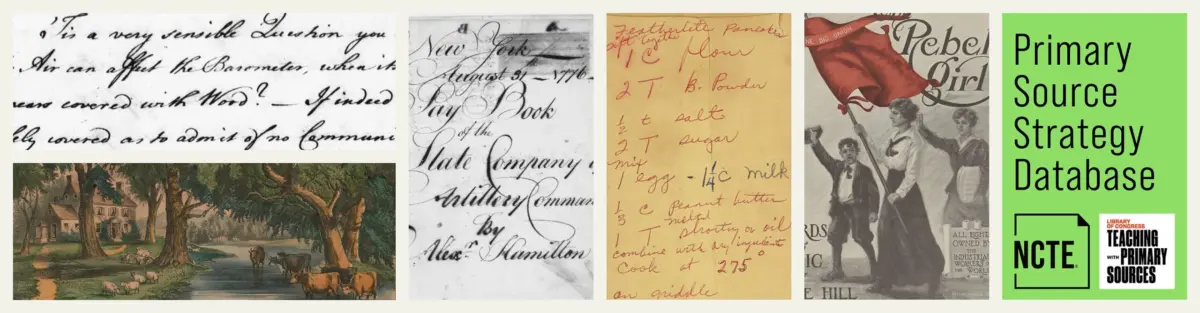
In an era defined by an overwhelming deluge of digital information, contemporary education faces a paradox: while students have unprecedented access to data, they frequently lack the critical-thinking framework necessary to interrogate, contextualize, and derive meaning from historical artifacts. To bridge this critical pedagogical gap, a transformative collaborative effort is underway. The National Council of Teachers of English (NCTE) has officially partnered with the Library of Congress as an active participant in the prestigious Teaching with Primary Sources (TPS) Consortium.
This ambitious multi-year initiative is systematically reshaping how literacy teachers and students interact with history. At its core, the partnership seeks to integrate the Library of Congress’s vast, digitized archives directly into English language arts (ELA) and humanities curricula nationwide. By moving beyond traditional, secondary textbook narratives, the program equips educators with a robust, searchable digital database containing pedagogical strategies for more than 150 specific historical artifacts.
Developed by over two dozen distinguished educators, literacy leaders, and curriculum specialists, these resources offer explicit instructional value, thematic alignment, and direct mapping to state educational standards. Among the crown jewels of this database is a newly cataloged, deeply poignant primary source: a 17th-century petition written from the confines of an Ipswich prison by ten women accused of witchcraft. This document—and the broader NCTE-Library of Congress initiative—represents a seismic shift in American education, prioritizing marginalized historical voices, fostering rigorous textual analysis, and redefining what it means to study literature and history in the 21st century.
Detailed Chronology: Unearthing the Ipswich Prison Petition
To understand the profound instructional value of the materials being integrated into modern classrooms, one must trace the historical trajectory of the artifacts themselves. The specific primary source highlighted within the NCTE database transports students back to the bleakest months of the 17th-century New England witch trials, specifically the winter following the infamous outbreak in Salem, Massachusetts.
While historical consciousness is often dominated by the dramatic courtroom scenes and executions in Salem Village, the terror cast a wide geographic net across Essex County, ensnaring dozens of unsuspecting citizens in neighboring towns such as Ipswich.
The Plight of the Ipswich Ten
During the bitter winter months of the trials, ten women who had been formally accused of witchcraft languished in the cold, damp confines of the Ipswich jail. Having already been imprisoned for many months without a formal trial—a common procedural injustice of the era—these women faced a new, immediate threat: the brutal New England winter.
Historical records reveal that the conditions within the jail were abysmal. Among the ten petitioners, some were severely ill, while others were pregnant. Realizing that the combination of stone walls, inadequate heating, and rampant disease would likely kill them before spring, the women took an extraordinary step. They drafted a formal petition to the governing authorities and magistrates, pleading for their temporary release on bail.
The Argument for Mercy
The petition serves as a masterclass in early American rhetoric, despite being penned under extreme duress. In the document, the women did not merely beg for pity; they made a calculated, rational appeal for survival. They promised that if they were released on bail to endure the winter months under the care of their families, they would willingly return to stand trial in the spring when the judicial courts reconvened.
Mainstream historical narratives of the period have historically overlooked these grassroots, self-authored pleas, opting instead to focus on the perspectives of the accusers, judges, and male magistrates. By bringing this specific petition into the classroom, the NCTE and the Library of Congress provide students with a rare, unfiltered primary source written by women whose voices were systematically silenced by the power structures of their time.
Supporting Context & Metrics: Bridging Archives and Classrooms
The integration of artifacts like the Ipswich prison petition is not merely a history lesson; it is fundamentally an exercise in advanced literacy. The NCTE-Library of Congress database is meticulously designed to meet rigorous educational frameworks, specifically aligning with both the NCTE Standards for the English Language Arts and the Common Core State Standards (CCSS).
Mapping to Educational Standards
The curriculum resources associated with the database are anchored in foundational educational benchmarks:
- NCTE Standard 1: Students read a wide range of print and nonprint texts to build an understanding of texts, of themselves, and of the cultures of the United States and the world; to acquire new information; to respond to the needs and demands of society and the workplace; and for personal fulfillment.
- NCTE Standard 2: Students read a wide range of literature from many periods in many genres to build an understanding of the many dimensions (philosophical, ethical, aesthetic) of human experience.
- Common Core Standard L.9-10.3: Apply knowledge of language to understand how language functions in different contexts, to make effective choices for meaning or style, and to comprehend more fully when reading or listening.
By utilizing these standards, educators can transcend rote memorization. When students analyze the Ipswich petition, they are not just memorizing dates; they are examining how language functions in high-stakes contexts. They analyze how marginalized individuals manipulate tone, decorum, and persuasive rhetoric when appealing to an oppressive authority.
Searchability and Curricular Flexibility
The digital repository has been engineered for intuitive navigation by busy educators. Content within the database is tagged using granular keywords such as picturebook, argument, government, law, and politics. This flexibility allows middle and high school teachers to seamlessly weave primary sources into diverse units of study.
Whether an educator is teaching Arthur Miller’s classic play The Crucible, conducting a thematic unit on Puritan America, or instructing students on the structural components of argumentative writing, the database provides ready-to-use pedagogical scaffolding. It transforms abstract historical epochs into visceral, human experiences by centering the actual words of historical actors.
Official Statements and Pedagogical Philosophy
The collaboration between the National Council of Teachers of English and the Library of Congress represents a shared conviction that primary sources are indispensable tools for developing civic literacy and critical thinking.
Educational leaders involved in the TPS Consortium emphasize that the traditional textbook model—where history is predigested and presented as a monolithic narrative—fails to prepare modern students for a complex information ecosystem. By contrast, working directly with digitized manuscripts, petitions, photographs, and broadsides forces students to become active historians and critical readers.
"When students touch the digital ink of a 17th-century petition written by women begging for their lives, history ceases to be a list of dates to be memorized for an exam," notes a curriculum specialist affiliated with the NCTE initiative. "It becomes a profound human encounter. Students begin to ask the vital questions: Who wrote this? Why did they write it? Who was intended to read it, and whose voices are missing from the margins?"
Furthermore, literacy experts stress that informational text nonfiction is a cornerstone of modern ELA curricula. The Common Core places heavy emphasis on students’ ability to analyze complex, non-fiction historical documents. The NCTE-Library of Congress database directly addresses this requirement by curating items that are rich in rhetorical devices, historical context, and argumentative validity.
Future Outlook: The Next Phase of Primary Source Literacy
As the Teaching with Primary Sources Consortium continues to expand its reach, the future of English language arts and social studies instruction looks increasingly interdisciplinary. The success of the initial database rollout—featuring over 150 meticulously analyzed items—has laid the groundwork for future expansions.
Scaling Up Teacher Professional Development
A major focus for the upcoming phases of the partnership involves scaling up professional development programs for educators. While the database provides the raw materials and suggested teaching strategies, many teachers require targeted training on how to integrate primary sources effectively into daily lesson plans without sacrificing instructional time. Regional workshops, webinars, and collaborative online modules are currently being developed to train teachers in "document-based questioning" (DBQ) techniques and source analysis frameworks.
Diversifying the Historical Record
Another critical frontier for the initiative is the continuous diversification of the primary source archive. Recognizing that mainstream historical collections have historically suffered from biases regarding race, gender, and socioeconomic status, the NCTE and the Library of Congress are actively prioritizing artifacts that shed light on underrepresented communities. Future database updates will continue to surface petitions, diaries, letters, and ephemera authored by women, people of color, indigenous populations, and working-class individuals.
Empowering Student Agency
Ultimately, the long-term vision of this partnership extends far beyond the walls of the traditional classroom. By routinely exposing students to primary sources that highlight dissent, resilience, and the struggle for justice, educators are cultivating a generation of critical thinkers. Students who learn to interrogate a 17th-century witchcraft petition are uniquely equipped to critically evaluate 21st-century media, political rhetoric, and digital information.
As the NCTE and the Library of Congress forge ahead with their collaborative mission, they are proving that the voices of the past—even those locked away in a freezing Ipswich jail centuries ago—still hold the power to illuminate the minds of the future.

