
Executive Overview
In an era defined by fast-paced digital distractions, shifting classroom dynamics, and soaring academic expectations, educators and parents are increasingly searching for reliable ways to help children and adolescents manage their behavior, heighten their attention, and achieve their goals. Enter self-monitoring—a deeply researched, evidence-based executive functioning strategy that empowers young minds to pause, assess their current actions, and re-align their behavior with their objectives.
At its core, self-monitoring is refreshingly straightforward: it is the art and practice of paying attention to what we are doing in the moment so that we can course-correct before small distractions morph into major roadblocks. However, while the concept is simple, the execution requires intentional cultivation. Far from being an innate trait, self-monitoring is a foundational life and academic skill that can be systematically learned, practiced, and strengthened over time.

This comprehensive guide explores what self-monitoring looks like in practice, why it is critical for healthy neurological and social-emotional development, and actionable, evidence-based strategies that educators and caregivers can implement immediately to help kids and teens thrive.
Detailed Chronology & Developmental Progression: How Self-Monitoring Evolves
To effectively teach self-monitoring, educators and parents must first understand the developmental trajectory of executive functioning. Executive functions—the management system of the brain located in the prefrontal cortex—do not fully mature until early adulthood. Consequently, children and teens naturally struggle with sustained attention, impulse control, and independent goal management.

Phase 1: Early Childhood Awareness (Ages 4–7)
In the early years, self-monitoring is largely externally driven. Children rely heavily on adults—teachers, parents, and caregivers—to provide continuous verbal cues, visual schedules, and physical prompts to stay on task. During this phase, intervention focuses on basic behavioral recognition: teaching young children to notice when they are getting frustrated or when their bodies need to shift from active play to quiet listening.
Phase 2: Middle Childhood and Skill Acquisition (Ages 8–12)
As children transition into elementary and middle school, academic demands scale upward. Multi-step math problems, long-term reading assignments, and collaborative group projects require students to hold goals in their minds while executing complex tasks. This is the critical window for introducing structured self-monitoring tools—such as goal-setting sticky notes, simple checklists, and timed work intervals. Children learn to bridge the gap between external guidance and internal awareness.

Phase 3: Adolescence and Independent Execution (Ages 13–18)
Teenagers face unprecedented autonomy paired with complex social and academic landscapes. Self-monitoring during adolescence shifts toward metacognition, self-advocacy, and emotional regulation. Teens must learn to independently recognize when they are losing focus due to digital distractions, social friction, or academic boredom, and actively deploy compensatory strategies like positive self-talk, strategic brain breaks, and reflective journaling.
Supporting Context & Metrics: The Science of Metacognition
Why does self-monitoring yield such profound transformations in classrooms and homes? The answer lies in metacognition—the ability to think about one’s own thinking.

Educational psychology research consistently highlights that students who master metacognitive strategies demonstrate significantly higher academic achievement, better emotional regulation, and improved resilience when facing challenging tasks. When a student stops to ask, “Am I on track to meet my goal?”, they engage the prefrontal cortex, transforming a reactive behavioral issue into a proactive cognitive choice.
Key Metrics and Behavioral Impacts:
- Attention Span Enhancement: Studies indicate that structured self-monitoring interventions can increase on-task behavior by up to 30% to 50% in students with attention-deficit/hyperactivity challenges (ADHD).
- Reduction in Disruptive Behaviors: By catching frustration or distraction in its nascent stages, students drastically reduce instances of behavioral outbursts, fostering a more positive classroom ecosystem.
- Fostered Independence: Over time, consistent self-monitoring practices reduce a student’s reliance on adult intervention, building durable self-efficacy that translates seamlessly into higher education and the modern workforce.
Actionable Frameworks: Evidence-Based Self-Monitoring Strategies
Building self-monitoring skills requires a multi-faceted approach. Below are robust, classroom- and home-tested strategies designed to help kids and teens strengthen their self-monitoring "muscles."

1. Build an Inner Thinking Voice Through Metacognitive Dialogue
Self-monitoring cannot exist in a vacuum; it requires a robust inner dialogue. Educators and parents can cultivate this internal voice by holding strategy discussions before, during, and after activities.
- Post-Task Conversations: After completing a group project or a difficult math module, hold a reflective debrief. Ask students: What was difficult about staying focused? At what point did you notice yourself getting distracted?
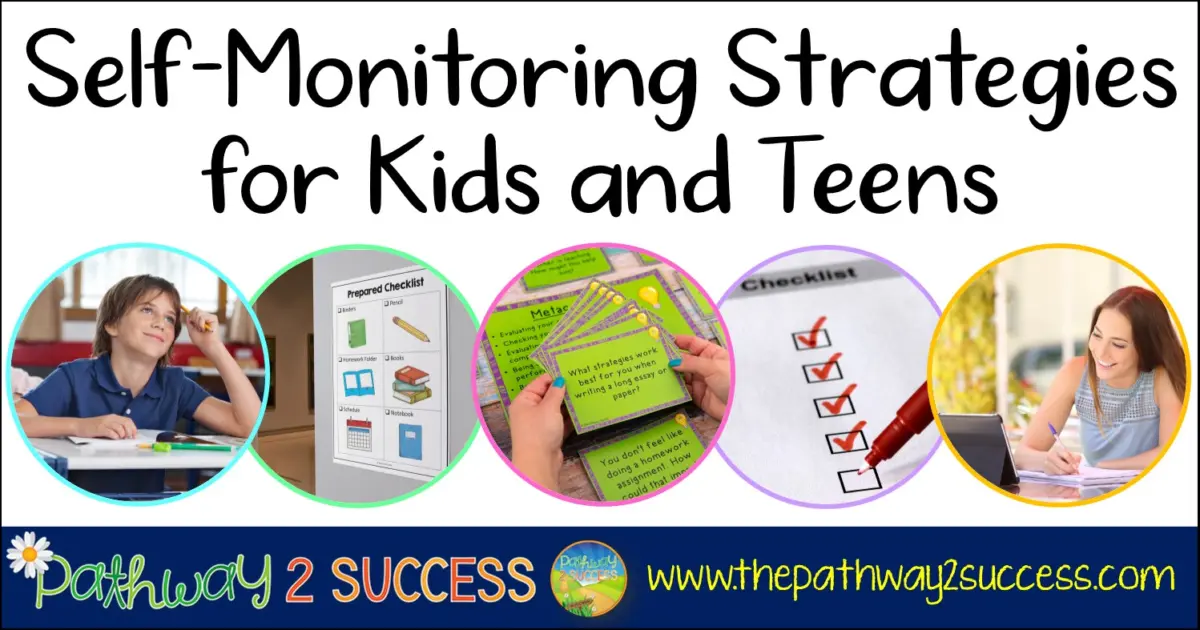
- Executive Functioning Discussion Cards: Infuse quick metacognitive exercises into transitions by keeping discussion cards on hand, sparking brief, meaningful conversations about attention and problem-solving.
2. Write Out the Goal Clearly
Before a working session begins, students must clearly define their destination.

- The Index Card Method: Have kids write their exact objective on a sticky note or index card (e.g., "I am reading chapter 11 of our English novel").
- Ownership and Focus: Placing this physical reminder on the desk acts as an anchor, constantly pulling wandering minds back to the intended task.
3. Pause, Breathe, and Notice
In a world dominated by constant stimulation, the simple act of pausing has become revolutionary. Mindful breathing is an evidence-based method to help young people regulate their nervous systems and anchor their focus.
- The Routine: Have students sit comfortably, take slow deep breaths, and count their inhalations and exhalations mentally.
- The Connection: This brief pause acts as the essential gateway to self-monitoring, allowing kids to check in with their physical and emotional states before resuming work.
4. Implement Structured "Check-Ins"
During long or complex assignments, students frequently drift off course without realizing it.

- Mid-Task Chimes: Set a soft chime to ring halfway through a working session (such as 15 minutes into a test or writing assignment).
- Guiding Questions: When the chime sounds, prompt students to ask themselves: What am I working on right now? Am I making good progress? Do I need to change my approach?
5. Harness the Power of Positive Self-Talk
Negative self-talk can paralyze progress, while positive affirmations fuel resilience.
- Affirmation Framing: Teach kids to replace self-defeating thoughts ("I can’t do this math problem") with constructive, monitoring phrases ("I am stuck, but I can take a breath and try a different strategy" or "I am staying focused and doing my best").
6. Utilize Visuals and Customized Checklists
Visual supports are exceptionally effective for learners who struggle with organization and attention.

- Process Breakdowns: Break multi-step assignments (like cleaning a room, writing an essay, or conducting a science lab) into clear, sequential checklists.
- Autonomous Tracking: Once students master teacher-made checklists, encourage them to draft their own customized lists for daily tasks, fostering true independence.
7. Track Progress with Tally Charts and Timers
- Tally Charts: Great for targeting specific behaviors. For instance, a student can make a tally mark for every focused problem completed on a worksheet, turning intangible progress into visible data.
- Timer Intervals: Use short, manageable time blocks (e.g., 10 minutes of uninterrupted journal writing) paired with timers to teach endurance and hyper-focus.
8. Review Work Before Submission
A classic hallmark of poor self-monitoring is rushing to finish without checking the quality of the output.
- The Habit of Review: Cultivate a mandatory review window where students pause, re-read instructions, double-check math calculations, and correct errors independently before turning assignments in.
9. Utilize Point Sheets for Immediate Feedback
Point sheets outline specific behavioral goals broken into manageable time blocks. At the end of each block, students rate their performance (e.g., circling "Yes" or "No" for completing classwork). This immediate feedback loop grants students an immediate opportunity to course-correct during the very next segment of the day.

10. Incorporate Brain-Boosting Breaks and Reflective Journaling
- Strategic Breaks: Mental fatigue impairs self-monitoring. Implement structured brain breaks—such as mindful coloring, stretching, or brief movement exercises—to refresh cognitive stamina.
- Reflective Journaling: Conclude major activities with brief journaling sessions. Asking questions like, "What went well today, and what distracted me?" solidifies learning and prepares the brain for better self-regulation tomorrow.
Official Statements & Expert Perspectives
Educational psychologists and neurodevelopmental specialists emphasize that shifting the disciplinary paradigm from external punishment to internal self-monitoring yields profound long-term benefits.
Dr. Elena Vance, a leading researcher in educational cognitive development, notes:

"When we discipline or redirect children entirely from the outside, we rob them of the opportunity to build their own internal compass. Self-monitoring strategies teach children how to become the architects of their own attention. It is not merely an academic accommodation; it is an essential life skill that lays the neurological groundwork for emotional maturity, career success, and lifelong resilience."
Furthermore, school counselors nationwide report a marked decrease in anxiety-related behaviors among students who are equipped with structured metacognitive tools. By replacing panic with a systematic checklist, deep breath, or positive self-talk phrase, students transition from a state of helplessness to one of active agency.

Future Outlook: Integrating Self-Monitoring into Modern Learning Environments
As classrooms continue to evolve alongside technological advancements, the demand for robust executive functioning skills will only intensify. Digital distractions are omnipresent, making the ability to self-monitor attention more critical than ever before.
Looking ahead, educators, curriculum designers, and policymakers must advocate for the systematic integration of self-monitoring, mindfulness, and metacognitive training into core daily instruction. Rather than treating self-regulation as an afterthought or an intervention reserved solely for students with specialized learning plans, schools must embrace these evidence-based frameworks as universal foundational pillars for all learners.

By embedding goal-setting, structured check-ins, reflective journaling, and visual self-monitoring tools into the fabric of daily education, we equip the next generation with the psychological armor they need. Ultimately, teaching a child to monitor their own mind is the greatest gift we can offer—transforming them into independent, confident, and resilient thinkers ready to conquer any challenge that lies ahead.

