
EXECUTIVE SUMMARY
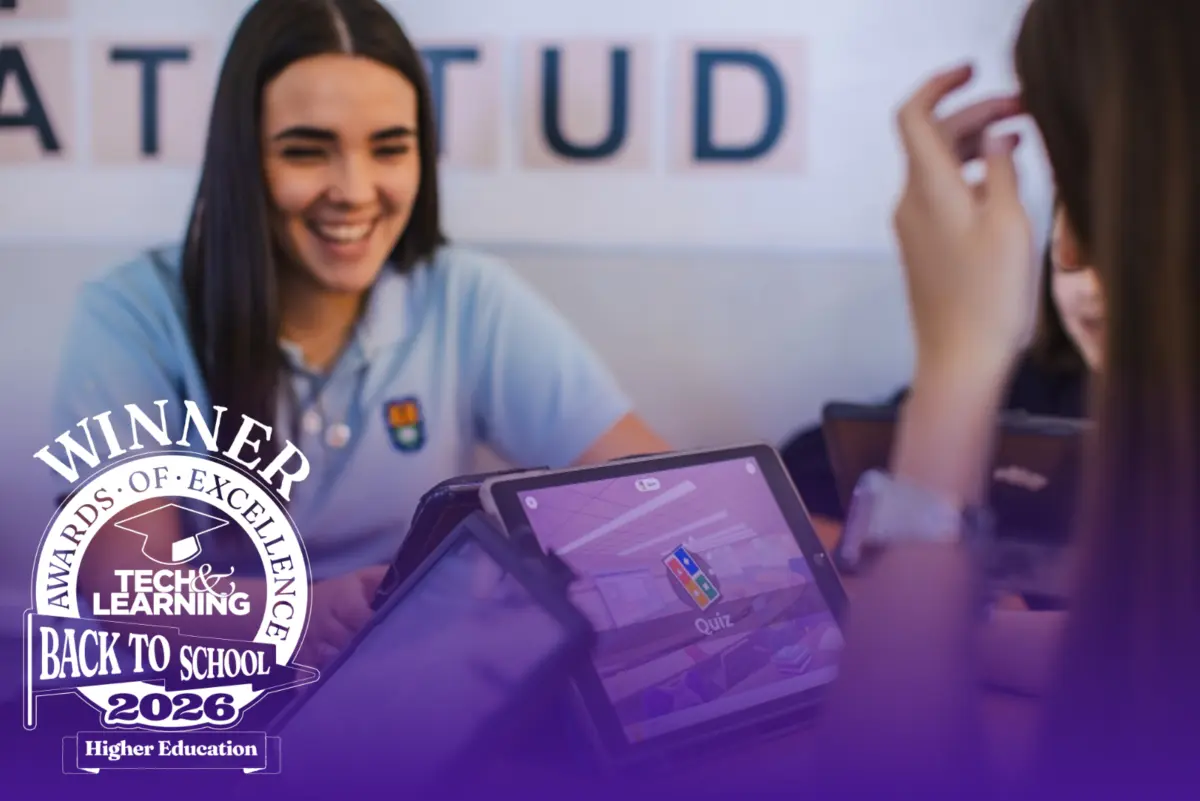
As the global academic community navigates a rapidly shifting technological landscape, the demand for dynamic, scalable, and research-backed educational tools has never been higher. Entering the 2026 academic year, interactive learning pioneer Kahoot! has secured a major industry milestone by winning the prestigious Tech & Learning Awards of Excellence: Back to School 2026 in the Higher Education category.
This accolade highlights Kahoot! EDU, the company’s flagship institutional offering, which has rapidly become an indispensable asset for colleges, universities, and school districts worldwide. Judged by a panel of veteran educational technology experts, the awards recognize products that demonstrate exceptional versatility, real-world value, radical innovation, and a proven ability to streamline educator workflows while driving measurable student outcomes.
With more than 10 million educators and countless millions of students utilizing the platform globally—including an overwhelming 97% of the world’s top 500 universities—Kahoot! has transcended its origins as a gamified quiz tool. Today, it stands as a comprehensive, AI-enhanced ecosystem engineered to combat student disengagement, reduce academic anxiety, and optimize knowledge retention at scale. This comprehensive report explores the significance of the 2026 Back to School award, the technological innovations driving Kahoot! EDU’s adoption, and the broader implications of AI-driven pedagogy in higher education.
1. Executive Overview: A Watershed Moment for Interactive EdTech
The opening of a new academic year invariably brings a wave of new software solutions promising to revolutionize the classroom. However, few platforms achieve the deep, institutional integration seen with Kahoot!. The Tech & Learning Awards of Excellence specifically spotlight solutions that make a profound, tangible difference in the daily lives of educators and learners alike.
In selecting Kahoot! EDU for the Higher Education category, the judging panel evaluated nominees against rigorous criteria: ease of use, overall value, market uniqueness, and a demonstrable capacity to address the complex challenges of modern higher education. In an era where post-secondary institutions grapple with shifting student demographics, hybrid learning models, and the demand for flexible engagement tools, Kahoot! EDU has distinguished itself as a unifying campus solution.
Through site licenses deployed across entire campuses and districts, educational institutions can now integrate evidence-based teaching, formative assessment, and interactive review tools seamlessly. The platform’s recent fusion of gamified learning with advanced generative artificial intelligence has elevated it from a classroom engagement booster into an intelligent, personalized academic assistant for both professors and students.
2. Detailed Chronology: The Evolution of Kahoot! EDU and the 2026 Award Win
To understand the weight of the Tech & Learning Back to School 2026 recognition, it is essential to contextualize the platform’s journey and the timeline of its institutional evolution.
- Foundational Roots: Launched originally as a game-based learning platform, Kahoot! quickly captured global attention by turning traditional multiple-choice quizzes into high-energy, competitive classroom experiences. Its intuitive interface and instant feedback loops made it a favorite among K-12 and higher-ed instructors.
- The Institutional Pivot (Kahoot! EDU): Recognizing the need for scalable deployment, administrative oversight, and advanced security compliance in colleges and universities, the company developed Kahoot! EDU. This specialized site license framework allowed entire higher-education institutions to standardize interactive learning, breaking down departmental silos.
- The Integration of Artificial Intelligence: In recent years, Kahoot! introduced a suite of AI-powered tools, most notably the Kahoot! Assistant. This technological leap transformed the platform from a passive creation tool into an active content generator capable of synthesizing complex source material into interactive learning assets in seconds.
- The 2026 Back to School Accolade: Culminating years of iterative development, rigorous educational research, and user feedback, Kahoot! EDU was officially named a winner in the Tech & Learning Awards of Excellence: Back to School 2026. This award validates the platform’s current strategy of blending pedagogical science with cutting-edge artificial intelligence, positioning it at the absolute forefront of higher education technology.
3. Supporting Context & Metrics: The Science of Student Success
The success of Kahoot! EDU is not merely a product of engaging design; it is deeply rooted in empirical research and learning science. Educational technology often faces skepticism regarding its actual impact on academic performance, but Kahoot! has consistently prioritized rigorous, peer-reviewed research to back its claims.
Quantifying the Impact on Student Performance
Meta-analyses and institutional studies examining the efficacy of Kahoot! in higher education have revealed compelling metrics:
- Grade Improvement: Research has shown that active review sessions utilizing Kahoot! can improve student performance on typical course examinations by a full letter grade.
- Reduction of Test Anxiety: Academic stress remains one of the primary barriers to student retention and success in higher education. Studies indicate that the low-stakes, game-based formative assessments provided by Kahoot! significantly lessen students’ test anxiety, reframing assessment from a high-pressure ordeal into an engaging review process.
- Global Institutional Trust: The platform’s reliability and academic rigor are underscored by its massive global adoption—notably utilized by 97% of the global top 500 universities. This statistic reflects deep integration into some of the world’s most rigorous academic environments, from Ivy League institutions in the United States to premier research universities across Europe, Asia, and beyond.
The Power of Scale
With more than 10 million educators utilizing the broader ecosystem, the network effects are profound. Professors do not have to build course materials in a vacuum; they can leverage a vast library of verified, curriculum-aligned content, or rapidly generate bespoke materials tailored to their specific syllabi.
4. Official Statements and Expert Analysis
The industry reception to Kahoot! EDU’s award win highlights a paradigm shift in how educational technology is perceived by institutional leaders and instructional designers.
Insights from the Tech & Learning Judging Panel
The panel of expert judges, composed of seasoned edtech administrators, technologists, and educators, praised the platform’s versatility and recent technological leaps. One judge offered a particularly striking assessment:
"This new, reinvented Kahoot EDU platform is a game changer now that it has added the power of AI! Now, the same power that teachers have had for years with Kahoot creativity is now also in the hands of students to help them prepare for national placement tests and even next week’s test with powerful AI tutoring tools!"
This testimonial touches on a critical evolution: while educational software has historically focused on streamlining the teacher’s workflow, the modern generation of edtech—exemplified by Kahoot! EDU—places powerful generative and analytical tools directly into the hands of the learner.
Bridging the Gap Between Faculty and Students
By equipping both faculty and students with advanced creation tools, Kahoot! EDU bridges the gap between passive lecture attendance and active, self-directed study. Professors can instantly convert dense academic slide decks or research PDFs into interactive review sessions, while students can autonomously generate flashcards, practice tests, and AI-driven study guides from their own lecture notes and class videos.
5. Future Outlook: AI-Enhanced Learning and the Next Era of Higher Education
As higher education continues to adapt to the realities of the mid-2020s, the integration of artificial intelligence into daily pedagogy is no longer an experimental luxury—it is an operational necessity. The recognition by Tech & Learning signals that Kahoot! is successfully navigating this transition, offering a blueprint for how AI can enhance, rather than replace, human-centric teaching.
The Rise of Autonomous Student Study Tools
Looking ahead, the frontier of higher edtech lies in hyper-personalization. Traditional "one-size-fits-all" studying methods are increasingly inadequate for diverse student bodies balancing coursework, employment, and personal responsibilities. By enabling students to transform complex, multi-format source materials (such as handwritten notes, recorded class videos, and comprehensive syllabi) into customized practice tests and flashcards, Kahoot! EDU empowers learners to take control of their own academic trajectories.
Streamlining Educator Workflows
For faculty members facing mounting administrative burdens and time constraints, the AI-enabled Kahoot! Assistant represents a vital relief valve. By automating the labor-intensive process of question generation and quiz building, professors can reclaim valuable hours, redirecting their focus toward high-impact pedagogical activities: direct student mentorship, seminar discussions, and advanced research.
Conclusion: A Defining Standard for Academic Excellence
The Tech & Learning Award of Excellence for Back to School 2026 is more than a trophy for the mantelpiece; it is an industry-wide validation of Kahoot! EDU’s vision for the future of higher education. By harmonizing research-backed learning methodologies with intuitive design and cutting-edge artificial intelligence, Kahoot! has solidified its status as an indispensable pillar of modern academia. As universities worldwide kick off the 2026 academic year, platforms like Kahoot! EDU ensure that learning remains engaging, measurable, and accessible to all.

