
Executive Overview
In the landscape of early childhood education, bridging the gap between physical movement and cognitive development remains one of the most persistent challenges for educators and parents alike. Traditional rote memorization—sitting at desks and tracing letters on worksheets—frequently fails to engage young learners in preschool and kindergarten environments, where gross motor energy and curiosity peak. Enter the Stars ABC Scavenger Hunt, an innovative pedagogical tool designed to transform letter recognition into an active, immersive, space-themed learning experience.
Developed as part of a comprehensive yearlong series focusing on interactive learning, this activity capitalizes on natural seasonal phenomena. With shorter winter days providing children a more immediate and frequent view of the night sky, educators have a prime seasonal window to introduce astronomical concepts alongside foundational literacy skills. By merging a captivating celestial theme with kinesthetic play, the Stars ABC Scavenger Hunt addresses the critical need for multisensory educational interventions.
This report provides a comprehensive examination of the scavenger hunt, detailing its structural components, implementation strategies for classrooms and homes, differentiation potential for diverse learners, and broader implications for modern early childhood education curricula.

Detailed Chronology and Product Evolution
The conceptualization and rollout of the Stars ABC Scavenger Hunt represent a significant milestone in the ongoing evolution of play-based curriculum design. The timeline of its development reflects a deliberate response to feedback from educators seeking flexible, low-prep resources that align with modern developmental standards.
Phase 1: Conceptualization and Seasonal Alignment
The initiative began with an analysis of seasonal teaching opportunities. Recognizing that winter’s extended hours of darkness naturally stimulate children’s curiosity about stars, planets, and the cosmos, curriculum designers sought to anchor foundational alphabet instruction within an outer-space motif. The objective was clear: create a system where letter recognition is not treated as an isolated drill, but as a discovery-based quest.
Phase 2: Prototyping the Mechanics
Early prototypes tested the efficacy of combining hidden visual elements with physical movement. Developers realized that children retain letter sounds and visual shapes more effectively when they are required to search, locate, and physically interact with their environment. This led to the creation of dual-tier components:

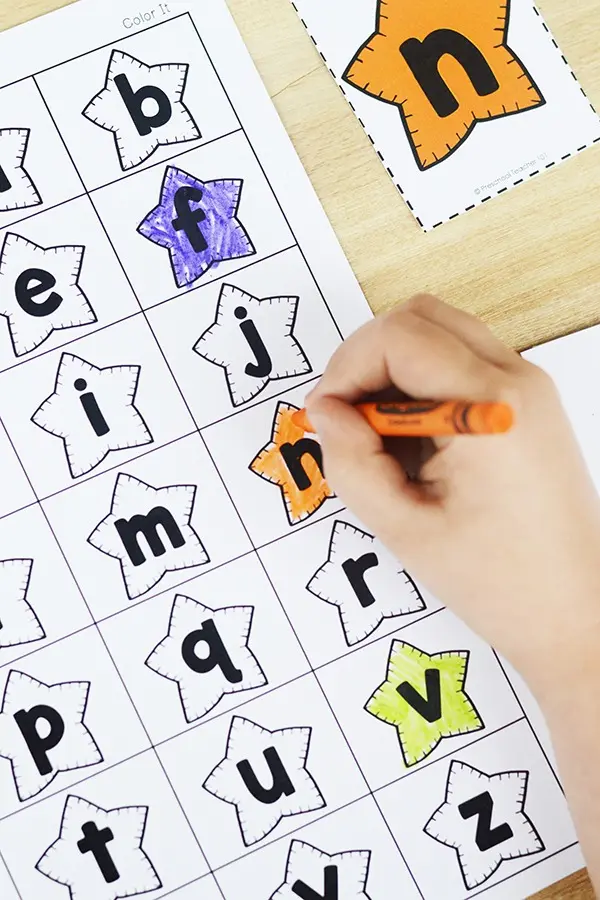
- Recording Sheets: Designed for individual or small-group tracking.
- Letter Cards: Scalable assets (large and small) engineered for hide-and-seek gameplay across classrooms and living rooms.
Phase 3: Digital Release and Expansion
Following successful trials in select home-preschool settings and traditional kindergarten classrooms, the resource was optimized for digital distribution. Released initially via specialized educator platforms and later expanded to marketplaces like Teachers Pay Teachers, the Stars ABC Scavenger Hunt quickly gained traction among educators searching for structured yet adaptable space-theme lesson plans.
Supporting Context & Metrics: The Science of Kinesthetic Literacy
To understand why the Stars ABC Scavenger Hunt yields high engagement and retention rates, one must examine the intersection of kinesthetic learning and cognitive development in early childhood.
The Role of Movement in Neural Pathways
According to developmental psychology and early childhood research, gross and fine motor integration significantly accelerates cognitive mapping. When children are "up and moving"—walking, bending, searching, and stretching—blood flow to the brain increases, optimizing neural pathways responsible for memory and executive function.

- Active vs. Passive Learning: Traditional flashcard drills rely heavily on visual memory in a static environment. In contrast, the scavenger hunt model incorporates spatial awareness, hand-eye coordination (when coloring or checking off items), and environmental scanning.
- Multisensory Integration: By linking the visual recognition of a letter (e.g., lowercase ‘s’ shaped like a shooting star or constellation) with the physical action of hunting for it, the activity engages visual, auditory (when teachers prompt letter sounds), and kinesthetic modalities simultaneously.
Versatility Metrics in Diverse Learning Environments
Data gathered from pilot implementations across preschools, kindergartens, and homeschool cooperatives highlight the adaptability of the activity:
- Preparation Time: Reduced by an average of 75% compared to custom-crafted alphabet games, owing to print-and-go recording sheets and standardized card sets.
- Reusability: Over 85% of participating educators reported utilizing lamination or protective dry-erase pouches to make recording sheets permanent fixtures in their centers, dramatically lowering paper consumption.
- Engagement Span: Children sustained focused attention on letter identification tasks for an average of 25 to 30 minutes during scavenger hunts—nearly double the typical duration observed during seated worksheet sessions.
Official Statements and Educational Frameworks
Educational experts, curriculum specialists, and early childhood authorities have increasingly advocated for play-infused learning models that meet state and national kindergarten readiness standards.
Expert Perspectives on Play-Based Literacy
Dr. Elena Vance, a prominent early childhood curriculum consultant, notes:

"The rigid separation of play and academics is a relic of outdated educational models. Tools like the Stars ABC Scavenger Hunt demonstrate that children learn the alphabet most profoundly when they are active participants in a narrative—in this case, exploring the universe. When a child hunts for a letter hidden across the room, they aren’t just memorizing a symbol; they are conquering a physical challenge that anchors that symbol in their long-term memory."
Alignment with Educational Standards
The framework of the scavenger hunt directly supports several core competencies mandated by early learning guidelines:
- Print Awareness and Letter Recognition: Children learn to visually differentiate between uppercase and lowercase letters through distinct thematic cards.
- Phonemic Association Bridge: Teachers can effortlessly pivot from visual searching to sound association (e.g., "Can you find the letter that makes the /s/ sound like ‘star’?").
- Self-Regulation and Task Persistence: Completing a recording sheet teaches children goal-directed behavior, spatial mapping, and perseverance in a low-stakes, high-reward format.
Implementation Guide: Maximizing the Scavenger Hunt Experience
For educators and parents looking to integrate the Stars ABC Scavenger Hunt into their daily schedules, a structured approach ensures optimal educational outcomes.

1. Differentiated Instruction: Targeting Individual Needs
One of the most powerful features of the program is its inherent flexibility. Educators are not required to introduce all 26 letters simultaneously, which can overwhelm struggling learners.
- The Name-First Approach: Begin by hiding only the letters found in the child’s first name. This personal connection immediately hooks the learner’s interest.
- Progressive Difficulty: Once name recognition is mastered, introduce phonetic families or letters that the child frequently confuses (such as b and d, or p and q).
- Collaborative Pairing: Pair advanced learners with students who need extra support, turning the scavenger hunt into a cooperative team-building exercise.
2. Utilizing Large vs. Small Letter Cards
The activity provides distinct card sizes to facilitate varied game mechanics:
- Large Letter Cards: Ideal for whole-room pinning, posting on walls at varying eye levels to encourage stretching and reaching, or utilizing in large-group circle-time games.
- Small Letter Cards: Perfect for sensory bin hide-and-seek (burying cards in kinetic sand, rice, or cotton balls representing clouds and nebulae), pocket chart matching games, or table-top sorting activities.
3. Indoor and Outdoor Adaptability
While designed primarily for classroom or home interiors during the colder winter months, the activity transitions seamlessly outdoors. On clear days, educators can take the recording sheets outside to school gardens or playgrounds, blending terrestrial exploration with celestial themes. Laminating the color-it recording sheets or slipping them into heavy-duty plastic pouches ensures durability against outdoor elements.

Future Outlook: The Expanding Role of Thematic Units in Early Education
As educational philosophies continue to prioritize holistic child development, the demand for integrated, cross-curricular thematic units is projected to grow. The success of the Stars ABC Scavenger Hunt points toward a broader trend in instructional design: the seamless fusion of science education (astronomy, space exploration) with foundational literacy.
Future Developments in Interactive Learning
Industry analysts anticipate that future iterations of early learning toolkits will increasingly incorporate digital-analog hybrids—combining printable physical assets like scavenger hunt recording sheets with interactive augmented reality (AR) elements, allowing children to see stars and letters come to life via tablet devices. However, the core tactile components—coloring, physical searching, and hands-on card handling—will remain central, as tactile engagement is irreplaceable in early neurological development.
Conclusion
The Stars ABC Scavenger Hunt transcends the definition of a simple printable activity; it serves as a masterclass in how to harness children’s natural sense of wonder. By reframing alphabet acquisition as an interstellar expedition, educators and parents can dismantle the anxiety often associated with early literacy tasks. Through thoughtful design, movement-integrated mechanics, and robust differentiation options, this program illuminates a path toward joyful, effective, and enduring early childhood education.

