
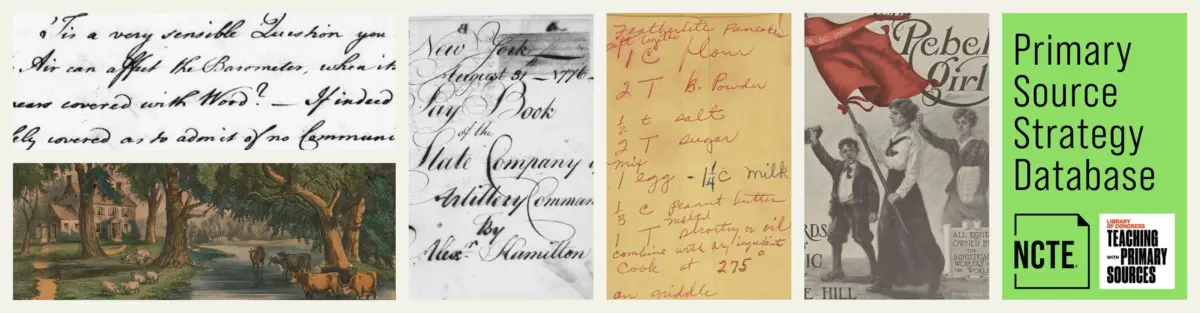
In an era where educational pedagogy increasingly emphasizes multi-perspective historical inquiry, a major nationwide initiative is bridging the gap between national archives and everyday classrooms. The National Council of Teachers of English (NCTE), participating actively within the Library of Congress’s prestigious Teaching with Primary Sources (TPS) Consortium, has rolled out an expansive, searchable instructional database designed to reshape how literacy teachers and students interact with historical artifacts.
At the center of this pedagogical shift is a newly highlighted, deeply poignant historical document: a 17th-century petition penned by ten women imprisoned in Ipswich, Massachusetts, during the height of the Salem Witch Trials. Long buried beneath mainstream, top-down historical accounts, this primary source offers an unfiltered glimpse into the terror, resilience, and humanity of those accused of witchcraft. By integrating such granular, marginalized voices into English Language Arts (ELA) and history curricula, the NCTE-Library of Congress collaboration seeks to foster critical thinking, historical empathy, and advanced argumentative literacy among modern students.
This article explores the mechanics of the TPS Consortium partnership, dives deep into the historical significance of the Ipswich prison petition, analyzes its alignment with national educational standards, and outlines the broader framework empowering teachers to bring suppressed historical narratives out of the archives and onto the classroom desk.
Detailed Chronology: From the Ipswich Jail to the Modern Classroom Archive
To understand the weight of the educational tools now available to teachers, one must trace the dual timeline of the primary source itself and the modern institutional effort to digitize and democratize access to it.
The Winter of 1692–1693: Voices from the Ipswich Prison
During the harrowing height of the Salem Witch hysteria in seventeenth-century colonial Massachusetts, hundreds of individuals—disproportionately women—were accused of practicing witchcraft. While much of the historical focus has historically remained fixed on Salem Village, the peripheral towns experienced equal, if not greater, logistical and humanitarian crises as local jails swelled beyond capacity.
In the dead of a brutal New England winter, ten women languishing inside the Ipswich jail took a courageous, deliberate step: they drafted a formal petition to the authorities. Having been imprisoned for many months without a trial, their petition was not merely a legal maneuver; it was a desperate plea for survival. The document details the deplorable conditions of the prison cell, noting that the bitter winter weather threatened their lives. Several of the imprisoned women were sick; others were pregnant.
Fearing they would perish in captivity before ever seeing a courtroom, the petitioners formally requested to be released on bail, promising to return for trial in the spring. This document represents a rare, surviving artifact authored collectively by the accused themselves—pleading directly to those holding absolute power, yet retaining agency through the written word.
The Digital Age: Archival Preservation and Access
Centuries later, this manuscript—alongside over 150 other historically significant artifacts—found a permanent home in the digitized collections of the Library of Congress. However, owning or hosting a digital scan of a 17th-century manuscript is vastly different from making it accessible to a high school sophomore or a middle school language arts class.
Recognizing this barrier, the NCTE mobilized more than two dozen expert teachers, curriculum directors, and ELA leaders to build a specialized, searchable database. This platform bridges the Library of Congress’s vast digital repository with practical, classroom-ready instructional strategies. Today, educators can instantly access the Ipswich petition alongside curated tags like picturebook, argument, government and law, and informational text, transforming an obscure archival record into an active cornerstone of modern literacy instruction.
Supporting Context & Metrics: The Mechanics of the NCTE-Library of Congress Partnership
The collaboration between the NCTE and the Library of Congress via the TPS Consortium is not a passive repository project; it is a systematic, metrics-driven effort to re-engineer instructional habits across American schools.
Bridging Literacy and Historical Inquiry
Traditional schooling has often compartmentalized subjects: history is taught through chronological textbooks, while English Language Arts focuses on literature and creative writing. The TPS Consortium model actively dismantles this siloed approach. By treating historical documents as complex informational texts, educators can teach close reading, rhetorical analysis, and syntactical evaluation using real historical stakes.
The pedagogical metrics of the database are structured to support diverse educational frameworks:
- Curricular Versatility: The database indexes strategies for more than 150 specific Library of Congress items.
- Granular Searchability: Educators can filter content by genre, historical era, state standards, and core skill sets (such as building an argument or analyzing perspective).
- Demographic Representation: A primary focus of the NCTE-led contributions is unearthing "unheard perspectives"—voices traditionally scrubbed from or marginalized within standard historical narratives.
Why the Ipswich Petition Matters for ELA Classrooms
In evaluating the instructional value of the Ipswich prison petition, curriculum designers emphasize its unique rhetorical structure. The document is an exercise in high-stakes persuasion. The imprisoned women had to navigate a deeply patriarchal, religious, and fearful judicial system while advocating for their basic bodily autonomy and right to survival.
For students studying Puritan America, the Salem Witch Trials, or early American legal structures, mainstream historical accounts typically provide a distanced overview: dates, execution numbers, and judicial outcomes. In contrast, the Ipswich petition forces students to confront the human element through primary source reading. It asks learners to analyze how language functions under extreme duress, how different social contexts shape rhetorical choices, and how marginalized populations utilize formal petitions to demand justice from institutional power.
Official Statements and Pedagogical Frameworks
The integration of these primary sources is deeply rooted in established national educational standards. The NCTE-Library of Congress initiative explicitly aligns its instructional strategies with both the NCTE Standards for the English Language Arts and the Common Core State Standards (CCSS).
Aligning with National Standards
-
NCTE-1 (Reading for Understanding):
- Standard: Students read a wide range of print and nonprint texts to build an understanding of texts, of themselves, and of the cultures of the United States and the world.
- Application: By engaging with the handwritten script or transcription of the Ipswich petition, students encounter 17th-century nonfiction that expands their understanding of early American societal structures and the lived realities of colonial women.
-
NCTE-2 (Exploring Human Experience):
- Standard: Students read a wide range of literature from many periods in many genres to build an understanding of the philosophical, ethical, and aesthetic dimensions of human experience.
- Application: The petition provides an ethical lens through which students can examine justice, institutional failure, fear-mongering, and human resilience across centuries.
-
Common Core Standard L.9-10.3 (Language in Context):
- Standard: Apply knowledge of language to understand how language functions in different contexts, to make effective choices for meaning or style, and to comprehend more fully when reading or listening.
- Application: Students analyze the specific word choice, tone, and syntactic strategies employed by the imprisoned women to appeal to seventeenth-century magistrates without provoking further punitive action.
Educational Leadership Perspectives
Educational leaders involved in the TPS Consortium emphasize that working with primary sources shifts students from passive consumers of history to active investigators.
"When students read a textbook summary of the Salem Witch Trials, they read about history as a fait accompli," notes curriculum development literature from the NCTE. "When they read a desperate, hand-penned plea from freezing women locked in an Ipswich jail, history becomes a human dialogue. They begin to ask critical questions: Who gets to tell the story? Whose voices are preserved? How does language serve as a tool for survival?"
Furthermore, the database provides scaffolding for teachers navigating potentially sensitive or challenging historical topics. By pairing primary sources with vetted instructional approaches, discussion protocols, and alternative texts, the platform ensures that educators are fully equipped to manage complex classroom conversations surrounding historical trauma, gender dynamics, and systemic injustice.
Future Outlook: The Evolution of Primary Source Literacy
As the Teaching with Primary Sources Consortium continues to expand, the long-term vision for this initiative points toward a fully integrated, multi-modal digital classroom. The success of the Ipswich petition module serves as a blueprint for how archival institutions and educational councils can work in tandem to modernize curriculum design.
Expanding the Archive
Moving forward, the NCTE and the Library of Congress plan to scale the database, incorporating an even wider array of underrepresented artifacts. Future expansions will likely target diverse geographic regions, under-documented social classes, and marginalized cultural groups across American history. The goal is not merely to add "supplemental readings," but to weave multi-perspective archival research into the foundational core of English and humanities textbooks.
Professional Development and Teacher Empowerment
A critical component of the future outlook is professional development. Access to a database of 150+ primary sources is only effective if teachers are trained to implement them seamlessly. The TPS Consortium routinely offers workshops, webinars, and collaborative fellowships designed to train ELA and history teachers in primary-source pedagogy. These sessions focus on teaching educators how to guide students through document analysis, source verification, and contextual inquiry—skills that are increasingly vital in an information landscape saturated with digital noise and misinformation.
Conclusion: Transforming the Classroom Experience
The inclusion of the Ipswich prison petition within the NCTE-Library of Congress searchable database marks a significant milestone in modern education. By lifting the veil on primary sources that give voice to the historically silenced, this initiative does more than teach history or reinforce grammar standards—it cultivates empathy, sharpens critical literacy, and honors the enduring power of the written word. As classrooms nationwide adopt these tools, students are learning that history is not just a static record of the past, but an ongoing conversation in which their own analytical voices actively participate.

