As universities grapple with rising rates of psychological distress among undergraduates, student advocacy continues to redefine institutional approaches to mental healthcare. In July 2026, mental health advocate and University of California, Los Angeles (UCLA) alumna Natalia Castillo published a reflective essay detailing her journey through severe mental health crises, campus-level advocacy, and recovery. Castillo’s narrative illustrates the intersections of systemic hardship, student-led institutional reform, and the foundational role of community support in suicide prevention.
Castillo’s journey from surviving multiple suicide attempts to serving on UCLA’s Suicide Prevention Committee highlights a critical paradigm shift in modern higher education: moving away from reactive crisis intervention toward proactive, student-informed safety ecosystems. This article examines Castillo’s personal testimony within the broader context of campus mental health advocacy, federal legislative efforts such as the Campus Lifeline Act, and the evolving landscape of specialized youth crisis support services.
Detailed Chronology: From Crisis to Institutional Advocacy
The Weight of Undergraduate Survival
For many contemporary college students, a degree represents far more than academic achievement. For Castillo, walking across the UCLA commencement stage served as tangible proof of survival against overwhelming odds. Her Bachelor’s degree encapsulated years of navigating complex trauma, financial hardship, sexual assault recovery, and severe suicidal ideation.
In her published reflections, Castillo noted that healing was never a linear process. Her survival through two distinct suicide attempts relied heavily on relational anchors—first her younger sisters, who motivated her to push past high school, and later a network of close friends who helped her envision a future outside of Los Angeles. These relationships provided the emotional scaffolding necessary to sustain her through moments when academic pressures compounded preexisting psychological wounds.
Moving beyond personal resilience, Castillo channeled her lived experience into systemic campus transformation during her senior year at UCLA. She assumed the role of undergraduate representative on the university’s Suicide Prevention Committee. In this capacity, she collaborated directly with:
Student leaders
Clinical psychologists and psychiatrists
University faculty
Administrative staff
The committee’s collaborative mandate focused on overhauling campus-wide protocols surrounding early intervention, crisis preparedness, and coordinated care networks. This multidisciplinary cooperation culminated in the launch of Hope Connects Us: Turning Collective Insight Into Campus Action, a comprehensive institutional campaign built upon four fundamental pillars:
Promotion: Normalizing mental health dialogues and reducing stigma across academic departments.
Prevention: Expanding mental health literacy training for faculty, resident advisors, and student organizations.
Protection: Strengthening safety nets for students exhibiting early warning signs of psychological distress.
Preparedness: Streamlining crisis response workflows and ensuring rapid linkage to immediate care facilities.
Through this work, Castillo’s trajectory exemplified a core tenet of modern mental health advocacy: that systemic change requires the direct, empowered participation of those who have navigated the depths of the crisis itself.
Supporting Context & Metrics: The State of Student Mental Health
The challenges navigated by Castillo and her peers reflect a national crisis within higher education. According to longitudinal data compiled by the Healthy Minds Study, rates of anxiety, depression, and suicidal ideation among college students have steadily risen over the past decade.
Metric / Focus Area
Institutional Finding / Impact
Prevalence of Distress
Over 40% of surveyed undergraduates report experiencing symptoms of moderate to severe depression.
Help-Seeking Barriers
Social stigma, financial constraints, and a lack of culturally competent care remain primary deterrents to treatment.
Peer Support Efficacy
Peer-led interventions significantly increase the likelihood that a distressed student will access professional resources.
Federal and state legislators have increasingly turned to student-led advocacy organizations—such as Active Minds—to draft and refine legislative solutions. Among these, the bipartisan Campus Lifeline Act has emerged as a focal point for national advocacy. The legislation aims to mandate the inclusion of the 988 Suicide & Crisis Lifeline on all newly issued student identification cards while expanding federal investment in youth-informed campus mental health initiatives.
Official Statements and Legislative Perspectives
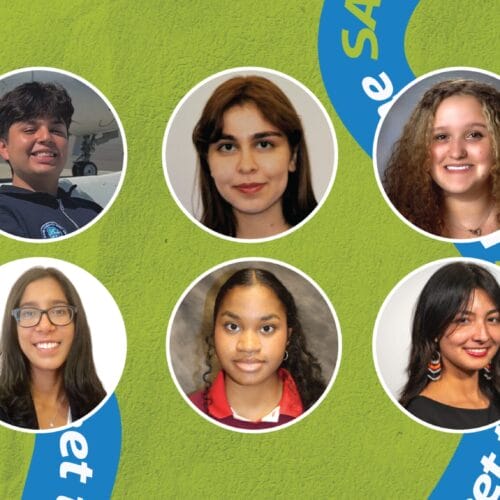
The momentum behind youth-driven mental health policy was prominently displayed during Mental Health Awareness Month briefings on Capitol Hill. Five young advocates testified before members of the House of Representatives and congressional staffers, emphasizing that effective policy cannot be formulated in the absence of youth representation.
Ayaan Moledina, a student advocate and director of Students Engaged in Advancing Texas (SEAT), underscored the necessity of authentic stakeholder inclusion:
"You can’t make effective mental health policy for young people without young people… Students are the ones closest to the problem."
Echoing this sentiment, Amy Senkerik—an undergraduate student at Arizona State University who successfully advocated for the integration of the 988 Lifeline onto digital student IDs—stressed the importance of friction-free access to care during moments of acute distress:
"They don’t have to google anything, they don’t have to remember where to look, the option is right in front of them. Clear, immediate, and accessible."
Simultaneously, the broader mental health landscape faces structural shifts. In July 2026, federal administrative decisions led to the discontinuation of the specialized "press 3" option on the 988 Suicide & Crisis Lifeline, which had been dedicated to supporting LGBTQ+ youth since 2022. While federal officials maintained that general 988 counselors remain equipped to assist all callers, advocacy groups emphasized the vital importance of identity-affirming care.
In response to these changes, independent organizations reaffirmed their commitment to vulnerable demographics. Jaymes Black, CEO of The Trevor Project, issued an authoritative reminder regarding ongoing, barrier-free support:
"I want every LGBTQ+ young person to know that you are worthy, you are loved, and you belong—despite this heartbreaking news. The Trevor Project’s crisis counselors are here for you 24/7, just as we always have been, to help you navigate anything you might be feeling right now."
Future Outlook: Reimagining the Architecture of Hope
As higher education institutions look toward the future, the integration of student lived experience into administrative planning is no longer viewed as optional; it is a clinical and operational necessity. Natalia Castillo’s narrative—bridging the worlds of cognitive science, art history, and systemic advocacy—demonstrates that recovery is sustained through both institutional reform and creative self-expression.
The trajectory of campus mental health moving forward relies on three core commitments:
Systemic Accountability: Universities must institutionalize feedback loops that place student mental health advocates directly inside policy-making committees.
Resource Visibility: Practical tools, including crisis lifeline numbers on physical and digital student identification cards, must become standard operating procedure nationwide.
Intersectionality in Care: Mental health frameworks must explicitly account for the overlapping impacts of race, gender identity, socioeconomic status, and systemic marginalization.
Hope, as Castillo reflects, is not a passive emotion waiting to be discovered; it is an active, collective practice built by communities choosing to remain steadfast in the face of trauma. By transforming personal pain into systemic advocacy, student leaders across the nation are ensuring that future generations do not have to carry their burdens alone.