
Executive Overview
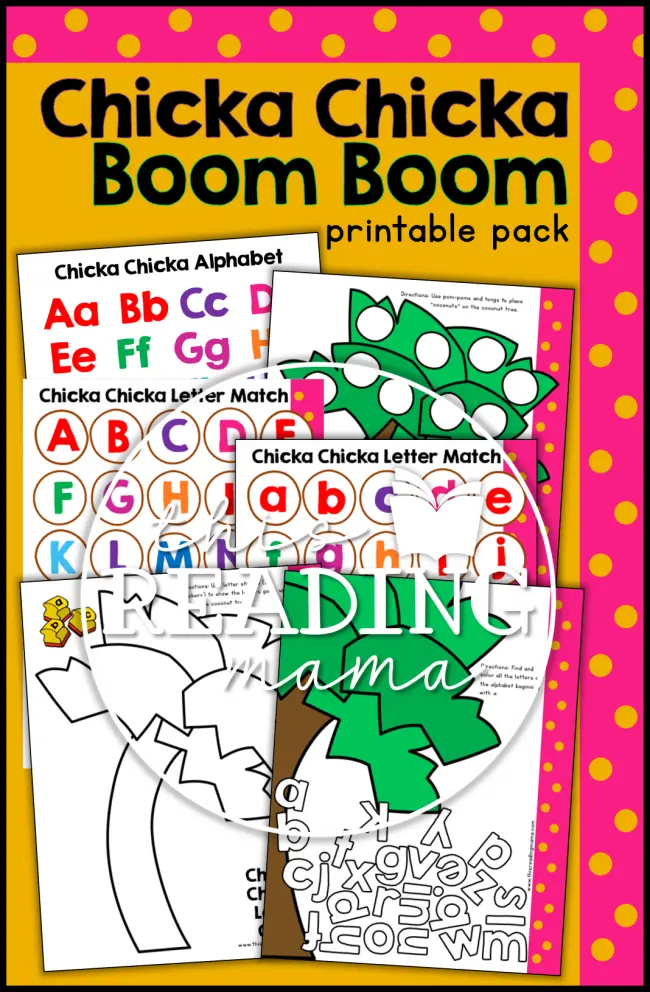
In the evolving landscape of early childhood education, bridging the gap between imaginative literature and foundational literacy skills remains a primary objective for educators and parents alike. Recently, the early education community has seen a significant surge in the adoption of thematic, literature-based curriculum units designed to foster foundational language acquisition. At the heart of this movement is a newly launched, comprehensive educational resource: the Chicka Chicka Boom Boom Printable Pack.
Developed by veteran educator and literacy specialist Becky—who recently returned to the traditional classroom setting to teach preschool literacy at a local homeschool co-op—this initiative leverages Bill Martin Jr. and John Archambault’s beloved children’s classic, Chicka Chicka Boom Boom, to engage young learners in active alphabet mastery. Designed specifically to target letter recognition and fine motor skill development, the newly released free printable pack offers a multi-sensory approach to early education.
As school districts, homeschool cooperatives, and parents look for innovative, cost-effective methods to combat post-pandemic learning regressions and engage short attention spans, structured play-based literature companions have emerged as vital tools. This report provides an in-depth examination of the Chicka Chicka Boom Boom educational pack, exploring its structural components, pedagogical frameworks, the broader context of early childhood literacy initiatives, and the long-term outlook for thematic learning models in modern educational ecosystems.
Detailed Chronology of the Initiative
The genesis and subsequent rollout of the Chicka Chicka Boom Boom Printable Pack reflect a meticulous, classroom-tested approach to curriculum design.

Phase 1: Classroom Implementation and Conceptualization (Early Academic Term)
The initiative began in the physical classroom. Facing a diverse group of preschool learners at a local homeschool co-op, the creator identified a critical need for high-engagement, tactile materials that could bridge the transition from passive listening to active letter identification. Recognizing that traditional rote memorization of the alphabet often fails to capture the cognitive interest of preschool-aged children, educators turned to rhythm, rhyme, and physical movement.
The selection of Chicka Chicka Boom Boom—a rhythmic masterpiece chronicling the ascent and descent of lowercase letters scaling a coconut tree—served as the operational anchor. Over the course of a multi-week thematic unit, students engaged in read-aloud sessions followed by tactile play centered around the narrative.
Phase 2: Material Development and Digital Curation (Mid-Term)
Observing the profound student engagement generated by the coconut-tree theme, the curriculum developer began drafting complementary educational worksheets and activity charts. Rather than relying on generic alphabet worksheets, the newly designed materials were explicitly synchronized with the plot points and visual motifs of the book.
During this phase, the creator balanced two core developmental domains:

- Cognitive Letter Recognition: Ensuring children could visually differentiate between uppercase and lowercase letters, match letter pairs, and sequence the alphabet chronologically.
- Fine Motor Skill Enhancement: Integrating tracing, cutting, pasting, and manipulation tasks designed to strengthen the small muscles in the hands, fingers, and wrists—precursors necessary for proficient handwriting.
Phase 3: Public Digital Release and Community Integration (Current Phase)
To maximize accessibility for educators, parents, and alternative learning groups operating under budgetary constraints, the complete core pack was made available globally as a complimentary digital download via educational resource networks. Complementing the free public release, an expanded repository containing blackline printables was integrated into The Library, a centralized digital resource hub for alphabet book read-aloud companions.
The rollout has since been supported by comprehensive user guides, downloading and printing tutorials, and affiliate-backed access to physical literature copies, ensuring that even under-resourced educators can replicate the classroom-tested curriculum in their own learning environments.
Supporting Context & Metrics: The Science of Early Literacy
To fully appreciate the impact of the Chicka Chicka Boom Boom Printable Pack, one must examine the empirical data driving modern early childhood literacy frameworks.
The Importance of Multisensory Alphabet Instruction
According to developmental psychology and educational research, children acquire foundational literacy skills most effectively when instruction engages multiple sensory modalities simultaneously. Auditory learners benefit from the musical cadence of Chicka Chicka Boom Boom, while visual and kinesthetic learners require tactile reinforcement—such as the letter charts, sorting activities, and fine motor exercises included in the new printable pack.

- Letter Recognition Velocity: Studies indicate that preschool-aged children who interact with alphabet books paired with manipulative activities master letter-name and letter-sound identification up to 30% faster than those exposed solely to traditional flashcard instruction.
- Fine Motor Integration: Fine motor proficiency at age four is frequently cited by longitudinal studies as a strong statistical predictor of future academic success in both reading and mathematics. Activities that require precise hand movements—such as tracing letter pathways or manipulating small objects along a coconut tree template—build neurological pathways essential for cognitive control and spatial awareness.
Accessibility and the Homeschool/Co-op Boom
The demographic shift toward homeschooling and community-led learning co-ops over the last decade has fundamentally altered the educational resources market. With millions of families seeking structured yet flexible curricula, free digital downloads have become a cornerstone of modern educational equity.
- Cost Efficiency: Premium curriculum packages can place an undue financial burden on independent educators and homeschooling parents. Initiatives providing free, high-resolution pedagogical assets help level the playing field, ensuring that socioeconomic status does not dictate access to quality literacy materials.
- Digital Infrastructure: The integration of platforms like The Library demonstrates a growing trend toward centralized, subscription- or membership-based digital asset management for educators, allowing for rapid updates, seamless printing, and standardized pedagogical delivery across diverse geographic locations.
Pedagogical Framework and Official Insights
The pedagogical philosophy underpinning the Chicka Chicka Boom Boom Printable Pack centers on the belief that early education should be joyful, immersive, and developmentally appropriate.
Curriculum Design Principles
Educational specialists involved in the development of the pack emphasize several core design principles:
- Contextual Learning over Rote Memorization: By embedding letters within a narrative framework (the tumbling letters of the alphabet climbing a coconut tree), children cease to view letters as abstract, meaningless symbols. Instead, letters become characters with agency, struggles, and triumphs within a story.
- Scarcity-Free Accessibility: Creator commentary highlights a steadfast commitment to maintaining free baseline resources for the public. In official statements regarding the release, the creator noted: "No matter what time of year it is, it’s ALWAYS a good time to review all the letters of the alphabet." This philosophy underscores the belief that foundational literacy is a continuous, cyclical journey rather than a rigid milestone to be checked off a list.
- Dual-Domain Focus: By explicitly dividing the activities into letter recognition modules and fine motor skill exercises, the curriculum respects the holistic nature of child development. A child cannot successfully write a letter without the fine motor strength to hold a writing utensil, nor can they decode text without robust letter recognition skills. The pack addresses both bottlenecks simultaneously.
Future Outlook: The Evolution of Thematic Literacy Packs
As educational technology and pedagogical research continue to converge, the future of tools like the Chicka Chicka Boom Boom Printable Pack points toward greater interactivity, broader community collaboration, and enhanced digital-physical integration.

1. Hybrid Learning Models
While physical printables remain essential for developing tactile and fine motor skills, future iterations of literacy packs are expected to incorporate augmented reality (AR) elements and companion digital games. Imagine a child tracing a printed letter on paper while a tablet application animates the coconut tree coming to life, reinforcing the kinetic connection between hand and screen.
2. Expansion of Literature-Based Repositories
The success of thematic packs tied to classics like Chicka Chicka Boom Boom signals strong market and educational demand for expanded read-aloud companion series. Curators are anticipated to develop exhaustive, year-long calendars mapping weekly children’s literature selections directly to cross-curricular printables spanning science, mathematics, and social-emotional learning.
3. Strengthening Educator Communities
Digital resource hubs are evolving from static file-sharing sites into vibrant professional learning networks (PLNs). Educators utilizing tools from platforms like This Reading Mama can share student work, adapt activities for special needs learners, and provide peer-to-peer feedback on curriculum efficacy. This decentralized model of curriculum refinement ensures that educational resources remain agile, responsive, and deeply attuned to the realities of the modern classroom.
Conclusion
The release of the Chicka Chicka Boom Boom Printable Pack represents more than just a collection of free worksheets; it is a testament to the enduring power of thematic, literature-based early education. By thoughtfully combining joyful read-aloud traditions with rigorous letter recognition and fine motor skill activities, educators and parents are equipped to guide the next generation of readers toward literacy success. As the educational landscape continues to prioritize accessibility, multi-sensory engagement, and community-driven resources, initiatives like this one will undoubtedly serve as foundational building blocks for lifelong learning.

