
Executive Overview
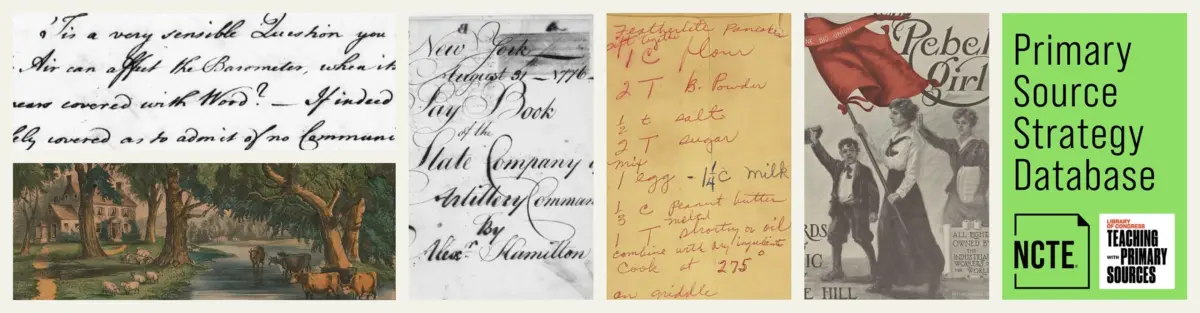
In an era defined by rapid information consumption and the constant reevaluation of educational equity, the National Council of Teachers of English (NCTE) has solidified a transformative collaboration with the Library of Congress. Operating as an active participant in the Teaching with Primary Sources (TPS) Consortium, the NCTE is spearheading an ambitious nationwide initiative to integrate historical artifacts seamlessly into the daily habits, curricula, and cognitive frameworks of literacy teachers and their students.
At the heart of this partnership lies a newly expanded, highly searchable digital database. This platform houses expertly crafted pedagogical strategies for over 150 distinct items selected directly from the Library of Congress’s vast digitized primary source collections. Conceived and vetted by more than two dozen distinguished educators, instructional coaches, and leaders in English language arts (ELA) education, these resources are designed to bridge the gap between historical inquiry and modern literacy instruction.
The pedagogical value of this database transcends traditional history education. By leveraging intuitive tagging systems—such as picturebook and argument—educators can pinpoint primary sources that align with specific thematic units, literacy genres, and rigorous state academic standards. More importantly, the initiative serves as a direct vehicle for social justice and representation in the classroom. Historically, mainstream narratives surrounding innovation, invention, and historical progress have suffered from severe demographic narrowness, disproportionately spotlighting white men. The NCTE-Library of Congress collaboration actively disrupts this paradigm. By intentionally surfacing the contributions of diverse historical figures—such as Black female innovators and marginalized community voices found within historical minority-press publications—the initiative equips educators with the tools necessary to dismantle systemic biases, foster inclusive classrooms, and empower students to see themselves reflected in the annals of history.
Detailed Chronology: The Evolution of the TPS Partnership and Database
The integration of primary sources into modern American classrooms did not happen overnight. It represents the culmination of decades of archival digitization, institutional collaboration, and a paradigm shift in how literacy is taught.
Phase One: Digitization and Accessibility (The Foundation)
For generations, the vast physical holdings of the Library of Congress—ranging from fragile antebellum newspapers to handwritten journals of inventors—were largely inaccessible to the average K-12 classroom. Educators relied almost exclusively on secondary textbook narratives that homogenized complex historical realities. The turning point began with the aggressive digital cataloging of Library of Congress holdings, most notably through initiatives like Chronicling America, a joint project between the National Endowment for the Humanities (NEH) and the Library of Congress to digitize historic American newspapers.
Phase Two: Establishing the TPS Consortium
Recognizing the untapped educational potential of these digital archives, the Library of Congress established the Teaching with Primary Sources (TPS) partner program. The goal was clear: to build a nationwide consortium of universities, educational associations, and professional organizations capable of training teachers to use primary sources effectively. The NCTE joined this consortium to leverage its unparalleled network of English language arts educators, recognizing that historical artifacts are not solely the domain of social studies classrooms; they are profound texts that drive advanced reading comprehension, critical analysis, and persuasive writing.
Phase Three: Mobilizing ELA Leaders and Developing the Database
To translate archival material into actionable classroom strategies, the NCTE mobilized more than two dozen ELA leaders, curriculum developers, and classroom practitioners. These educators were tasked with reviewing items from the Library of Congress digital repository and developing explicit pedagogical rationale documents.
Rather than treating primary sources as mere historical illustrations, these educators articulated the specific literary merit of each item. They mapped each artifact to reading standards, suggested thematic units, and categorized them by genre markers like picturebook and argument.
Phase Four: Launching the Searchable Repository and Standards Alignment
Today, the initiative stands as a fully operational, searchable digital database hosted through the NCTE platform. It links directly to state-level academic standards—such as the New Mexico Content Standards for Reading and History/Social Sciences—proving that primary source integration directly supports statutory educational mandates. Teachers can now search the database to find materials that fulfill specific competencies, such as citing textual evidence from primary sources, determining central ideas, and evaluating the origins of historical arguments.
Supporting Context & Metrics: Re-writing the Narrative of Innovation
To understand the profound impact of the NCTE-Library of Congress database, one must examine the pedagogical rationale underpinning its development. Traditional curricula have long suffered from a homogeneity that distorts the true nature of innovation and societal progress.
Challenging the Monolithic Narrative of Innovation
Historically, narratives surrounding inventors and technological pioneers have been overwhelmingly centered around white men. This historical curation has perpetuated a pervasive, damaging myth that genius and structural innovation are exclusive demographic traits.
The NCTE’s curriculum frameworks actively combat this by centering figures like pioneering Black women and other marginalized innovators. When students learn about innovators who faced systemic racial and gender barriers, they challenge traditionally limited perspectives. This pedagogical approach does more than correct historical oversight; it directly works to dismantle racial and gender injustices that have persisted in educational materials for generations.
Furthermore, these resources redefine what it means to be an "innovator." For instance, instructional modules examine figures who lacked formal institutional education yet solved complex, real-world problems to improve daily life. By highlighting individuals who drove progress without the pursuit of fame or fortune, the curriculum fosters an intrinsic appreciation for civic problem-solving, empathy, and community resilience.
Archival Evidence: The Power of the Regional Press
A prime example of the primary sources featured in the initiative’s ecosystem is The Statesman, a historic weekly newspaper founded in 1888 and published in Denver, Colorado. Serving the African American communities across Colorado, Wyoming, Montana, Utah, and New Mexico, The Statesman acted as a vital communication channel.
As documented in Library of Congress archival reviews, the paper provided a platform where readers could "voice their opinions, assert their rights, and demand their due recognition." It meticulously reported local church and society news alongside hard-hitting national stories of specific interest to African Americans residing in the Mountain West. Crucially, the publication featured bold op-eds confronting Jim Crow laws, segregation, and interracial marriage.
When ELA and social studies teachers integrate historical publications like The Statesman into their classrooms, students are exposed to primary rhetoric that exemplifies passionate civic engagement, persuasive argumentation, and journalistic integrity.
Official Standards Connections & Pedagogical Frameworks
The database’s integration into modern curricula is anchored in rigorous state and national standards. By aligning archival study with established educational benchmarks, the NCTE ensures that inquiry-based learning does not come at the expense of accountability metrics.
Below is an examination of how specific state standards—such as those adopted by the New Mexico Public Education Department—map directly onto the primary source instructional framework:
Reading Standards for Literature and Informational Text (Middle School Focus)
- RI.6.1: Cite textual evidence to support analysis of what the text says explicitly as well as inferences drawn from the text.
- Application in the NCTE Database: Students examine digitized historical letters, newspaper editorials, and photographs, learning to extract explicit details and draw supported inferences about the daily lives and political climates of historical actors.
- RI.7.2: Determine two or more central ideas in a text and analyze their development over the course of the text; provide an objective summary of the text.
- Application in the NCTE Database: Using regional historical newspapers like The Statesman, students trace the development of civil rights arguments across multiple columns and editorials, synthesizing complex thematic arguments into objective summaries.
History/Social Sciences, Science, and Technical Subjects (High School Focus)
- RH.9-10.1: Cite specific textual evidence to support analysis of primary and secondary sources, attending to such features as the date and origin of the information.
- Application in the NCTE Database: High school students evaluate the provenance of artifacts—analyzing when, where, and by whom a document was created—to understand how contextual factors shape historical bias and perspective.
- RH.11-12.2: Determine the central ideas or information of a primary or secondary source; provide an accurate summary that makes clear the relationships among the key details and ideas.
- Application in the NCTE Database: Advanced students dissect complex, multi-layered historical arguments, mapping the relationship between foundational ideas and the socio-political movements they inspired.
Future Outlook: The Next Frontier in Literacy and Archival Education
As the partnership between the National Council of Teachers of English and the Library of Congress continues to expand, educational leaders are looking toward the future with a clear vision for scalability, technological integration, and pedagogical evolution.
Expanding the Digital Repository
With strategies currently in place for over 150 specific items, planning is already underway to curate and analyze hundreds of additional artifacts from the Library of Congress digital vaults. Future expansions will place a heavy emphasis on underrepresented voices, indigenous histories, immigrant narratives, and scientific contributions from women and people of color. By continuously refreshing the database, the NCTE ensures that the repository remains responsive to the evolving cultural and linguistic needs of modern classrooms.
Professional Development and Teacher Empowerment
Access to digital archives is only valuable if educators possess the confidence and training to deploy them effectively. The TPS Consortium and the NCTE are scaling up professional development workshops, webinars, and coaching modules designed to train pre-service and in-service teachers. These training sessions focus on moving away from passive textbook learning and toward active, inquiry-based ELA instruction where students act as historians, researchers, and critical thinkers.
Cultivating Critical Literacy for the 21st Century
In an age saturated with digital media, misinformation, and polarized discourse, the skills taught through this initiative are more critical than ever. By learning how to interrogate primary sources—evaluating origins, questioning bias, analyzing arguments, and cross-referencing historical records—students develop sophisticated critical literacy skills.
The ultimate objective of the NCTE and Library of Congress partnership extends far beyond the walls of the classroom. By democratizing access to our nation’s historical record and amplifying the diverse voices that built America, this initiative is empowering a new generation of students to critically examine the past, question the present, and author a more equitable future.

