
Executive Overview
Mental health advocacy in the United States has reached a critical juncture. For decades, conversations surrounding psychological well-being were relegated to the shadows, treated as private struggles rather than systemic public health concerns. Today, however, a profound paradigm shift is underway, propelled by a generation of young people refusing to accept the status quo. At the forefront of this movement is Active Minds, a premier national organization dedicated to transforming the conversation around mental health for youth and young adults.
Recent initiatives, highlights, and community resources curated by Active Minds underscore a holistic approach to psychological resilience. From exploring the foundational power of language and the therapeutic benefits of journaling to building vibrant, life-saving queer communities and mobilizing hundreds of advocates directly onto Capitol Hill, the organization is charting a new course for mental healthcare.
This comprehensive report examines the multifaceted strategies driving the modern youth mental health movement. It explores the cognitive science behind emotional disclosure, the life-saving impact of peer-to-peer connection during Suicide Prevention Month, the power of inclusive community spaces like local drag scenes, and the historic legislative push for the bipartisan Campus Lifeline Act. Through expert panels, grassroots organizing, and rigorous data-driven frameworks, Active Minds is proving that the future of mental health advocacy is youth-led, intersectional, and unstoppable.
Detailed Chronology: From Grassroots Resilience to Capitol Hill
The journey of contemporary mental health mobilization is marked by key milestones that bridge daily self-care practices with sweeping national legislative action. Understanding this continuum requires examining how individual healing feeds into collective political power.
Phase One: The Foundation of Expression (Daily Mental Health Management)
The journey of mental wellness begins internally, often rooted in the very words we use to define our existence. As highlighted in Active Minds’ ongoing wellness insights, language serves as the primary architecture of human connection. When life’s stressors disrupt emotional processing, individuals frequently experience spikes in anxiety precisely because "words fail."

To counteract this, mental health professionals have long championed accessible tools like journaling. Rooted historically in James W. Pennebaker’s 1997 Emotional Disclosure Theory—which posits that suppressing trauma requires physical energy that compromises the immune system—writing has evolved from a private habit into a clinically validated intervention. Recent studies, including a 2022 publication by the National Library of Medicine, confirm that structured journaling interventions significantly reduce patient health distress scores. By integrating daily prompts—such as the Body Check-In, the 3-2-1 Method, and Fact vs. Fiction inventories—individuals translate chaotic emotional experiences into organized cognitive frameworks.
Phase Two: Building Lifesaving Connections (Suicide Prevention Month and Beyond)
Moving from the internal page to interpersonal relationships, the movement emphasizes that connection is a literal lifesaver. September’s designation as Suicide Prevention Month serves as an annual catalyst, but the ethos of checking in on peers—“You good?”—is a year-round imperative.
Through frameworks like the A.S.K. platform (Acknowledge, Support, and Keep-in-Touch), young people are equipped to move past superficial pleasantries and engage in difficult, potentially life-saving conversations. Coupled with 24/7 institutional lifelines such as the 988 Suicide & Crisis Lifeline, the Crisis Text Line (741741), and The Trevor Project, these community-building efforts ensure that no student or young adult navigates a crisis in isolation.
Phase Three: Finding Identity and Sanctuary in Community
Mental health is profoundly tied to a sense of belonging, particularly for marginalized populations. The queer community has long understood that survival often depends on the creation of "chosen families." For many young LGBTQ+ individuals, local cultural institutions—ranging from sober art collectives and coffee shops to vibrant regional drag scenes—provide vital sanctuaries.
As personal essays from the front lines of drag performance illustrate, these spaces offer more than glamour, makeup, and performance; they offer mentorship, intergenerational connection, and safety. Rooted in the historical traditions of the ballroom scene, "drag parents" and mentor figures guide newer artists while building robust support systems. This web of chosen family protects against minority stress and fosters resilience, proving that seeing oneself reflected in a community is a cornerstone of psychological well-being.

Phase Four: National Policy Mobilization (The 2026 Hill Day + Conference)
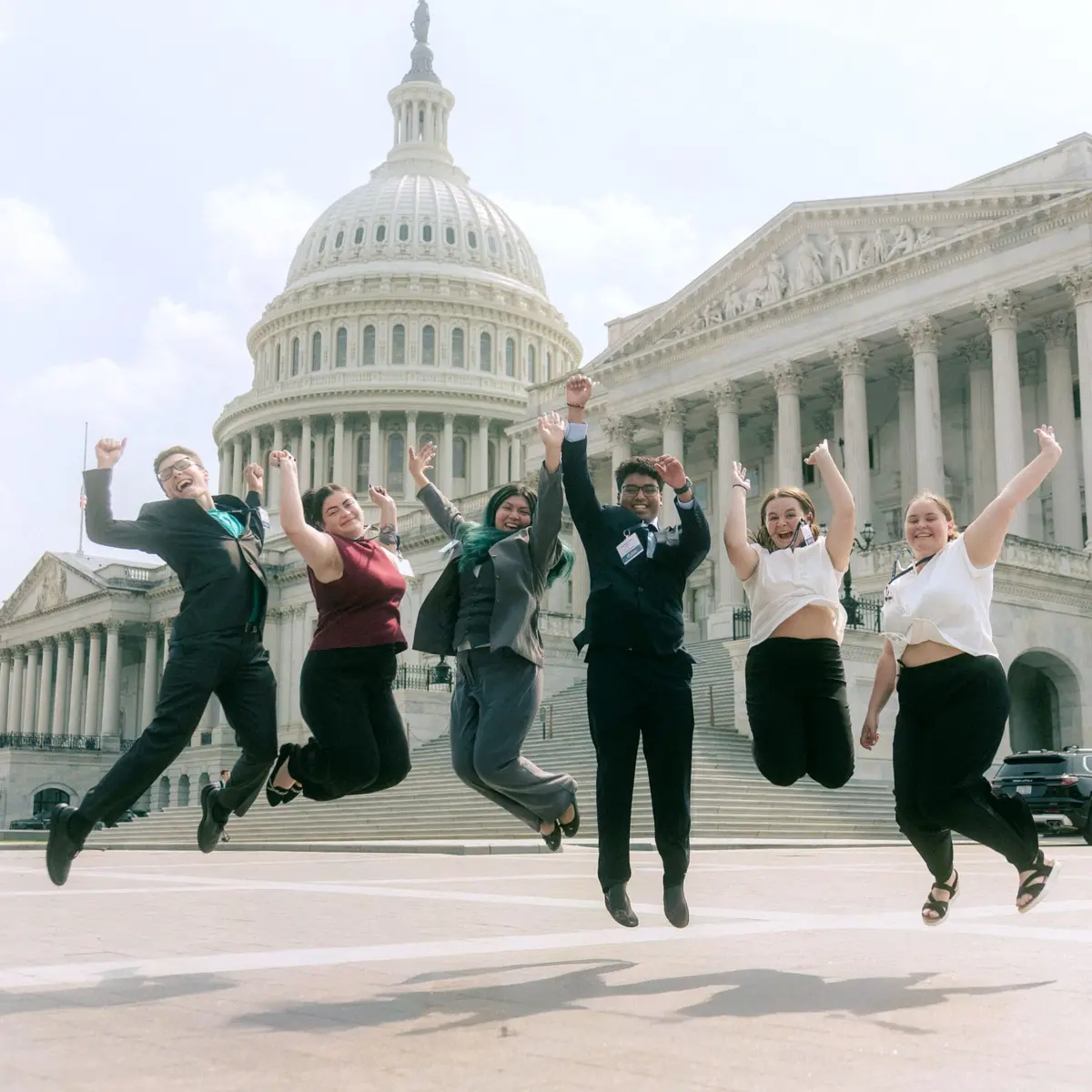
The culmination of these grassroots efforts is national legislative mobilization. Active Minds’ signature annual conference represents the apex of this transition, bringing together hundreds of youth and young adults to coordinate programming, share advocacy strategies, and take their demands directly to the seat of federal power: Capitol Hill.
In a landmark push, more than 200 young advocates converged on Washington, D.C., to lobby lawmakers in direct support of the bipartisan Campus Lifeline Act. This historic event married boots-on-the-ground activism with immersive evening programming, featuring live podcast recordings (such as the She Persisted Podcast with Sadie Sutton and Hailey Hardcastle), keynote musical performances by D.C. native Be Steadwell, and panels exploring the pipeline from school passion to national impact.
Supporting Context & Metrics: The Case for Empirical Research and Legislative Action
While organizations like Active Minds have successfully mobilized millions of students, the broader scientific and political communities are only beginning to catch up with the empirical data required to enact systemic change.
The Science of Low-Cost, High-Reward Interventions
The economic and human toll of the youth mental health crisis demands interventions that are both scalable and scientifically sound. Practices like journaling, peer support networks, and community art programs offer a "low cost, high reward" model that eases the burden on overstretched clinical healthcare systems. However, mental health experts note a glaring gap in empirical literature: while qualitative and observational data overwhelmingly support the efficacy of these tools, large-scale quantitative studies remain limited.
Closing this research gap is essential. Data-driven analysis informs how mental health providers, academic institutions, and policymakers can allocate resources equitably. Without rigorous metrics, marginalized communities—who often bear the brunt of systemic health inequities—risk being underserved by generalized policy rollouts.

The Legislative Core: The Campus Lifeline Act
To address the institutional gaps in student mental health support, the Campus Lifeline Act introduces two vital, concrete provisions designed for immediate implementation across the nation’s colleges and universities:
- Universal Access to Crisis Resources: Mandating the inclusion of the 988 Suicide & Crisis Lifeline contact information directly onto newly issued student identification cards. This ensures that every student carries immediate, confidential crisis support in their wallet or digital device at all times.
- Federal Investment in Youth-Informed Strategies: Directing federal funding toward innovative, peer-led mental health programs on college campuses, shifting away from top-down bureaucratic models and empowering students to design solutions tailored to their actual lived experiences.
Official Statements and Expert Perspectives
The intersection of grassroots activism and national policy leadership was powerfully illustrated during the 2026 Hill Day conference panel, titled "Built for This: The Advocacy Pipeline from School Passion to National Impact." Moderated by Brandon Bond, Director of People & Organizational Well-Being at Garrett’s Space, the discussion highlighted the diverse pathways through which young leaders are reshaping public health.
"Action is not merely an option; it is an absolute necessity," noted the panel organizers, emphasizing that youth and young adults must be given an active seat at the table when designing mental health solutions.
Key voices on the panel brought invaluable interdisciplinary perspectives to the national stage:
- Brandon Bond (Moderator): A prominent public health practitioner, social worker, and former Emerging Scholars Fellow, Bond has pioneered multicultural wellness initiatives, including an integrative wellness pop-up barbershop. As a member of the Active Minds x MTV Entertainment Youth Advisory Board—which helped launch the A.S.K. campaign—and one of the youngest Human Rights Commissioners in Ann Arbor’s history, Bond bridges clinical understanding with systemic advocacy.
- Bria Murph: Reigning Miss Celina in the Miss America Opportunity and creator of the community service initiative "Do More, Be More," Murph uses her platform to help youth transform adversity into ambition. Through her podcast "Chai with Bria" and her work with the Active Minds Advocacy Institute—where she developed "Project Zen UH" to revamp campus spaces into relaxing, culturally inclusive environments—Murph exemplifies the power of community-focused design.
- Rohan Sajita: Co-Founder and CEO of the Let’s Learn Foundation, Sajita has distributed over 75,000 books and 5,000 mental health kits to more than 13,000 underserved students across Texas. Through the Mental Health Advocacy Academy, he scaled the Vibrant Voices Project, utilizing monologue-writing workshops to support youth in juvenile detention facilities, proving that mental health resources belong in every corner of the justice and education systems.
- Jodi Johnson: An Active Minds Emerging Scholars Fellow and creator of "Brother, You’re Not Alone," Johnson focuses acutely on bridging the mental health treatment gap among Black, African, and Caribbean American men. By marrying his advocacy with endurance athletics—completing the Philadelphia and Berlin Marathons while raising thousands of dollars for Team Active Minds—Johnson demonstrates that physical endurance and mental health resilience go hand in hand.
- Varsha Penumalee: Serving on the Active Minds Student Advisory Committee, as President of NAMI Virginia NextGen, and as Secretary of Youth MOVE National, Penumalee is a driving force in youth-driven mental policy and peer support. Her work centers on eliminating health inequities and destigmatizing mental health for marginalized populations through legislative outreach and public speaking.
Future Outlook: Sustaining the Momentum
As Suicide Prevention Month observances conclude and legislative sessions advance, the overarching message from Active Minds and its network of advocates is clear: the conversation around mental health does not end on a specific calendar date; it is an ongoing, daily commitment.

The future of mental health advocacy depends on three critical pillars:
- Institutional Accountability: Colleges, universities, and lawmakers must move beyond performative awareness and adopt structural safeguards, such as the passage of the Campus Lifeline Act and the integration of 988 contact details on all student IDs.
- Intersectionality and Peer Leadership: Programs must continue to center the voices of queer youth, students of color, and young people with lived experience, ensuring that support systems are culturally responsive and accessible.
- Equilibrium Between Advocacy and Self-Care: As student advocates tirelessly carry the emotional weight of their peers—often acting as the "strong friend" in their circles—organizations must reinforce boundaries, rest, and self-compassion. As the adage reminds us, nobody can pour from an empty cup.
By fusing the quiet, reflective power of daily journaling with the booming, unified roar of hundreds of advocates marching on Capitol Hill, Active Minds is redefining what it means to care for a generation. The blueprint has been drawn by the youth themselves; now, the responsibility falls on society to listen, fund, and act.

