
Executive Overview
In the landscape of modern primary education, foundational reading skills remain the bedrock upon which all future academic achievement is built. Among these foundational elements, phonemic awareness and systematic phonics instruction are universally recognized by educators, reading specialists, and cognitive scientists as the primary gateways to fluent literacy. However, bridging the gap between abstract auditory sounds (phonemes) and visual letter symbols (graphemes) often presents a significant cognitive hurdle for young learners.
Enter a timely pedagogical innovation: a newly released suite of FREE Ending Digraph Puzzles designed to gamify and demystify the mechanics of reading. Developed by literacy advocate and educator Becky of This Reading Mama, these hands-on puzzles target a notoriously tricky area of early spelling and pronunciation—ending digraphs and trigraphs such as ch, sh, th, ck, ph, and tch.
This comprehensive report examines the educational framework behind the new puzzle release, exploring how multisensory learning tools combat reading deficits, the science of phonics versus phonemic awareness, and the broader implications for classrooms and homeschooling environments alike. By analyzing the instructional mechanics of these free resources, educators gain actionable insights into elevating student engagement while reinforcing essential structural language components.
Detailed Chronology & Resource Development
The journey toward developing effective, accessible reading intervention tools has accelerated significantly over the past decade. As educators pivot toward structured literacy models—which emphasize explicit, systematic teaching of phonics—the demand for high-quality, targeted classroom materials has reached an all-time high.
Phase I: Identifying the Instructional Gap
For years, reading coaches noted that while young learners often grasp beginning sounds relatively quickly, ending sounds and complex letter combinations present a distinct challenge. Specifically, digraphs (two letters that make a single distinct sound, such as the /sh/ in fish or the /ck/ in duck) frequently confuse developing readers who attempt to sound out each individual letter separately.

Recognizing this instructional bottleneck, the development of the Ending Digraph Puzzles began with an exhaustive review of common spelling patterns that trip up early readers. The inclusion of common digraphs (ch, sh, th, ck, ph) alongside the more complex trigraph (tch) was intentionally curated to cover the foundational spectrum of word-ending phonograms encountered in primary grade texts.
Phase II: Design and Multisensory Integration
Unlike traditional worksheet-based instruction, which relies heavily on passive visual processing, the puzzle framework was engineered to promote active, tactile manipulation. The development phase focused on a two-step cognitive sequence:
- Auditory-Visual Association (Phonemic Awareness): Students begin by interacting exclusively with the picture puzzle pieces. By naming objects out loud—such as identifying a "sock" or a "duck"—learners isolate and segment the final phoneme, tuning their ears to the target sound.
- Symbol-Sound Integration (Phonics): Once the auditory component is established, learners are introduced to the grapheme puzzle pieces containing the ending letters. Matching these pieces bridges the gap between the sound heard and the letters written.
Phase III: Digital Distribution and Community Access
The official rollout of the resource was designed to maximize accessibility for under-resourced classrooms and homeschooling parents. Esaving complex paywalls, the puzzles were made available as a direct digital download, supplemented by companion guides detailing the distinct differences between blends and digraphs. Furthermore, the launch coincided with the expansion of The Library, an ad-free repository designed to streamline lesson-planning workflows for busy educators.
Supporting Context & Metrics: The Science of Reading and Phonics
To fully understand the value of tools like the Ending Digraph Puzzles, one must examine the empirical data driving modern literacy instruction. The "Science of Reading"—a vast, interdisciplinary body of scientifically-based research about how humans learn to read—underscores the necessity of explicit phonics instruction.
Phonemic Awareness vs. Phonics: Understanding the Synergy
A common point of confusion in early education is the distinction between phonemic awareness and phonics. Though frequently used interchangeably, they represent two distinct cognitive operations:

- Phonemic Awareness is entirely auditory. It is the ability to notice, think about, and work with the individual sounds (phonemes) in spoken words. For example, a child practicing phonemic awareness can tell you that the word bath ends with the /th/ sound without ever looking at the printed letters.
- Phonics involves the visual component. It is the system of known relationships between letters (graphemes) and sounds (phonemes). When a child matches the letters th to the spoken sound at the end of bath, they are engaging in phonics.
+-------------------------------------------------------------------+
|                   THE DUAL-PATHWAY LITERACY MODEL                 |
|                                                                   |
|   [ Auditory Input ] --------> [ Phonemic Awareness ]             |
|   (Hearing sounds)               (Isolating /th/ in "bath")       |
|                                             |                     |
|                                             v                     |
|   [ Visual Mapping ] <-------- [ Phonics Integration ]            |
|   (Seeing letters)               (Matching "th" to the sound)     |
+-------------------------------------------------------------------+
Metrics from educational research consistently demonstrate that interventions incorporating both auditory phonemic awareness and visual phonics yield superior reading comprehension and spelling outcomes compared to rote memorization methods.
The Challenge of End-Position Digraphs
Statistical analyses of early reading errors reveal that children are significantly more accurate at identifying initial sounds than final sounds. In initial positions, letters stand proud at the beginning of a visual scan path. In terminal positions, however, ending digraphs must contend with preceding vowel sounds (often short vowels, as in lock, math, or cash), which can obscure the distinct boundary of the final consonant sound.
Puzzles that isolate these ending units force the learner’s cognitive focus away from the initial consonant and toward the tail end of the word architecture, directly addressing this common oversight.
Official Statements and Pedagogical Insights
The release of targeted literacy aids has sparked meaningful dialogue within the educational community regarding the importance of play-based, tactile learning structures.
Reflecting on the design philosophy behind the puzzles, creator and literacy specialist Becky emphasizes the integration of play with rigorous cognitive science:

"Working on phonemic awareness and phonics at the same time shouldn’t feel like a chore for young learners. By transforming sound isolation into a physical matching game, children connect abstract phonemes to concrete graphemes naturally, reducing frustration and building lifelong reading confidence."
Educational psychologists note that tactile manipulation of learning materials stimulates neural pathways associated with spatial reasoning and fine motor skills, which complements language processing centers in the brain.
Furthermore, reading coaches emphasize that resources addressing trigraphs like tch—as seen in words like match or patch—fill a critical gap in standard curricula. Many commercial reading programs rush through trigraph rules, leaving students unprepared for the spelling complexities encountered in second and third-grade texts. Providing scaffolded practice early on mitigates these long-term literacy hurdles.
Future Outlook: The Evolution of Early Literacy Tools
As educational paradigms continue to shift toward digital-physical hybrids and evidence-based structured literacy frameworks, the future of teaching aids is pointing squarely toward multi-modal engagement.
1. Customization and Differentiated Instruction
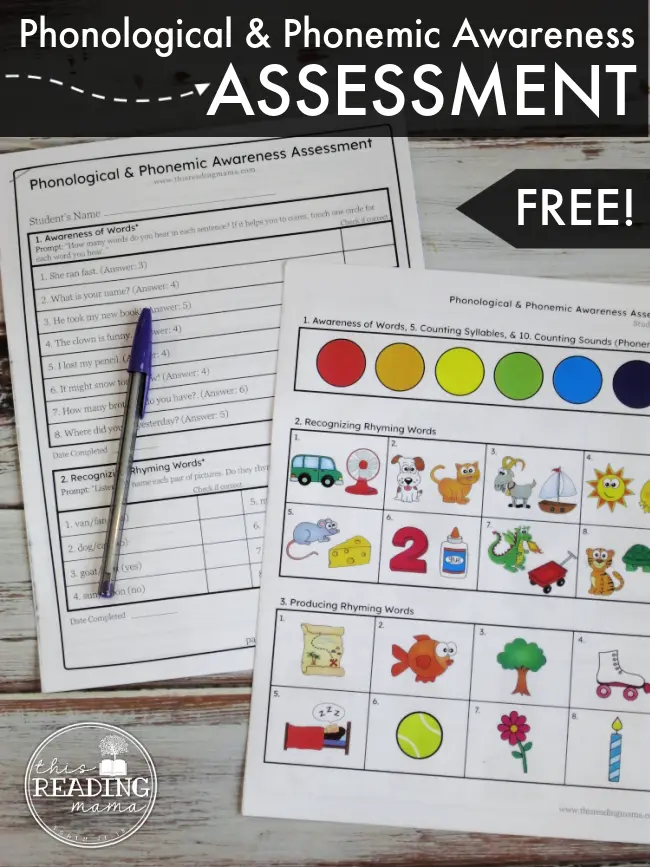
Future iterations of phonics-based puzzles are expected to feature advanced differentiation tiers, allowing educators to customize complexity based on individual student diagnostic profiles. By utilizing initial diagnostic tools—such as comprehensive phonological and phonemic awareness assessments—teachers can assign specific puzzle sets tailored to a child’s exact zone of proximal development.

2. Streamlining Teacher Workflows
The administrative burden placed on modern educators cannot be overstated. Initiatives that prioritize clean, ad-free digital repositories—such as The Library model—represent a growing movement to reclaim instructional time. Moving forward, the success of educational resources will be measured not only by their cognitive impact on students but also by their friction-free accessibility for teachers operating under tight time constraints.
3. Bridging the Classroom-Home Divide
With parental involvement remaining a premier indicator of early reading success, tools designed with intuitive instructions are vital. When parents are equipped with clear, game-like resources, home environments transform into low-stakes laboratories for language acquisition. The ability to download, print, and implement phonics puzzles at a kitchen table ensures that the science of reading is not confined strictly to school hours.
Conclusion
The introduction of specialized instructional aids like the FREE Ending Digraph Puzzles proves that rigorous academic concepts do not require dry, monotonous delivery. By marrying the auditory demands of phonemic awareness with the visual requirements of systematic phonics, these resources provide a vital stepping stone for developing readers.
As primary education continues to embrace evidence-based literacy instruction, tools that offer tactile engagement, clear scaffolding, and ease of access will remain indispensable. For educators and parents dedicated to unlocking the magic of reading for the next generation, integrating these innovative puzzle packs offers a proven, joyful pathway to enduring literacy success.

